(+44) 7900 515 552
13 Nov 2026
 insurance backed guaranteeinsurance backed guarantee
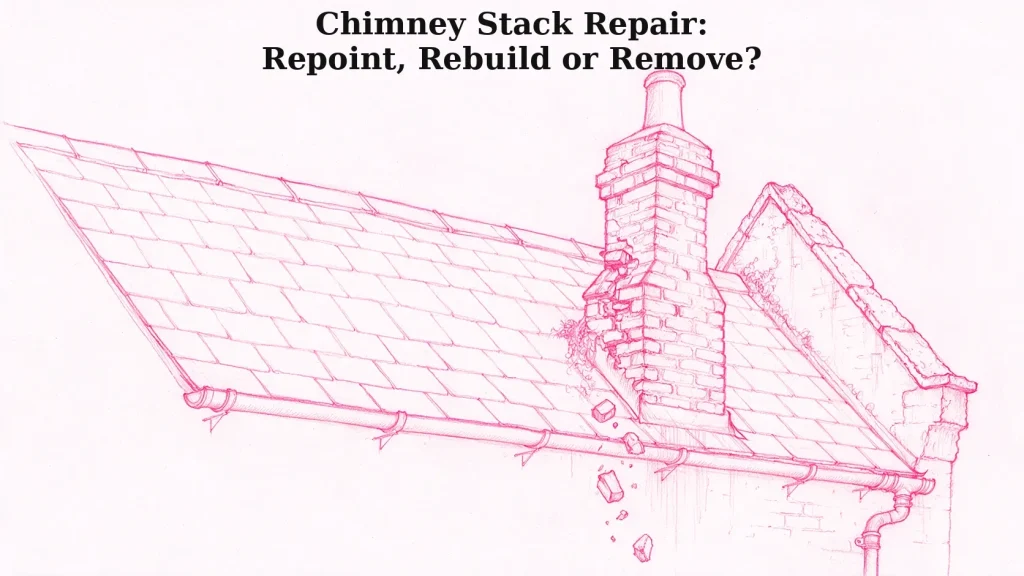
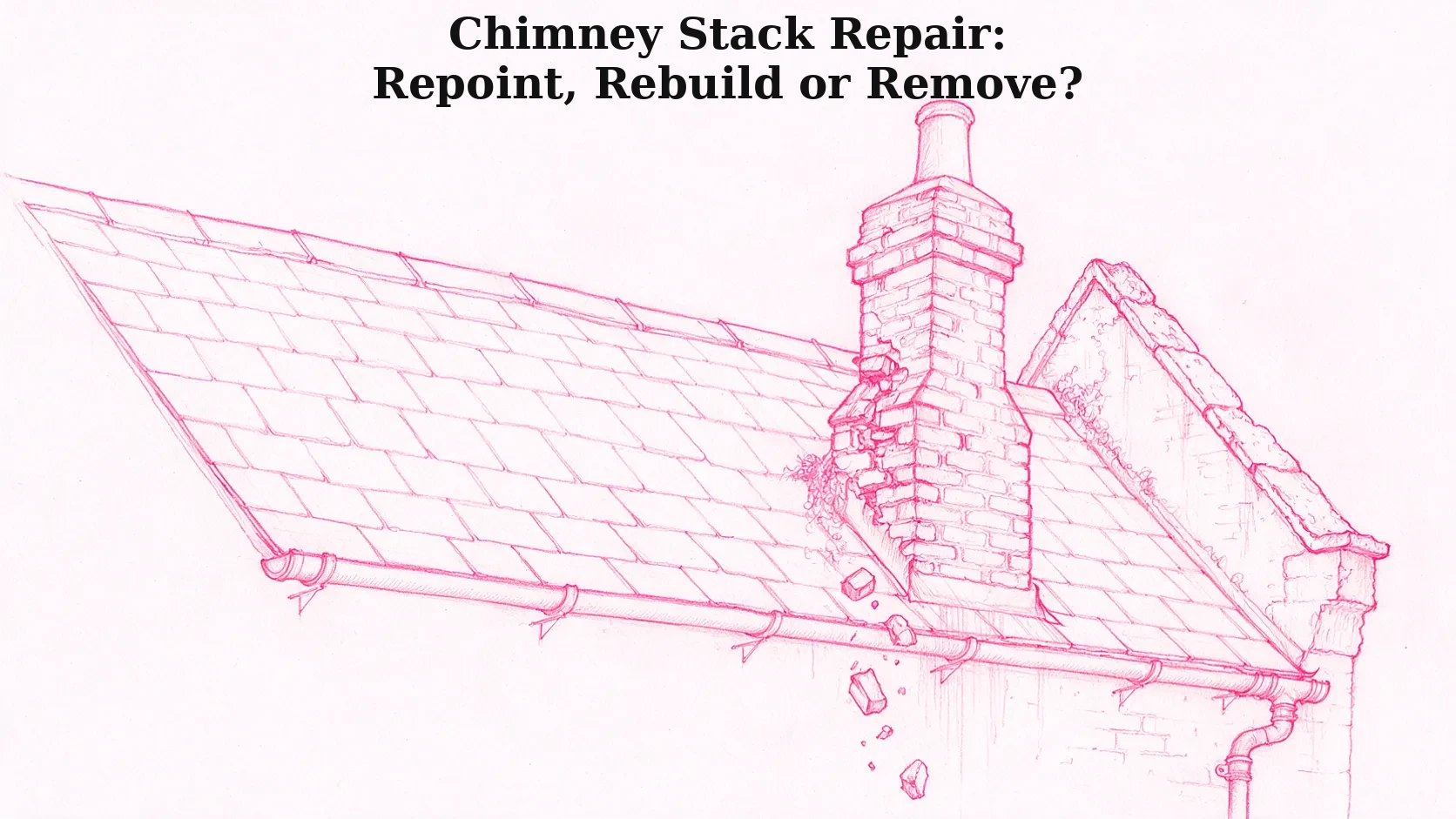
If there’s one part of your roof that takes the worst of British weather, it’s the chimney stack. It sits higher than everything else, gets hit by wind and rain from every direction, and is often the oldest masonry on the house.
Most homeowners only notice a problem once mortar starts landing in the gutter, a brick looks like it’s crumbling, or a damp patch appears on a bedroom ceiling. By then the question isn’t whether to act, it’s whether you need repointing, a partial rebuild, or something more drastic.
This guide walks through what actually causes chimney stacks to fail, how to tell which kind of repair you need, what it costs in the UK right now, and when the job needs more than a roofer alone.
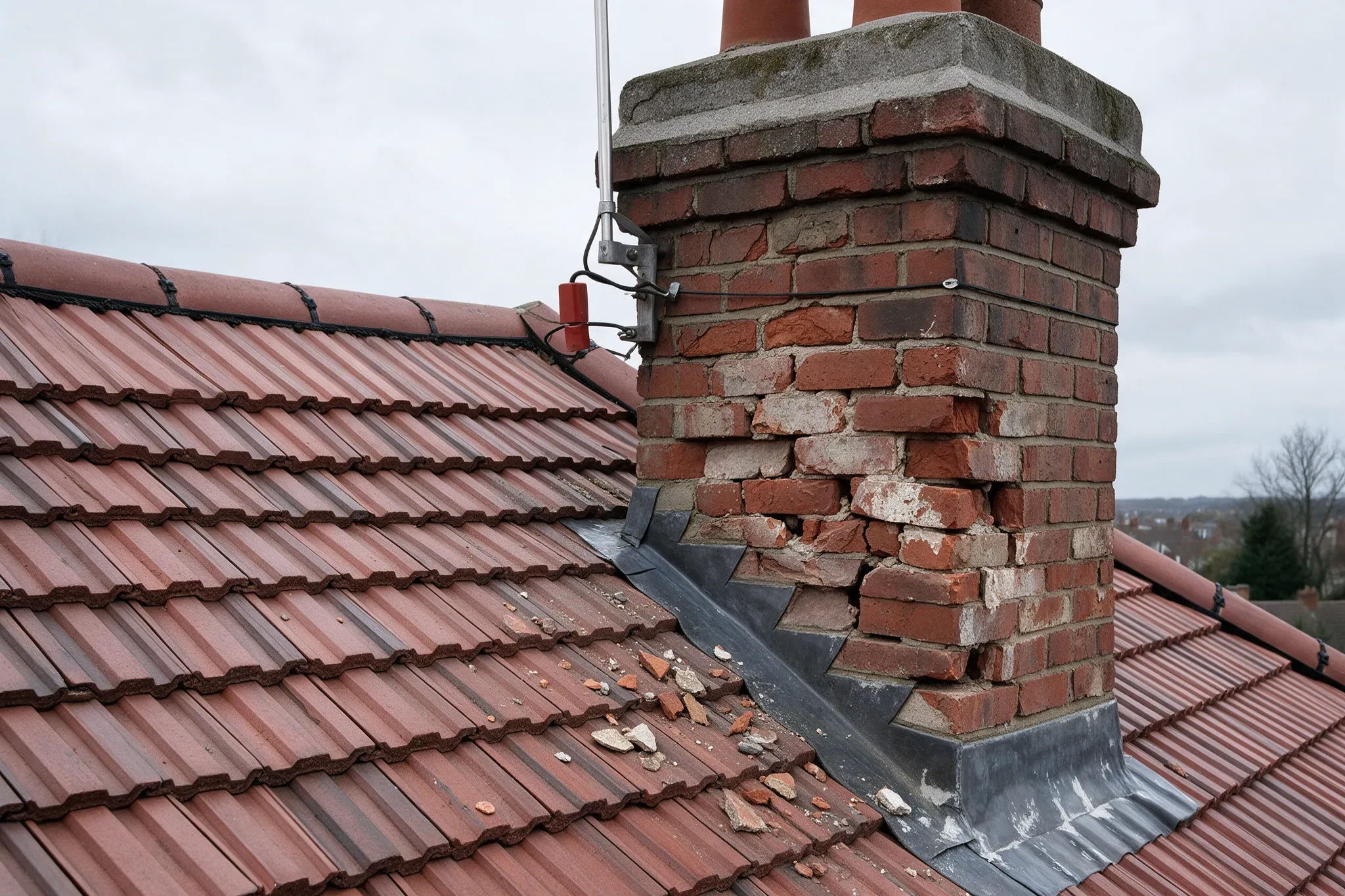
A chimney stack is exposed on all four sides, standing clear above the roofline where wind-driven rain, frost and sun all hit it directly. The rest of your roof has tiles or slates doing the weatherproofing. A chimney relies almost entirely on sound brickwork and mortar.
Water gets into a brick’s surface, then freezes. Ice expands, and the face of the brick can crack and blow off over time. This is called spalling, and it’s one of the clearest signs a chimney has been neglected.
Older, softer bricks are more vulnerable than modern engineering bricks. A Victorian terrace chimney is often more at risk than one built in the last 30 years, simply because of what it’s made from.
Mortar is the weaker material by design. It’s meant to wear before the brick does, so it can be replaced without touching the brickwork itself. Over decades, wind and rain wash it out, leaving gaps that let water straight into the stack.
If the chimney is still used for an open fire or a wood burner, sulphur compounds in the flue gases can attack the mortar from the inside as well as the outside. A stack that’s actively used tends to need attention sooner than one that’s purely decorative.
A chimney stack doesn’t fail all at once. It fails one wet winter at a time, which is exactly why it’s easy to put off until the damage is no longer just cosmetic.
Most chimney problems show themselves well before anything serious happens, if you know where to look. Worth a check from the ground with binoculars, or ask your roofer to look at it next time they’re up a ladder for anything else.
These are three different jobs, and getting the wrong one quoted wastes money either way. A good roofer will tell you honestly which category your chimney falls into rather than defaulting to whichever job is easiest to sell.
Repointing is right when the brickwork itself is sound and the problem is just the mortar joints: crumbling, washed-out, or simply old. This is the most common job, and usually the cheapest.
A partial or full rebuild is needed when the bricks themselves have failed, not just the mortar. Widespread spalling, a visible lean, or cracks running through several courses of brick all point towards a rebuild rather than a repoint.
Removal is worth considering when the stack is unused, badly damaged, and not worth the ongoing cost of maintaining. We’ve covered that decision in detail in our guide to removing a chimney stack, including the building control and Party Wall Act issues it can raise.
Prices vary a fair amount depending on who you ask, which is normal for a job where access, chimney size and the state of the brickwork all swing the final number. Here’s a realistic range pulled from UK trade pricing data.
| Job | Typical UK cost | Typical time on site |
|---|---|---|
| Minor repointing (small area) | £200 – £350 | 2 – 4 hours |
| Full chimney stack repointing | £450 – £1,200 | 1 – 2 days |
| Flaunching repair | £150 – £300 | Half a day |
| Brick replacement (spalled bricks) | £20 – £40 per brick | Varies with number |
| Complex repair (bricks, flashing and flaunching together) | £1,000 – £1,800+ | 2 – 3 days |
| Scaffolding or tower access | £300 – £600 | – |
Two independently published UK cost guides don’t fully agree on the numbers, which is worth being upfront about rather than quoting one figure as gospel. Checkatrade’s guide puts an average full job at around £750, built up from a rate of roughly £55 per square metre for brickwork.
MyJobQuote’s guide gives a wider £450–£1,200 range and quotes an average nearer £825. Both agree a well-done job should hold up for decades, not years.
Access is usually the biggest factor. A chimney on a steep roof, a tall Victorian stack, or one without easy scaffold access will cost more purely in labour and equipment, before a single brick is touched.
The state of the brickwork matters just as much. Repointing alone is straightforward. The moment spalled bricks need cutting out and replacing, or the flaunching and lead flashing both need redoing at the same time, the job shifts from a half-day task to a multi-day one.
It’s worth knowing the steps, so you can tell a thorough job from a rushed one before you’re the one standing on the ground looking up at it.
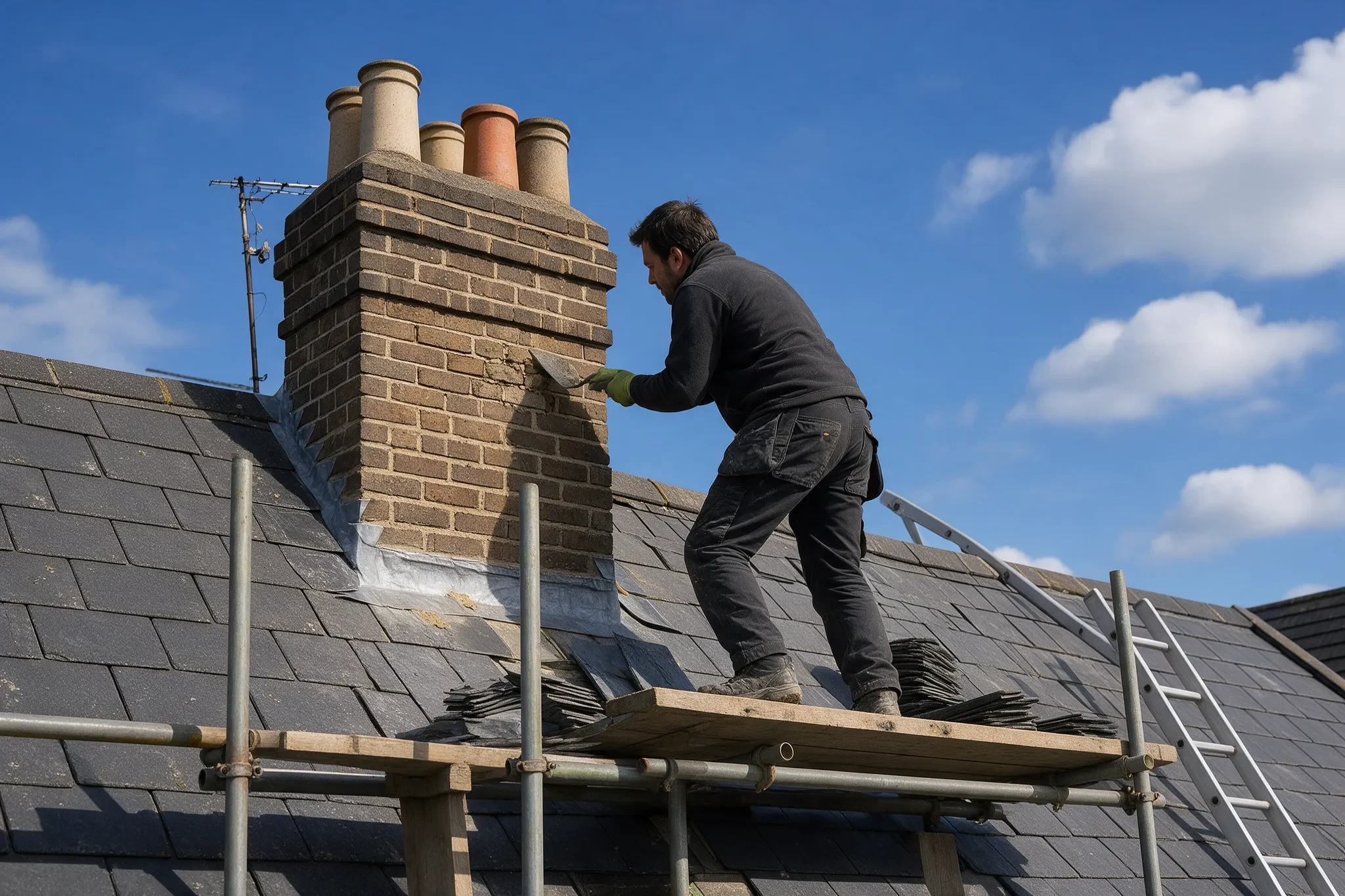
A huge number of “my chimney is leaking” calls turn out to be a flashing problem, not a masonry one. Flashing is the strip of lead dressed into the brickwork where the chimney meets the roof, and it fails in completely different ways to the brick and mortar above it.
If the leak is appearing well below where the chimney meets the roofline, or there’s no visible damage to the brickwork itself, flashing is the more likely culprit.
We’ve written a full breakdown of flashing failure, cost and repair in our guide to chimney leaks and lead flashing, including how to tell the two apart yourself before you call anyone out.
On terraced and semi-detached houses, it’s common for a chimney stack to straddle the boundary between two properties. Repair or rebuild work on a shared stack can trigger the Party Wall Act, which means notifying your neighbour before work starts.
This isn’t just a courtesy. Skipping it can leave you liable for damage even when the work itself was done properly. We cover the practical side of this, including notice periods and what counts as “party wall” work, in our guide to the Party Wall Act and roof work.
If you share a chimney stack with next door, assume the Party Wall Act applies and check early. It’s a much smaller conversation before scaffolding goes up than after.
Chimney work almost always means proper access, not a ladder propped against the gutter. For anything beyond a very minor repair, scaffolding or a scaffold tower is the safe, and usually the only insurable, way to do the job.
We’ve broken down what scaffolding typically costs for roof work, including the kind a chimney job needs, in our guide to roof scaffolding costs. It’s worth reading before you compare quotes, since a cheap quote that skips proper access usually isn’t cheaper once something goes wrong.
Chimney repair sits in an odd spot: it’s masonry work, roofing work and access work all at once. That’s exactly the kind of job where a contractor who cuts corners on one part can leave you with a bigger problem than you started with.
Look for a contractor who’s a member of a recognised trade body, offers an insurance-backed guarantee rather than just a verbal promise, and is happy to explain exactly why they’re recommending a repoint over a rebuild, or vice versa.
All Custom Roofing is a verified member of the Confederation of Roofing Contractors, and backs its chimney work with an insurance-backed guarantee, which protects you even if the business itself were ever unable to.
We’ve written a full checklist for vetting any roofing contractor, chimney work included, in our guide to choosing a roofing contractor. Worth a read before you book anyone, not just for a chimney job.
A properly done repointing job, using a mortar mix suited to the property, should last at least 30 years and sometimes well over 50. If a chimney needs repointing again within a decade, something was wrong with the original job or the mix used.
Technically yes, but it’s rarely sensible. The job needs safe access at height, a mortar mix matched to the existing brickwork, and the experience to spot problems like spalled bricks or failed flaunching while you’re up there. Getting it wrong can trap moisture and make the chimney worse.
Visible cracked mortar, loose bricks or crumbling pointing point to the chimney itself. A leak appearing at roof level with no visible masonry damage usually points to the lead flashing instead. See our dedicated guide on chimney flashing for a fuller breakdown.
Yes, potentially. A stack that’s visibly out of true can mean the structure has started to move, which is a safety issue as well as a repair one. Get it looked at promptly rather than waiting, especially before any strong winter winds.
Routine repointing doesn’t need planning permission. A full rebuild usually doesn’t either, provided you’re rebuilding like-for-like, but listed buildings and conservation areas can have extra restrictions. Check before work starts if you’re unsure.
Usually not for routine wear and tear like mortar erosion, which is treated as maintenance. Sudden damage, such as a chimney cracked or dislodged by a storm, is more likely to be covered. Check your policy wording and see our guide on home insurance and roof damage for the detail.
Most full repointing jobs come in between £450 and £1,200, depending on chimney size, access and the state of the brickwork. More complex repairs involving bricks, flashing and flaunching together can run to £1,800 or more.
If you’ve spotted crumbling mortar, a loose pot, or debris in the gutter below your chimney, don’t wait for it to become a leak. Get in touch for a free, no-obligation assessment, and we’ll tell you honestly whether you need a repoint, a rebuild, or nothing at all.