(+44) 7900 515 552
13 Nov 2026
 insurance backed guaranteeinsurance backed guarantee
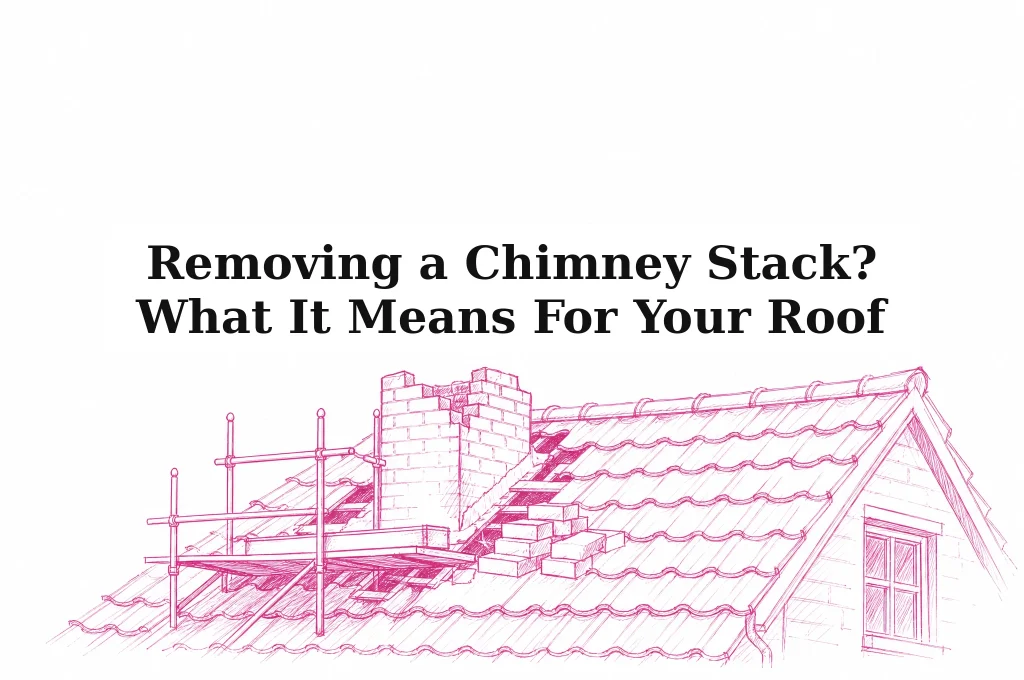
Taking out an old chimney stack has become a popular way to free up loft space, stop a persistent source of leaks, or simply remove the cost of maintaining a stack nobody uses any more. What often gets missed is that this isn’t really a chimney job. Once the stack comes down, whether it’s the whole thing or just the section above the roofline, you’re left with a hole in your roof that has to be made structurally sound and properly weatherproof. Get that part wrong and you’ve swapped one leak problem for another, usually a worse one.
This guide covers what building regulations actually require, what a proper reinstatement looks like from the roofing side, real UK cost figures, and the questions worth asking before anyone starts stripping tiles off your roof.
There’s rarely just one reason. The ones we hear most often from customers across Berkshire, Buckinghamshire and Surrey are:
A chimney stack that’s stopped earning its keep doesn’t just sit there quietly. It’s still brickwork exposed to UK weather, and it still needs the same repointing and flashing care as the rest of your roof.
This is the first question to settle, because it changes the whole shape of the project. The rules split depending on how much of the stack is coming out.
If you’re only taking off the visible chimney pot and stack above the roof, leaving the structure inside the house untouched, you generally won’t need a building regulations application for that part on its own, according to Local Authority Building Control’s own guidance. It’s still sensible to leave a small stub, no more than around a metre above the roofline, rather than taking it flush, since a planning officer may want to see it hasn’t disappeared entirely if the property sits in a conservation area.
Taking out the breast that runs down through the house, not just the stack above the roof, is a different matter entirely. Building regulations approval is required, and the application needs a structural engineer’s calculations showing how the walls, floors and roof that the chimney was quietly supporting will now be held up instead. That usually means either a fire-protected steel beam or a pair of load-bearing brackets, known as gallows brackets, fitted at each floor level where the breast used to sit.
| Scope of removal | Building regs approval? | Structural engineer needed? | Typical extra cost |
|---|---|---|---|
| Stack above roofline only, breast retained inside | Not usually required for the stack itself | Rarely, unless the stack was structurally tied in | Roof reinstatement only |
| Full breast removal (loft to ground floor) | Required | Yes, for support design and sign-off | Roughly £400 for the structural engineer’s report, plus around £200 for building control approval, on top of the removal and roofing work |
Skipping this step isn’t a shortcut worth taking. An unapproved structural alteration is exactly the sort of thing that surfaces on a buyer’s survey years later and can hold up a sale while it’s investigated and retrospectively certified, or worse, reversed.
Not every problem chimney needs to come out entirely. If the stack itself is structurally sound and the issue is actually failed flashing, cracked flaunching around the base, or deteriorated pointing, a repair is usually cheaper and less disruptive than a full removal, and it keeps a period feature that some buyers genuinely value on an older property. We’ve written a separate guide covering how to diagnose why a roof leaks near the chimney and what a proper lead flashing repair involves, which is worth reading first if leaks are the main reason you’re considering removal at all.
The cases where removal genuinely makes more sense are usually where the stack is entirely redundant (no working fireplace or flue connected to it at all), where it’s causing repeated structural movement in the roof around it, or where the loft or room space it’s taking up is worth more to you than the chimney is. If none of those apply, a repair is worth pricing up first.
If your chimney stack is built into or straddles a shared wall with a neighbouring property, which is common on the Victorian and Edwardian terraces found across Windsor, Staines and Slough, removing it may trigger the Party Wall etc. Act 1996. We’ve covered the notice process, timings and what happens if a neighbour objects in full in our dedicated guide to the Party Wall Act and roof replacement. The short version: get the notice served before any work starts, not after, since working on a shared structure without one can leave you liable for making good any damage regardless of who’s actually at fault.
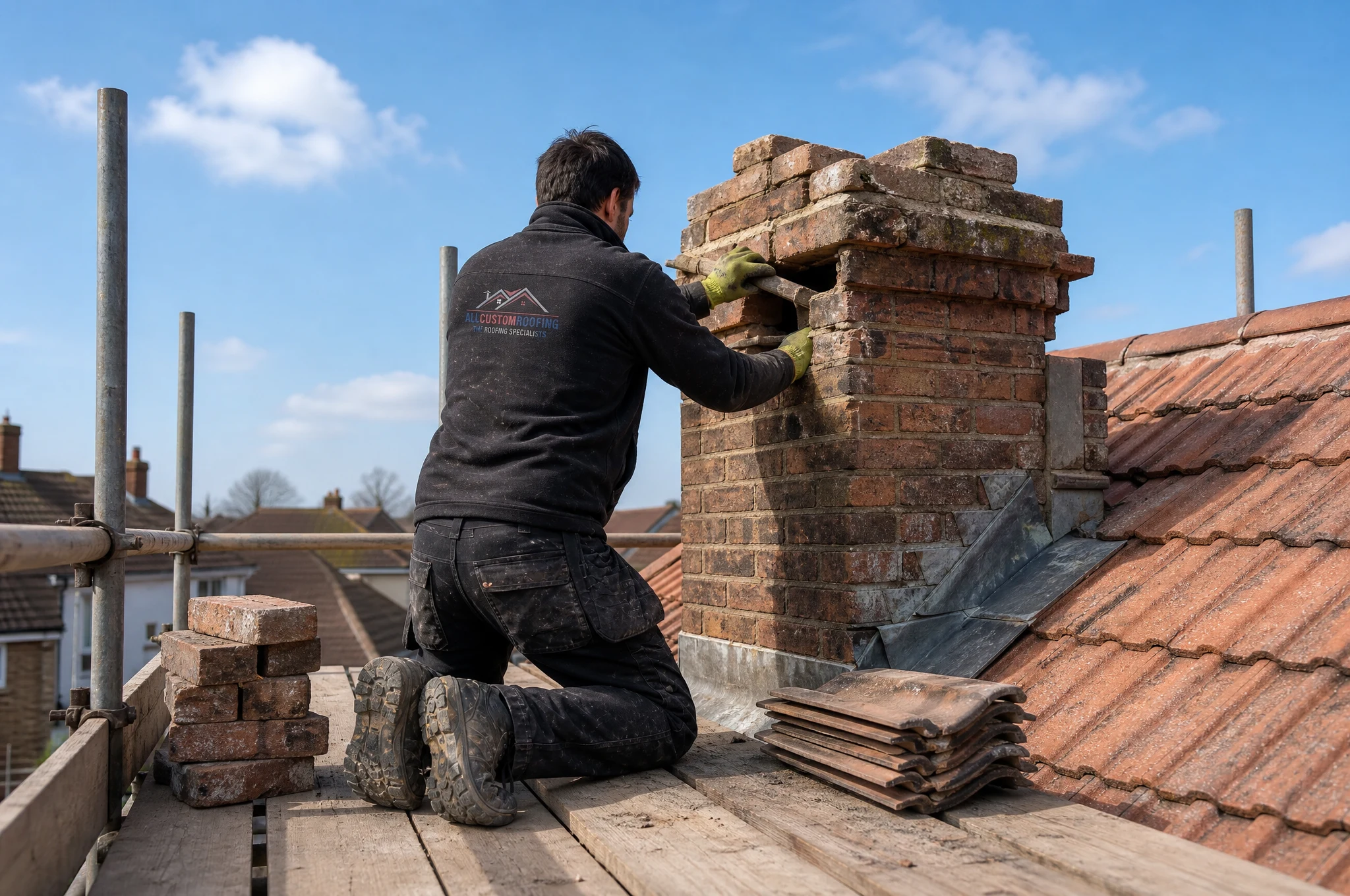
This is the part that determines whether the job actually solves your leak problem or just relocates it. A proper reinstatement follows the same sequence every time:
The tile-matching and ridge-finishing steps are where a lot of chimney removals go wrong. It’s easy to remove a stack cleanly and still leave a roof that leaks at the patch six months later because the junction wasn’t finished properly.
Prices vary with London and the South East generally sitting at the higher end of these UK ranges, and with how much structural work is involved. The figures below come from Checkatrade’s 2026 chimney removal cost guide.
| Job | Typical UK cost | What’s usually included |
|---|---|---|
| Stack removal (above roofline only) | Around £1,800 per project, or £260-£340 per metre | Removing the visible stack and pot |
| Full breast removal (load-bearing, stack retained) | £1,750-£3,250 (average around £2,500) | Breast removal with structural support fitted |
| Non-load-bearing breast removal | £400-£600 per floor | Simpler removal where no support is needed |
| Scaffolding hire | Around £660 per week | Safe access for the removal and roofing work |
| Roof tile reinstatement | Around £170 for up to five tiles, more for a larger patch | Matching tiles, felt and battens around the opening |
| Making good internally | Around £180 per breast | Plastering and finishing where the breast used to be |
These are separate line items, not automatically bundled into a single quoted price, so it’s worth asking exactly what’s covered before you compare quotes from different contractors, especially whether scaffolding and roof reinstatement are included or charged on top.
A handful of direct questions tell you a lot about whether a contractor has actually thought this through:
For a fuller checklist on vetting any roofing contractor, not just for a chimney job, our guide to choosing a roofing contractor in the UK covers what to check before you sign anything. We’re a verified member of the Confederation of Roofing Contractors, and every chimney removal and roof reinstatement we carry out is covered by our insurance-backed guarantee, which means the cover on the finished roof doesn’t disappear if a contractor ever stops trading, something worth checking on any chimney job given how much of the risk sits in the roof patch rather than the demolition itself.
Usually not, since it’s normally treated as permitted development. The main exceptions are listed buildings and conservation areas, where extra rules can apply. See our guide to planning permission for roof work for the detail on conservation area restrictions.
We wouldn’t recommend it. A load-bearing breast needs a structural engineer’s design and building control sign-off, and the roof reinstatement above it needs to be done to the same standard as any other roofing work. The saving on labour is rarely worth the risk if the support or the weatherproofing isn’t done properly.
It can, particularly if the removal wasn’t done with proper building regulations sign-off where that was required. Insurers can query unapproved structural alterations at claim time, so it’s worth keeping the completion certificate and any structural engineer’s paperwork somewhere safe.
A straightforward above-roofline stack removal with reinstatement typically takes one to two days once scaffolding is up. A full breast removal with structural support and roof patching usually takes longer, closer to a week, depending on access and how much making good is needed inside.
This almost always comes down to the felt, batten or tile-matching work around the new patch rather than the demolition itself. It’s why the reinstatement should be covered by the same guarantee as the removal, so you’ve got recourse if it wasn’t finished properly.