 (+44) 7900 515 552
01 Apr 2026
 insurance backed guarantee
insurance backed guarantee
insurance backed guarantee
When fierce UK winds and rain batter your property, your first moves in dealing with potential storm damage roof repair shouldn’t involve a ladder. Instead, it starts with a calm, safe assessment from the ground. The goal is to spot any obvious issues, document them thoroughly, and get a professional roofer on the phone before a small problem turns into a major interior disaster.
The minutes and hours after a severe storm can feel chaotic. Taking a few methodical steps, however, can protect your home and make the whole repair process much smoother down the line. The trick is to prioritise your safety while gathering the crucial information you’ll need for both your insurance claim and your roofing contractor. Stay calm, keep your feet on the ground, and start documenting. A good initial response sets the stage for getting your roof sorted efficiently.
Your immediate focus should be on spotting the clear signs of damage without putting yourself in harm’s way. A powerful storm can easily compromise your roof’s structural integrity, making it a dangerous place for anyone without the right training and gear.
Your very first action should be a simple walk around the perimeter of your property. Make sure to keep a safe distance from the building, just in case of any loose tiles or falling debris, but try to get a clear view of all the different slopes of your roof.
Here’s a quick rundown of what you’re looking for:
Getting a good look can be tricky and risky. For a quick, precise overview without any danger, some homeowners now use advanced drone roofing inspection software to get a bird’s-eye view.
To help you stay safe while checking for problems, here’s a quick reference checklist.
| Priority Action | Key Things To Look For | Critical Safety Note |
|---|---|---|
| Ground-Level Walkaround | Missing, cracked, or slipped tiles/slates. | NEVER climb on the roof yourself. It could be unstable. |
| Check Key Areas | Bent or missing flashing around chimneys, vents, and skylights. | Stay clear of downed power lines and be wary of falling debris. |
| Look for Debris | Branches, leaves, or other objects on the roof or in gutters. | Wear sturdy, closed-toe shoes when walking around your property. |
| Document Everything | Take photos/videos of all damage from multiple angles. | Do not attempt to remove large debris from the roof yourself. |
| Internal Check | Water stains on ceilings or walls, especially in the loft. | If you see significant sagging, evacuate the area below immediately. |
This table should give you a clear, step-by-step process for a safe initial assessment.
Before you touch, move, or try to fix anything, grab your phone. Your camera is your single most important tool at this stage. Why? Because thorough documentation is absolutely essential for a smooth and successful insurance claim.
Take plenty of clear photos and videos of all the damage you can see. Get different angles and distances – wide shots showing the whole roof, and close-ups of specific problems like a cracked tile or lifted flashing. Don’t forget to photograph any bits of the roof that have fallen into your garden. If your camera can add a timestamp to the images, even better.
This visual evidence gives your insurance company indisputable proof that the damage was a direct result of the storm.
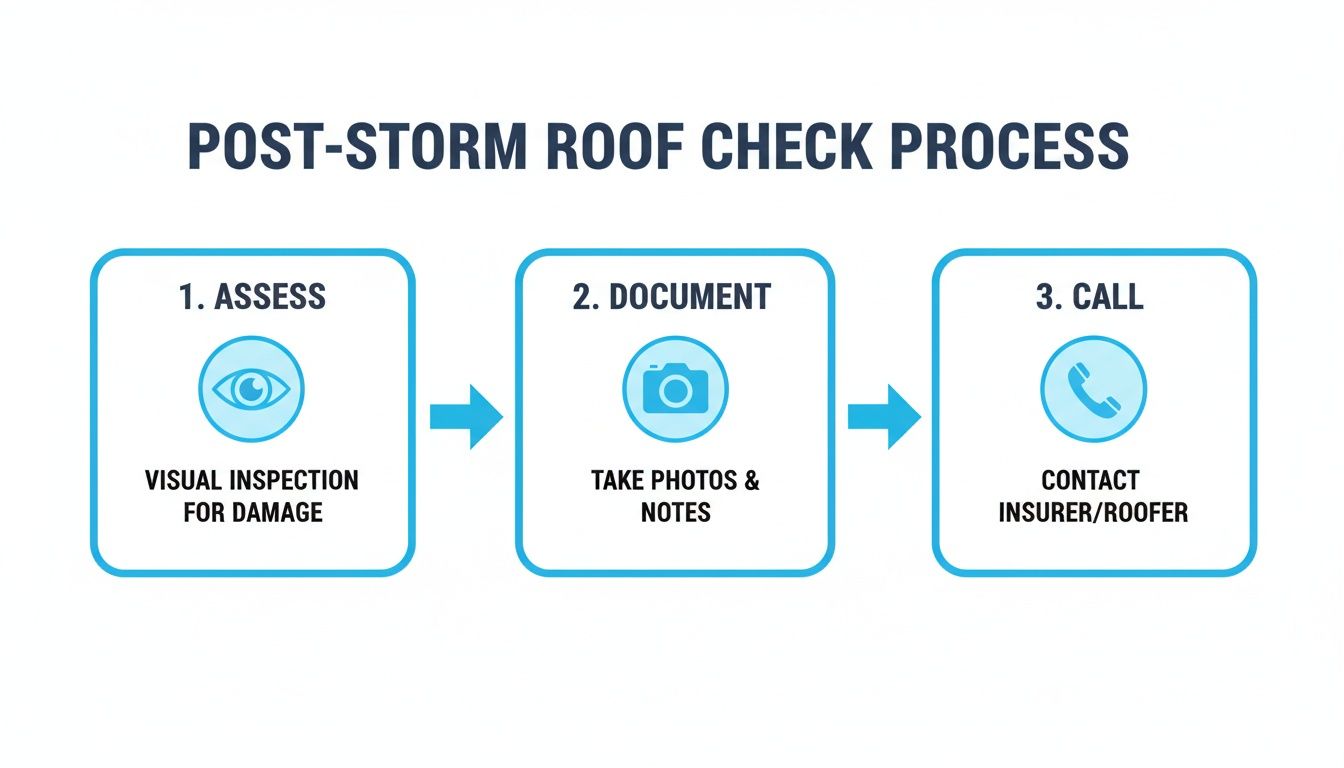
Following this simple Assess, Document, and Call process ensures you act quickly and safely to protect your property.
Storm damage is one of the biggest threats to UK homes. In fact, research shows that one in ten UK adults have already experienced flood or storm damage in their current home, which really highlights why a swift response is so important. Ideally, a professional roof inspection should happen within 24-48 hours after severe weather to properly document the damage and stop it from getting worse.
Once you’ve taken your photos, your next two calls are critical.
First, ring your insurance provider to let them know what’s happened and get the claims process started. Second, call a trusted local roofing company like All Custom Roofing. We provide expert storm damage roof repair services across Windsor, Slough, Reading, and the wider Berkshire area. Getting a professional assessment quickly not only strengthens your insurance claim but also helps us spot any hidden issues before they cause you more serious trouble.
Once you’ve had a safe look from the ground and taken plenty of photos, your immediate priority shifts to damage control. A compromised roof is essentially an open door for water, which can quickly lead to stained ceilings, ruined plaster, electrical hazards, and even serious structural problems.
Acting fast with a temporary fix is the key to stopping a roofing issue from turning into a whole-house disaster. This is where emergency repairs, usually involving professional tarping, are absolutely essential.
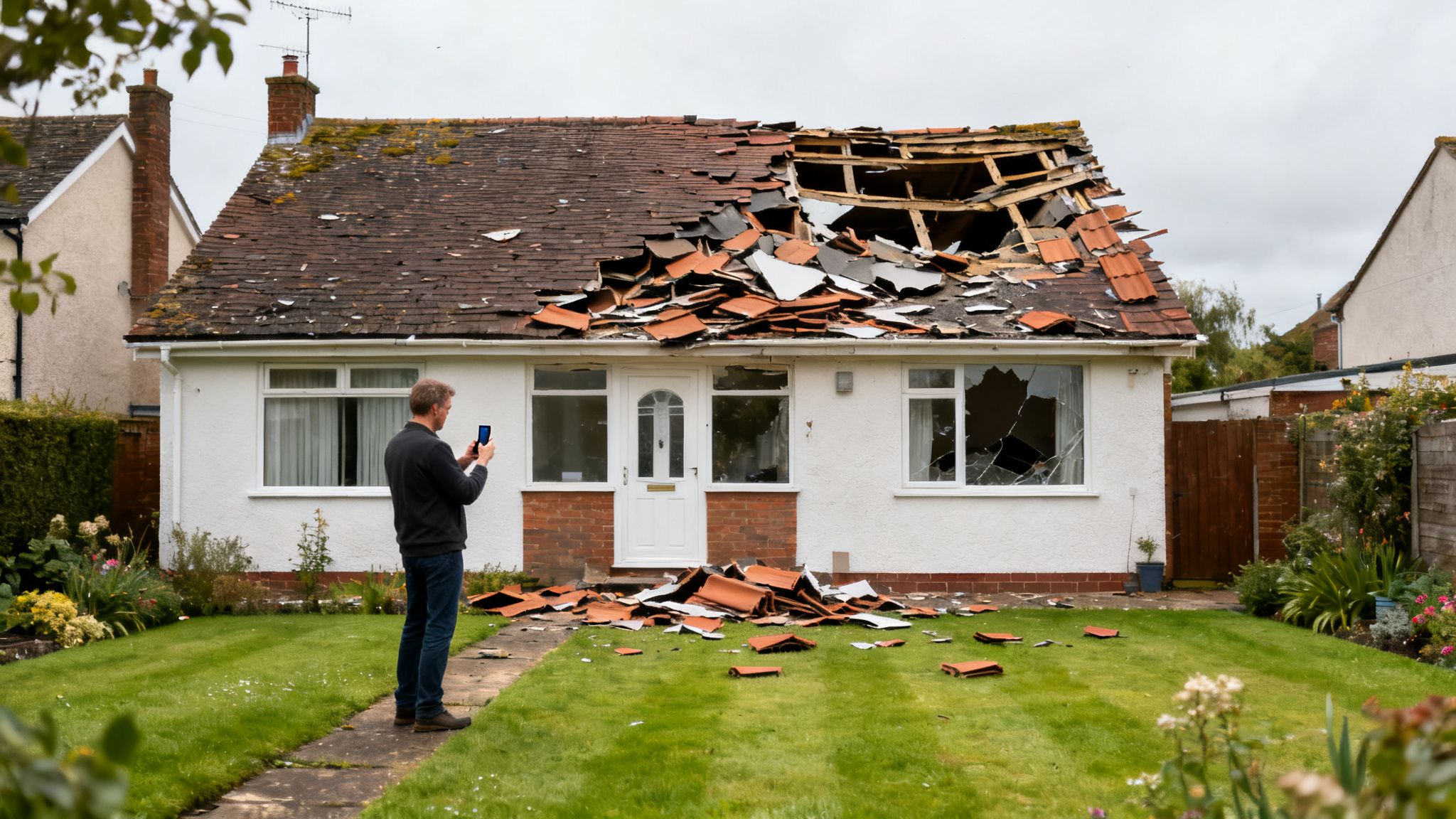
Think of it as a stop-gap. It’s not a permanent solution, but it’s a critical one that buys you the valuable time needed to arrange for a proper, high-quality storm damage roof repair.
A few missing tiles might not look like a code-red emergency, but with the UK’s notoriously unpredictable weather, even a small breach can become a major headache in a matter of hours. Water gets in everywhere and causes problems far beyond a simple drip from the ceiling.
Temporary repairs are vital for a few big reasons:
A professional emergency repair is much more than just throwing a plastic sheet over a hole. It involves skilfully fastening a heavy-duty, waterproof tarpaulin over the damaged section, making sure it can hold up against more wind and rain without causing even more damage to your roof.
When water is pouring in, you need help, and you need it fast. The problem is, the aftermath of a storm is prime time for dodgy “storm chasers” who prey on worried homeowners. It’s absolutely crucial to find a genuine, local company with a solid track record.
Look for a contractor who specifically offers a dedicated emergency call-out service; it shows they are set up to handle urgent situations. A professional and reassuring voice on the phone is always a good first sign.
To quickly vet a roofer on the phone, have these questions ready:
In a stressful situation like this, a swift, professional response from a local expert is exactly what you need. At All Custom Roofing, we run a rapid-response service for homeowners across Berkshire, including Maidenhead, Bracknell, and the surrounding towns. Our first priority is always to make your property safe and secure, giving you peace of mind while we work with you to plan the permanent solution.
Once your home is safe from further harm with temporary fixes, the next big hurdle is dealing with your insurance company. This part can feel intimidating, but a bit of preparation and organisation goes a long way. If you understand the process from that first phone call to the final sign-off, you’ll be in a much better position to manage your claim and get the full settlement you deserve.
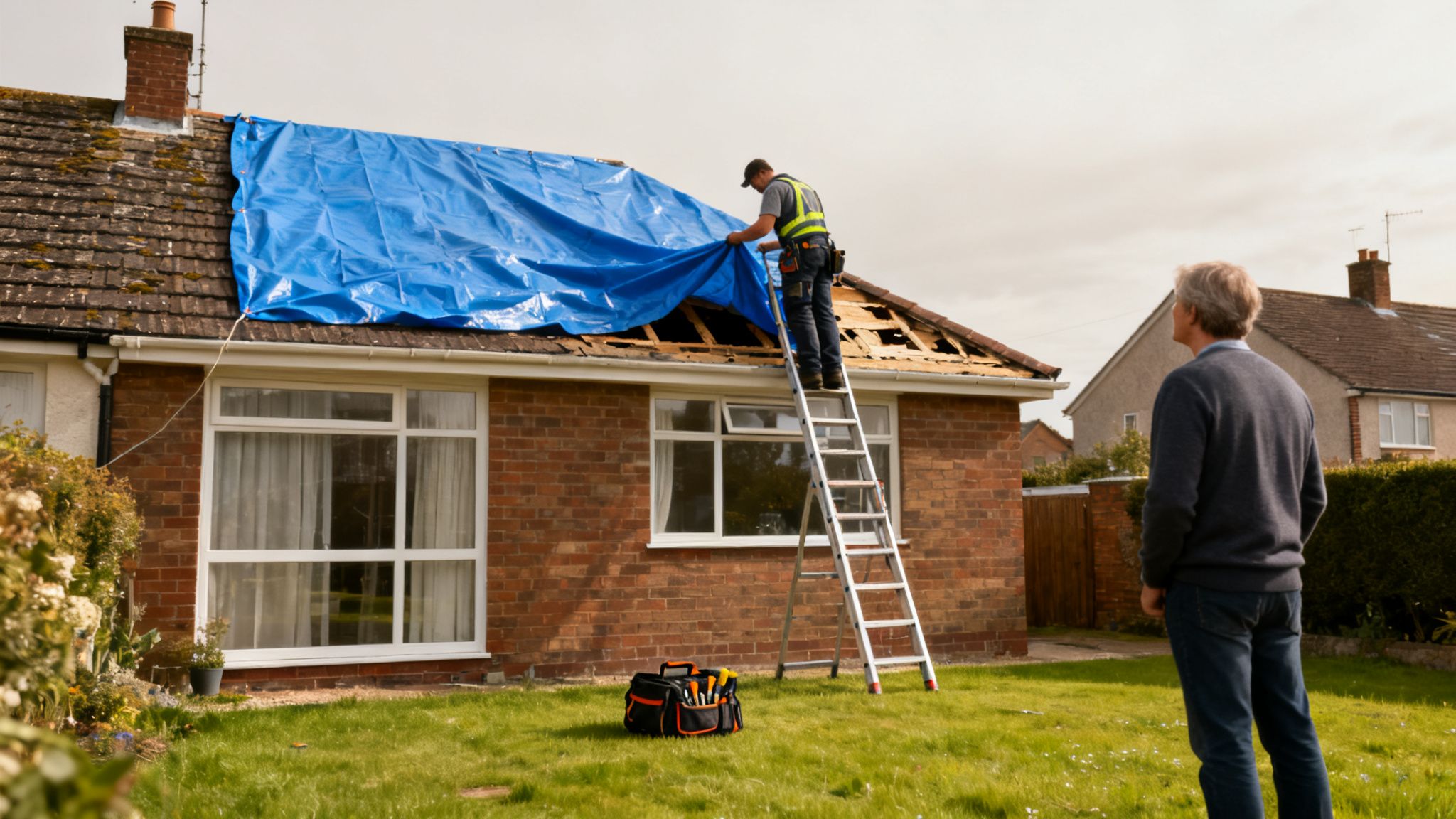
The trick is to be methodical. You need clear evidence and professionals who can back up your claim with the right paperwork. A successful claim for your storm damage roof repair really comes down to clarity, solid proof, and keeping the lines of communication open.
With photos and notes in hand, your first job is to ring your insurance provider as soon as you can. Most policies have a strict window for reporting storm damage, and leaving it too late could put your entire claim at risk.
Before you dial, get these details ready to make the call smoother:
They’ll give you a claim number and talk you through what happens next, which almost always involves a visit from their representative, called a loss adjuster. It’s also a good time to get clear on your policy’s specifics. For instance, knowing the details of your cover for a tree falling on house insurance is vital, as this can have its own set of rules and requirements.
The loss adjuster works for the insurance company. Their job is to visit your property, assess the damage, and figure out the cause and cost of the repair. This is a pivotal moment in the process.
This is where having your chosen roofing contractor present can make a massive difference.
A trusted roofer, like our team at All Custom Roofing, can meet the adjuster on-site. We can point out damage that isn’t immediately obvious, explain the proper repair methods needed to meet UK standards like BS 5534, and make sure the adjuster’s report is accurate and complete. Think of your roofer as your professional advocate, fighting your corner to ensure the scope of work is correctly defined.
Keep in mind, the first offer from your insurer is rarely set in stone. Your strongest negotiating tool is a detailed, itemised quote from a trusted local roofer. It ensures the settlement covers a proper, long-lasting repair, not just a quick patch job.
This quote should clearly break down every cost involved, from labour and materials to scaffolding and waste removal.
A few common slip-ups can easily turn a straightforward claim into a nightmare. Knowing what to avoid can save you a world of time, money, and stress.
Here are the big ones to steer clear of:
Getting through an insurance claim is a key part of the storm damage roof repair journey. For homeowners across Berkshire—from Windsor and Slough to Reading and Bracknell—having an expert roofer on your side is invaluable. Contact All Custom Roofing for a detailed assessment and quote to give your insurance claim the best chance of success.
Once the storm clears and you’ve made that initial, often stressful, call to your insurance provider, you face what is arguably the most important decision of the entire recovery process: hiring the right roofer. This choice is about more than just fixing a leak; it dictates the quality of the repair, how long your roof will last, and your ultimate peace of mind. For a proper storm damage roof repair, you need a professional who doesn’t just have the skills, but who genuinely understands Berkshire’s unique properties and weather challenges.
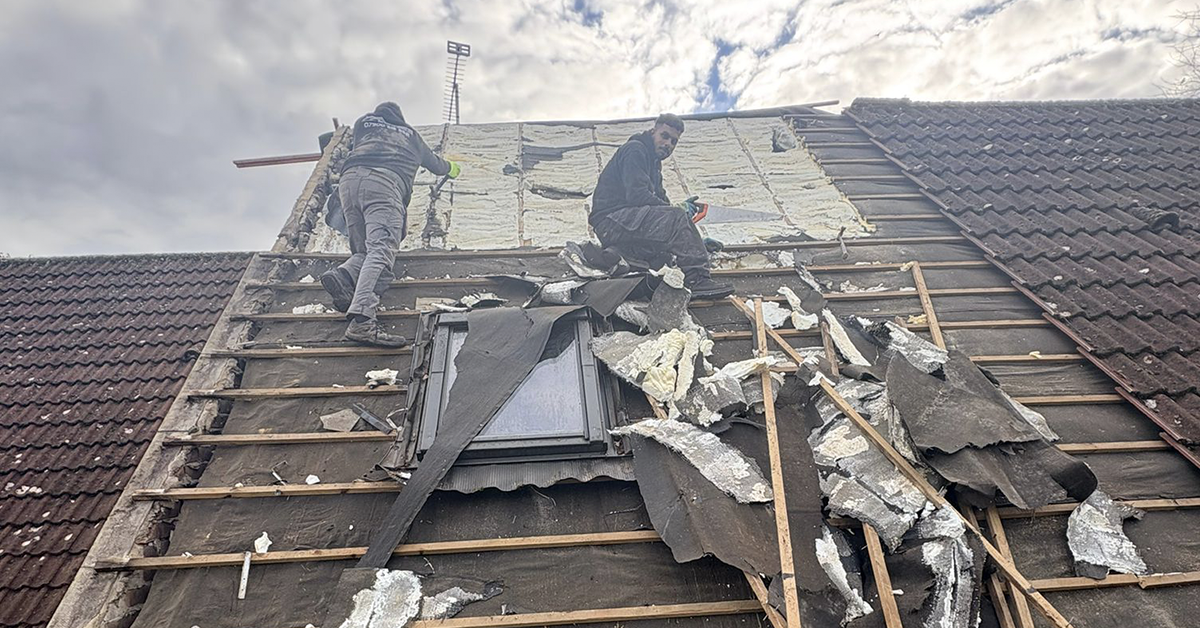
There’s a reason we stress the importance of choosing a truly local company. It isn’t just about convenience—it’s about accountability. A roofer with deep roots in towns like Windsor, Slough, or Reading has a local reputation to protect. They know the specific slate and tile common in our area and are fluent in applying UK building standards, such as BS 5534, to make sure your repair is not only effective but fully compliant.
To sort the real professionals from the opportunists who flock to storm-hit areas, you need to have a solid vetting process. It really comes down to asking the right questions and knowing what a good answer sounds like. This isn’t a time for assumptions; it’s about getting the facts that confirm you’re putting your home in safe hands.
Here’s a practical checklist to run through with any potential contractor:
A true professional will welcome these questions and give you clear, straightforward answers.
Unfortunately, the aftermath of a storm can attract some less-than-reputable operators. You might hear them called “storm chasers”—they move from town to town, carrying out shoddy work before disappearing, leaving homeowners with failed repairs and worthless warranties.
Your best defence against a rogue trader is vigilance. A genuine, established roofer will never pressure you into an instant decision or ask for a large cash payment upfront before any materials have even been delivered to your property.
Be very wary of anyone who:
These are major warning signs that you should walk away immediately.
Finding a quality roofer has become more competitive than ever. The UK roofing industry is currently facing a significant shortage of skilled labour, which can impact both how quickly you can get a repair done and the quality of the work itself. This scarcity has also pushed prices up, making it harder to book a reliable team, especially right after a storm hits a local area. You can discover more about how market trends are impacting roofing services on openpr.com.
This challenge really highlights the importance of choosing an established company like All Custom Roofing. We consistently invest in our team, making sure we have the skilled professionals ready to deliver high-quality storm damage roof repair when you need us most. We cover Windsor, Reading, Slough, Bracknell, Maidenhead, and all the surrounding towns, providing reliable, expert service backed by years of local experience.
Contact All Custom Roofing in Windsor for an honest assessment and a professional repair you can trust.
After the shock of a storm, the two questions that immediately spring to mind are “how much is this going to cost?” and “how long will it take to fix?”. The honest answer is: it depends. The final bill and the project schedule for any storm damage roof repair really come down to a mix of factors unique to your property and the severity of the damage.
Getting your head around these variables right from the start helps you set a realistic budget and manage your expectations. It takes the guesswork out of the equation and puts you back in control, so there are no nasty surprises when the invoice arrives.
Several key elements come together to determine the final price of getting your roof back in shape. Any professional quote from a reputable Berkshire roofer will break these down for you, ensuring the price is both accurate and transparent.
Here’s what we look at:
Because every job is different, a one-size-fits-all price list just doesn’t exist for storm damage.
Just like the cost, the time it takes to complete a repair can vary hugely. A straightforward job, like replacing a handful of tiles on a terraced house in Slough, might be all done and dusted in a few hours.
More complex projects, however, will have longer timelines. For example, if severe damage means we have to order specific matching slates or have flashing custom-made, we’re at the mercy of supplier lead times. If the work is substantial enough to require scaffolding, putting it up and taking it down will add a day or two to the schedule.
A good contractor will always give you a clear, step-by-step timeline and keep you in the loop if any delays pop up. For a more detailed look at this, check out our guide to understanding the costs of roof repair in the UK.
Remember, a professional roofer’s goal isn’t just to be quick; it’s to be thorough. A quality repair that will stand up to the next storm is far more valuable than a rush job that fails in a few months.
To give you a rough idea of what to expect, we’ve put together a table of typical cost brackets for common storm damage repairs in the UK. This should help you start budgeting.
| Type Of Repair | Estimated Cost Range (£) | Typical Repair Timescale |
|---|---|---|
| Minor Tile/Slate Replacement | £250 – £750 | 2-4 hours |
| Lead Flashing Repair/Replacement | £400 – £1,200 | 1-2 days |
| Small Leak Detection & Repair | £600 – £2,000 | 1-3 days |
| Gutter & Fascia Repair/Replacement | £500 – £2,500 | 1-3 days |
| Significant Structural Damage | £3,000 – £10,000+ | 1-2+ weeks |
Keep in mind these are just estimates. The financial impact can differ dramatically based on the severity of the damage. A small flashing issue might sit at the lower end of the scale, but if the storm has compromised the timber structure beneath, the costs will naturally be higher.
If you're facing storm damage in Windsor, Maidenhead, Bracknell, or anywhere across Berkshire, the best first step is to get a detailed, no-obligation quote. Contact All Custom Roofing for an honest assessment and transparent pricing to get your home secure and weatherproof once more.
After a storm rolls through, it’s only natural to have a head full of questions. The uncertainty around roof damage can be stressful, but getting clear, straight answers is the first step to getting things back on track. We've put together some of the most common questions we hear from homeowners across Windsor, Reading, and Slough to help guide you through the storm damage roof repair process.
First things first: stay off the roof. It’s incredibly dangerous to climb up there yourself, especially when the structure might be unstable after a storm. You can get a surprisingly good look from the safety of the ground.
Grab a pair of binoculars or just use the zoom on your phone's camera. From your garden or across the street, scan for the obvious signs: tiles that are missing, cracked, or sitting at odd angles. One of the biggest giveaways is finding roofing granules – they look like dark, coarse sand – in your gutters or on the pavement below. That's a sure sign the protective layer of your roofing felt has been scraped away.
Also, take a good look at the lead flashing, particularly around your chimney, vents, and skylights. If it's bent, peeling away from the brickwork, or torn, you've found a definite weak spot where water will get in. And don't forget to pop your head into the loft. New damp patches on the timbers or little slivers of daylight you've never seen before are tell-tale signs of a problem.
In most cases, yes. The vast majority of UK home insurance policies are designed to cover damage from a specific event, like a storm. This typically includes damage from gale-force winds, torrential rain, and falling trees or branches.
But there's an important catch. Insurers will almost always reject a claim if they determine the damage was due to pre-existing issues like general wear and tear or a lack of maintenance. If your roof was already in a bad way, they’ll likely argue that the storm just highlighted a problem that was already there.
That's exactly why you need to document everything as soon as it's safe to do so. Photos and videos taken right after the storm build a strong case that the damage was sudden and directly caused by that single weather event, not by long-term neglect. Always have a quick read of your policy wording to be clear on what is and isn't covered.
A proper, professional storm damage roof repair is a permanent fix, not a temporary stop-gap. When it’s done right by an experienced roofer using the correct materials, the repair should stand the test of time, often lasting for the remaining lifespan of the roof itself.
The longevity of any repair really comes down to a few key things:
This is the big question, and the answer really hinges on two things: the age of your roof and how widespread the damage is.
If the storm damage is confined to a specific area – say, a few ridge tiles were ripped off or a section of flashing was lifted – and the rest of your roof is in pretty good shape, then a targeted repair is absolutely the most sensible and cost-effective route to take.
On the other hand, if your roof is getting on in years and the storm caused extensive or structural problems, a full replacement often becomes the smarter long-term investment. It might seem like a bigger outlay, but a brand-new roof comes with complete protection and a fresh guarantee. This often makes more financial sense than sinking money into large-scale repairs on an old system that might fail elsewhere next year. A trustworthy roofer will give you an honest assessment and recommend the best course of action for your home and your budget.
If your home in Berkshire has been hit by a storm, don't let a small leak turn into a major headache. For a reliable, professional assessment and high-quality storm damage repairs, get in touch with All Custom Roofing today. We cover Windsor, Reading, Slough, Bracknell, Maidenhead, and all surrounding areas. Visit us at https://customroofing.co.uk/ to schedule your free inspection.