 (+44) 7900 515 552
16 Oct 2026
 insurance backed guaranteeinsurance backed guarantee
A lot of people start searching roof supplier near me at the worst possible moment. A tile has slipped after a windy night, a damp mark has appeared on the ceiling, or an old flat roof has finally started letting water in around the edge. At that point, the internet gives you too many options and not nearly enough clarity.
That’s where local judgement matters. In Berkshire and the Thames Valley, you’re dealing with regular rain, winter frost, gusty weather, and a mix of property types ranging from modern estates to older homes in conservation areas. A supplier that looks fine on a national directory can still be a poor fit for a house in Windsor, Maidenhead, Reading or Slough if they don’t stock the right materials, can’t deliver reliably, or don’t understand local roofing styles.
A roof is a major investment. The UK roofing market reached £1.2 billion in 2022, and modern tile systems can offer 40 to 60 years of service when the right products are specified and fitted well. That’s why choosing the supplier matters almost as much as choosing the roofer.
The first thing to know is this. A good supplier isn’t just a place that sells tiles and felt. A good supplier helps your roofer get the right materials, in the right quantity, at the right time, with proper product certification and clear paperwork.
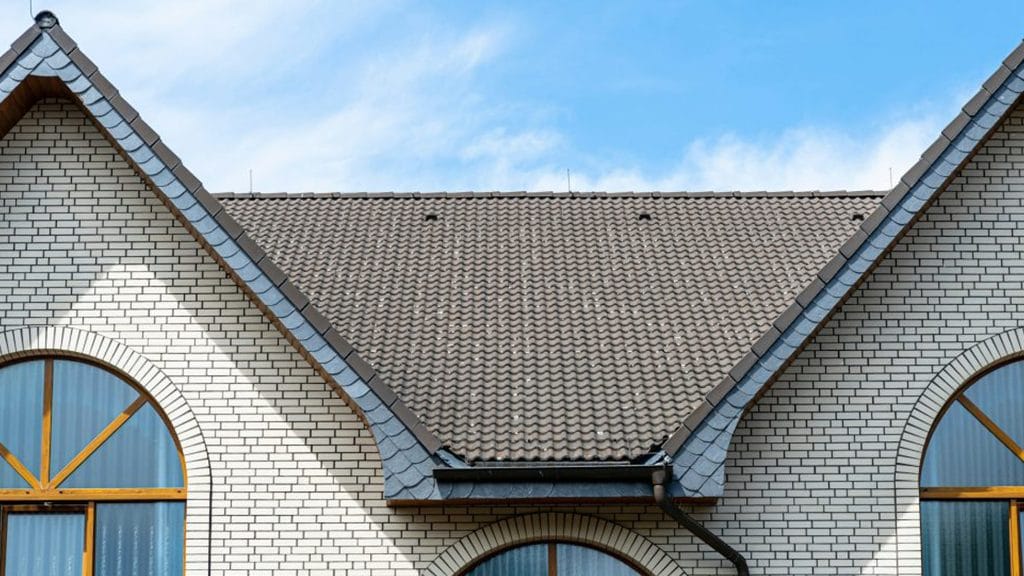
In practice, that means looking beyond who appears first in search results. If you’re in Windsor or nearby, you want a supplier that understands common UK roof coverings such as concrete tiles, clay tiles, slate systems, and modern flat roofing products used on garages, dormers and extensions. You also want someone who can work within UK standards such as BS 5534 where relevant, because poor sourcing usually shows up later as breakages, delays, mismatched batches or short-lived repairs.
A reliable supplier will usually get four things right:
Practical rule: If a supplier can’t clearly explain what they’re selling, where it’s appropriate, and what standard it meets, keep looking.
Around Berkshire, this matters even more because properties vary so much. One road may have newer concrete-tiled homes, the next may include older buildings where appearance and planning sensitivity matter far more. Generic advice rarely covers that properly.
The most common mistake is rushing. Homeowners often pick the first nearby name with decent reviews, then discover later that delivery dates are vague, the materials are substituted, or the quote left out essential items like underlay, fixings, waste removal or matching ridge components.
A better approach is to treat the supplier as part of the project team. If they’re competent, organised and transparent, the whole roofing job tends to run more smoothly.
Google is useful, but it shouldn’t be your only filter. The stronger approach is to build a shortlist from a few different places, then compare what comes up consistently.
Professional roofers often source close to the job. Following that same approach makes sense for homeowners too. Geo-filtering suppliers within a 50-mile radius can reduce project delivery delays by up to 78%, according to CITB. In our part of the country, where weather can close in quickly, faster delivery and easier collections make a real difference.
For a Windsor homeowner, that usually means looking at suppliers serving Windsor, Slough, Maidenhead, Bracknell, Reading and nearby towns rather than chasing a cheaper option much farther away.
Use a mix of these routes:
You don’t need ten names. You need a sensible longlist of a few suppliers or roofing firms with supplier relationships that look credible, local and properly set up.
A good early step is to compare how each one handles first contact. Are they easy to reach? Do they ask sensible questions? Do they seem comfortable discussing product options instead of pushing one stock answer?
If you want a benchmark for how a proper enquiry should work, a free roofing estimate guide is worth reading before you start calling around.
Local knowledge beats a flashy listing. A supplier who knows Berkshire roofs, access issues and common tile profiles is usually more useful than one with a bigger advert budget.
After you have gathered a few names, the simple phase is complete. Now you must distinguish between the companies that appear acceptable online and those that are truly safe to trust with your roof.
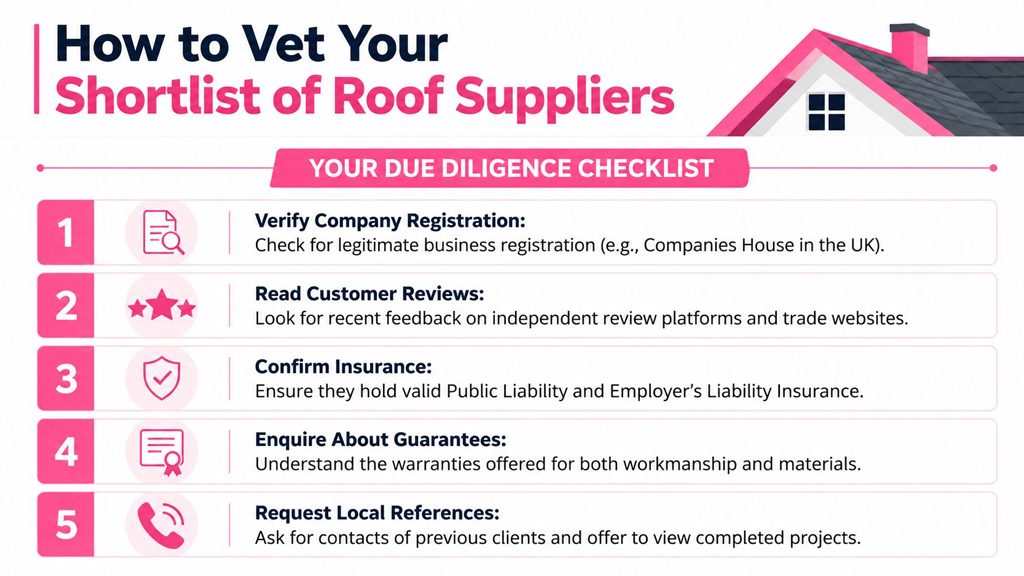
Before you get into product details, confirm the business is real and trading properly.
Those checks won’t tell you everything, but they quickly weed out the flimsy operators.
This is the part many homeowners skip, and it’s where problems start. 62% of roofing failures in the UK stem from non-compliant materials, according to HSE roofing guidance. If the supplier is casual about standards, expect trouble later.
Ask direct questions such as:
If the answers are vague, that’s not a good sign.
A wall of five-star reviews doesn’t prove much on its own. Look for patterns instead.
| What to look for | Why it matters |
|---|---|
| Recent reviews | They show how the firm is performing now |
| Specific details | Comments about delivery, matching materials and communication are more believable than generic praise |
| Negative review responses | Calm, practical replies usually indicate a real business |
| Repeated complaints | Delays, wrong materials or poor aftercare often repeat for a reason |
A supplier doesn’t need perfect reviews. They need a believable track record and sensible responses when something goes wrong.
If you’re arranging a survey before choosing materials or comparing firms, this free roof inspection article helps you understand what should be checked before products are ordered.
A proper quote should tell you what you’re paying for, what materials are included, and what assumptions the price is based on. If it doesn’t, you’re not comparing quotes. You’re comparing guesses.
A decent roofing quote usually breaks out the major cost areas so you can see what’s included and what isn’t.
If one quote is much lower than the others, it often means something has been left out rather than a genuine bargain being offered.
The right covering depends on the roof shape, the property style and the exposure.
For many pitched roofs in Berkshire, concrete tiles are a practical choice because they suit a lot of suburban housing stock and are widely available. For more traditional homes, clay tiles can be a better aesthetic fit. Slate often suits period properties, but matching and detailing need more care. On extensions and garages, the conversation often turns to GRP, EPDM, or other flat roof systems, where drainage and detailing make all the difference.
Here’s a simple comparison:
| Roof type | Often suited to | Main trade-off |
|---|---|---|
| Concrete tile | Many modern and post-war homes | Heavier look than some alternatives |
| Clay tile | Traditional and character properties | Usually higher material cost |
| Slate | Older homes and premium finishes | Needs good detailing and matching |
| GRP or similar flat roof systems | Extensions, dormers, garages | Installation quality is critical |
When reviewing pricing in the South East, concrete tiles typically cost £38 to £55 per square metre as of Q2 2024, based on BCIS data from RICS. Also allow for a 12% to 18% waste factor on complex roof pitches, because awkward cuts, valleys and roof geometry affect ordering.
A short explainer can help when you’re reading estimates and trying to compare options fairly:
What works is choosing a material that fits the house, the pitch and the budget, then making sure every supporting component is specified properly.
What doesn’t work is pricing tiles alone and ignoring the rest of the system. Cheap underlay, unsuitable fixings, mismatched accessories and vague labour allowances are where “cheap” roofs become expensive.
If you want to see how a roofer should present costs and scope, this guide on what to expect when getting a new roof quote is a useful reference point.
A supplier or roofer can sound polished on the phone and still be a poor fit once the job starts. The fastest way to find that out is to ask better questions.
Some questions expose professionalism straight away:
A good firm won’t dodge those. They’ll answer clearly and in plain English.
Ask how problems are handled, not just how the job starts. Most roofing disputes begin after a delay, a substitution, or a snagging issue.
This area has plenty of homes where the right material isn’t the cheapest one on the list. In and around Windsor especially, local planning sensitivity can affect what is appropriate on visible roof slopes.
That’s why it’s worth asking about experience with local constraints. The Royal Borough highlights the importance of conservation areas, and that makes it sensible to ask suppliers and roofers about familiarity with Windsor area conservation requirements before you commit.
Ask things like:
You’re not looking for a sales script. You’re looking for someone who can talk you through likely issues before they happen.
The strongest suppliers and roofing firms are usually straightforward. They’ll explain lead times, likely complications, access issues, batch matching, and any concerns about replacing part of a roof versus doing the work properly in one go. That honesty is usually a better sign than a quick promise.
Once you’ve chosen your supplier and accepted a quote, get everything confirmed in writing. That includes the scope of work, materials, start expectations, payment terms, waste arrangements and any guarantees being offered.
Before work begins, a few simple steps make the job easier:
For larger jobs such as a full re-roof, it’s worth discussing budget before the date is locked in. Some homeowners prefer to phase repairs. Others would rather complete the whole roof in one go and use finance through a regulated provider if that suits their circumstances.
A secure roof usually comes from a simple chain of good decisions. Find a local supplier or roofing firm with proper standards, ask the awkward questions, compare quotes carefully, and don’t let urgency push you into a rushed choice.
If you need practical advice from a local team, All Custom Roofing provides roof repairs, new roofs, flat roofing and maintenance across Windsor and the wider Berkshire area. Finance is available via Phoenix Financial Consultants, subject to status. Contact All Custom Roofing in Windsor for expert roof repairs across Berkshire. We cover Windsor, Reading, Slough, Bracknell, Maidenhead, Woking and surrounding towns.