 (+44) 7900 515 552
07 Apr 2026
 insurance backed guarantee
insurance backed guarantee
insurance backed guarantee
A rain gutter downpipe is the vertical pipe that channels rainwater from your roof gutter down to the ground, guiding it safely away from your house. Just think of it as the most critical exit ramp on your roof’s drainage motorway; without it, water just spills over the edge, causing chaos and potential damage.
It’s all too easy to overlook the humble downpipe, but this simple component is a frontline defender of your property’s structural integrity. Its main job is to take the thousands of litres of rainwater collected by the gutters and direct it safely into a drain or soakaway. When it works, you barely notice it. When it fails, the consequences can be severe and expensive.
For property owners in rainy areas like Berkshire and Surrey, a fully functional drainage system isn’t a luxury—it’s an absolute necessity. A blocked, cracked, or poorly fitted rain gutter downpipe can quickly lead to a whole host of serious issues.
Water that isn’t managed properly will always find the path of least resistance, which often leads directly to your home’s most vulnerable spots. Some of the biggest risks include:
The growing importance of effective rainwater management is being felt across the entire industry. In the UK, the rain gutter market, which includes downpipes, was valued at £393.12 million in 2023 and is projected to hit £590.98 million by 2031. This trend shows just how crucial these systems are for protecting properties against the increasingly heavy rainfall we’re seeing. You can explore more data on the UK rain gutter market to see the full picture.
Understanding these risks is the first step toward being proactive. Making sure your downpipes are correctly installed and well-maintained is a small investment that protects the huge value of your property. For more tips on keeping your system in top condition, feel free to explore our other articles on guttering. For expert advice on protecting your home, don’t hesitate to contact All Custom Roofing in Windsor.
Picking the right material for your rain gutter downpipe is a big decision, one where you have to weigh up looks, budget, and how long you want it to last. In the UK, with our famously damp weather and diverse mix of housing stock, there’s no single “best” choice. The perfect fit really depends on your home’s character and how much maintenance you’re prepared to do.
Whether you’re in a modern new-build in Berkshire or a charming listed property in Windsor, the material you go for makes a real difference to your kerb appeal and how well the system works. Think of it as a vital investment in protecting your home from the elements.
uPVC (Unplasticised Polyvinyl Chloride) is easily the most common sight on modern homes, and for good reason—it’s kind to the wallet. It’s also lightweight, a doddle to install, and won’t ever rust or corrode. The trade-off? Over years of sun exposure, it can get brittle and might crack if it takes a knock, so it’s not as tough as its metal counterparts.
Aluminium is a fantastic all-rounder, hitting that sweet spot between cost and performance. It’s light like uPVC but much more durable, and its powder-coated finish gives it a sleek, modern look that won’t fade or rust for decades. This makes it a smart long-term investment for most homes.
Cast Iron is the traditional, heavyweight champion of downpipes. Nothing beats it for strength and longevity—it’s not uncommon for it to last over 100 years. It’s the required choice for many listed buildings and homes in conservation areas to maintain their historic integrity. The main downsides are the high initial cost and the need for a fresh coat of paint every so often to keep rust at bay.
Steel, either galvanised or stainless, is another tough contender. It offers brilliant durability and a clean, contemporary look, often coming in cheaper than cast iron or even aluminium. Galvanised steel, in particular, is an excellent shield against the relentless British rain.
Choosing the right material isn’t just about what looks good. It’s about investing in a system that can handle everything our seasons throw at it—storms, frost, and sun—year after year, protecting your home’s very foundations from water damage.As you can see, a fully working downpipe is your home’s first line of defence, steering water away to protect the foundation, keep walls dry, and stop your garden from turning into a swamp.
To help you weigh up the options, we’ve put together a simple comparison of the most common downpipe materials used in the UK. This should help you choose the best fit for your home’s style, your budget, and our local weather conditions.
| Material | Average Lifespan | Cost (per metre) | Best For | Maintenance Level |
|---|---|---|---|---|
| uPVC | 10-20 years | Low (£5 – £10) | Budget-conscious projects, modern homes, and DIY installation. | Low |
| Aluminium | 40-50 years | Medium (£15 – £25) | A great balance of durability, modern style, and long-term value. | Very Low |
| Steel | 20-40 years | Medium (£20 – £30) | Contemporary properties needing a strong, corrosion-resistant option. | Low |
| Cast Iron | 100+ years | High (£40 – £60+) | Listed buildings, period properties, and maximum longevity. | Medium (Repainting) |
Each material clearly has its place, from the cost-effective simplicity of uPVC to the unbeatable heritage and strength of cast iron.
So, how do you decide? Your final choice should boil down to a few key things. First, think about your home’s style—a contemporary property looks sharp with the clean lines of aluminium or steel, whereas a Victorian terrace just wouldn’t look right without the classic profile of cast iron.
Next, consider your budget, not just for the installation but for any future upkeep. While uPVC is cheaper upfront, a powder-coated aluminium system could easily save you money over its lifespan by avoiding the need for repairs or early replacement. The location of the downpipe also matters; for connecting to specific drainage points, you can learn more about the role of rain gutter outlets in our detailed article.
For expert advice tailored to your property in Windsor, Surrey, or the surrounding areas, just get in touch with All Custom Roofing. We can help you navigate the options and select the perfect material that delivers on both performance and style.
Learning to spot the early warning signs of a failing downpipe can save you a world of stress and a fair bit of money down the line. Most serious issues start small, so a quick visual check after a heavy downpour can alert you to trouble before it causes lasting damage. Think of it as a quick health check for your home’s drainage system.
These inspections don’t require any specialist tools, just a keen eye for things that look out of place. Most problems leave obvious clues behind, letting you catch them early. By knowing what to look for, you can figure out whether it’s a simple fix or a job that needs a professional touch.
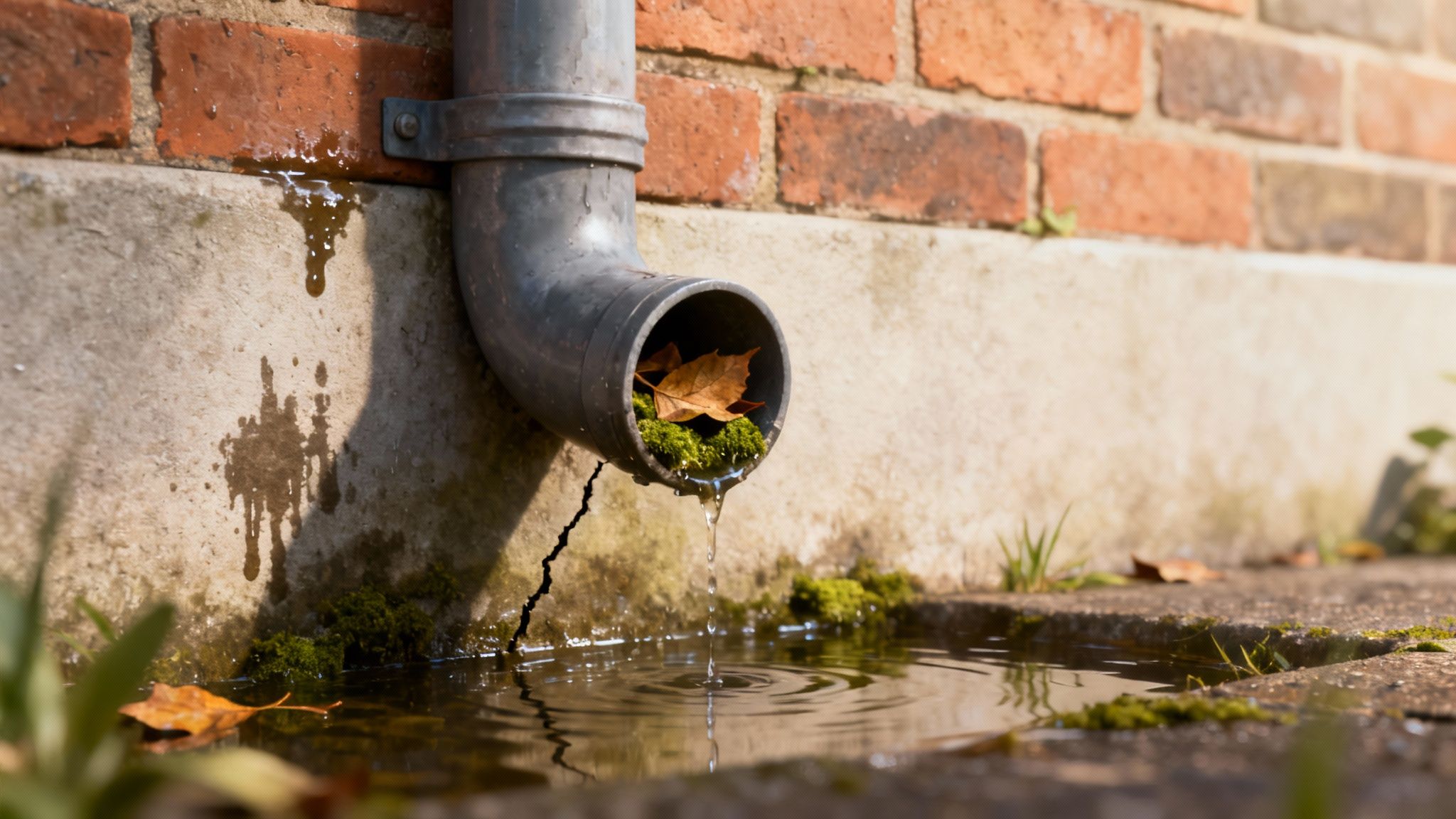
Your home’s exterior will often tell you when something is wrong with your downpipes. After it rains is the perfect time to look for these tell-tale signs:
A healthy downpipe system works silently in the background, channelling water away from your property. When you start to see physical evidence of water on your walls or foundations, it’s a clear signal that this vital defence has been breached.
Beyond just spotting the visual signs, understanding the root cause is key to finding the right solution. Some of the most frequent problems we see in properties across Maidenhead and Surrey are caused by the seasonal challenges of the British climate.
For example, blockages are incredibly common, especially in autumn. Leaves, moss, twigs, and even the odd tennis ball can clog the top of the downpipe, causing water to back up and spill over the gutter’s edge. Similarly, cracks and splits, particularly in older uPVC pipes, can appear after a harsh winter. The freeze-thaw cycle can cause trapped water to expand, putting immense pressure on the pipe and leading to fractures.
Finally, always check the brackets securing the downpipe to the wall. Over time, wind and the sheer weight of water can cause them to become loose. A wobbly or detached downpipe is not only ineffective but also a safety hazard. If you spot any of these issues, it might be time for a professional assessment. Contact All Custom Roofing in Windsor for expert advice on diagnosing and fixing your downpipe problems.
Keeping your guttering and downpipes in good working order is hands-down the best way to protect your home from water damage and make the whole system last longer. Especially with the UK’s notoriously wet and leafy autumns, making sure everything is clear of debris is a job you can’t afford to ignore. The good news is that a bit of basic upkeep is often something you can handle yourself, saving you a bit of time and money.
Think of it as routine housekeeping for the outside of your property. A couple of simple checks and a good clean-out twice a year can stop the build-up that leads to blockages, overflows, and the dreaded damp patches on your walls. It’s a proactive approach that ensures your downpipes are ready to handle whatever the next downpour throws at them.
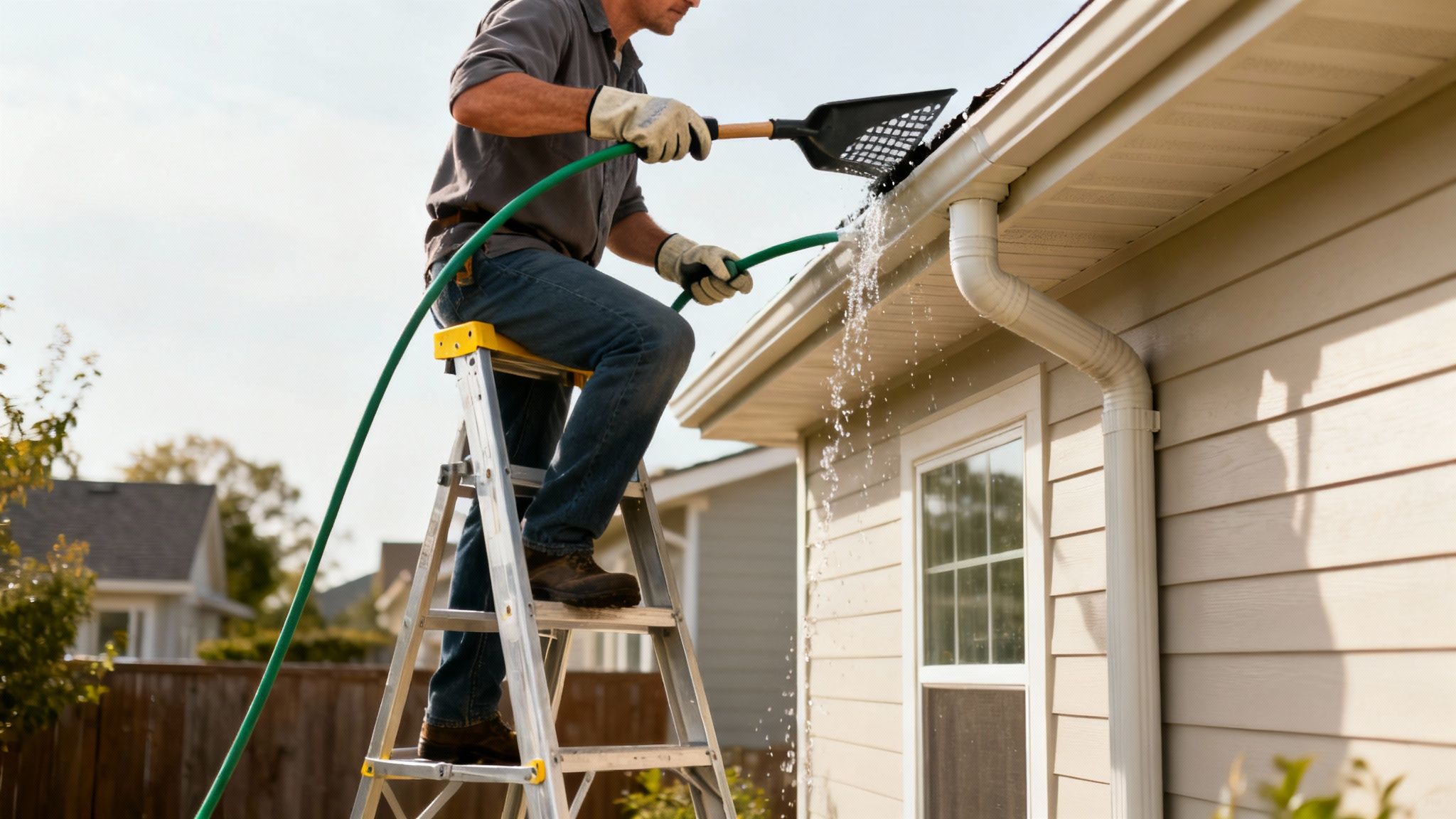
Before you even think about climbing a ladder, safety has to be your number one priority. Working at height is serious business. Make sure your ladder is solid, planted on firm, level ground, and ideally, have someone there to hold it steady for you. Whatever you do, don’t overreach – it’s always better to climb down and move the ladder.
Once you’re safely up there, here’s what to do:
If the water starts backing up or just trickles out, you’ve likely got a more serious blockage that needs a professional touch. Proper maintenance is a key part of holistic roof care, which you can read more about in our guide on essential roofing maintenance tips to prevent costly repairs.
Proactive maintenance isn’t about fixing problems—it’s about stopping them from ever starting. A clean downpipe is a silent guardian, and a few hours of work a year ensures it stays that way.
While a bit of DIY cleaning is fine for routine jobs, some situations really do need an expert. Knowing when a job is too complex or just too risky is the key to protecting yourself and your property.
You should definitely give a professional a ring if you run into any of these issues:
For homeowners and businesses across Berkshire, Surrey, and the surrounding areas, All Custom Roofing in Windsor provides a safe, reliable, and thorough gutter and downpipe cleaning service. We have all the right equipment and expertise to get your system working perfectly, giving you complete peace of mind.
Getting your roof drainage right is about more than just sticking a pipe on the wall and hoping for the best; it’s a bit of a science. The size and positioning of your downpipes are absolutely vital for preventing overflows that can lead to some seriously nasty water damage. A system that’s too small or has pipes too far apart simply won’t stand a chance against a typical British downpour.
Think of it like trying to empty a swimming pool with a garden hose—it’s just a recipe for a soggy disaster. The same idea applies to your roof. The diameter of the downpipe and how many you have must be carefully worked out to handle all the rainwater your specific roof gathers. This is where getting a professional in really pays off.
A well-designed system makes sure water is whisked away efficiently, even when it’s absolutely chucking it down. Several factors come into play here, including the total surface area of your roof and its pitch. A steeper roof, for example, makes water flow much faster, putting more pressure on the gutters and downpipes.
As a general rule of thumb, one downpipe can usually handle about 12 metres of guttering. But honestly, that’s just a starting point.
A correctly sized and placed rain gutter downpipe system is the difference between controlled drainage and uncontrolled damage. Getting this calculation right ensures your property’s foundations are protected, not endangered, by the very system designed to save them.
It can be tempting to have a go yourself or just guess what’s needed, but getting it wrong can be a costly mistake. An undersized system will always overflow during heavy rain, sending water cascading down your walls and creating puddles around your foundations. This is exactly what a good drainage system is meant to stop.
At All Custom Roofing, we don’t do guesswork. We calculate the exact flow rates your property needs based on its unique features. By looking at your roof’s dimensions and local weather patterns, we make sure your downpipes are perfectly sized and placed for optimal performance. Serving homes and businesses across Berkshire, Surrey, and beyond, we design drainage systems that offer robust, reliable protection you can count on. Contact All Custom Roofing in Windsor for expert advice on all your guttering needs.
While routine cleaning is a job most homeowners can tackle, some downpipe problems are a clear signal it’s time to put down the ladder and pick up the phone. Trying to fix complex issues without the right skills or gear can quickly turn a small problem into a costly headache, so knowing when to call in an expert is key.
If you spot something seriously wrong during your inspection, that’s your cue. These aren’t just minor blockages; they’re your home’s way of telling you a professional eye is needed.
Some issues go far beyond a simple clog and need a proper diagnosis and repair from a trained roofer. Don’t hesitate to get a professional opinion if you notice any of these signs:
A professional inspection can uncover hidden problems that aren’t obvious from the ground. At All Custom Roofing, our team knows the ins and outs of UK building regulations and which materials stand up best to the local Berkshire weather. We’ll assess your entire rainwater system, from the roof right down to the drain, to ensure a solid, lasting solution.
Investing in a professional assessment isn’t just about fixing a leak. It’s about protecting the structural integrity of your property and getting the peace of mind that comes from a job done right.
For homeowners and businesses across Windsor and the surrounding areas, All Custom Roofing offers honest, transparent quotes and expert service. Don’t wait for a small drip to become a disaster. Contact us today for a professional inspection.
We hear a lot of the same questions from property owners across the UK about their guttering. Here are some clear, straightforward answers to help you get to grips with what your downpipes need.
For most homes, especially if you’ve got trees looming nearby, a good rule of thumb is to inspect and clear out your gutters and downpipes twice a year. Late autumn is the perfect time, once most of the leaves have fallen, and then again in the spring to get rid of any debris that’s built up over winter.
Of course, if your property is surrounded by a small forest or you’re in an area known for heavy, driving rain, you might need to check them more often. Staying on top of it is the best way to prevent the kinds of blockages that lead to overflows and water damage.
Yes, you often can. This is particularly true for modern uPVC systems, where swapping out a single damaged piece is usually quite simple. The key, however, is making sure the new section is a perfect match in material, size, and profile. If it isn’t, you’ll never get a watertight seal at the joints.
It gets trickier with older systems, like cast iron. Finding an identical piece can be a real challenge. In these cases, it often makes more sense in the long run to replace the entire length. It’s usually a more durable and, surprisingly, a more cost-effective solution when you factor in future repairs.
The best way to know for sure is to get an expert eye on it. A professional assessment will tell you the most practical approach for your specific property, ensuring the repair is reliable and built to last.
The cost to replace a downpipe here in the UK can vary quite a bit. It really depends on a few key things: the material you go for (uPVC is the most affordable, while cast iron or aluminium are more premium choices), the height of your house, and how easy it is for our team to get to the area.
As a rough guide, a standard replacement on a typical two-storey house might start from a couple of hundred pounds. But for a precise, no-obligation quote that’s tailored specifically to your home, the best thing to do is schedule a proper inspection with us.
For expert advice and a free inspection at your property in Windsor or the surrounding areas, get in touch with All Custom Roofing. We believe in transparent pricing and solutions that last. Find out more at https://customroofing.co.uk/.