Getting rid of moss on your roof tiles is not just about making it look better; it is a vital bit of maintenance that protects the whole structure of your roof. For homes across the UK, especially in damp spots like Berkshire, moss acts like a sponge, holding onto moisture that can cause some serious damage if left to its own devices.
Why Moss on Your Roof Is a Problem
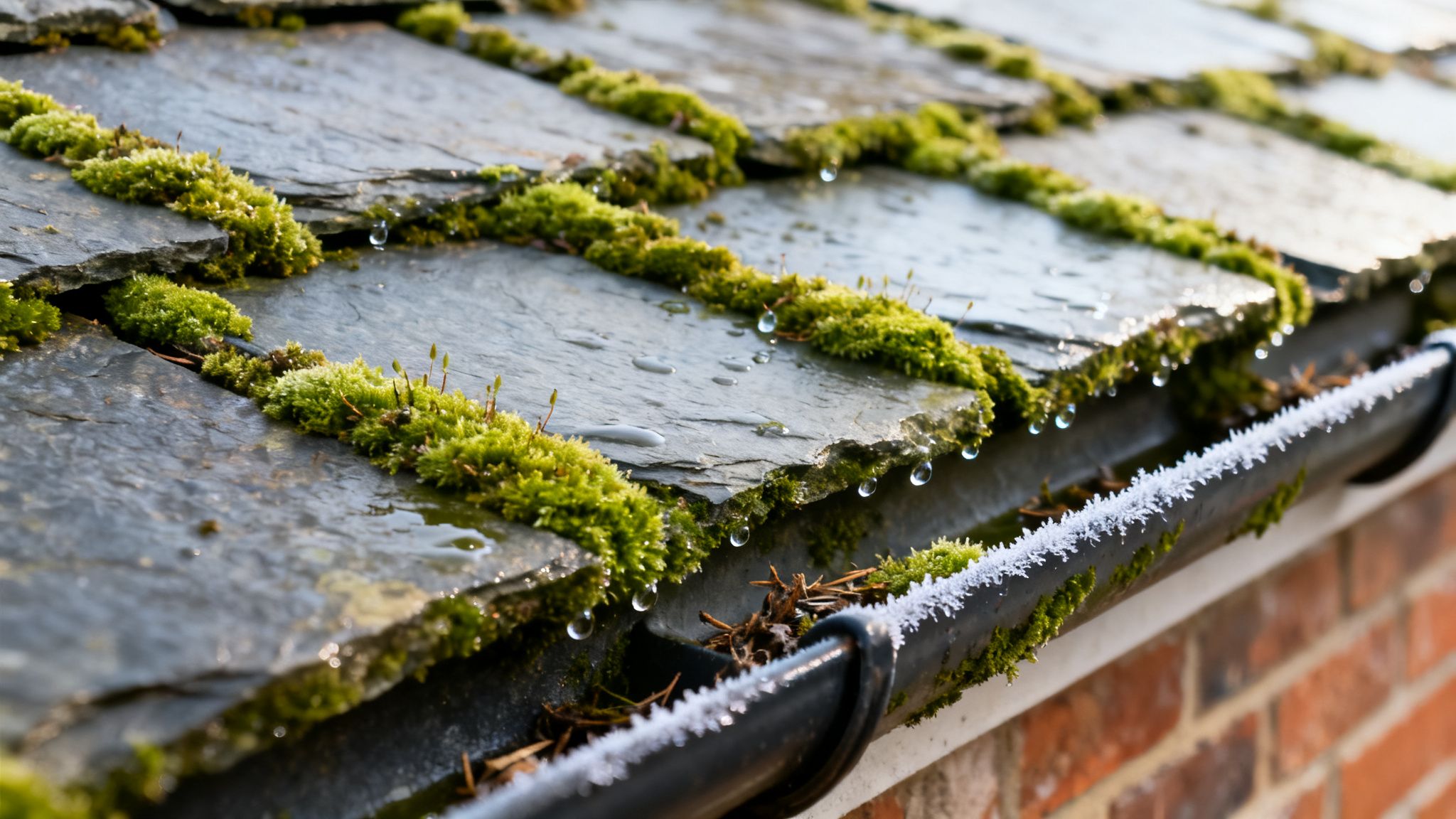
That green blanket spreading across your roof might look quite natural, almost part of the British scenery. But for your property, it is a warning sign. It is important to see moss removal not as a quick cosmetic tidy-up, but as essential preventative care for your home.
Moss loves damp, shady spots, which makes plenty of roofs in Windsor, Slough, and the surrounding areas the perfect place for it to set up shop. Once it gets a foothold, a whole host of problems can follow.
The Threat of Constant Moisture
Moss is brilliant at absorbing and holding water. This means your roof tiles are kept damp long after the rain has stopped, and that constant moisture leads to trouble.
- Tile Degradation: Many roof tiles we see in the UK, like clay and slate, are porous. When they are soaked with water held by moss, they are at the mercy of the freeze-thaw cycle in winter. Water gets into tiny pores, freezes, expands, and creates small cracks. Over time, this process repeats, and eventually, the tiles can fail completely.
- Weight Strain: It might not look like much, but a thick carpet of moss gets surprisingly heavy when it is waterlogged. This puts extra, unnecessary weight and stress on your roof’s structure.
- Organic Breakdown: As moss lives and dies on your roof, it breaks down and produces acids that can gradually eat away at the protective surface of your tiles, shortening their lifespan.
This is just one part of the puzzle. You can read more about other common roofing problems and how to fix them to get a better idea of what your roof is up against all year round.
Gutter Blockages and Structural Damage
Another big headache comes when clumps of moss get dislodged by heavy rain or strong winds. All that debris has only one place to go: straight into your gutters and downpipes.
Once gutters are clogged with moss, they cannot do their job. Water has nowhere to go but over the side, pouring down your exterior walls instead of being channelled away. This overflow is a leading cause of damp getting into the house, damaging brickwork, and even causing problems with your foundations.
Encouraging Pest Infestations
A thick layer of moss creates a damp, sheltered home that is very appealing to insects and other pests. They can burrow underneath it, potentially finding a way into your roof space where they can cause even more damage to the timber battens and roofing felt.
What starts as a small green patch can quickly escalate into some very expensive repairs if you ignore it. Being proactive with moss removal from roof tiles is one of the smartest things you can do to protect your property’s value and structural health. For homeowners in Reading, Bracknell, and Maidenhead, tackling this issue sooner rather than later is always a wise investment.
How to Safely Assess Your Roof from the Ground
Before you even think about getting a ladder out, the most important part of any moss removal job happens with your feet firmly on the ground. A proper ground-level assessment is not just a quick glance; it is your first line of defence and helps you figure out if this is a job you can realistically tackle yourself or if it is time to call in the professionals.
Find a good vantage point, maybe from your garden or even across the road. A pair of binoculars is a game-changer here, letting you get a close-up look without taking any risks. What you’re trying to gauge is the sheer amount of moss. Is it a light, green dusting here and there, or are we talking about thick, heavy clumps that have been there for years?
What’s the Condition of Your Roof?
Next, you need to play detective and identify what your roof tiles are made of and what sort of nick they’re in. Homes across the UK, and especially here in Berkshire, have a mix of materials, and each one needs to be handled differently.
- Concrete or Clay Tiles: These are everywhere. Scan for any obvious cracks, chips, or tiles that look like they have slipped out of position. A thick blanket of moss can easily hide this kind of damage.
- Slate Tiles: While incredibly durable, slate can get brittle over time. Look closely for slates that are broken, completely missing, or delaminating where they look like they’re flaking apart in layers.
Make sure to pay special attention to the areas around chimneys, vents, and the valleys where different roof sections meet. These spots are often the first to show signs of trouble. Spotting existing damage is critical because attempting to clean a compromised roof can turn a small problem into a major leak.
A thorough ground assessment is not just about spotting moss; it is a vital health check for your entire roof. Knowing the condition of your tiles and the pitch of your roof will inform every decision you make about its maintenance and care.
Evaluating Access and Pitch
Finally, have a realistic think about the roof itself. How steep is it? A sharply pitched roof is a world away from a gentle slope and is significantly more dangerous to work on. Anything that looks remotely steep is almost always a job for an experienced roofer with proper safety gear.
Then there is the issue of access. Can you actually get to every part of the roof safely? Obstacles like extensions, conservatories, or even tight access due to neighbouring properties can make it impossible to position a ladder securely. If you cannot reach every corner without overstretching, a DIY attempt is off the table. To get a better idea of what a professional eye looks for, it is worth reading about the benefits of professional roof inspections.
If your initial check reveals widespread moss, any visible tile damage, or tricky access, that is your cue to stop and call for expert help. For homeowners in Windsor, Reading, or Slough, our team at All Custom Roofing can provide a safe, thorough inspection and a clear quote to get the job done right.
Gathering the Right Tools for Safe Moss Removal
Once you have had a good look at your roof from the ground and decided it is a job you can handle yourself, the next step is getting your kit together. Trying to remove moss from roof tiles without the proper equipment is not just a waste of time; it is incredibly dangerous. Getting this part right is absolutely crucial for protecting both you and your home.
I find it helps to think of your toolkit in three simple categories: your personal safety gear, the actual tools for the job, and finally, the supplies you’ll need for a thorough cleanup and aftercare. Putting safety first from the get-go makes the entire process run smoother and massively cuts down the risk.
Essential Safety Gear First
Working at a height is easily one of the most hazardous jobs you can tackle around the house. Never, ever underestimate the risks, even if the task seems straightforward. Before you even think about setting foot on a ladder, make sure you have this gear ready.
- A Sturdy, Well-Placed Ladder: Your ladder needs to be in top-notch condition and long enough to reach at least one metre above the gutter line. Just as importantly, it must be set up on firm, level ground and properly secured so it cannot slip.
- Safety Harness: If you are working on a pitched roof, a safety harness connected to a solid anchor point is non-negotiable. It is your last line of defence if you slip.
- Non-Slip Footwear: A pair of sturdy boots with excellent grip is essential. Roof tiles can be surprisingly slippery, especially when they are damp or covered in loose bits of moss and dirt.
Choosing the Right Removal Tools
The whole point is to get the moss off without causing any damage to the tiles themselves. That means aggressive methods are completely off the table, and the right manual tools are your best friend.
The most common mistake we see is homeowners reaching straight for a high-pressure washer. For most UK roofs, this is a terrible idea. The intense jet can easily strip the protective granular surface from your tiles, blast water underneath the roofing felt, and even crack older clay or slate tiles.
Instead, your toolkit should be focused on gentle but effective removal:
- Long-handled, stiff-bristle brushes: These are great because they let you scrub away moss from a more stable position, meaning you do not have to move around on the roof as much.
- Plastic or nylon scrapers: Never use metal tools. Anything metal will scratch, chip, and cause permanent damage to your roof tiles. A simple plastic scraper or trowel is perfect for lifting those really stubborn clumps of moss.
Even if you are only planning a gentle rinse-down, it is worth understanding the equipment. Getting familiar with choosing the right pressure washer can help you find a model with adjustable settings that are suitable for a low-pressure rinse, not a destructive blast.
DIY Moss Removal Methods Compared
To help you decide which approach is best for your situation, here is a quick comparison of the most common DIY methods. Each has its place, but the risks and suitability vary a lot depending on your roof type and confidence level.
| Method | Best For | Pros | Cons / Risks |
|---|---|---|---|
| Manual Scraping & Brushing | Most roof types, especially older or delicate tiles (clay, slate). | Low risk of damaging tiles; precise control; affordable. | Labour-intensive; slow; can be physically demanding. |
| Low-Pressure Wash | Modern, durable tiles (e.g., concrete) in good condition. | Faster than manual methods for rinsing debris after scraping. | Risk of forcing water under tiles if pressure is too high; can strip protective coatings. |
| Biocide/Chemical Treatment | All roof types (after manual removal) for long-term prevention. | Kills remaining spores; prevents regrowth for a longer period. | Requires careful application; some chemicals can be harmful to plants or pets. |
Ultimately, for most DIY projects, a combination of manual scraping followed by a gentle rinse and a biocide treatment offers the safest and most effective result. It protects your roof while ensuring the moss does not come straight back.
Cleanup and Treatment Supplies
Once the bulk of the moss is off the roof, you will need a few more bits and pieces to finish the job properly.
A standard garden hose with a low-pressure spray nozzle is perfect for washing away the last of the fine debris. You will also want to lay down large bags or tarpaulins on the ground below to catch the falling moss. This saves you a massive cleanup job later and stops it from clogging up your drains and making a mess of the garden.
Finally, think about applying a professional-grade biocide treatment. You spray this on after cleaning, and it works to kill off any lingering spores, stopping the moss from making a swift return. For anyone in Berkshire dealing with our damp climate, this final step is the key to getting a result that actually lasts.
A Practical Guide to Removing Moss Manually
When it comes to getting moss off your roof tiles without causing damage, the manual approach is often the safest and most reliable. It definitely takes a bit of elbow grease, but doing it by hand gives you total control, ensuring you do not accidentally harm the very surface you are trying to protect. This method is all about patience and the right technique.
First things first: ladder safety is non-negotiable. Make sure your ladder is planted on solid, stable ground at the correct angle. It should extend a good distance above the gutter line to give you a safe handhold when you transition. Always keep three points of contact when climbing, and whatever you do, do not overreach. It is far better to climb down and shift the ladder than to risk a serious fall. I cannot stress this enough – pick a dry, calm day for the job. Damp tiles and gusty winds are a recipe for disaster.
This image shows the straightforward, three-stage workflow for a safe and effective moss removal project.
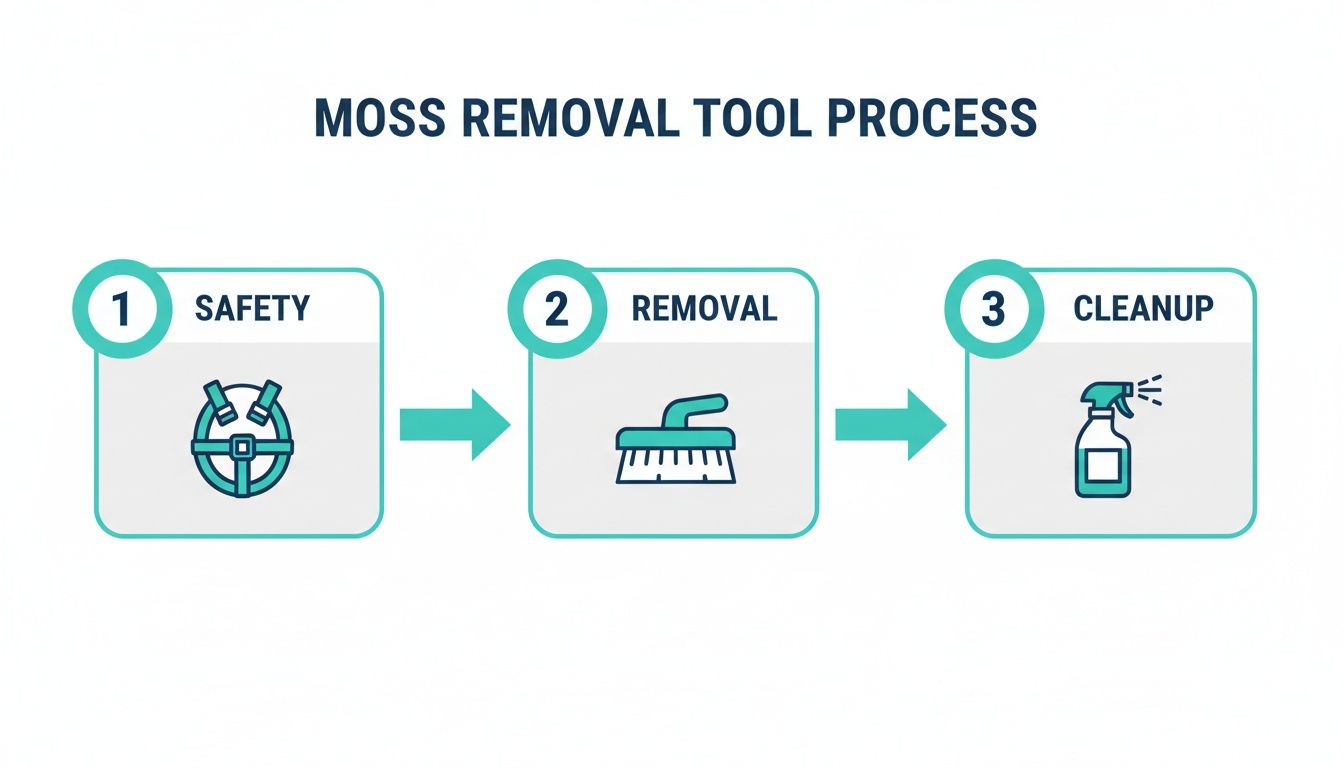
As you can see, the job is not over once the moss is scraped away. The final clean-up and treatment are just as vital for a long-lasting result.
The Correct Working Method
Here is the golden rule of manual moss removal: always work from the ridge downwards. Start at the very top of your roof and scrape or brush the moss down towards the gutters. If you try working your way up, you are almost guaranteed to lift the tiles and push debris into the gaps. That can easily compromise your roof’s weatherproofing and lead to some nasty leaks.
Think of your roof tiles like the overlapping scales on a fish. Brushing upwards goes against the grain, lifting those scales and making them vulnerable. Working downwards keeps everything lying flat and secure, exactly how it was designed to be.
Using a long-handled brush or a telescopic pole fitted with a scraper attachment is a massive help. It allows you to reach a much larger area from one stable ladder position, so you do not have to constantly move around on the roof itself. This hugely reduces the risk of slipping or cracking tiles underfoot.
Managing Debris Effectively
You will be amazed at how much moss and other gunk you dislodge. It is crucial to manage this mess properly to avoid creating a new problem: blocked gutters. Before you even start scraping, lay down some tarpaulins or big plastic sheets on the ground around the house to catch the worst of it.
For the bits that inevitably end up in the gutters, you have got a couple of options:
- Clean as you go: Pause your work periodically to clear out sections of the gutter as they start to fill up.
- Do a final clean-up: Finish all the scraping first, then dedicate time at the end to thoroughly clear out all your gutters and downpipes.
Leaving your gutters clogged is a common mistake we see homeowners in Windsor and Maidenhead make. Blocked gutters force rainwater to overflow, which can lead to damp problems in your walls and even cause damage to your home’s foundations over time. A thorough gutter clear-out is an absolutely essential final step.
If you get up there, assess your roof, and feel the pitch is too steep or the job just feels too risky, please do not push it. It is always better to call in the professionals. Get in touch with All Custom Roofing for an expert assessment and a no-obligation quote across Berkshire and the surrounding areas.
Preventing Moss from Coming Back
Getting all that moss off your roof feels great, but the job is not quite finished. Thanks to the damp British climate, especially here in Berkshire, moss will always be looking for a way back. To make sure all your hard work was not for nothing, long-term prevention is the real key.
This is where a quality biocide treatment makes all the difference. Think of it as the crucial final step that makes your roof an unwelcome place for any new growth.
Applying Biocide Treatments Correctly
Once your roof has been scraped clean and rinsed down, a biocide application is your best line of defence against the swift return of moss, algae, and lichen. These treatments are specially formulated to deal with any microscopic spores left behind that you cannot even see.
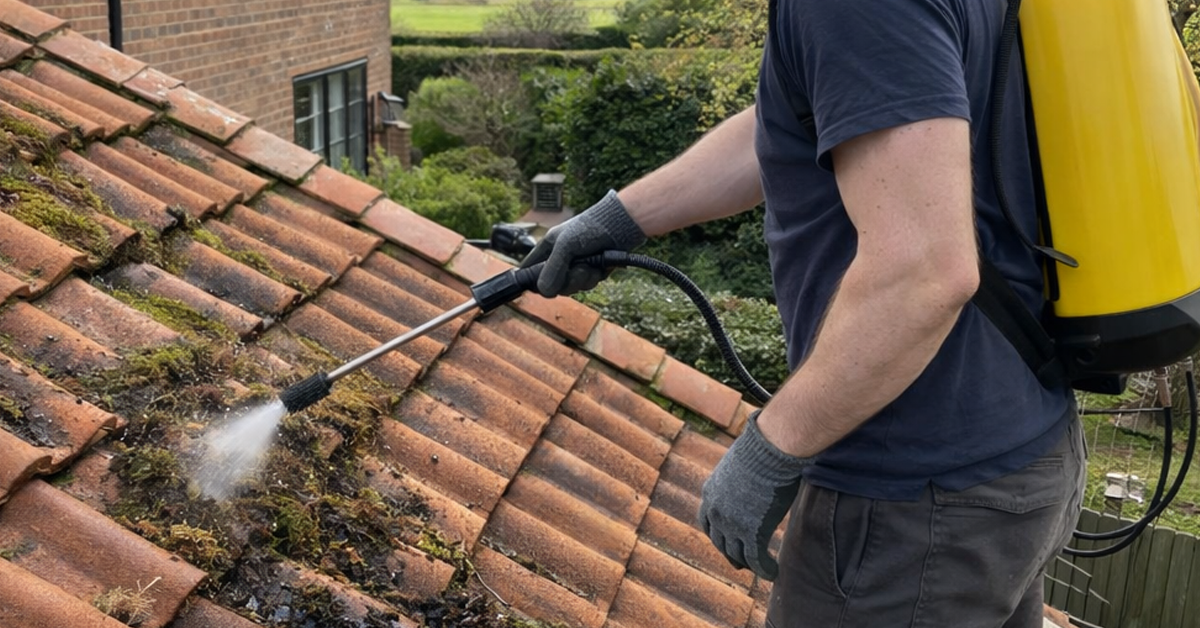
For the treatment to be effective, it needs to be applied evenly across the entire roof. We typically use a low-pressure garden sprayer or a professional backpack sprayer for this. The trick is to saturate the tiles properly without causing a lot of run-off into your gutters and drains.
The point of a biocide is not to blast anything away; it is to leave a protective, residual layer that works its magic over several weeks. It gently kills off any lingering organic life and continues protecting the tiles for months, and often years, to come.
Using a professional-grade product is a must, as is applying it on a dry day when no rain is forecast. This gives the treatment plenty of time to soak in and bond with the surface of the tiles. Adding a biocide treatment might cost an extra £100–£200, but it prevents regrowth for 2–5 years, giving you real long-term value by stretching the time between professional cleans.
Given the local climate and surrounding trees, homeowners in places like Windsor have to view moss removal as part of their ongoing property maintenance. You can learn more about the different factors that influence roof cleaning costs in the UK.
Simple Maintenance Habits for Prevention
Beyond the chemical treatments, a few good habits can go a long way in keeping your roof clear. Moss loves damp, shaded spots, so the goal is to get as much sunlight and air circulation up there as possible.
- Trim Overhanging Trees: If you have large branches hanging over your roof, they are doing two things: blocking sunlight and dropping leaves. Those leaves trap moisture and create the perfect breeding ground for moss. Keeping them trimmed back is one of the single most effective things you can do.
- Regular Gutter Cleaning: Make sure your gutters are cleared out at least twice a year, especially after autumn. When gutters are clear, water drains away as it should, preventing the damp conditions along the edge of your roof that moss just loves.
For homeowners in Maidenhead, and across the region, combining a post-cleaning biocide treatment with these simple habits is the best strategy for keeping moss at bay. Contact All Custom Roofing in Windsor for a professional consultation if you need expert advice on the right treatment for your type of roof.
When You Should Call a Professional Roofer
While there is a certain satisfaction in tackling a bit of DIY moss removal, some jobs are best left to the professionals. Knowing when to put down the tools and pick up the phone is the smartest decision any homeowner can make, especially when working at height is involved.
Sometimes, the initial look from ground level is all you need to spot the red flags. If your roof has a particularly steep pitch, for instance, the risk of a fall skyrockets. It is just not worth it. Likewise, if you can see widespread damage like cracked, slipped, or missing tiles lurking beneath the moss, walking on it could easily turn a small issue into a major leak.
The Value of Professional Expertise
When you bring in a professional roofing company, you are getting a lot more than just someone with a long ladder. We arrive with specialist safety gear, years of training, and the right insurance to work safely at height. That alone removes all the risk from your shoulders.
But just as importantly, an experienced eye can spot underlying problems a DIYer would almost certainly miss. What might look like a simple patch of green could be hiding failing flashing around your chimney or deteriorating mortar on your ridge tiles. We catch these things early and sort them properly, saving you a world of trouble down the line. To get the full picture of what we bring to the table, have a read of our guide on the benefits of professional roof cleaning services.
If the job feels too big or you would just rather not deal with it, consider looking into specialist treatments. Some companies offer professional roof spraying services that not only remove moss but also help prevent its return.
A Smart Investment in Your Property
Looking at it from a purely financial perspective, hiring a pro makes a lot of sense. A thorough, professional clean can prevent an estimated £5,000 or more in potential roof repairs that stem directly from untreated moss damage. When you weigh up the costs, it is clear why regular maintenance is a no-brainer for savvy property owners.
Ultimately, if you have any doubt whatsoever about your ability to get the job done safely and effectively, calling in a professional is always the right call.
For a safe, efficient, and thorough moss removal from roof tiles service, get in touch with All Custom Roofing. We offer no-obligation quotes to homeowners across Windsor, Reading, Slough, Bracknell, Maidenhead, and all the surrounding towns in Berkshire. Let our experienced team give your roof the protection it needs.
Your Roof Moss Questions Answered
To finish up, let us tackle a few of the most common questions we get from homeowners in Berkshire about dealing with moss. Hopefully, this will clear up any lingering doubts and help you decide on the best course of action for your roof.
How Often Should I Get Moss Removed From My Roof?
For most properties here in the UK, a professional moss removal followed by a biocide treatment every 5 to 10 years is a solid benchmark. But that is just a rule of thumb – your specific situation really dictates the schedule.
If your home is tucked away in a damp, shady spot, surrounded by trees, or near woodland, you will probably find yourself on the shorter end of that timeframe. A quick look up at the roof from the ground each spring is a great habit to get into. It helps you catch any new green patches before they properly take hold.
Is It Okay to Use a Pressure Washer on My Roof Tiles?
We get asked this all the time, and our answer is always a firm no. We strongly advise against ever using a high-pressure washer to clean roof tiles. That powerful jet of water is simply far too aggressive for the majority of roofing materials we see in the UK.
Pressure washing can easily crack older clay or slate tiles, strip the protective granular finish from modern concrete tiles, and force water up underneath the overlaps. This can saturate the roofing felt and timber battens, leading to serious leaks and rot.
A much safer and more effective approach is to manually scrape the bulk of the moss off, followed by a gentle, low-pressure rinse with a standard garden hose and a proper biocide treatment to finish the job.
Will Removing Moss Actually Damage My Roof?
When the job is done correctly by a skilled hand using the right tools, removing moss is one of the best things you can do to protect your roof’s health. The whole secret is to avoid aggressive, heavy-handed techniques.
Using soft-bristle brushes and plastic scrapers instead of anything metal is absolutely crucial to prevent scratching or chipping the tiles. It is also vital to work from the ridge down towards the gutters, which stops you from accidentally lifting tiles and letting water in. If you have any doubts about the condition of your roof, it is always smartest to get a professional opinion first.
If you are not sure about tackling this job yourself or just want a professional assessment of your roof’s condition, the team at All Custom Roofing is here to help. We provide expert moss removal services across Windsor, Maidenhead, Reading, and the wider Berkshire area. Visit us at https://customroofing.co.uk to arrange a free, no-obligation quote.