
Think of a proactive flat roof inspection as your first line of defence. It is genuinely the single best way to catch minor issues before they spiral into major, expensive headaches. For property owners across Berkshire, a regular check-up is essential protection against the UK’s often unforgiving weather, helping prevent leaks and ultimately extending the life of your roof.
Why Regular Inspections Are Your Best Defence
Your flat roof is out there battling the elements 24/7. We see it all across the Thames Valley, from persistent, drizzling rain to the intense summer sun and sharp winter frosts. This constant cycle puts incredible stress on any roofing material.
Unlike pitched roofs, which are designed to shed water in a hurry, flat roofs are far more prone to standing water, a problem we in the trade call ‘ponding’. It might not look like much, but that lingering water puts sustained pressure on the roof membrane and, crucially, its seals.
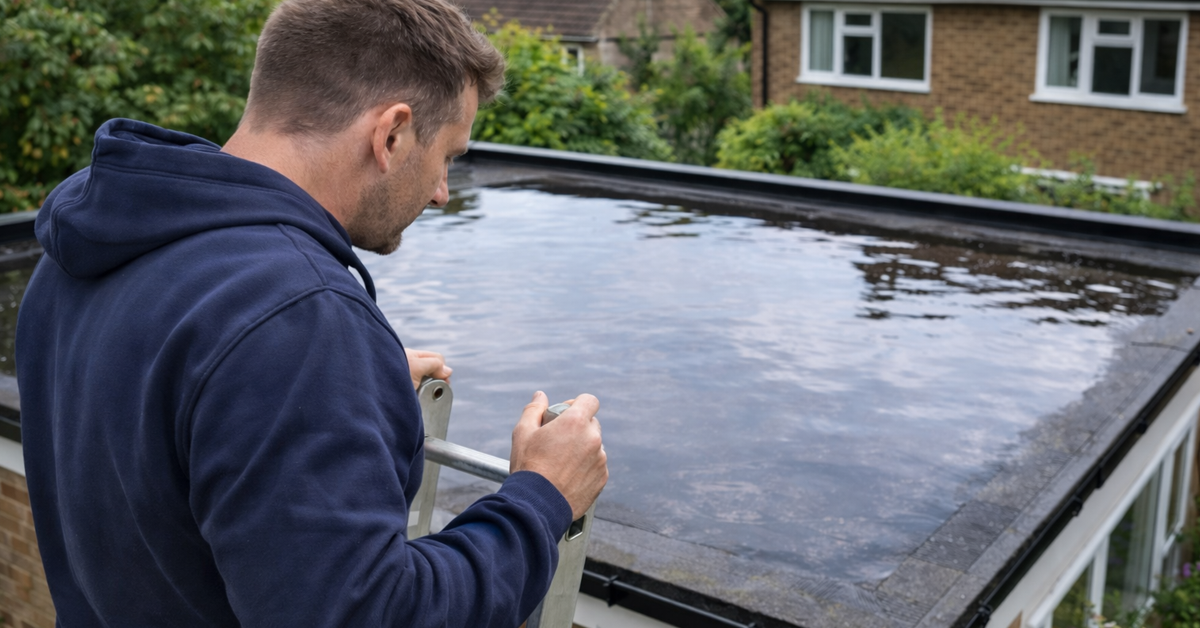
This constant stress is the root cause of several common problems that a routine inspection will spot straight away:
- Membrane Damage: Tiny cracks, blisters, or even punctures can start to appear over time, caused by weather exposure and the simple expansion and contraction from temperature changes.
- Blocked Drainage: It is amazing how quickly leaves, moss, and other bits of debris can clog up drainage outlets. When this happens, water has nowhere to go, causing it to back up and add excessive weight to the roof structure.
- Failing Seals: The points where your roof meets a wall, a skylight, or a vent are always the most vulnerable spots. A good inspection focuses heavily on these flashings and joints, looking for any signs of wear and tear.
The Value of Prevention
Spotting these issues early is what saves you from the nightmare of emergency repairs. A small tear in the roofing felt is a straightforward, simple fix for a professional. But leave it unnoticed, and you’re letting water seep into the roof deck, ruin your insulation, and eventually leave damp, ugly patches on your ceiling.
What begins as a minor external issue can very quickly escalate into significant internal and structural damage.
A preventative flat roof inspection is not really an expense at all. It is a crucial investment in protecting your property’s value and giving you complete peace of mind. It is the difference between planned, affordable maintenance and a disruptive, costly emergency call-out.
This table provides a quick overview of what a professional, or a confident DIYer, should be looking for.
Flat Roof Inspection Checklist at a Glance
| Inspection Area | What to Look For | Urgency Level |
|---|---|---|
| Roof Surface | Cracks, blisters, punctures, torn membrane | High – Immediate repair needed |
| Drainage Systems | Clogged outlets, debris, standing water (ponding) | Medium – Clean as soon as possible |
| Seals & Flashings | Gaps, peeling, deterioration around vents/skylights | High – Vulnerable point for leaks |
| Gutters & Downpipes | Blockages, sagging, loose fittings | Medium – Prevents water overflow |
| Interior Ceilings | Water stains, damp patches, mould growth | High – Indicates an active leak |
| Structural Integrity | Sagging or soft spots on the roof deck | High – Requires professional assessment |
This checklist is a great starting point for keeping your flat roof in top condition.
Investing in prevention is also incredibly cost-effective. Here in the UK, a professional flat roof inspection is a smart move, especially in areas like Berkshire where the weather can be so unpredictable. On average, a professional flat roof inspection costs just £150, making it significantly more affordable than surveys for pitched roofs, which can easily climb towards £500.
For a relatively small outlay, you get a clear, expert assessment of your roof’s health, which helps you budget for any future work and avoid those nasty financial shocks.
If you are in Berkshire, get in touch with All Custom Roofing in Windsor for an expert inspection you can trust.
Staying Safe and Getting the Right Tools
Before you even think about getting up that ladder, let’s talk about prep. When it comes to inspecting a flat roof, your safety is paramount, and trying to rush things without the right gear or a bit of common sense is a recipe for disaster.
The first rule is just basic stuff, but you would be surprised how often it is ignored: always check the weather. Trying to do an inspection when it is wet, icy, or gusting wind, which we get plenty of across Berkshire, is asking for trouble. A slippery roof massively increases your risk of a fall, so just wait for a calm, dry day. It is not worth it.
Your Essential Toolkit
You do not need a van packed with specialist equipment for a simple visual inspection. In fact, a few key items will let you do a thorough job from the safety of the ground or a well-placed ladder.
- A Sturdy Ladder: First things first, make sure your ladder is in good nick. Place it on solid, level ground and have it extend at least three rungs above the roofline. That gives you something to hold onto when you’re getting on and off.
- Binoculars: Seriously, a good pair of binoculars is your best friend here. You can get a fantastic close-up look at the roof surface, flashings, and seams without ever setting foot on the roof itself.
- Torch: A bright torch is brilliant for peering into those dark corners, checking under overlaps, and getting a proper look inside gutters and downpipes.
- Camera or Smartphone: This is non-negotiable. Document everything you see. Take clear, well-lit photos of any cracks, blisters, pooling water, or anything else that looks a bit off. These pictures will be invaluable if you need to bring in a professional.
The Golden Rule of Safety
Never work alone. It is as simple as that. Always have someone on the ground who knows you’re up there. They can keep the ladder steady, pass you a tool if you need it, and, most importantly, be there to help if something goes wrong.
A DIY flat roof inspection should really just be about visual checks from a safe vantage point. You should never walk on a flat roof unless you are absolutely certain it is built to take foot traffic. You could cause serious damage or, far worse, end up falling through.
Professionals often rely on more advanced gear to spot issues that are not obvious to the naked eye. To get an idea of how the pros identify hidden damp, it is worth learning about the best moisture meters for home inspectors. While a good visual check is a great starting point, tools like these are what help us find problems before they become catastrophes.
What to Look For on Your Flat Roof Exterior
With all your safety checks done, it is time to get a good look at the roof. This is where you will really get a feel for its condition and spot the early warning signs that the classic British weather has been leaving its mark. The trick is to be methodical, breaking the roof down into zones and checking each part carefully.
Your first port of call should always be the main surface of the roof, what we in the trade call the membrane. This is the waterproof skin of your roof, and its health is absolutely vital. Whether you have got traditional felt, a modern EPDM rubber sheet, or a sleek GRP fibreglass finish, you are on the hunt for any damage that could let water in.
Before you start, just take a moment to run through these simple safety steps.

It is just a quick reminder that a good inspection starts before you even set foot on the ladder: check the forecast, get your ladder setup right, and never, ever work alone.
Examining the Roof Membrane
Slowly and carefully scan the entire surface for any tell-tale signs of trouble. I find it helps to mentally divide the roof into a grid and then inspect each square one by one. You are less likely to miss something that way.
Keep a sharp eye out for these common culprits:
- Blisters and Bubbles: These look like raised pockets on the surface, almost like the roof has a rash. They are usually caused by trapped air or moisture getting under the membrane. While a single small blister might not be an immediate panic, lots of them, or any large ones, are a major red flag that the membrane is failing.
- Cracks, Splits, or Punctures: Even a tiny crack can let in a surprising amount of water over time. Look closely around areas where people might have walked or where something could have been dropped. A puncture from a storm-dislodged satellite dish or a heavy fallen branch needs dealing with, and fast.
- Worn or Exposed Surfaces: This is especially common on older felt roofs. You might see the gritty top layer has worn away, exposing the fabric-like material underneath. This is a sure sign the felt is getting old, brittle, and losing its waterproof qualities.
Checking Seams and Flashings
If a flat roof is going to leak, it is most likely to happen where different bits of material meet. These are the weak spots. We are talking about the seams where rolls of felt or rubber join together, and the flashings that seal the edges of the roof against walls, pipes, skylights, and chimneys.
Gently prod and look at these areas. Are there any signs of peeling? Can you see cracks, or gaps where the sealant has shrunk and pulled away from the wall? On a typical terraced house in Slough or Bracknell, the lead or felt flashing against a neighbour’s wall is one of the most common failure points we see.
A crucial thing to remember is that a leak rarely shows up directly below the actual hole. Water can get under the membrane and travel quite a distance before it finds a weak spot in your ceiling to drip through. That is why checking every inch of the seams and flashings is so important.
Assessing Your Roof’s Drainage
A flat roof is not actually flat. It has a very slight, carefully designed slope to guide rainwater towards the drains. When that system gets blocked, you get ponding water, your roof’s worst enemy.
A few small puddles straight after a rain shower are perfectly normal. But if you have still got standing water on your roof 48 hours after the rain has stopped, you have got a drainage problem. All that extra weight puts an incredible strain on the roof structure and dramatically speeds up how quickly the membrane wears out.
Have a good look at your drainage outlets, scuppers, and the tops of your downpipes. They are often clogged with leaves, moss, and general gunk. While you are there, glance at the gutters around the roof edge. Are they full of debris? Sagging? If gutters get blocked, water will just back up and spill over, often finding a way under the edge of your roof covering. A bit of regular cleaning goes a long way, as we cover in our guide to extending your roof’s lifespan.
Finding Hidden Problems Inside Your Home
A proper flat roof inspection is not just about climbing a ladder and looking at the surface. The first clues that a leak has started its slow, destructive journey often show up inside your home, right under your nose.
Spotting these signs early is absolutely critical. Water has a nasty habit of travelling a long way from where it first gets in before it finally decides to reveal itself. That small, damp patch on your ceiling might look like a minor cosmetic issue, but it is often a warning sign of a much bigger problem brewing overhead.
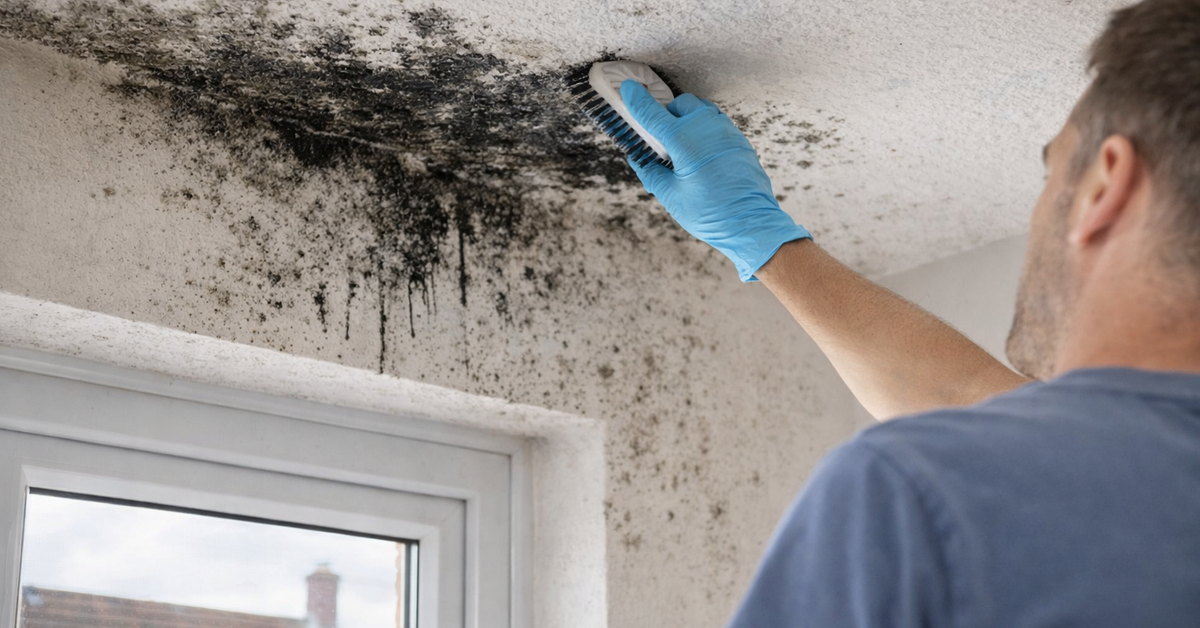
Where to Look and What to Find
Start your interior check on the top floor. You need to be methodical here. Slowly scan the entire ceiling in each room, paying extra attention to the corners where the ceiling meets the walls, this is a favourite gathering spot for moisture.
Here is a quick checklist of the most common red flags:
- Damp Patches and Staining: Be on the lookout for discoloured patches. They often appear as brownish or yellowish rings on your ceiling and are the classic calling card of a persistent, slow leak.
- Peeling or Bubbling Paint: If the paint or wallpaper on your ceiling or high up on the walls is starting to bubble, blister, or peel away, that is a dead giveaway that moisture is trapped behind it.
- Signs of Mould or Mildew: Any sign of black, green, or grey spots, especially in corners, is a serious problem. Mould only grows where there is a consistent source of moisture, making it a tell-tale sign of an active leak.
- A Musty Smell: Sometimes you can smell trouble before you see it. A persistent damp, musty odour in an upstairs room that you just cannot trace to anything else often points to hidden moisture lurking in the ceiling cavity.
A Pro Tip for Spotting Subtle Signs
Some water stains are incredibly faint and can be almost invisible in normal daylight. Here is a trick we use on professional surveys: turn off the main lights and grab a powerful torch.
Shine the torch beam at a very shallow angle across the ceiling. This technique, known as ‘raking light’, is brilliant for highlighting subtle changes in texture. It will immediately show up any slight sagging, bubbling, or the faint outline of a dried water stain you would otherwise miss.
Catching these issues is vital. Even a small, seemingly insignificant stain proves the waterproof membrane on your roof has been breached somewhere. It is the direct link between an interior symptom and an exterior failure, reinforcing why even the smallest signs inside your Berkshire property warrant an immediate, thorough flat roof inspection outside.
If you spot any of these warning signs, do not put it off. Contact All Custom Roofing for a professional assessment. We cover Windsor, Reading, Slough, Bracknell, Maidenhead, and surrounding towns and can quickly pinpoint the source of the leak to prevent any further damage to your home.
After the Inspection: When to Call a Professional
So, you have done your flat roof inspection. What now? You have got a much clearer picture of its condition, and the next step is deciding what to do with what you have found. This is where it gets critical.
While some minor upkeep is perfectly fine for a confident DIYer, many issues really do need the skill, tools, and experience of a professional roofer. Trying to tackle a complex repair yourself can easily make things worse.
Knowing the difference between a simple clean-up and a genuine repair is key to protecting your property. Scooping a handful of leaves out of a gutter is one thing. Attempting to patch a blistered felt membrane without the right knowledge, however, could turn a small flaw into a major leak. That is a mistake that will cost you far more in the long run.
DIY Fix vs Professional Repair
Deciding whether to tackle a flat roof issue yourself or call in a professional can be tricky. This table breaks down common scenarios to help you make a safe and sensible choice. While clearing debris is straightforward, anything involving the roof’s waterproofing needs an expert touch.
| Flat Roof Issue | Safe for DIY? | When to Call All Custom Roofing |
|---|---|---|
| Leaves & twigs in gutters | Yes. Safe to clear from a sturdy ladder. | If gutters are blocked solid, damaged, or pulling away from the roofline. |
| Visible moss on the surface | Yes. Can be gently brushed away. | If moss growth is extensive and has started to lift the membrane edges. |
| Small ponding after rain | Monitor. Check if it evaporates in 48 hours. | If water is still sitting there 48 hours after it stops raining. |
| Cracked or peeling sealant | No. Requires specialist materials and prep. | Immediately. This is a primary cause of leaks around vents and skylights. |
| Blisters or bubbles | No. Indicates trapped moisture or delamination. | As soon as you spot them. A professional needs to assess the cause. |
| Tears or punctures | No. A patch repair needs to be done correctly. | Immediately. This is an open door for water to get into your home’s structure. |
Ultimately, a professional assessment is the only way to be certain you’re addressing the root cause of the problem, not just patching over a symptom.
When to Call Us: The Red Flags
If your inspection turns up any of the following, it is time to put down the tools and pick up the phone. Attempting to fix these without proper training can compromise your entire roofing system and lead to serious water damage.
-
Blistering or Cracking: These are clear signs the bond between roofing layers is failing or the material has become brittle with age. A professional will know whether a simple patch is enough or if a larger section needs replacing to prevent it from spreading.
-
Ponding Water: If water is still sitting on your roof 48 hours after rain, it is not going anywhere. This points to a significant drainage problem or a structural issue that needs an expert eye to diagnose properly.
-
Damaged Flashing: The seals around vents, skylights, and walls are your roof’s first line of defence. If flashing is peeling, cracked, or has come loose, it is a direct pathway for water to get into your home. This needs urgent, expert attention.
-
Membrane Shrinkage: Older felt or rubber roofs can shrink over time, pulling away from the edges and creating significant gaps. This leaves your roof deck completely exposed to the elements and is a major failure point.
A professional assessment from a team like All Custom Roofing is a sound investment. We do not just fix the symptom; we diagnose the root cause, ensuring the repair is effective, compliant with UK standards, and built to last against the Berkshire weather.
In the UK, the best practice for flat roofs is moving away from simply reacting to leaks and towards actively preventing them. This proactive approach can extend a roof’s lifespan significantly. That is a huge deal when you consider that poor maintenance contributes to failures in many older flat roofs within just a decade.
If your inspection reveals widespread damage, it might lead to an insurance claim. In these situations, it is helpful to be prepared. If you run into difficulties, knowing how to dispute a denied or underpaid roof insurance claim can be a valuable resource.
For more immediate concerns about a leak you’ve just found, check out our guide on what to do in an emergency flat roof repair.
Ultimately, a professional roofer offers more than just a repair; they provide peace of mind. For an expert assessment in Windsor, Reading, Slough, or the surrounding areas, contact All Custom Roofing.
Your Flat Roof Inspection Questions Answered
Over the years, we’ve spoken with countless property owners across Berkshire about their flat roofs, and the same questions tend to pop up. To give you a bit more confidence in looking after your property, I have put together some straightforward answers to the queries we hear most often.
How Often Should I Inspect My Flat Roof in the UK?
While you might hear a general guideline of every 3 to 5 years, the reality of British weather means we need to be a bit more on the ball. We always recommend giving it a good visual check at least once a year, ideally in the autumn before winter properly kicks in.
This gives you the perfect opportunity to clear away any fallen leaves and debris. More importantly, you can spot any minor issues before the cycle of frost and heavy rain has a chance to turn them into major headaches. If you have an older roof or your property is in a more exposed spot, bumping that up to a twice-yearly check is a very smart move.
What Does a Professional Flat Roof Inspection Cost?
Think of a professional inspection as a small, worthwhile investment in your property’s long-term health. The exact cost can vary depending on the roof’s size and how easy it is to access, but it is typically a very reasonable price for a thorough assessment from a team in the Windsor area.
An inspection from All Custom Roofing is much more than just a quick glance. It is a proper deep dive that includes:
- A detailed, hands-on examination of the membrane, drainage points, and flashings.
- Clear photographic evidence of any problem areas we find.
- A comprehensive, jargon-free report on your roof’s condition. You can see what goes into a professional roof inspection report here.
- A no-obligation quote for any necessary repairs, with a clear explanation of what needs doing and why.
Is It Safe to Walk on My Flat Roof?
Honestly, our advice is always to be extremely cautious. The vast majority of domestic flat roofs simply are not designed to handle foot traffic. Walking around up there can easily cause hidden damage, crush the insulation underneath, or even create tiny punctures in the waterproof membrane that will lead to leaks down the line.
It is far safer to do your visual checks from a securely-placed ladder at the roof’s edge. For any task that requires actually getting on the roof, it is always best to call in a professional who has the right safety gear and knows exactly where it is safe to tread.
When Does My Flat Roof Need Replacing Instead of Repairing?
This is a critical question. Knowing when to stop patching things up and opt for a full replacement can be far more cost-effective in the long run. It is usually time to think about a replacement when you start seeing multiple, significant issues crop up.
Key indicators include widespread blistering across large sections, extensive water damage showing up on your interior ceilings, or simply if the roof is getting on a bit. For instance, a traditional felt roof that is over 15-20 years old is often a prime candidate for replacement rather than another repair.
If you’ve spotted any of these signs or just want some professional peace of mind, the team at All Custom Roofing is here to help. We provide expert flat roof inspections and honest advice to homeowners and businesses in Windsor, Reading, Slough, Bracknell, Maidenhead, and the surrounding towns. Contact us today to schedule your assessment. Find out more at https://customroofing.co.uk.