For commercial properties across the UK, a flat roof commercial system is not just an option; it is often the most sensible and financially sound choice. The design brings huge advantages in usable space, overall cost, and speed of construction, making it the go-to standard for warehouses, offices, and retail buildings from Berkshire to Birmingham.
Why Flat Roofs Dominate UK Commercial Buildings
If you walk through any business park or industrial estate, whether in Windsor or Slough, you will quickly spot a common theme: the flat roof. This is not just an architectural trend. For business owners and property managers, choosing a flat roof is a strategic move driven by real-world benefits that go far beyond aesthetics.
Unlike the pitched roofs you typically see on residential homes, a flat roof commercial installation offers a level of practicality that is hard to beat. That level surface provides valuable extra room that can be put to work for essential building equipment.
Maximising Space and Efficiency
One of the biggest reasons businesses opt for flat roofs is the smart use of space. A flat, open surface is the perfect platform for things like:
- HVAC Systems: Placing bulky heating, ventilation, and air conditioning units on the roof frees up precious ground-level space around your building.
- Solar Panels: A flat roof gives you an ideal, clear area to install solar arrays, which can help your business slash energy costs and hit its sustainability targets.
- Access and Maintenance: They are almost always safer and much easier to get onto for routine maintenance, whether for the roof itself or the equipment it holds.
This functional advantage is a key reason why they are everywhere. In the UK, data from an analysis of over 40 million buildings shows that flat roofs are far more common on commercial properties than on homes. This is especially true in areas like Windsor, Berkshire, and Maidenhead, where modern commercial architecture needs to be practical.
This trend is also tied to more efficient installation, which can lower initial labour costs by as much as 20-30% compared to pitched roofs on similar-sized projects. You can read more about the rise of commercial flat roofs on customroofing.co.uk.
A well-designed flat roof is not just a cover for your building; it is a functional asset. Think of it as an extra floor dedicated to your building’s operational needs, keeping crucial systems out of sight and out of mind.
This approach gives a building a clean, modern profile while making the most of every square metre of the property. Before we dive deeper, here is a quick summary of the main advantages a flat roof commercial system brings to your business premises.
Key Advantages of Flat Roofs for UK Businesses
The table below offers a quick glance at the main benefits commercial flat roofs offer to property owners across Berkshire and the surrounding areas.
| Benefit | Impact on Your Business |
|---|---|
| Cost-Effective Installation | Lower initial labour and material costs compared to pitched roofs, helping to reduce overall project budgets. |
| Space Utilisation | Provides usable space for HVAC units, solar panels, or even rooftop terraces and green spaces. |
| Faster Construction | The simpler design and construction process means your project can be completed much quicker. |
| Easier Maintenance & Repair | Safer and more straightforward access for inspections and repairs, which minimises disruption to your business. |
These benefits make it clear why flat roofing is such a popular choice for commercial buildings, offering a blend of practicality and financial sense that is hard to ignore.
Choosing Your Ideal Commercial Flat Roof Material
Picking the right material for your commercial flat roof is a decision that will echo for decades. It is one of those choices that directly impacts your building’s lifespan, your annual maintenance budget, and how well it stands up to the famously unpredictable British weather. We will walk through the most common systems out there, from the tried-and-true workhorses to more specialised, modern solutions.
To start, this decision tree can help you quickly see if a flat roof aligns with your business priorities, especially when it comes to things like usable space, construction time, and overall cost.
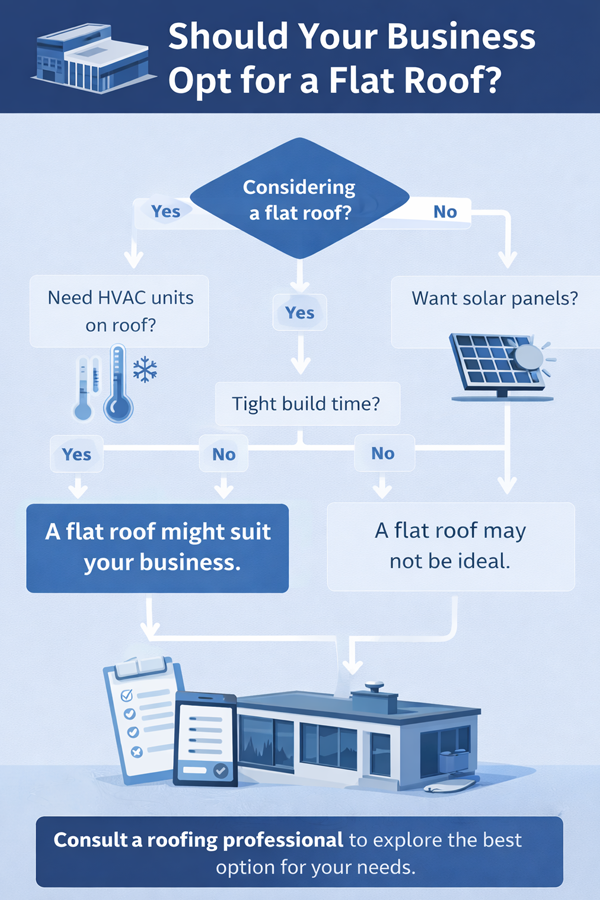
As you can see, practical needs often steer the decision. If you need a home for bulky HVAC units, want a quicker build to get your business operational, or are looking for initial cost savings, a flat roof is an incredibly strong contender. These benefits are exactly why it has become the go-to for so many commercial projects in Berkshire and beyond.
To help you compare the main contenders at a glance, here is a simple breakdown of the most popular materials we work with.
Comparison of Commercial Flat Roofing Materials
| Material | Typical Lifespan | Average Cost (Per m²) | Best For |
|---|---|---|---|
| EPDM Rubber | 20-30+ years | £70 – £95 | Large, simple roof areas needing long-term durability and minimal seams. |
| TPO Membrane | 20-30 years | £75 – £100 | Businesses wanting energy efficiency from a reflective surface and very strong, heat-welded seams. |
| Bitumen Felt | 15-25 years | £60 – £85 | Cost-effective solutions for smaller roofs, repairs, and projects where budget is the main driver. |
| GRP Fibreglass | 30+ years | £90 – £120 | Roofs that require a tough, rigid surface for foot traffic or maximum durability. |
This table gives a quick overview, but the real story is in how these materials perform in the real world. Let’s dive a bit deeper into each one.
EPDM Rubber Roofing
EPDM (Ethylene Propylene Diene Monomer) is a synthetic rubber membrane that has become an absolute staple for commercial properties. The best way to think of it is like a huge, custom-made bicycle inner tube stretched seamlessly across your roof. Its biggest selling point is its incredible flexibility and resilience.
This material handles everything from scorching summer heat to freezing winter temperatures without cracking or becoming brittle. It is usually installed in massive, single sheets, which means there are very few seams, and fewer seams mean a drastically lower risk of leaks. For any business owner from Maidenhead to Woking, that is a massive plus.
EPDM is a true workhorse of the commercial roofing world. With a potential lifespan of over 20-30 years when installed correctly, it offers one of the best long-term value propositions you can find.
TPO Single-Ply Membrane
TPO (Thermoplastic Polyolefin) is another single-ply membrane that is hugely popular, often seen as a more modern take on EPDM. It cleverly blends the flexibility of rubber with the hardy nature of plastic, which results in a seriously tough, puncture-resistant surface. The seams on a TPO roof are heat-welded, which melts them together to form a bond that is actually stronger than the membrane itself.
This process creates a single, unified sheet across your entire roof, giving you outstanding protection against water. For businesses in areas like Slough or Bracknell, TPO’s standard white or grey surface offers another advantage: it reflects sunlight, helping to keep the building cooler in summer and potentially shaving a little off your air conditioning bills.
Traditional Bitumen and Felt Roofing
Built-up felt roofing, which uses bitumen (asphalt), is the classic flat roofing method here in the UK. The system is straightforward: you layer multiple sheets of roofing felt and bond them together with hot or cold bitumen to build up a thick, waterproof barrier. It has been trusted for decades for good reason.
While single-ply systems have certainly grown in popularity, bitumen felt is still a very cost-effective and reliable choice, particularly for smaller flat roof commercial projects or for repairs. Plus, modern polymer-modified bitumen has come a long way, offering much better flexibility and a longer lifespan than its predecessors.
Advanced Flat Roofing Systems
For property owners looking for the highest levels of durability or specific green credentials, a couple of more advanced systems present some fantastic benefits.
- GRP (Glass Reinforced Plastic) Fibreglass: Imagine creating a single, seamless, and rock-solid shell over your entire roof, much like the hull of a boat. That is exactly what a GRP fibreglass roof is. It is incredibly tough, completely waterproof when installed properly, and can easily last for over 30 years. Its hard-wearing finish makes it a brilliant choice for roofs that might see a bit of foot traffic.
- Green Roofs: A green or ‘living’ roof is where you cover the waterproof membrane with a special growing medium and vegetation. It is not just about looks; a green roof provides incredible natural insulation, actively improves air quality, and helps manage rainwater runoff, a growing concern for businesses in built-up areas. They are a brilliant way to add a genuinely eco-friendly feature to your commercial property.
With so many choices on the table, getting to grips with the small details is what matters. For an even deeper look, you might find our guide on the best roofing materials for flat roofs helpful.
Ultimately, the perfect material comes down to your building’s unique structure, your budget, and what you want to achieve in the long run. For expert advice tailored to your property in Windsor or anywhere in Berkshire, get in touch with the All Custom Roofing team for a no-obligation chat.
The Blueprint for a High-Performance Flat Roof
Choosing the right material is a massive part of the equation, but a top-performing flat roof commercial system is about so much more than just a quality membrane. Its real strength and lifespan come from the thinking that goes into the design and the skill that goes into the installation. Think of it like building a house: the best bricks in the world are useless if the foundations are poorly laid.
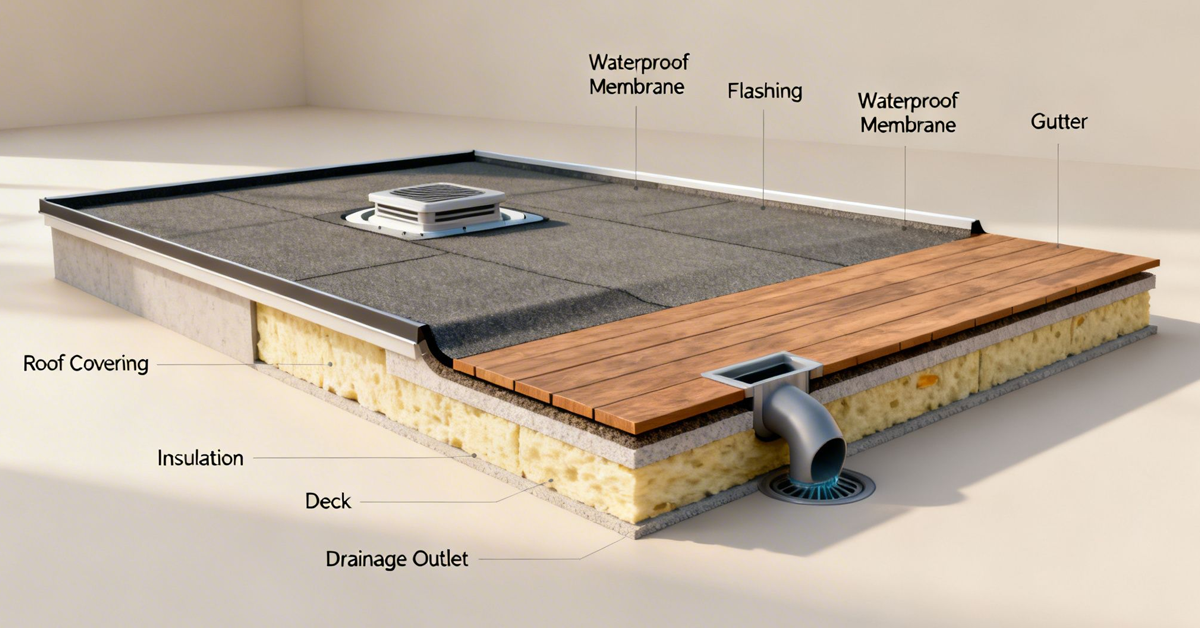
A durable commercial flat roof is an engineered system where every single piece has to work in harmony. From handling torrential UK downpours to keeping your energy bills down, the details in the blueprint are what separate a roof that just covers your building from one that truly protects your investment.
Engineering the Perfect ‘Fall’
One of the biggest misconceptions we hear about flat roofs is that they are completely level. A professionally installed roof should never be perfectly flat; it needs a very slight, deliberate gradient known as the ‘fall’. This subtle slope is the roof’s first and most important line of defence against water.
The fall makes sure that every drop of rain is guided efficiently towards the drainage points. Without it, water will inevitably sit on the surface, creating stagnant pools known as ‘ponding’.
Ponding water is the number one enemy of a commercial flat roof. The sheer weight adds huge stress to the structure, and over time, it will break down even the toughest roofing materials, leading to leaks and expensive damage.
A properly designed fall, usually a gradient of 1:80 or 1:60 as recommended by UK building standards (like BS 6229), stops this from ever happening. For any job we take on in Berkshire and the surrounding areas, this is an absolute non-negotiable.
Smart Drainage for a Wet Climate
The famously unpredictable UK weather, especially the heavy downpours we often see from Windsor to Reading, calls for a seriously robust drainage strategy. While the fall directs the water, the drainage system is what gets it off the roof quickly and safely.
An effective system has several crucial components:
- Roof Outlets and Scuppers: These are the main drains where water collects. They have to be correctly sized for your roof area and placed at the lowest points of the fall.
- Overflows: These are your essential backup plan. Overflows give water a secondary escape route if the main drains get clogged with leaves or debris, preventing a disastrous build-up.
- Gutters and Downpipes: These channels carry water from the roof down to the ground-level drains, protecting your building’s foundations from water damage.
We design our drainage solutions to handle the kind of peak rainfall we experience across the Berkshire region, making sure your property stays dry even in the worst storms.
Insulation and Flashing: The Unsung Heroes
Beyond managing water, two other elements are absolutely vital for a high-performance roof. Modern insulation, fitted beneath the waterproof membrane, plays a huge role. It does not just keep your building warmer in winter and cooler in summer; it can make a real dent in your energy consumption and running costs. Current UK Building Regulations have strict standards for thermal performance, and putting on a new roof is the perfect time to upgrade.
Just as important is the flashing. This is the material used to create a watertight seal around anything that pokes through the roof, such as:
- Vents and soil pipes
- Skylights
- Air-conditioning units
- Walls that join the roof (abutment walls)
You would be surprised how often leaks are caused by nothing more than faulty or badly fitted flashing. We use high-quality, durable materials to make sure these weak spots are sealed perfectly. Creating architectural blueprints for commercial hotel projects demands this same level of detail for all building elements, and the roof is no exception. Working with an installer who has mastered UK building regulations like BS 5534 is key to long-term peace of mind.
For expert advice on designing a high-performance flat roof commercial system for your property in Windsor, Maidenhead, or Bracknell, contact All Custom Roofing today.
Extending Your Roof’s Life With Proactive Maintenance
A new flat roof commercial installation is a significant outlay. But the job is not finished once the last sheet is laid; its long-term performance hinges on what you do next. Proactive maintenance is single-handedly the most effective way to protect that investment, stopping small, cheap-to-fix issues before they escalate into catastrophic failures that disrupt your business.
Think of it less as an expense and more as an insurance policy. You would not run a company vehicle into the ground without servicing it, and your roof is no different. Regular check-ups ensure your building’s most vital asset stays in top condition, safeguarding everything (and everyone) underneath it.
Your Seasonal Maintenance Checklist
For property managers in Bracknell or landlords over in Woking, a simple inspection schedule twice a year (once in spring, once in autumn) can catch over 90% of potential problems. Here are the key things to look for from a safe viewpoint.
- Check for Ponding Water: After it rains, check for any standing water that has not disappeared within 48 hours. This is a dead giveaway of a blocked drain or an issue with the roof’s fall.
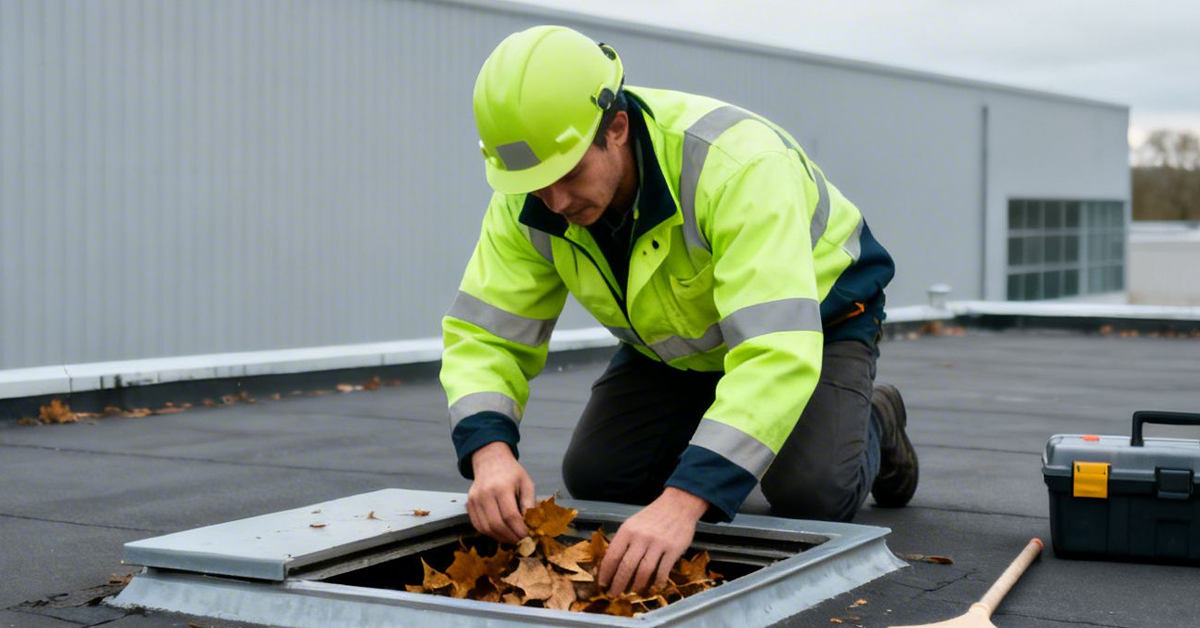
- Clear Debris from Drains: Leaves, twigs, and rubbish are the number one cause of blocked outlets. Keeping these clear is essential to prevent water from backing up, particularly before the heavy downpours of autumn and winter arrive.
- Inspect the Roof Surface: Get a good look at the membrane itself. Are there any visible cracks, blisters, or punctures? These are the first warning signs that your waterproof layer might be compromised.
- Examine Flashing and Seals: Pay close attention to the joinery around vents, skylights, and upstand walls. Damaged or peeling flashing is one of the most common culprits behind leaks.
Regular maintenance is not about waiting for a leak to show up. It is about systematically finding and fixing the little things that, if you ignore them, will eventually cause that leak.
When to Call the Professionals
While these visual checks are incredibly useful, knowing when to pick up the phone to an expert is just as important. Some problems demand immediate professional attention to stop them from getting worse.
A small blister or crack might seem trivial, but it can let water track underneath the membrane, rotting the insulation and decking below. Likewise, persistent ponding water puts immense weight and stress on the whole roof structure, and you need a professional to diagnose and fix the root cause. And never, ever ignore damp patches appearing on your ceilings; by the time you see them, the problem overhead is already well underway.
If you spot any of these red flags, it is time to call in a professional roofer. For a closer look at this topic, have a read of our guide on flat roof maintenance tips to extend your roof’s lifespan.
Partnering with All Custom Roofing for Long-Term Care
At All Custom Roofing, we offer scheduled maintenance plans built specifically for commercial properties across Berkshire and the surrounding 100-mile radius. We give businesses in Windsor, Slough, and Maidenhead a practical roadmap for long-term care, removing the guesswork from protecting your asset.
Our service includes:
- Scheduled Inspections: We carry out thorough, professional inspections at agreed intervals and provide you with a detailed report on your roof’s health.
- Proactive Repairs: We find and fix minor issues on the spot, from clearing blocked drains to sealing small cracks, stopping them from turning into big headaches.
- Emergency Call-Outs: Our team is on standby to respond quickly to urgent problems like storm damage or sudden leaks, keeping disruption to your business at a minimum.
This structured approach not only extends the life of your flat roof commercial system but also gives you predictable budgets and total peace of mind. Contact All Custom Roofing today to talk about a maintenance plan that fits your property.
Budgeting and Financing Your Commercial Roof Project
A new commercial flat roof is a major capital investment, so getting to grips with the numbers is the first step toward making a sound decision. The final figure is not just a simple quote; it is a total shaped by several key factors that define the project’s true scope and complexity. We believe in being upfront about pricing so you can plan effectively from day one.
The final price for your new roof will ultimately come down to a few critical variables. These include the sheer size of the roof, your choice of material (like EPDM, TPO, or GRP), the state of the existing roof deck, and any on-site complexities like vents, skylights, or abutment walls.
Understanding the Key Cost Factors
To help you put together a realistic budget, let’s break down the main things that influence the cost of a commercial flat roof project in areas like Windsor, Maidenhead, or Bracknell.
-
Roof Size and Accessibility: It is simple, the larger the roof area in square metres, the higher the overall cost. That said, the price per square metre can sometimes drop on very large projects due to economies of scale. Accessibility is also a major factor; a roof that is tricky to get to might need specialised equipment like cranes or extra scaffolding, which adds to labour costs.
-
Choice of Roofing Material: As we have covered, different materials come with different price tags. A traditional built-up felt roof is often the most budget-friendly choice upfront. On the other hand, a high-performance GRP fibreglass system will mean a larger initial investment but pays you back with a much longer lifespan.
-
Condition of the Existing Structure: If the current roof structure or decking is suffering from rot or damage, it will need to be repaired or completely replaced before any new system goes on. This prep work adds to the total cost, but it is absolutely vital for the long-term health and durability of your new roof.
Spreading the Cost with Sensible Financing
For a major investment like a new flat roof, it is smart to look at all your financing options. For example, you might want to explore specialised construction business loans to fund the project from start to finish.
Here at All Custom Roofing, we know a new roof is a significant but unavoidable expense. To make it more manageable for businesses and landlords, we offer access to financing options through our trusted partner, Phoenix Financial Consultants. This lets you spread the cost over time, protecting your cash flow while still getting a top-quality, durable roof over your head. You can learn more by reading our guide on exploring your options for new roof financing.
Spreading the cost means you do not have to compromise on quality. It allows you to choose the best roofing system for your property’s long-term needs, not just the one that fits an immediate, tight budget.
The UK’s roofing industry is a significant market, with commercial flat roofs being a large part of its growth. This demand is fuelled by a need for durable, energy-efficient solutions that can handle the British weather. Materials like TPO and EPDM are becoming more popular because they are faster to install and can result in 15-25% less material usage than pitched roofs, making them a savvy choice for budget-conscious businesses.
To get a clear, no-obligation quote tailored to your specific project, contact All Custom Roofing in Windsor today. We serve businesses across Berkshire and the surrounding towns.
Why Partner With All Custom Roofing
Choosing the right contractor for your commercial flat roof is just as important as picking the right materials. In fact, your decision here will dictate the quality of the installation, how long your investment lasts, and your peace of mind for years to come. At All Custom Roofing, we have built our name on being the go-to local experts for businesses across Berkshire and beyond.
We have been a family-run business since 2008, and our entire approach is built on clear communication, transparent pricing, and a genuine commitment to top-tier workmanship. We know that a new roof or a major repair is a significant undertaking, and our job is to make sure you feel informed and confident every step of the way.
Our Proven Track Record
Our expertise is not just something we talk about; it is something you can see in every project we complete. We have a deep and proven track record in all aspects of commercial flat roofing, from precision installations of modern systems like EPDM and GRP to fast, effective repairs that stop leaks dead in their tracks. We also specialise in creating scheduled maintenance plans that protect your asset and prevent costly surprises down the line.
We always encourage clients to browse our gallery of recent projects to see the quality and care we put into every job. Our portfolio showcases a wide range of work for businesses in Windsor, Slough, Maidenhead, and the surrounding towns.
As a family-run company, we put our name on the line with every project. Your satisfaction is our absolute priority, and we treat your property with the same respect and attention to detail as we would our own. This value is at the heart of everything we do.
Your Local Roofing Experts
We are proud to be part of the local community, serving businesses within a 100-mile radius of our base in Windsor. This local focus means we are not just familiar with the challenges of our specific climate, from persistent rain to winter frosts, we are experts in overcoming them. Our solutions are designed to stand up to these very conditions, ensuring your commercial property stays secure all year round.
Our core services include:
- New Installations and Re-Roofing: Expert installation of high-performance flat roofing systems designed to last.
- Prompt and Reliable Repairs: A fast response to leaks, storm damage, and general wear-and-tear to get you watertight again.
- Scheduled Maintenance Plans: Proactive care to extend your roof’s lifespan and catch small problems before they become big ones.
We are not just contractors; we aim to be your trusted partners in protecting your business. Ready to secure your commercial property’s future with a durable, high-performance flat roof?
Contact All Custom Roofing for expert advice and a no-obligation consultation. We cover Windsor, Reading, Slough, Bracknell, Maidenhead, and all surrounding towns.
Frequently Asked Questions About Commercial Flat Roofs
When it comes to commercial properties, flat roofs raise a unique set of questions for business owners across the UK. To give you some clarity, we have put together straightforward answers to the queries we hear most often about flat roof commercial systems.
How Long Should a New Commercial Flat Roof Last in the UK?
The lifespan of your commercial roof comes down to two things: the material you choose and how well you look after it. A properly installed EPDM rubber or TPO membrane roof should give you 20 to 30 years of service, sometimes even more. If you are looking for ultimate longevity, a top-tier GRP fibreglass system can push well beyond 30 years.
But here is the key: these numbers rely on regular, proactive maintenance. Without it, you will find even the most robust materials will fail long before they are supposed to.
Can I Install Solar Panels on My Commercial Flat Roof?
Yes, you absolutely can. In fact, flat roofs are an ideal platform for solar panel arrays. Their level surface makes it simple to mount panels at the perfect angle to catch the sun, which can make a real dent in your business’s energy bills.
Before you go ahead, it is vital to have a professional roofer like All Custom Roofing take a look. We will need to confirm the roof membrane and the structure underneath are strong enough for the extra weight, and ensure the installation will not compromise your roof’s waterproofing.
What Are the Signs That My Commercial Flat Roof Needs Repair?
Keep an eye out for these common warning signs. If you spot any of them, it is time to arrange a professional inspection:
- Ponding Water: Puddles of water that are still visible 48 hours or more after it has rained are a red flag. This often points to a problem with drainage or the roof structure itself.
- Surface Damage: Have a look for any obvious cracks, blisters, tears, or seams that have started to pull apart in the roofing membrane.
- Interior Damp: Damp spots, water stains, or signs of mould on your ceilings or high on the walls inside are a classic giveaway of a roof leak.
- Damaged Flashing: Pay close attention to the seals around vents, pipes, skylights, and anything else that sticks out of the roof. Flashing that is peeling or cracked is a very common entry point for water.
Catching these issues early can be the difference between a simple repair and a far more costly and disruptive replacement project down the line.
Most significant roof failures begin as small, easily-missed problems. By the time a leak becomes visible inside your property, the damage to the roof’s structure and insulation is often already well advanced.
Is Planning Permission Needed for a New Commercial Flat Roof?
For most straightforward repair jobs or a direct like-for-like replacement, you typically will not need to get planning permission.
However, you will almost certainly need to contact your local authority if the project involves major structural changes, alters the height of the building, or if your property is listed or sits within a conservation area. We always recommend checking with your local council in Berkshire before any major roofing work begins, just to be safe.
Do you have more questions or need a specific assessment for your property? The team at All Custom Roofing is here to help. We provide expert guidance and transparent quotes for businesses across Windsor, Slough, Maidenhead, and the wider Berkshire region. Get in touch today for a no-obligation consultation.