Spotting a leak in your commercial roof demands a quick but calculated response. The goal is to stop a minor headache from turning into major structural damage and operational chaos. The key is to rapidly assess where the problem is coming from, whether it’s the obvious drip-drip-drip inside your Berkshire warehouse or standing water on a flat roof long after the rain has stopped. Acting fast protects your building, your stock, and your bottom line.
Your First Steps in Tackling an Industrial Roof Leak
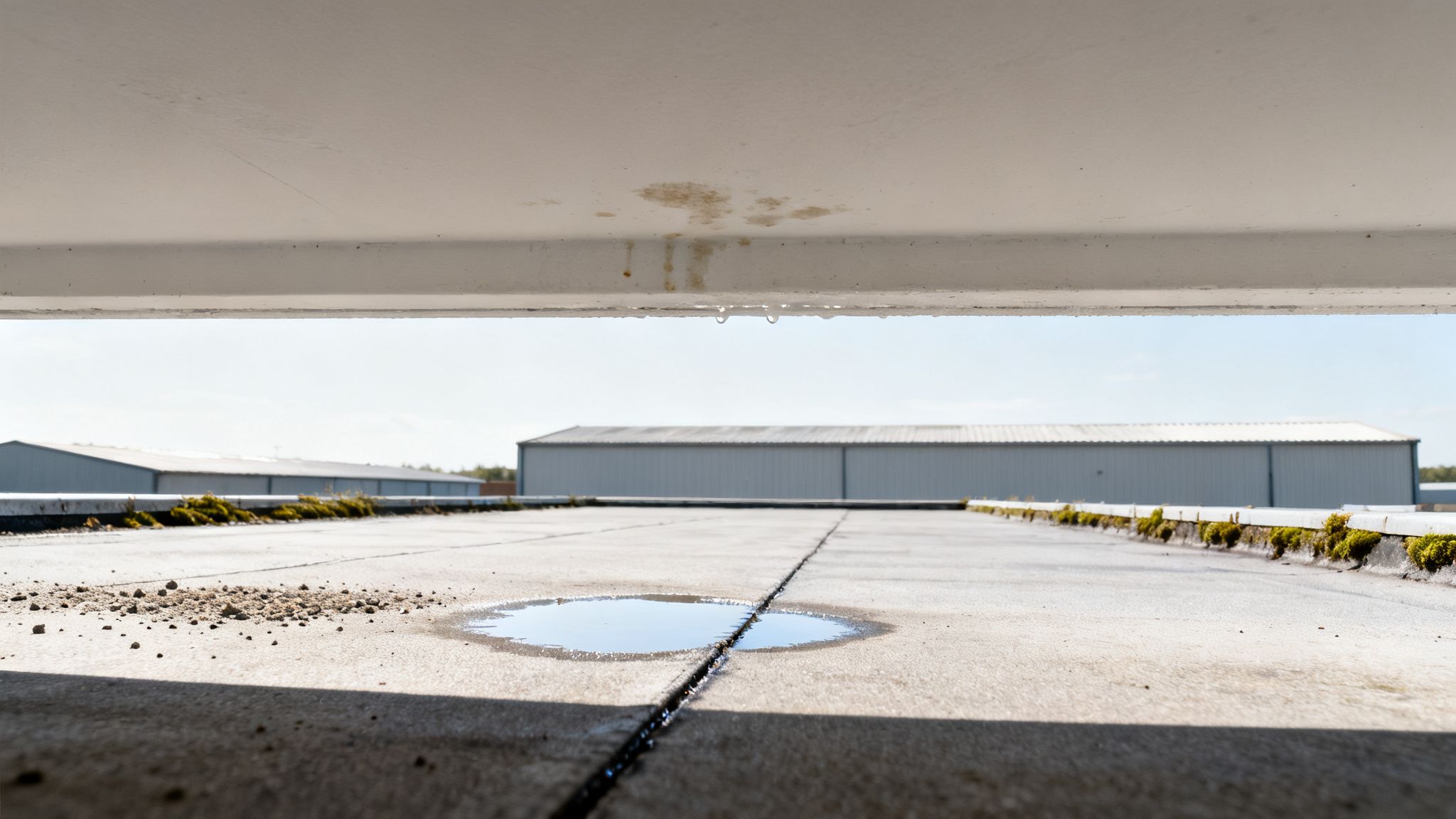
It’s easy to feel a sense of panic when you first notice signs of a leak on your commercial property, whether you’re in Reading or Slough. But a calm, methodical approach is what’s needed. The first clues aren’t always dramatic; they can be subtle signs pointing to a much bigger problem brewing overhead.
Your first job is to identify these warning signs. Be on the lookout for discoloured ceiling tiles, damp patches appearing on walls, or even a musty smell that screams “hidden moisture.” For the flat roofs common on UK industrial units, ponding water that hangs around for more than 48 hours after a downpour is a huge red flag. It points to poor drainage or low spots in the roof structure, problems that will only get worse.
Common Causes of Leaks in the UK
Let’s face it, the British weather is the number one enemy of any roof. The relentless cycle of rain, wind, and frost takes a heavy toll. Beyond that, here are a few other common culprits we see time and time again:
- Material Fatigue: Over the years, materials like single-ply membranes or metal sheeting simply wear out. This can lead to cracks, splits, or rust that compromise the waterproof layer.
- Blocked Drainage: Gutters and downpipes choked with leaves, moss, and other debris will cause water to back up. That trapped water will always find the path of least resistance, usually straight into your building.
- Damaged Flashing: The seals around vents, skylights, and chimneys are notorious weak spots. If they aren’t perfectly maintained, they’re often the first place a leak will start.
- Poor Installation: We often get called out to fix problems caused by substandard workmanship from a previous job. It’s a classic case of “buy cheap, buy twice.”
A prompt and professional fix is more than just a repair; it’s an investment in your building’s future and your business’s continuity. Ignoring a small leak today can lead to saturated insulation, ruined stock, and costly operational shutdowns tomorrow.
When to Call the Professionals
While a quick visual check from the ground is a smart first move, you should never attempt to get onto an industrial roof without proper safety training and equipment. It’s just not worth the risk.
If you spot any of the signs we’ve mentioned, it’s time to call in an expert. A professional roofer has the right tools and, more importantly, the experience to trace a leak back to its true source, which is often a long way from where the water is actually showing up inside. To get a better idea of what a professional assessment involves, take a look at our guide on what to expect from a professional roof inspection report.
The UK’s roofing industry is a big business for good reason. More and more businesses are realising that a well-maintained roof isn’t an expense, it’s a critical asset. For any business in Windsor, Maidenhead, or Bracknell, a timely call to the team at All Custom Roofing guarantees a fast, safe, and effective solution. We cover Windsor, Reading, Slough, Bracknell, Maidenhead, and surrounding towns.
How to Safely Inspect Your Commercial Roof
Before you even think about how to fix an industrial roof, you need to know exactly what you’re dealing with. That starts with a thorough and, above all, safe inspection. Let me be clear: climbing onto a commercial roof without professional training and the right gear is a recipe for disaster.
The good news is you can gather a huge amount of information from the ground or a high window. This initial check-up is all about spotting the obvious problems without putting yourself at risk. Think of it as gathering intelligence before calling in the specialists. A well-documented problem is a problem half-solved.
Your Pre-Inspection Checklist
Safety has to be the top priority. Even an inspection from solid ground needs a bit of planning to make sure it’s done right and nobody gets hurt. Before you start, just run through this quick checklist.
- Choose a Safe Time: Always do your inspection in daylight and good weather. Rain doesn’t just make it hard to see; it makes every surface a potential hazard.
- Notify Relevant Staff: Give your facilities manager or other key personnel a heads-up. If you’re going to be near loading bays or busy entrances, make sure people know you’re there.
- Prepare Your Tools: You don’t need much. A good pair of binoculars, a camera with a decent zoom (your smartphone is probably fine), and a way to take notes will do the trick.
It sounds simple, but this little bit of prep makes all the difference. It helps you carry out a productive check without causing any new headaches.
It’s a classic mistake to underestimate what you can see from the ground. Honestly, you can often spot 80% of major issues, like blocked gutters, slipped panels, or damaged flashing, without taking a single step up a ladder. This information is gold for any roofer you call.
What to Look For from a Safe Distance
With your binoculars and camera at the ready, take a slow, methodical walk around the building. You’re looking for anything that just doesn’t seem right. Your goal is to spot the tell-tale signs that tell you it’s time to fix your industrial roof.
Common issues you can spot from the ground include:
- Blocked Gutters and Downpipes: Look for plants growing out of the gutters or obvious clumps of leaves and muck. See any water stains on the walls just below the gutter line? That’s a dead giveaway that they’re overflowing when it rains.
- Damaged or Rusted Metal Panels: Scan any metal sheet roofing for rust, dents from hail or falling debris, or any panels that look like they’re lifting away at the seams.
- Cracks or Blisters on Flat Roofs: If you have a view from a higher window, look for cracks, splits, or bubble-like blisters on the roof membrane. These are serious red flags that mean moisture is trapped underneath.
- Damaged Flashing: Use your binoculars to get a close look at the seals around vents, pipes, skylights, and anything else that pokes through the roof. If the flashing is bent, loose, or cracked, you’ve found a prime suspect for leaks.
After a harsh Berkshire winter, it’s also a good idea to check for signs of frost heave on built-up roofs. This is where trapped moisture freezes and expands, physically lifting parts of the roof and causing real damage. For a deeper dive into seasonal checks, you can read more about the benefits of professional roof inspections on our blog.
Documenting Your Findings Effectively
When you spot something, document it properly. Vague notes like “leak on the north side” aren’t going to help anyone. You need to be specific.
Take clear, well-lit photos of every issue you find, preferably from a couple of different angles. Add detailed notes describing the exact location, for instance, “Rusted flashing on the third skylight from the west corner.”
This level of detail turns your notes into a high-quality report you can share with our team at All Custom Roofing. It gives us a solid understanding of the problem before we even set foot on your property in Windsor, Maidenhead, or Bracknell. It means we can get to work faster and give you a much more accurate initial assessment, streamlining the entire repair process.
Common Methods to Fix Industrial Roof Problems
Once you’ve spotted a potential issue, the next job is figuring out the right way to tackle it. Not all industrial roofs are the same, and the right fix for a modern single-ply membrane in Maidenhead will be completely different from what’s needed for traditional metal sheeting. Every material has its own common weak points and requires a specialist solution.
Getting the repair method right is absolutely critical for a durable fix that can handle the unpredictable UK weather. A botched job, like using the wrong sealant on a specific membrane, will fail in no time. That leads to more damage and, you guessed it, much higher costs down the road. It really is about using the right tools and techniques for the specific roof you’re working on.
Repairing Single-Ply Membrane Roofs
Single-ply membranes, such as materials like PVC, TPO, and EPDM, are a go-to choice for flat industrial roofs across Berkshire. They’re known for being tough and flexible. Still, they aren’t immune to punctures, tears, or seams splitting over time. The main solution here is patching.
This involves giving the damaged area a thorough clean, applying a primer to get a solid bond, and then heat-welding a patch of the same membrane material over the tear. For smaller cracks or just as a bit of preventative maintenance, a liquid-applied coating can seal things up and add an extra layer of protection against UV rays and water.
Fixing Issues with Metal Sheet Roofs
Metal roofs are incredibly resilient, but they have their own set of problems. The most common issues we come across on warehouses in Slough and Bracknell are failing sealants at the seams, screws that have worked themselves loose, and patches of corrosion. Fixing these requires a methodical approach.
- Sealing Seams: The sealant between metal panels can degrade and become brittle over the years. The fix is to strip out the old stuff, clean the seam meticulously, and lay down a new, high-quality industrial-grade sealant designed specifically for metal.
- Replacing Fasteners: Metal sheets expand and contract with temperature changes, which can cause screws to loosen. These need to be tightened or, if the rubber washer is shot, replaced entirely with new, oversized fasteners to guarantee a watertight seal.
- Treating Corrosion: You can treat small rust spots by grinding back the corrosion, applying a rust-inhibiting primer, and finishing with a matching topcoat. If you’re seeing widespread rust, it might be a sign that a panel needs replacing or the whole roof needs a protective coating.
When looking at repair options, it’s worth understanding how different waterproof roof coating systems can seriously extend the life of a metal or membrane roof.
Addressing Blisters in Built-Up Roofing
Built-up roofing (BUR), which you might know as felt roofing, is made from multiple layers of bitumen and reinforcing fabrics. A frequent headache with these roofs is blistering, where pockets of air or moisture get trapped between the layers. If you ignore them, they’ll eventually crack and cause serious leaks.
A small blister on a felt roof might look harmless, but it’s a red flag. It tells you there’s a failure in adhesion between the layers, letting moisture sneak in. If you don’t deal with it, a cold snap can freeze that trapped water, causing it to expand and split the roof wide open.
To fix a blister, you have to carefully cut it open to let the trapped air or moisture out. Then, the area needs to be dried completely before the layers are stuck back down with roofing cement and sealed over with a tough patch. For more extensive blistering, you’ll probably need a professional. If you’re spotting multiple issues, our guide on common roofing problems and how to fix them offers more detailed advice.
The infographic below shows the basic steps a professional would take during an inspection to determine which repair method is the right fit.
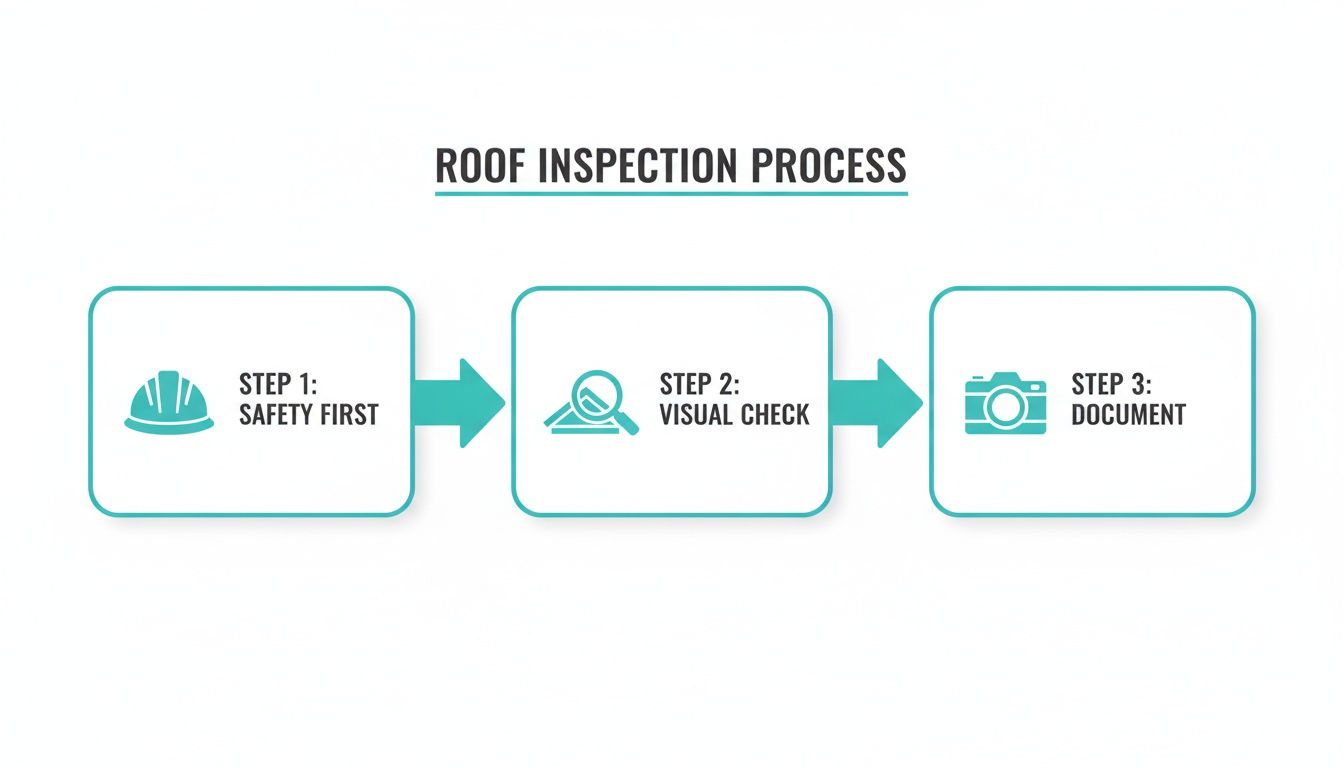
This simple three-step flow: safety first, then a detailed visual check, followed by documenting everything, ensures nothing gets missed before deciding on a repair strategy.
Industrial Roof Types Common in the UK
To give you a clearer picture, it helps to know what you’re dealing with. Different materials have different lifespans and common failure points.
Here’s a quick comparison of the most common industrial roof types we see across the UK.
| Roof Type | Typical Lifespan | Common Problems to Fix |
|---|---|---|
| Single-Ply Membrane | 20-30 Years | Punctures, split seams, shrinkage, and membrane uplift in high winds. |
| Metal Sheeting | 40-60 Years | Loose fasteners, failed sealants at seams, corrosion, and denting from impact. |
| Built-Up Roofing (BUR) | 15-25 Years | Blistering, alligatoring (cracking), ponding water, and flashing failures. |
Knowing your roof type is the first step to getting the repair right. If you’re not sure what kind of roof your commercial property has or which repair method is best, it’s always a good idea to get some professional advice.
Essential Tools and Materials for a Lasting Repair
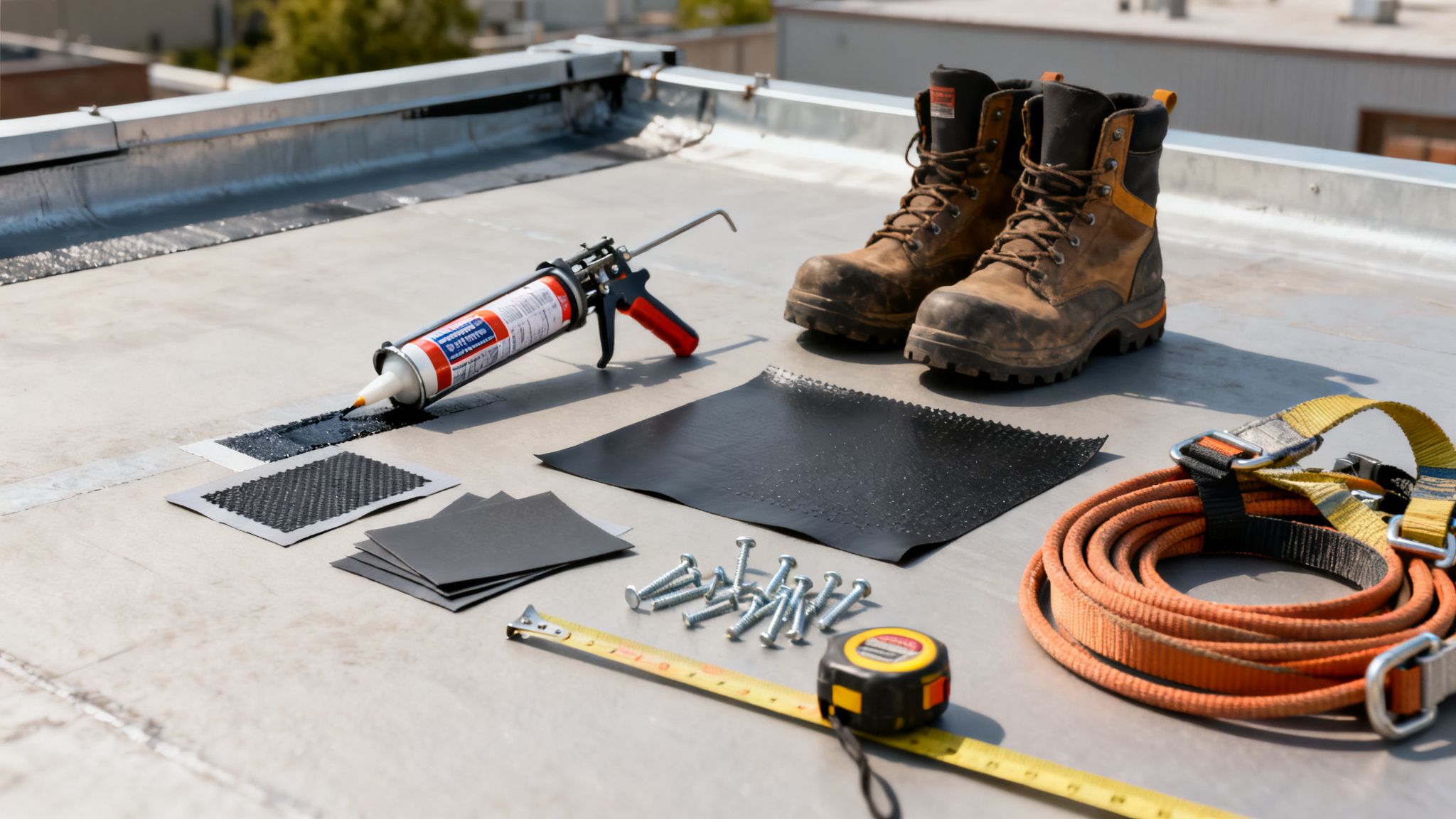
Using the right kit to fix an industrial roof is every bit as important as the repair technique itself. A proper professional toolkit is much more than just a ladder and a bucket of tar. The specific tools and materials we choose are dictated by the type of roof, the nature of the damage, and the unique challenges posed by the UK’s damp climate.
Knowing what a professional roofer brings to your property in Windsor or Maidenhead helps you appreciate the true scope of the work. It also means you can have a much more informed conversation with your contractor, ensuring the job is done right the first time with materials built to last.
Core Safety and Access Equipment
Before any repair work even thinks about starting, safety is the absolute priority. You simply can’t afford to cut corners here. A professional team will arrive with a full set of safety gear, which is non-negotiable for anyone working at height.
- Secure Access: This isn’t just about leaning a ladder against the wall. Expect to see properly erected scaffolding or a mobile elevating work platform (MEWP) to provide safe, stable access to the roof.
- Personal Protective Equipment (PPE): At a bare minimum, this includes hard hats, high-visibility jackets, steel-toed non-slip boots, and protective gloves. Depending on the job, harnesses and full fall arrest systems are also essential.
- Site Safety: This involves setting up a safe perimeter on the ground with barriers and warning signs to keep your staff and visitors well clear of the work area.
Specialised Tools for Different Roof Types
The tools needed for the job change dramatically depending on whether we’re dealing with a single-ply membrane or corrugated metal sheets. Using the wrong tool can easily cause more damage than it fixes. For instance, applying intense, direct heat to certain membranes can ruin them in an instant.
A professional’s van will be kitted out with a whole range of specialised equipment tailored to the roof in question:
- For Membrane Roofs: A hot-air welder is crucial for creating strong, fused seams on PVC or TPO membranes. You’ll also see seam rollers for applying even pressure and specialised cutters for trimming patches with precision.
- For Metal Roofs: A power drill with a specific torque setting is needed to install new fasteners without overtightening and damaging them. Nibblers or shears are used to cut metal panels cleanly, while grinders are used to prep corroded areas before treatment.
- For Built-Up Roofs: Heavy-duty utility knives are essential for slicing through the tough layers of felt. You’ll also see trowels and brushes used for applying bitumen adhesives and sealants smoothly and evenly.
A classic DIY mistake is thinking any old sealant will do the job. The reality is, material compatibility is critical. Using a silicone-based sealant on an EPDM rubber roof, for example, will cause the membrane to degrade, and the repair will fail in no time.
Choosing the Right Repair Materials
The quality and suitability of the materials are what truly determine how long a repair is going to last. Professionals select products based on their proven performance in conditions we see across Berkshire, from persistent drizzle to harsh winter frosts. For tackling common weak spots, using a reliable product like Everbuild Roof Gutter Sealant is vital for stopping water ingress and preventing further damage.
The choice of material is highly specific to the problem. A liquid-applied membrane might be the perfect solution for a complex roof with lots of pipes and vents, as it creates a seamless, waterproof coat. On the other hand, for a simple puncture on a flat TPO roof, a heat-welded patch of the exact same material provides a much stronger, more integrated fix.
Ultimately, it’s the correct combination of tools, safety gear, and high-performance materials that sets a professional repair apart from a quick fix. It’s the difference between a temporary patch-up and a long-term solution that genuinely protects your property. If you need expert advice on the right approach for your industrial roof in Reading or Slough, contact All Custom Roofing in Windsor for expert roof repairs across Berkshire.
Deciding Between Roof Repair and Full Replacement
Choosing between a targeted repair and a full-scale replacement is one of the biggest financial decisions a property owner can make. It’s the classic dilemma of short-term cost versus long-term value, and the right answer isn’t always obvious.
For businesses in the Windsor area, making the correct call is vital to protect your assets and manage your budget effectively. This decision hinges on a few critical factors, moving beyond just the immediate leak you’re trying to stop. You’ve got to consider the roof’s age, the extent of the problems, and the escalating cost of repeated call-outs.
Analysing the Age and Extent of the Damage
The first thing to look at is the age of your roof. It’s a dead giveaway. Most industrial roofing systems in the UK have a typical lifespan of 15 to 25 years. If your roof is only five years old and springs a single, isolated leak, a professional repair is almost certainly the most sensible and cost-effective solution. The underlying structure and materials are still in good shape.
However, the situation changes dramatically for an older roof. Imagine a 20-year-old felt roof on a warehouse in Reading that has developed multiple leaks, widespread blistering, and visible surface cracking. While you could patch each individual issue, you are likely just delaying the inevitable. This is when the scales tip firmly towards a full replacement.
Constant repairs on an ageing roof are often a false economy. If you find yourself budgeting for a roofer’s visit every winter, the combined cost of those repairs can quickly approach the price of a replacement, without providing any of the long-term benefits or guarantees.
When Repairs Make Financial Sense
So, when is a patch-up job the right move? A targeted repair is the best route when the damage is localised and the rest of the roof is in good condition.
Think about these real-world scenarios where a fix is the logical choice:
- Isolated Punctures or Tears: Damage from a dropped tool or a piece of storm debris on an otherwise healthy membrane roof.
- Failed Flashing: The seals around a single vent or skylight have given up, but the main roof area is perfectly sound.
- Loose Fasteners: A few screws on a metal roof have worked loose, but there is no widespread corrosion.
In these cases, a professional repair will solve the problem efficiently and extend the life of your existing roof without the major expense of a full replacement.
Recognising the Signs You Need a Replacement
Sometimes, a repair is like putting a plaster on a serious wound. A full replacement becomes the smarter, more cost-effective long-term investment when you see these clear signs:
- Widespread and Recurring Issues: You’re fixing leaks in different spots several times a year. It’s a game of whack-a-mole you can’t win.
- Extensive Surface Deterioration: You can see large areas of cracking, blistering, or corrosion across more than 25% of the roof surface.
- Spiking Energy Bills: An old, poorly insulated roof can lead to significant heat loss. A replacement offers the chance to drastically improve thermal performance and bring those bills down.
UK regulations can also influence the decision. When replacing 50% or more of your roof, you are required to upgrade the insulation to meet current standards. While this adds to the upfront cost, it delivers substantial long-term savings on your energy bills, making a replacement a wise investment in your property’s efficiency.
Ultimately, the best way to make an informed decision is with a professional assessment. For a clear, honest evaluation of your industrial roof in Windsor, Slough, or Bracknell, contact All Custom Roofing. We provide expert advice to help you choose the right path for your property and your budget.
Your Questions About Industrial Roof Repairs Answered
If you own or manage a commercial property, a roofing problem is one of the last things you want to deal with. It’s a major source of stress. Over the years, we’ve found that business owners across Berkshire tend to ask the same kinds of questions. Here are some straightforward answers to help you figure out your next steps.
How Much Does It Cost to Fix an Industrial Roof in the UK?
This is the big question, and the honest answer is: it varies massively. There’s no one-size-fits-all price. A simple patch on a small flat roof leak in Maidenhead might only set you back a few hundred pounds. On the other hand, repairing multiple damaged panels on a sprawling warehouse roof in Slough could easily run into the thousands.
It all comes down to a few key factors:
- The scale of the damage: Are we talking about a single, tiny puncture, or is there widespread material failure across a large area?
- Your roof type: Fixing a modern single-ply membrane is a totally different ball game to repairing an old-school built-up felt roof. The materials, skills, and time required are completely different.
- Access and safety: Is the roof easy to get to, or is it high up and hazardous? The need for scaffolding or specialist lifting equipment will naturally add to the labour costs.
The only way to get a figure you can rely on is to have a professional get up there and assess it properly. A detailed, itemised quote should break everything down for you, including labour, materials, and any equipment hire.
How Long Will an Industrial Roof Repair Last?
A professionally done repair should be a permanent solution, not just a quick stopgap. How long it lasts really depends on the quality of the work, the materials used, and the general state of the rest of the roof. For instance, a properly heat-welded patch on a PVC membrane should last for the remaining lifespan of the roof itself.
It’s absolutely crucial to distinguish between a quick fix and a professional-grade repair. Slapping on some incompatible sealant or using the wrong technique might stop a leak for a few months, but it’s a false economy. The repair will fail, and you’ll be right back where you started. We always insist on using high-grade, compatible materials to ensure the fix holds for years to come.
Do I Need to Close My Business During Roof Repairs?
In almost all cases, no, you won’t need to shut up shop. Experienced commercial roofers are used to working on active sites. Our priority is always to minimise disruption to your daily operations. We plan the work meticulously to manage noise, control access points, and guarantee the safety of your team and customers.
For bigger jobs, we can often tackle the work in phases. This approach allows your business to carry on as usual while we work through the repairs section by section. Communication is everything, so we’ll always sit down with you beforehand to map out a work schedule that causes the least possible friction with your business.
What Are the Signs I Need a Full Roof Replacement?
Knowing when to stop patching and start replacing is a tough call. But sometimes, continuing with repairs just doesn’t make financial sense. If your roof is getting close to the end of its typical 15 to 25-year lifespan, a full replacement is definitely on the horizon.
Beyond age, here are a few other tell-tale signs:
- Constant leaks: If you’re fixing a leak in one area only for another to pop up somewhere else, it’s a clear sign of systemic failure.
- Widespread damage: Look for extensive blistering on flat roofs, large cracks, or significant corrosion covering more than a quarter of the roof surface.
- Soaring energy bills: An old, failing roof almost always means compromised insulation. That translates directly to heat loss and higher running costs for your business.
If you find yourself paying for frequent repairs, it’s often far more cost-effective in the long run to invest in a brand-new roof that comes with a solid, long-term guarantee.
If you’re facing roofing issues at your commercial property in Windsor, Reading, Slough, or the surrounding Berkshire area, don’t hesitate to seek expert advice. All Custom Roofing offers professional assessments and reliable repairs to protect your business. Contact us today for a no-obligation quote at https://customroofing.co.uk.