
A flat roof problem rarely announces itself with a bang. Most of the time, it’s a quiet affair, starting with subtle signs you could easily overlook. But catching these early clues, a faint watermark on the ceiling or an odd sound during a downpour, is the key to preventing a small headache from turning into a full-blown, expensive crisis.
How To Spot An Urgent Flat Roof Problem
For property owners across Berkshire, the first hint of a flat roof issue usually shows up inside. You might spot a small, discoloured patch on the ceiling in your extension or an upstairs room. It can look like a faint shadow at first, but it is a classic sign that water is slowly making its way in.
Another dead giveaway is peeling or bubbling paintwork on ceilings or high on the walls. This happens when moisture gets trapped behind the plaster, forcing the paint to lift away. Do not just write it off as a decorating job; it almost always points to a problem with the roof membrane directly above.
Look For These Telltale Interior Signs
It is not just about what you can see. Sometimes, your other senses will alert you to a problem first. A musty, damp smell that you cannot trace to any other source is a huge red flag. That odour often means there is hidden moisture festering in the ceiling cavity, which can lead to nasty mould growth and timber rot if you ignore it.
You might even hear the issue. During a rainstorm, are you hearing faint dripping sounds coming from inside the ceiling or walls? That is a clear sign water has breached the roof covering and is actively getting into your home.
Keep an eye out for these main interior warnings:
- Damp Patches: Look for yellowish or brownish stains on your ceiling. These show a slow, persistent leak has been active for a while.
- Bubbling or Flaking Paint: This is caused by moisture pushing through from behind the plasterboard, a common symptom of a leak.
- A Musty Odour: An earthy, damp smell is a sure sign of moisture, even if you cannot see a stain yet.
- Visible Drips or Bulging: If your ceiling is sagging or actively dripping water, you need an emergency flat roof repair immediately.
Before you start poking around, this table can help you quickly gauge how serious the problem might be.
Quick-Check For Flat Roof Emergencies
Use this table to quickly assess the seriousness of your flat roof issue based on common signs.
| Symptom | What It Likely Means | Urgency Level |
|---|---|---|
| Faint, yellowish stain on the ceiling | A slow, long-term leak. Water is getting in but not in large volumes. | Medium. Investigate soon. |
| Bubbling paint on the ceiling/walls | Moisture is trapped behind the surface, indicating a consistent leak. | Medium to High. Needs professional inspection. |
| Musty, damp smell in a room | Hidden moisture, potentially leading to mould and rot. | Medium. Do not ignore this. |
| Active dripping during rain | A direct breach in the roof membrane. Water is entering freely. | High. Call a professional immediately. |
| A visible bulge or sag in the ceiling | Water is pooling and weighing down the plasterboard. Risk of collapse. | CRITICAL. Emergency action required. |
Seeing any of these signs, especially those marked as High or Critical, means it is time to pick up the phone. A fast response can make all the difference.
Spotting The Problem From The Outside
While the interior signs tell you there is a leak, a quick look at the roof’s exterior (always from a safe vantage point, like the ground or a secure window) can reveal why. The biggest external problem to watch for is “ponding”, that is when you see large puddles of standing water still sitting on the roof more than 48 hours after it has rained. This points to a drainage problem and puts a massive amount of stress on the roof membrane.
You should also look for obvious physical damage to the roof surface itself. This usually shows up in a few common ways:
- Cracks and Splits: The classic British weather, with its constant freeze-thaw cycles, can make materials like felt brittle and cause them to crack over time.
- Blisters and Bubbles: These look like trapped pockets of air or moisture under the roof surface. When the sun heats them up, they expand. A blister is just a weak spot waiting to burst and let water in.
- Lifted Seams: On felt or single-ply roofs, the joins are always the most vulnerable points. If these seams start to lift or peel back, it is an open invitation for water to get underneath.
A tiny crack that lets a bit of water in can freeze and expand during a cold Berkshire night. This process, known as ‘frost heave,’ can turn a minor flaw into a major failure surprisingly fast.
Ignoring these exterior signs is a real gamble. A small puddle or a minor crack can be blown wide open by the next heavy downpour, leading to the very interior damage you are trying to prevent.
If you spot any of these issues, it is time to act. Getting a professional roofer to take a look is the safest bet. For anyone with a property in Windsor, Reading, Slough, or the surrounding towns, a prompt inspection from All Custom Roofing can stop a small problem from becoming a genuine emergency.
What To Do The Moment You Find A Leak
That tell-tale drip, drip, drip from the ceiling is enough to send a shiver down any homeowner’s spine. It is a moment of pure panic, but what you do in the next hour is absolutely critical to containing the mess and preventing a small headache from turning into a full-blown disaster.
Your first move should always be damage control. Forget about the roof for a minute and focus on what is happening inside. Get any furniture, electronics, and valuables well out of the way of the leak. Then, grab buckets, basins, even old towels, anything to catch the water and protect your floors. It is a simple step, but it stops the immediate damage from spreading.
Managing A Bulging Ceiling
If you look up and see the ceiling plasterboard sagging or forming a bulge, you have got a more serious issue on your hands. That is a sign that a significant amount of water is pooling above, and the ceiling is under immense strain. It could collapse without warning.
As strange as it sounds, the best course of action is to release that pressure yourself.
- First, place a large bucket or bin directly under the lowest point of the bulge. Lay down plenty of towels around it.
- Next, take a screwdriver or something similar and carefully puncture the very centre of the sag.
- This creates a controlled drain, letting the trapped water flow safely into the bucket.
It might feel wrong to poke a hole in your ceiling, but it is far better than having an entire section of wet plasterboard come crashing down. Trust me, that is a much bigger, more expensive mess to clean up.
Prioritise Safety Above All Else
Once you have got the water contained, your immediate focus has to switch to safety. Water and electricity are a lethal mix, so you need to isolate the power to the affected area without delay.
Go to your consumer unit and switch off the circuit breaker for the lights and sockets in that room. If you are not sure which one it is, play it safe and turn off the mains power to the whole house. It is a small inconvenience that could prevent a serious accident.
Crucial Safety Warning: Whatever you do, do not go up onto the flat roof yourself to have a look. A wet roof is incredibly slippery, and more importantly, the structure underneath could be compromised by the water damage. It is just not safe. Leave the inspection to a professional with the right safety gear.
The UK’s flat roof market has seen its ups and downs. Demand dropped by about 13% during the pandemic as projects stalled. But when construction boomed again in 2021, a backlog of delayed maintenance meant a surge in calls for emergency repairs like this.
When you discover a water leak through your ceiling, your quick thinking inside is just as important as the professional repair that follows. These initial steps will not fix the problem, but they are absolutely essential for managing the crisis until help arrives. If your property has been hit hard by a storm, our guide on what to do when your roof is damaged by a storm has more useful tips.
This visual guide shows some of the common culprits we find on the roof itself, ponding water, cracks, and blisters, which are often the root cause of the drama unfolding inside your home.
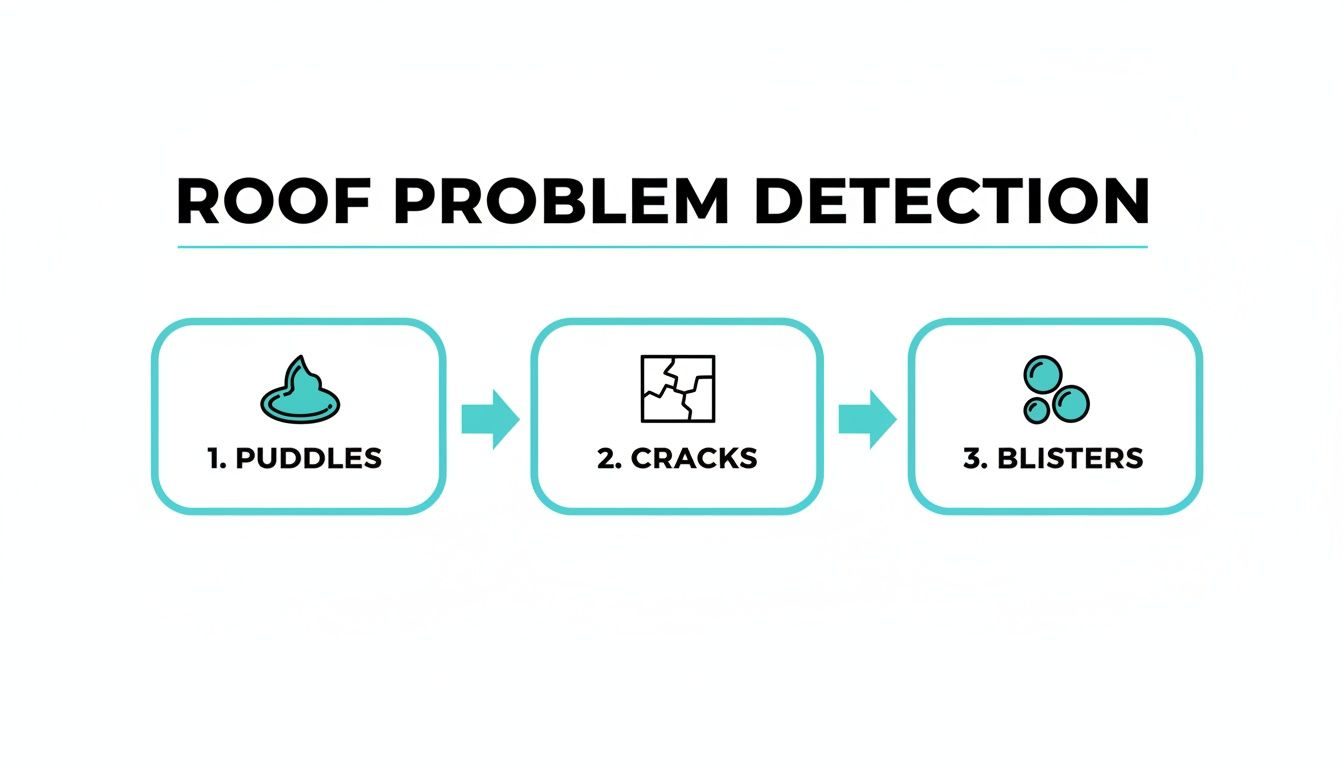
It is a good reminder that while the dripping ceiling is the alarming symptom, the real problem is almost always on the outside, which is why a professional diagnosis is so important.
Once you have managed the immediate chaos and made the area safe, it is time to call in the experts. For a fast response to an emergency flat roof repair in Windsor, Slough, Maidenhead, or anywhere across Berkshire, give All Custom Roofing a call. We will get someone out to you as quickly as possible.
Applying A Safe Temporary Fix Yourself
When your flat roof fails during a classic British downpour, waiting for a professional can feel like an eternity. While a permanent fix from an expert is non-negotiable, a safe, temporary measure can be a property-saver, preventing thousands of pounds in water damage while you wait. This is not about attempting a full repair; it is about damage control.
The goal is simple: create a temporary barrier that redirects the rain away from the breach in your roof. It is a stop-gap solution designed purely to buy you crucial time. We will walk through two practical methods you can use: securing a heavy-duty tarpaulin and applying an emergency patch sealant. Both can be highly effective if done correctly and, most importantly, safely.
Using A Tarpaulin The Right Way
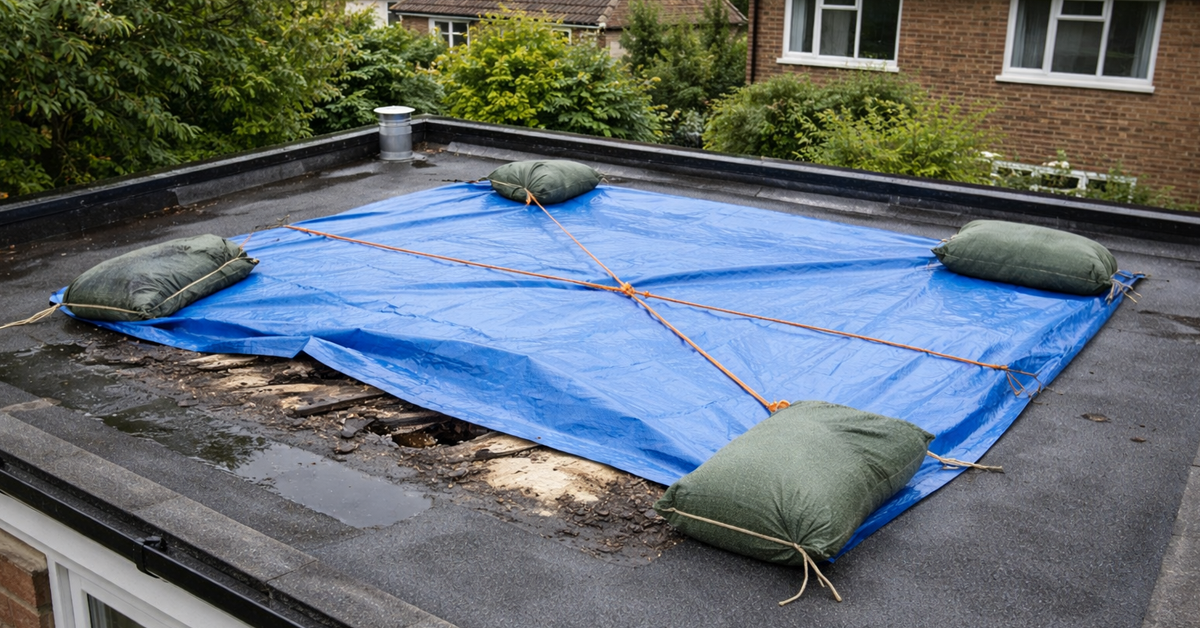
A simple plastic tarp is one of the most effective tools for an emergency flat roof repair. However, the key is securing it without causing even more damage. The absolute last thing you want to do is drive nails or screws into your roof membrane; you will just be creating new holes for water to get in later on.
Instead, the best practice is to use weight to hold the tarp in place.
- Select the Right Tarp: Go for a heavy-duty, woven tarpaulin that is big enough to cover the damaged area and extend at least a metre beyond it in all directions.
- Position It Correctly: Lay the tarp flat over the suspected leak. The upper edge must be placed higher up the roof slope than the damaged area. This ensures water runs down over the tarp, not underneath it.
- Secure with Weight, Not Punctures: Use smooth, heavy objects to anchor the edges. Sandbags are ideal, but bricks or sturdy planks of wood work fine. Place them around the entire perimeter of the tarp to stop the wind from getting underneath and lifting it.
This method effectively creates a new, temporary waterproof layer over the problem spot. It is a straightforward but incredibly useful technique to stop water ingress during a storm.
Applying An Emergency Patch Sealant
For smaller, more obvious cracks or failing seams, a liquid repair product can be a brilliant quick fix. Many modern repair compounds are designed to be applied directly to damp surfaces, which is perfect for a rainy day in Berkshire.
You are looking for a product described as a “high-build resin,” “liquid membrane,” or “emergency roof sealant.” These are thick, fibrous liquids that bond to the existing roof material and form a flexible, waterproof seal.
Here is how to apply it effectively:
- Clean the Area: Even in the rain, do your best to clear away any leaves, moss, or loose debris from the immediate area. A stiff brush will do the job.
- Apply Generously: Use a trowel or a disposable paintbrush to apply a thick layer of the sealant directly over the damage. Make sure you extend the patch at least a few inches beyond the edges of the crack to ensure a good seal.
- Reinforce If Needed: For larger gaps, some kits come with a reinforcing scrim or mesh. You would apply a layer of sealant, embed the mesh into it, and then apply another layer on top. This creates a much stronger temporary patch.
These emergency sealants are not a permanent solution. They are designed to plug a gap and keep your property dry until a professional from a company like All Custom Roofing can perform a proper, lasting repair.
Both of these DIY methods are about stabilising the situation. They provide a crucial window of time, protecting your home or business from further harm and helping to reduce the overall cost of the final repair. Once your temporary fix is in place, you can have peace of mind knowing you have done everything possible to manage the immediate crisis.
Your next call should be to a professional. Contact All Custom Roofing for expert roof repairs across Berkshire. We cover Windsor, Reading, Slough, Bracknell, Maidenhead, and surrounding towns.
Knowing When To Call a Professional Roofer
Throwing a tarpaulin over a leak or slapping on some emergency sealant during a downpour can feel like a huge win. It is a smart first move that buys you precious time. But it is crucial to see these fixes for what they are: a temporary pause button, not a permanent solution.
Relying on that DIY patch for too long is a gamble. One of the biggest risks we see is moisture getting trapped underneath. This creates a humid, sealed-off pocket, the perfect breeding ground for timber rot and mould, which can silently eat away at your roof deck and structural supports.
Another common pitfall is using the wrong materials. A sealant from a DIY shop might not be compatible with your specific flat roof membrane. A bad chemical reaction can degrade the material, turning a small problem into a much bigger, more expensive one. A professional knows exactly which products work with which systems, ensuring the fix does not cause more harm than good.
The Professional Diagnostic Advantage
When you call in a professional, you are not just getting someone to plug a hole. You are hiring a detective. Water is sneaky; it can travel a long way under a roof membrane before it decides to drip onto your ceiling. The leak you see is often nowhere near the actual source of the problem.
We are trained to spot the subtle clues of roof failure that an untrained eye would easily miss. We also work to UK building regulations like BS 5534 and use trade-grade materials that are far superior to anything you can buy off the shelf. This means any repair we do is not just a patch, it is a compliant, durable fix.
The UK roofing market is growing, with projections showing annual growth between 5.27% and 7.23% until 2031. But this boom has created a real shortage of skilled, experienced roofers. This makes finding a reliable team for an emergency flat roof repair more important than ever. You can read more about these market trends and their impact on the industry.
Situations That Demand an Immediate Call
Any leak needs a professional eye, but some situations are genuine emergencies. Do not wait to call if you see any of these signs:
- Widespread Water Damage: If water is showing up in multiple rooms or large areas, the breach is likely significant and needs an urgent assessment.
- Any Structural Sagging: A dipping roofline or a bulging interior ceiling is a major red flag. This points to a potential structural failure and is a serious safety risk.
- Damage from a Fallen Object: A tree branch or storm debris can cause hidden damage that is far worse than what you can see from the ground.
- Your Temporary Fix Is Not Holding: If water is still getting past your patch, the problem is too big or complex for a DIY solution.
For homeowners and businesses in Windsor, Maidenhead, and across Berkshire, calling a professional roofer is the definitive step toward resolving a flat roof emergency. It shifts the responsibility from your shoulders to an expert who can guarantee a safe, effective, and permanent solution.
When you contact a company like All Custom Roofing for an emergency, you get a rapid response. We will get to your property, secure the site, often with a much more robust temporary repair, and then get to the bottom of the issue. From there, we will give you a clear plan for a permanent fix. It is the only way to truly restore your roof and your peace of mind.
Documenting Damage For A Home Insurance Claim
When you are dealing with the fallout of an emergency flat roof repair, the last thing you want is a drawn-out battle with your insurance company. But taking a moment to gather the right evidence can make all the difference. Think of it like a detective building a case, the more clear, organised proof you have, the smoother the whole process will be.
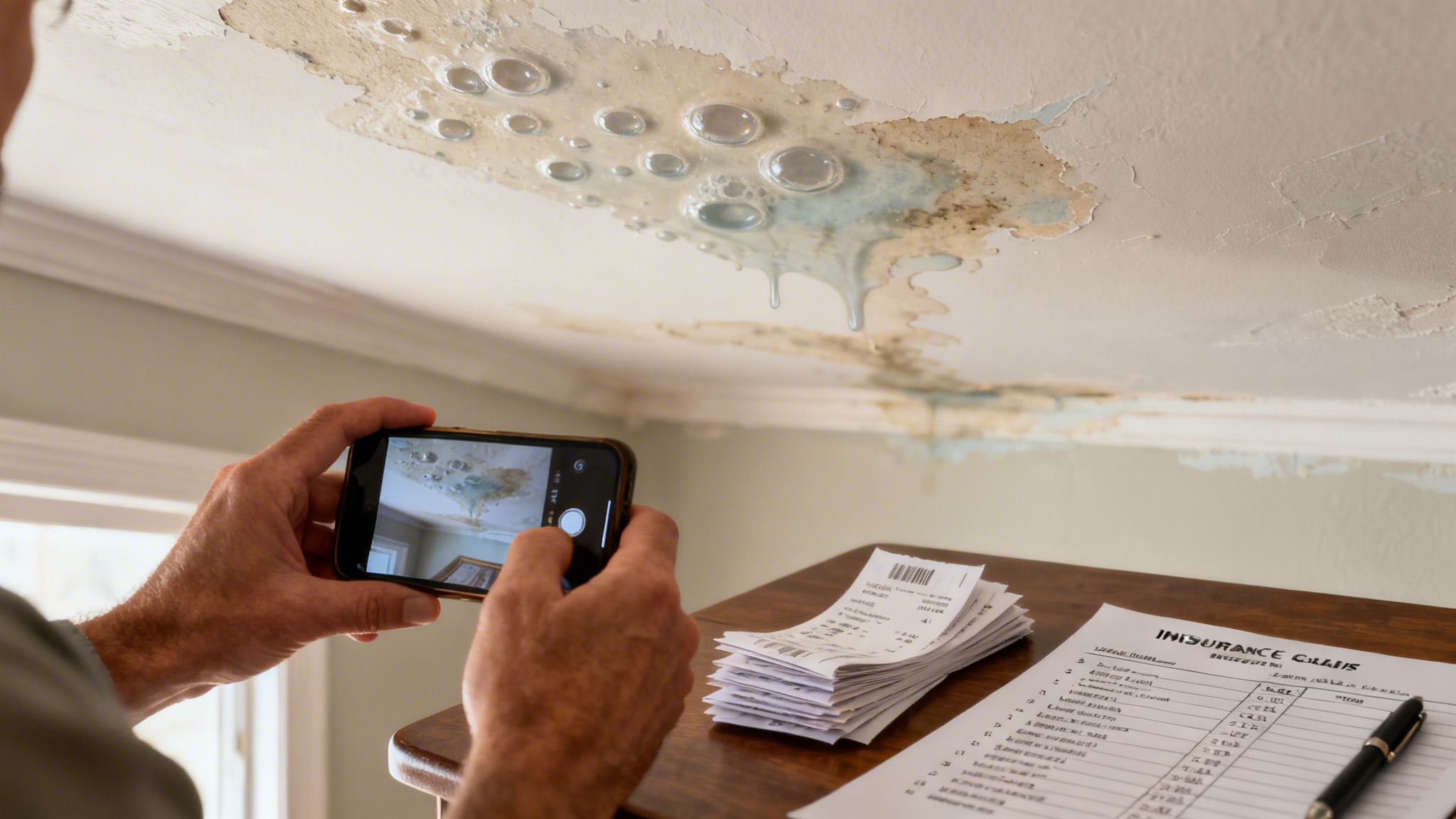
Your smartphone is your best friend here. Before you move a single thing or start any clean-up, get it out and start taking photos and videos. This initial snapshot of the chaos is vital because it shows your insurer the full, unfiltered extent of the damage.
What To Photograph And Video
Be systematic. You need to paint a complete picture for the claims adjuster, showing the cause on the roof and the devastating effect inside your home. Focus your documentation on two key areas.
Inside Your Home:
- The Active Leak: Get a video of the water dripping. It is powerful proof. Also, take photos of any puddles forming on the floor.
- Ceilings and Walls: Start with wide shots to show where the damage is in the room. Then, get right up close to capture the details, the water stains, bubbling paint, and any plasterboard that is starting to sag.
- Your Belongings: Do not forget to photograph anything that has been ruined. This includes furniture, electronics, soggy carpets, and any other personal items caught in the flood.
The Cause Outside (If It Is Safe To Do So):
- If you can see the roof from a window or safely from the ground, snap a few pictures. Look for obvious problems like seams that have pulled apart or large pools of standing water.
- Crucially, never go up on a wet or damaged roof yourself. Leave the detailed inspection to the professionals who have the right safety gear.
A great little tip I have picked up over the years: always include something for scale in your close-up shots. A ruler next to a crack or even a 50p coin next to a water stain gives the insurer a much clearer idea of the damage’s true size.
Keep Every Scrap of Paperwork
Visuals are one thing, but a solid paper trail is just as important. Every conversation, every receipt, every quote, it all forms part of your claim. Getting organised now will save you a massive headache later.
Grab a folder and keep everything related to this incident in one place. Make sure you include:
- Receipts: Hang on to receipts for absolutely everything you buy for temporary fixes, like tarps, buckets, or emergency sealants.
- Professional Communications: Keep all emails, written quotes, and final invoices from your roofing contractor. A formal roof inspection report is a hugely valuable piece of evidence that pinpoints the cause professionally.
- Insurance Call Log: Simply jot down the date, time, and name of the person you spoke to every time you call your insurer. It helps keep everyone accountable.
For a deeper dive, this homeowner’s guide to property damage assessment is a brilliant resource to make sure you have not missed anything. By giving your insurer a clear, well-documented claim, you make their job easier, which massively speeds up your chances of getting a fair and fast settlement. For homeowners across Windsor, Reading, and Bracknell, this bit of diligence can turn a nightmare scenario into something far more manageable.
How To Prevent Future Flat Roof Emergencies
Once the immediate crisis is over and the repairs are sorted, the last thing anyone wants is a repeat performance. The best way to avoid another panicked call for an emergency flat roof repair is to switch from a reactive to a proactive mindset. Honestly, a bit of straightforward, seasonal maintenance can make a world of difference, especially with the classic British weather we get here in Berkshire.
Proactive care does not have to be complicated or time-consuming. It is mostly about common-sense checks that stop the usual suspects, like blocked drains and minor cracks, from turning into major headaches. Stay on top of the small stuff, and you will catch problems long before they have a chance to cause real damage.
Adopt A Simple Seasonal Maintenance Routine
The changing seasons really put a flat roof through its paces. From soggy autumns to frosty winters, each brings its own challenges. A simple routine is your best defence.
- Autumn Check: When the leaves start to fall, they inevitably find their way into your gutters and drains. This is probably the number one cause of ponding water, which adds a shocking amount of weight and stress to your roof. Once the trees are bare, make it a habit to clear everything out.
- Spring Inspection: After the last of the winter frost has thawed, it is a good idea to have a proper look at your roof. You can often spot potential trouble from the ground, things like small cracks, blisters in the membrane, or seams that have started to lift after being frozen and thawed repeatedly.
This kind of quick visual check only takes a few minutes but can save you a fortune. For a more detailed guide, have a look at our post on flat roof maintenance tips to extend your roof’s lifespan.
A single blocked drain can cause hundreds of litres of rainwater to pool on your roof. That is like parking a small car up there, putting enormous strain on a structure not designed to hold it. Regular clearing is one of the most effective things you can do.
The Value Of A Professional Annual Inspection
While your own checks are brilliant, they cannot quite replace a professional’s trained eye. An annual inspection means a roofer can get up close to spot the subtle signs of wear and tear you just cannot see from the ground.
They will check for weak spots in the membrane, assess the integrity of flashings around vents and skylights, and make sure every seal is still watertight. It is a small investment that turns potential future emergencies into minor, planned maintenance jobs, saving you thousands in the long run.
The UK roofing industry is a huge part of the economy, valued at over £7.2 billion, and that reflects the constant need for both urgent repairs and smart, preventative maintenance.
Consider Modern Roofing Materials
When the time eventually comes for a full roof replacement, it is a great opportunity to upgrade. Modern materials are worlds away from traditional felt, designed specifically to handle the UK’s climate and last for decades.
Two fantastic options to chat about with your roofer are:
- EPDM (Ethylene Propylene Diene Monomer): This is a synthetic rubber membrane that is incredibly tough and flexible. It handles UV rays and massive temperature swings without cracking. Best of all, it is often installed in one seamless sheet, getting rid of the weak points common in old felt roofs.
- GRP (Glass Reinforced Plastic): You might know it as fibreglass. A GRP roof is applied as a liquid that cures into a hard, seamless, and totally waterproof shell. It is strong enough to walk on and can easily last for more than 30 years.
By partnering with a local specialist for long-term care and making smart choices about materials, your flat roof can be a reliable protector for your home, not a recurring source of stress.
For professional roof inspections, maintenance, and advice on the best roofing materials for your Berkshire property, contact All Custom Roofing. We cover Windsor, Reading, Slough, Bracknell, Maidenhead, and surrounding towns, providing expert care to prevent future emergencies. Find out how we can help at https://customroofing.co.uk.