 (+44) 7900 515 552
16 Oct 2026
 insurance backed guaranteeinsurance backed guarantee
You notice the stain before you notice the leak. It starts as a faint brown patch on the ceiling, or a damp corner in the loft after a night of hard rain and wind across Berkshire. Within minutes, you’re on your phone searching best roof repair near me, trying to work out who’s genuine, who’ll turn up, and who won’t make a stressful problem worse.
That search can go badly if you rush it. Roofing attracts good tradespeople and opportunists in equal measure, especially after storms around Windsor, Maidenhead, Reading, and the surrounding towns. A smart hire usually comes down to a few practical checks, a clear quote, and knowing what a proper repair process should look like on the day.
A roof leak feels urgent because it is urgent. Water rarely comes through exactly where the fault sits, so a small ceiling drip can still point to a larger issue higher up the roof slope, around flashing, under ridge tiles, or near a valley.
Start inside the house. Don’t climb onto the roof, don’t lean out of an upstairs window, and don’t put a ladder up in wet or windy conditions.
Take these steps in order:
Practical rule: Contain the water first, document the damage second, and leave the roof access to a professional.
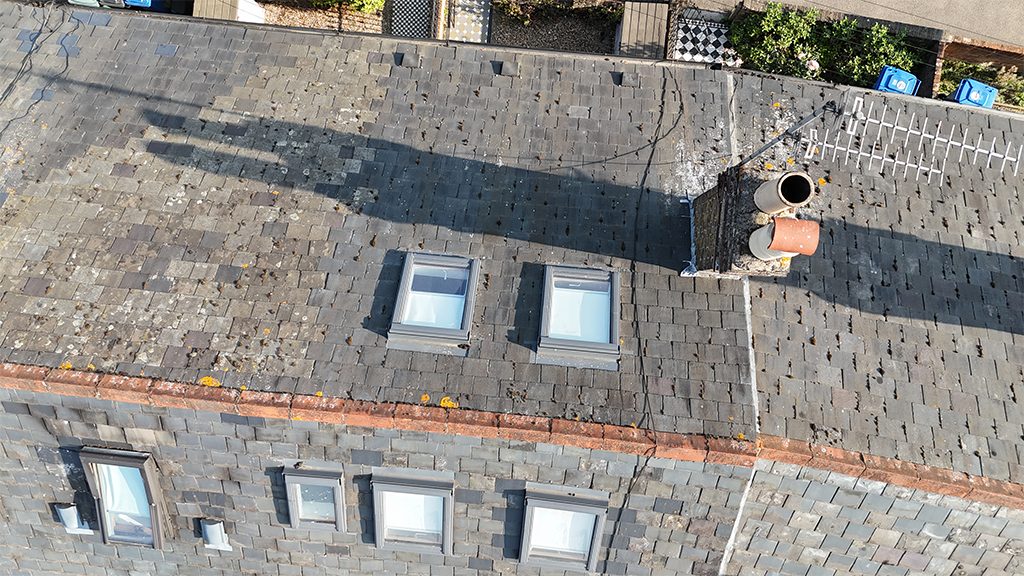
In this part of the country, leaks often show up after repeated rain, frost-thaw cycles, or gusty weather that lifts or shifts roof coverings. On older properties in Windsor and nearby villages, it’s common to find:
A single missing tile might look minor from the ground, but the underfelt beneath may already be compromised. Likewise, a leak near a chimney breast isn’t always the chimney itself. It can be leadwork, mortar failure, or water tracking from higher up the pitch.
Call for urgent help if water is reaching electrics, dripping heavily, spreading quickly across ceilings, or entering after every spell of rain. If you need a clearer breakdown of immediate actions, this guide to emergency roof leak repair in Berkshire is worth reading before you ring around.
The key point is simple. Stop the indoor damage safely, then focus on finding a roofer who can diagnose the actual cause rather than just patch the visible symptom.
A broad online search gives you everything at once. Sponsored ads, map listings, lead-generation sites, and firms based nowhere near your property. That’s why many homeowners searching best roof repair near me end up comparing companies that aren’t equal at all.
The best starting point is a mix of local presence and independent verification. Search engines are fine for names, but they shouldn’t be your only filter.
A practical shortlist often comes from:
A Berkshire roofer who regularly works on Victorian terraces, post-war semis, and newer estates will usually diagnose faster than a firm that only drops into the area occasionally. Local knowledge matters. Roof types vary, access varies, and common leak points on one housing style aren’t always the same on another.
A contractor familiar with Windsor and the wider Berkshire area should already understand a few practical realities:
A reliable roofer doesn’t just know roofing. They know the kinds of roofs you actually have in your area.
That local fit can save time and reduce confusion when the problem needs tracing rather than guessing.
Look for consistency. The business name should match across review sites, the website, the invoice paperwork, and the vehicles if they have them. The contact details should be clear, and the service area should make sense for where you live.
If you’re trying to balance cost with credibility, this guide on finding affordable roofers near me in Berkshire gives a sensible way to narrow your list without defaulting to the cheapest option.
A short list of three well-matched local firms is usually far more useful than ten random names from a search results page.
At this juncture, people either protect themselves or create problems. A roofer can sound confident on the phone and still be poorly insured, vague on scope, or unwilling to stand behind the work. Vetting isn’t paperwork for its own sake. It’s how you avoid paying twice for one repair.
Ask every contractor for the same core information. Not roughly the same. The same. That makes comparison easier and excuses harder.
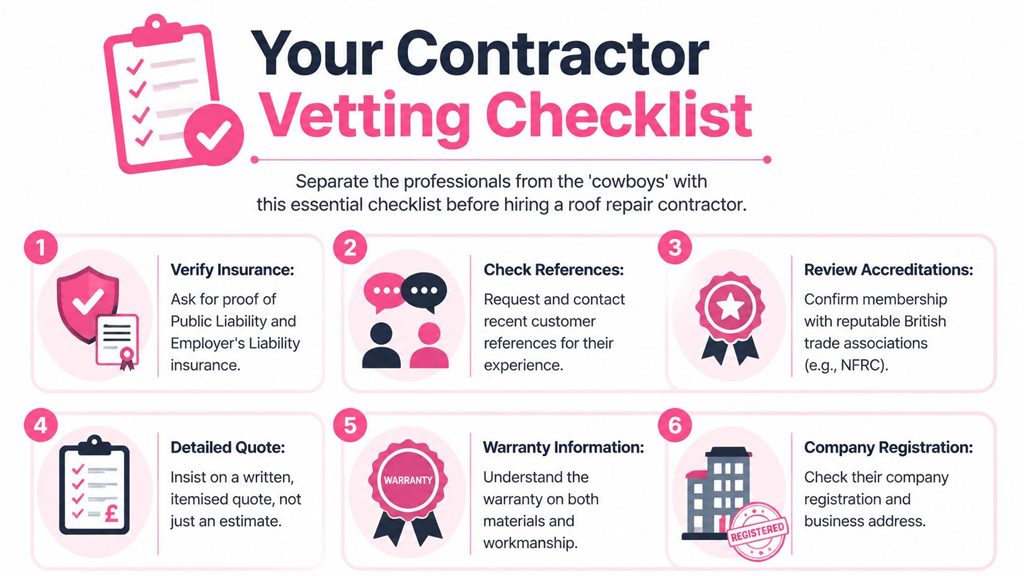
Start with these essential factors:
Ask this directly: “If you uncover more damage once the roof covering comes off, how will you document it, price it, and get my approval before doing extra work?”
That one question tells you a lot. Good contractors answer calmly and specifically. Poor ones get slippery, vague, or annoyed.
Some questions should be short and sharp. Others need a fuller answer.
A few patterns come up again and again:
If the contractor offers a free inspection, that’s useful only if it’s a genuine assessment rather than a sales visit. This article on what a free roof inspection actually involves for UK homeowners lays out what a proper inspection should include.
Vetting takes a little time. Fixing a bad repair takes much longer.
Most homeowners don’t need more quotes. They need better ones. A cheap figure on a message thread isn’t a proper quote, and it tells you almost nothing about what you’re buying.
A sound quote should tell you exactly what’s being repaired, how it will be accessed, what materials will be used, and what happens to waste. It should also be clear on whether VAT applies.
At minimum, look for these elements:
A vague quote often hides risk rather than offering value. If a roofer says “repair roof leak” and little else, you’ve no proper basis for comparison.
Below is the difference between a transparent quote and a risky one for a hypothetical tile repair on a semi-detached house in Woking.
| Quote Element | Good Quote (Transparent & Professional) | Bad Quote (Vague & High-Risk) |
|---|---|---|
| Scope of work | Identifies front left roof slope, valley edge, and chimney flashing area to be inspected and repaired | “Roof repair to leak” |
| Materials | States matching replacement tiles if available, lead flashing repair or renewal as required, breathable membrane patch if exposed | “Materials included” |
| Labour | Separates labour for removal, repair, reinstatement, and final check | One total with no explanation |
| Access | Specifies whether scaffold tower or scaffold is included and where it will be placed | No mention of access |
| Waste disposal | Confirms broken tiles, old lead offcuts, felt, and debris will be removed from site | No mention of waste |
| Timescale | Gives likely job duration and notes weather dependency | “Will do asap” |
| Variations | Explains how hidden defects will be documented and approved before extra charges | “More if worse than expected” |
| Guarantee | States workmanship guarantee terms in writing | “Guaranteed” with no detail |
| Payment terms | Sets out deposit if any, stage payment if relevant, and final payment after completion | Requests large upfront cash payment |
| VAT | Clearly states whether VAT is included or excluded | Silent on VAT |
Some warning signs aren’t dramatic. They’re just sloppy. Sloppy paperwork often leads to sloppy communication on the job.
Watch for:
If you can’t tell what you’re paying for, you can’t tell whether the repair has been done properly.
The cheapest quote can still cost more if it skips access, uses poor matching materials, or leaves waste behind. Likewise, the highest quote isn’t automatically the best if it pads the job with unnecessary work.
A practical way to compare is to ask each roofer to revise unclear points in writing. Good firms usually don’t mind. They know clear scope protects both sides. Weak firms often resist because vagueness gives them room to improvise later.
If two quotes are close in price but one is far clearer on materials, access, and guarantee, that clearer quote is usually the safer choice. Roofing repairs don’t reward guesswork.
Once the agreement is signed, most homeowners want the same thing. No surprises, no mess, and no awkward silence while people walk over the house sorting things out.
A well-run repair day has a rhythm to it. The team arrives, confirms the job, protects the working area, sets up access safely, completes the repair, checks the finish, and clears the site properly.
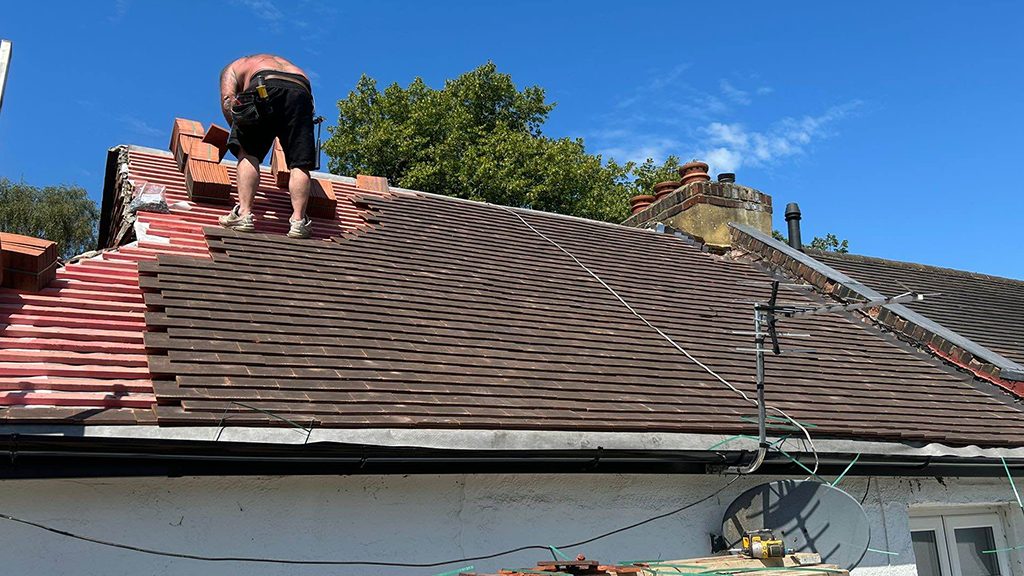
You should know who’s on site and what they’re there to do. Good teams don’t just unload and start banging about. They confirm the repair area, discuss access, and note anything sensitive such as conservatories, flowerbeds, shared drives, or fragile paving.
For many repairs, some combination of ladders, tower access, or scaffolding will be used depending on height, pitch, and complexity. On UK jobs, safe setup matters just as much as the repair itself. A quick fix done from poor access often turns into another callout later.
Typical homeowner concerns on the morning are usually practical:
The answer depends on the repair, but clear communication should come before the first tile is lifted.
Expect noise. Scraping, lifting, cutting, foot traffic, and materials being moved all sound louder when it’s above your head. That doesn’t mean anything has gone wrong.
What matters is whether the team communicates when conditions change. If they uncover rotten battens, damaged membrane, or failed leadwork beyond the visible leak point, they should show you the issue and explain the options before carrying on. That basic discipline helps avoid costly project delays and confusion later, especially when repair scope changes once the roof covering is opened up.
A useful visual example of work flow and roof-level activity can help if you’ve never had this kind of job done before.
Professional roofers don’t leave a trail of broken tile, old felt, mortar bits, and takeaway wrappers. A clean finish should include debris collection, magnet sweeping where appropriate around driveways, and a final look over gutters and ground-level areas affected by the repair.
A repair isn’t finished when the leak stops. It’s finished when the site is safe, tidy, and the homeowner knows exactly what was done.
You don’t need running commentary all day, but you should get a sensible update before the team leaves. That includes what was repaired, whether any related defects were spotted, and what paperwork follows.
Once the work is done, keep every document together. Homeowners often focus on the repair itself and then lose the quote, invoice, photos, and guarantee paperwork that matter later.
If the damage relates to a storm or another insured event, your insurer may ask for photographs, the contractor’s findings, and a paid invoice or written report. It helps if your roofer has documented the defect clearly and separated observed damage from any older wear.
For a broader explanation of how insurers often look at roof leak situations, For The Public Adjusters’ roof leak advice gives useful context on the kinds of questions that can come up during a claim.
A material warranty usually comes from the manufacturer. That might apply to certain membranes, systems, or components used in the repair.
A workmanship guarantee comes from the roofing contractor. That covers how the repair was carried out.
Those are not the same thing. A tile can be sound while the installation around it is poor. Equally, excellent labour can’t fix a defective product if the product itself fails. Keep both sets of paperwork, and make sure the documents show the business name that completed the work.
If anything is unclear, ask before final payment. It’s much easier to sort wording out while the job is still fresh than months later when a different issue appears.
Many small repairs can be completed within a day, but that depends on access, weather, and whether the visible leak turns out to have a deeper cause. Replacing a few slipped tiles is one thing. Repairing lead flashing and the surrounding area is another.
Some tasks can continue in light, manageable conditions, but many repairs can’t be done properly in active rain. Wet surfaces affect safety, and some materials need dry conditions to be installed or sealed correctly. A good roofer won’t force the job just to stay on schedule.
It usually comes down to the overall condition of the roof, not just the leak you can see. If faults are isolated and the surrounding roof covering is still sound, a repair often makes sense. If defects are widespread, recurring, or tied to ageing materials across the whole roof, a larger replacement may be the better long-term decision.
Yes, if the property is safe enough to allow it. For a true emergency, you may need one trusted roofer to make the area watertight first, then review any wider remedial work afterwards. The important thing is that even urgent jobs should still come with written scope and paperwork.
If you need clear advice and dependable workmanship, All Custom Roofing offers expert roof repairs from Windsor across Berkshire. Contact All Custom Roofing in Windsor for expert roof repairs across Berkshire. We cover Windsor, Reading, Slough, Bracknell, Maidenhead, and surrounding towns.