(+44) 7900 515 552
16 Nov 2026
 insurance backed guaranteeinsurance backed guarantee
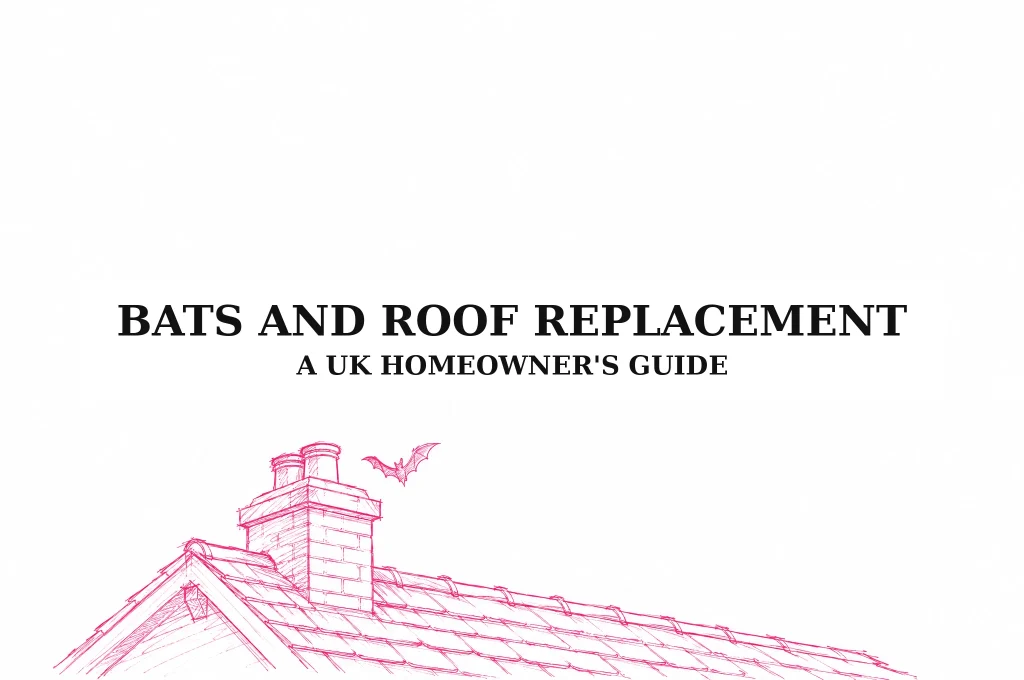
Most people planning a re-roof think about materials, cost and how long the job will take. Few think about bats. But if your roof or loft shows signs of a bat roost, UK law treats it as seriously as any other protected wildlife issue, and getting it wrong can mean a stopped job, a police report, or an unlimited fine.
This guide explains what the law actually requires, how to tell if you might have bats, what a survey costs, and why timing a re-roof around bat season matters more than most homeowners expect.
Every bat species found in the UK is a European protected species, and that protection carries into English law through the Conservation of Habitats and Species Regulations and the Wildlife and Countryside Act 1981. It applies to bats themselves and, separately, to the places they roost.
The protection covers more than the bats in the moment you see them. A roost is protected even when it’s empty, because bats are faithful to the same roosts and return to them year after year. Damaging or destroying one is an offence whether or not a bat is inside at the time.
GOV.UK’s own guidance names roof work specifically: repairing or replacing a roof, and insulating or converting a loft, are both listed as activities that can affect bats and may require a survey before you start.
It’s an offence to deliberately or recklessly disturb a bat in its roost, to damage or destroy a roost, or to block access to one. Convictions can carry up to six months in prison, an unlimited fine, or both. “I didn’t know they were there” is not a reliable defence if the signs were there to be found.
The roost is what’s protected, not just the bat. A roof with bat droppings in the loft but no bats visible on the day your roofer turns up is still legally a bat roost.
Bats are good at staying hidden, and a lot of roosts go unnoticed until someone’s up in the loft or on the scaffold. A few checks before you book a quote can save weeks of delay later.
None of these confirm a roost on their own, but any one of them is reason enough to mention it when you book your survey or your roofer’s first site visit, rather than waiting until scaffolding is up.
Not every roof job needs a formal bat survey. What matters is the type of work, the age and construction of the property, and whether there’s any existing sign of roosting. A reputable contractor will ask about this before quoting, not after.
As a rough guide, the more a job disturbs the roof void itself, rather than just the outer covering, the more likely a survey is worth having. Stripping back to the timbers, opening up the loft, or working on an older property all raise the odds of disturbing a roost that’s been there for years.
| Situation | Survey likely needed? |
|---|---|
| Like-for-like re-tiling with no changes to the roof structure, timbers or loft space | Usually low risk, though worth a visual check for droppings first |
| Full roof strip and re-cover on a pre-1960s property, especially one with a slate or clay tile roof | Yes, recommended before work starts |
| Loft conversion or loft insulation work alongside the re-roof | Yes, GOV.UK lists this specifically as triggering activity |
| Any droppings, staining or bat sightings already noticed | Yes, before any work begins |
| A listed building or a property in a conservation area with an older roof structure | Yes, surveys are often expected as part of any consent process too |
If you’re already working through the planning side of a re-roof, our guide to planning permission for roof replacement covers the other checks worth doing at the same stage, since conservation area and listed building considerations often overlap with bat-roost likelihood on the same older properties.
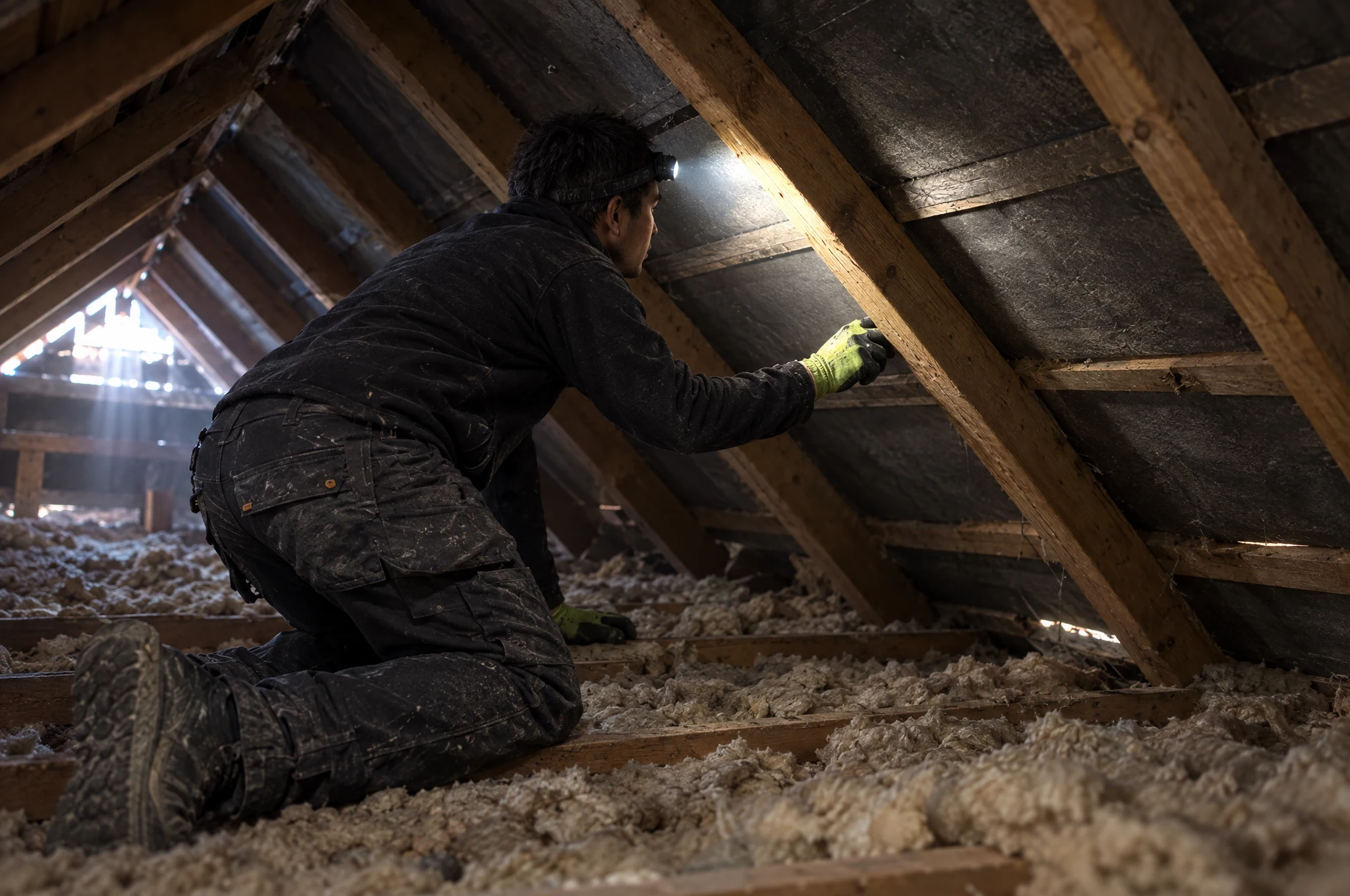
A PRA isn’t a quick glance with a torch. A licensed ecologist inspects the roof void in daylight, checking timbers, ridge gaps, soffits and the underside of tiles for droppings, feeding remains (moth wings are a common giveaway), staining, and scratch marks.
They’ll also look at access points from the outside: gaps under ridge tiles, loose flashing, missing mortar in verge details, and any point where a bat could squeeze through a gap as small as 15 to 20mm. Most UK bat species need surprisingly little space to get in.
If nothing is found, the ecologist can usually confirm the roof is clear there and then, and work can proceed without further delay. It’s the properties with ambiguous or positive findings that move on to a Phase 2 survey.
If your roofer finds signs of bats once the job is already underway, the right response is to stop and get it checked properly, not to carry on and hope for the best. Here’s the sequence a competent contractor should follow.
The Bat Conservation Trust’s free advice service covers exactly this situation, and is worth contacting the moment anyone on site is unsure, rather than guessing and carrying on.
How long this whole process takes depends entirely on when in the year it starts. A PRA carried out in bat season that comes back clear can mean work resumes within days. A PRA outside the May to September window that flags possible signs can mean waiting several months for the confirmatory survey alone, before any mitigation plan or licence application even begins.
The cost itself is rarely what causes problems on a project. It’s the calendar that does the damage, because the second-stage survey has a hard seasonal window that no amount of budget can get around. Figures below are UK averages for 2026, and will vary by region and property size.
| Survey stage | Typical UK cost | When it can be done |
|---|---|---|
| Preliminary roost assessment (PRA) | £400 to £600 | Any time of year |
| Phase 2 emergence or re-entry survey | £800 to £1,000 | May to September only |
| Combined total, where bats are confirmed present | £1,200 to £1,600 | PRA any time, Phase 2 in season |
A PRA booked in November can happen the same month. A Phase 2 survey booked in November has to wait until the following May at the earliest. That gap is what actually derails a project timeline, not the invoice.
If a PRA in, say, January finds possible signs of roosting, the follow-up emergence survey needed to confirm it can’t legally or practically happen until bats are active again in late spring. That can turn a planned autumn or winter re-roof into a project that doesn’t restart until the following summer.
This is exactly why checking for signs of bats before you book your roof, rather than after scaffolding goes up, matters. It’s also worth reading alongside our guide to how long a roof replacement actually takes, since a bat-roost delay is one of the few things on that list that can genuinely add months rather than days.
A contractor who ignores clear signs of bats to keep a job moving isn’t just risking a fine, they’re putting your project at legal risk too, since the law applies to whoever carries out the work, not only to the ecologist who should have been called in.
This is one of the genuine, practical reasons CORC membership and a properly insurance-backed guarantee matter beyond the obvious workmanship reasons. A contractor who knows to pause and check is protecting your project from a legal problem, not just a building one. It’s worth asking any roofer directly, before you book, what they’d do if they found droppings in your loft. Our guide on how to choose a roofing contractor covers the wider questions worth asking alongside this one. A straight answer that includes “we’d stop and bring in an ecologist” is what you want to hear. Vague reassurance that it “shouldn’t be an issue” is worth pressing on further.
Bats favour older roof structures: timber frames with gaps under ridge tiles, loose-fitting slate, and the kind of weathered eaves common across the Victorian and Edwardian housing stock found right across Windsor, Maidenhead, Chertsey and the wider Berkshire and Surrey towns we work in.
Many of these properties also sit in conservation areas or carry listed status, which means bat-roost likelihood and planning considerations often arrive together on the same job. If you’re dealing with both, it’s worth reading our guide to the Party Wall Act and roof replacement too, since terraced and semi-detached period homes in this area frequently raise more than one of these checks at once.
Towns with a high proportion of pre-war housing, mature gardens and tree cover close to the roofline, think Chertsey’s older riverside streets or the Georgian core around High Wycombe, tend to see more bat activity than newer estates. It’s not a reason to avoid a re-roof, just a reason to budget a survey into the planning stage rather than treating it as an afterthought.
If you’re re-roofing with an eye on selling later, it’s worth knowing that a buyer’s surveyor can ask whether bat surveys were carried out, particularly on an older property. Being able to show a clean PRA, or a completed mitigation plan if bats were present, is a straightforward answer to have ready rather than a gap in the paperwork.
This sits alongside the other documentation worth keeping for a future sale, the kind covered in our guide to whether a new roof adds value when you sell. A re-roof done properly, with the right checks at the right stage, is one less question for a buyer’s solicitor to raise.
No, provided the work pauses and follows the correct process once bats are found. An insurance-backed guarantee covers the quality and completion of the roofing work itself. What it doesn’t cover is a contractor who presses on illegally after finding clear signs of a roost, which is a separate legal problem, not a workmanship one.
A single sighting is still worth mentioning to your roofer or surveyor, since bats roost in small numbers as well as large colonies. It may not need a full survey, but a quick daytime check by someone experienced is far cheaper than finding out partway through the job.
Not directly. Bats are drawn to the gaps, voids and access points a roof offers rather than the specific tile or membrane used. A well-sealed, modern roof can still have a roost if there’s an existing access point under the ridge or at the eaves that isn’t closed off.
No. It’s illegal to disturb, capture or move bats or to block their access to a roost without the right licence, even if your intention is to relocate them safely. Any removal or exclusion work has to be done by, or under the supervision of, a licensed ecologist.
No. A straightforward like-for-like re-tile with no sign of roosting and no loft work involved is usually low risk. Full roof strips, loft conversions, older properties and anywhere with existing signs of bats are where a survey genuinely matters, as set out in the table above.