
An asphalt roof repair usually means patching up cracks, sorting out blisters, or sealing leaks on flat or low-sloped roofs made from bitumen. It’s a tough, durable material that’s incredibly common across the UK, but it still needs a bit of TLC to handle our unpredictable weather. Keeping on top of maintenance ensures it stays the waterproof barrier your property needs.
Understanding Your Asphalt Roof and Why It Needs Repairs
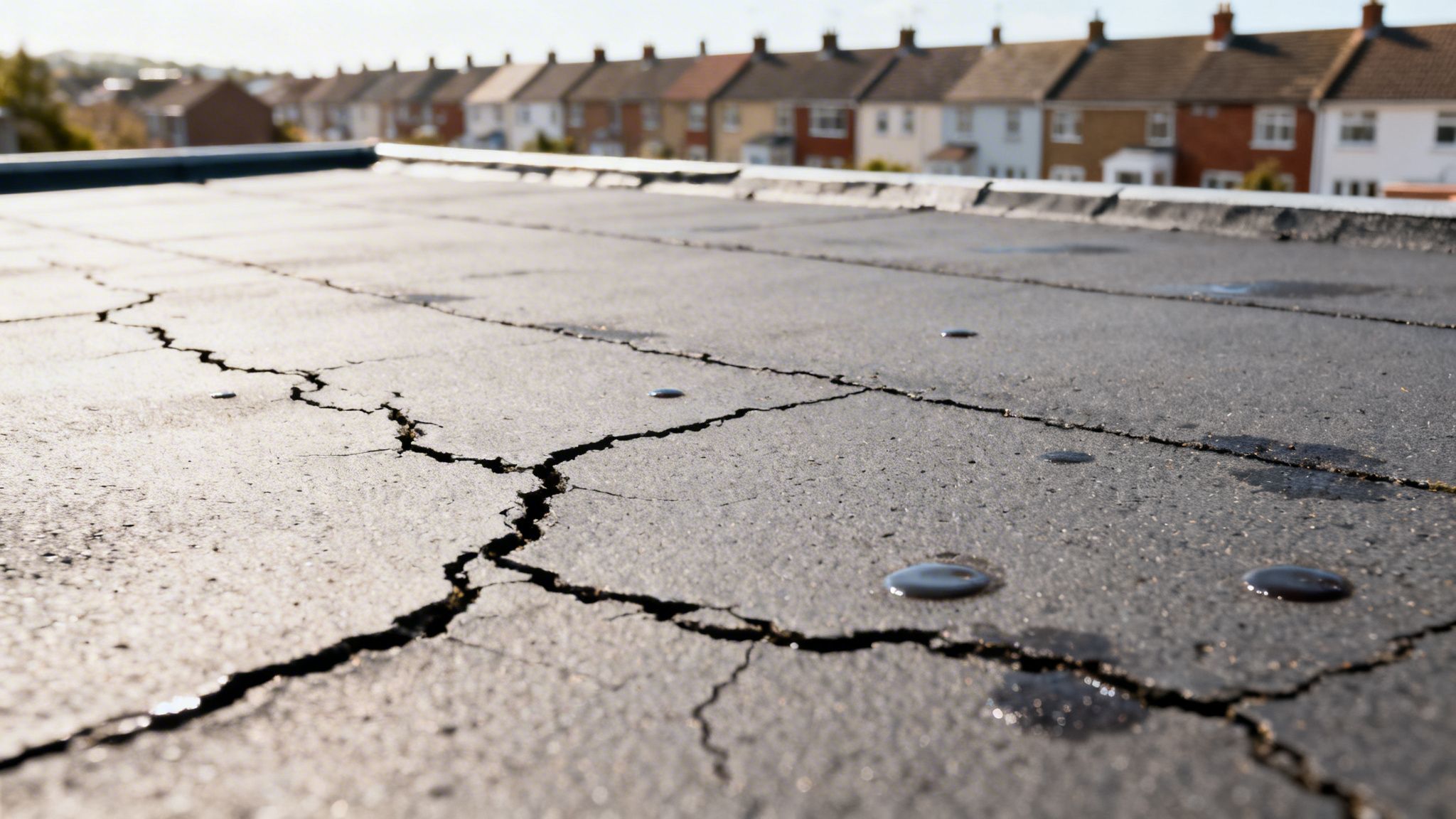
Asphalt roofing is a real workhorse for countless homes and businesses in Berkshire, from commercial buildings in Slough to home extensions in Windsor. At its core, it’s a specialised system made from bitumen, a petroleum-based material famous for its waterproofing abilities. Think of it as a seamless, resilient coat painted onto your roof, specifically designed to fend off the persistent rain and fluctuating temperatures we get here in the UK.
That durability is exactly why it’s such a popular choice for flat or gently sloped roofs, where water tends to hang around longer than on a pitched roof. But of course, no material is invincible. Constant exposure to the elements will eventually take its toll, making a timely asphalt roof repair essential to stop a small issue from snowballing into a major structural headache.
Common Problems That Affect Asphalt Roofs
The first step to effective maintenance is knowing what you’re looking for. Over time, you might start to spot changes on your roof’s surface that are tell-tale signs of trouble brewing. Each problem has its own cause and needs a specific fix to get it right.
Here are a few of the most common culprits we see:
- Alligatoring: This is a pattern of interconnected cracks that looks a lot like crocodile skin. It happens when the sun’s UV rays bake the oils out of the bitumen, making it brittle and inflexible.
- Blistering: These are raised bubbles or pockets that pop up on the roof’s surface. They form when moisture gets trapped between the asphalt layers, turns to vapour in the heat, and pushes the surface up.
- Ponding Water: If a flat roof doesn’t have the right drainage, rainwater can collect in low spots. This standing water speeds up the breakdown of the asphalt and dramatically increases the risk of a leak.
- Splitting and Cracking: Sharp temperature swings, from frosty nights to sunny afternoons, cause the roofing material to expand and contract. After years of this, stress fractures can appear, creating a direct path for water to get in.
An asphalt roof is a bit like the skin on your hands. When it’s healthy and hydrated, it’s flexible and provides a strong barrier. But when it gets dry and brittle from exposure, it cracks easily, losing its protective qualities.
Catching these warning signs early gives you the chance to act before water seeps into your property’s structure, which can lead to far more extensive and costly damage down the line. For homeowners and landlords across Maidenhead, Reading, and Bracknell, being proactive is always the best investment. If you spot any of these issues, it’s a clear signal that it’s time to call in the professionals.
Contact All Custom Roofing in Windsor for expert asphalt roof repairs across Berkshire and the surrounding towns. We can diagnose the problem and provide a durable solution to protect your property.
How to Spot Asphalt Roof Damage from the Ground
You don’t need to get up on a ladder to get a good read on your roof’s health. In fact, a simple, safe walk around your property is one of the best ways for homeowners in Berkshire to catch the early warning signs of asphalt roof damage. If you know what you’re looking for, you can spot small issues before they snowball into serious, expensive leaks.
Start by doing a slow walk around your house, taking in the entire roof surface from a few different angles. Your first mission is to look for any areas that seem darker than the rest. These dark patches are often a dead giveaway for trapped moisture or spots where water has begun to break down the asphalt, signalling that a repair might be on the horizon.
This initial visual check can tell you a surprising amount. With the persistent UK rain, even what looks like a minor drainage problem can cause major headaches over time. Being proactive is everything.
Visual Clues and What They Mean
As you scan your roof, keep your eyes peeled for a few specific clues. Each one tells a story about your roof’s condition and the kind of stress it’s under. For example, a sagging or dipping area is a massive red flag. This usually means water is pooling up instead of draining away: a problem we call ‘ponding’.
Ponding water is a serious enemy of flat asphalt roofs. The constant weight and moisture don’t just affect the surface; they can weaken the entire roof structure, leading to significant structural damage if ignored.
Other critical signs to watch for include:
- Visible Cracks or Splits: These are basically open doors for water. They often appear after years of the roof expanding and contracting with temperature shifts, a common issue in our variable climate.
- Blisters or Bubbles: These look like bumps or pimples on the roof’s surface and are typically caused by trapped moisture or air pockets. When the sun beats down, this trapped vapour expands and pushes the asphalt layer up.
- Loose or Damaged Flashing: Flashing is the metal trim that seals the joints around chimneys, vents, and skylights. If it looks bent, rusty, or is pulling away from the roof, your property is extremely vulnerable to leaks.
A quick visual guide can make it easier to connect what you’re seeing with the potential cause.
Common Asphalt Roof Problems and Their Causes
| Symptom (What You See) | Common Cause | Potential Risk If Ignored |
|---|---|---|
| Dark patches or staining | Trapped moisture under the surface | Gradual material breakdown, leading to leaks and rot |
| Sagging or dipping areas | ‘Ponding’ water due to poor drainage | Structural damage to roof deck and joists from excess weight |
| Cracks or splits in the asphalt | Age, sun exposure, and temperature fluctuations | Direct water entry, causing leaks and underlayment damage |
| Bubbles or blisters on the surface | Trapped air or moisture expanding in the heat | Ruptured blisters can create holes, leading to immediate leaks |
| Granules collecting in gutters | Normal wear and tear, or a sign of an ageing roof | Reduced UV protection, accelerating deterioration |
| Loose or rusted flashing | Wind, rain, and age causing sealant to fail | Leaks around chimneys, vents, and other roof penetrations |
This table isn’t exhaustive, but it covers the most common issues we see on asphalt roofs across the UK. Spotting these symptoms early is the key to preventing a small problem from becoming a big, costly one.
Checking Around Vulnerable Points
While a general overview is important, you need to pay special attention to the areas where the roof meets another structure. These are almost always the first points of failure. Look closely at the seals around any chimneys, pipes, or vents that stick out from the roof.
Flashing in these areas can work its way loose after years of being battered by wind and rain. For landlords and property managers in Reading or Slough, checking these points regularly can head off tenant complaints about leaks before they even start. A careful ground-level inspection gives you the crucial information needed to decide when to call in a professional. Understanding what you’re looking at is the first step, and for more detail, you can learn more about what is included in a professional roof inspection report in our detailed guide.
A quick walk around your property every few months, especially after a heavy storm, puts you in control. It empowers you to spot issues early, connecting the visual signs to their likely causes and preventing a small repair from turning into a major crisis.
For a professional assessment of any issues you spot, contact All Custom Roofing in Windsor. We provide expert asphalt roof repair services across Windsor, Reading, Slough, Bracknell, Maidenhead, and surrounding towns.
Common Methods for Asphalt Roof Repair
So, you’ve spotted some potential trouble on your roof. What happens next? Understanding how a professional tackles the job is key. Proper asphalt roof repair is much more than just slapping on a bit of sealant from a tub; it’s a skilled process using specific techniques to create a tough, watertight seal that can handle everything the UK climate throws at it.
When you know what quality workmanship looks like, you can ask the right questions and feel confident that your roof is in good hands.
The roofer’s approach will depend entirely on what they find. A small blister needs a very different fix compared to a long split or a section where water has been pooling. A pro doesn’t just treat the symptom; they get to the root of the problem to make sure the repair lasts, whether your property is in Berkshire or any of the surrounding areas.
This quick overview shows you the usual process for identifying damage before the real work begins.
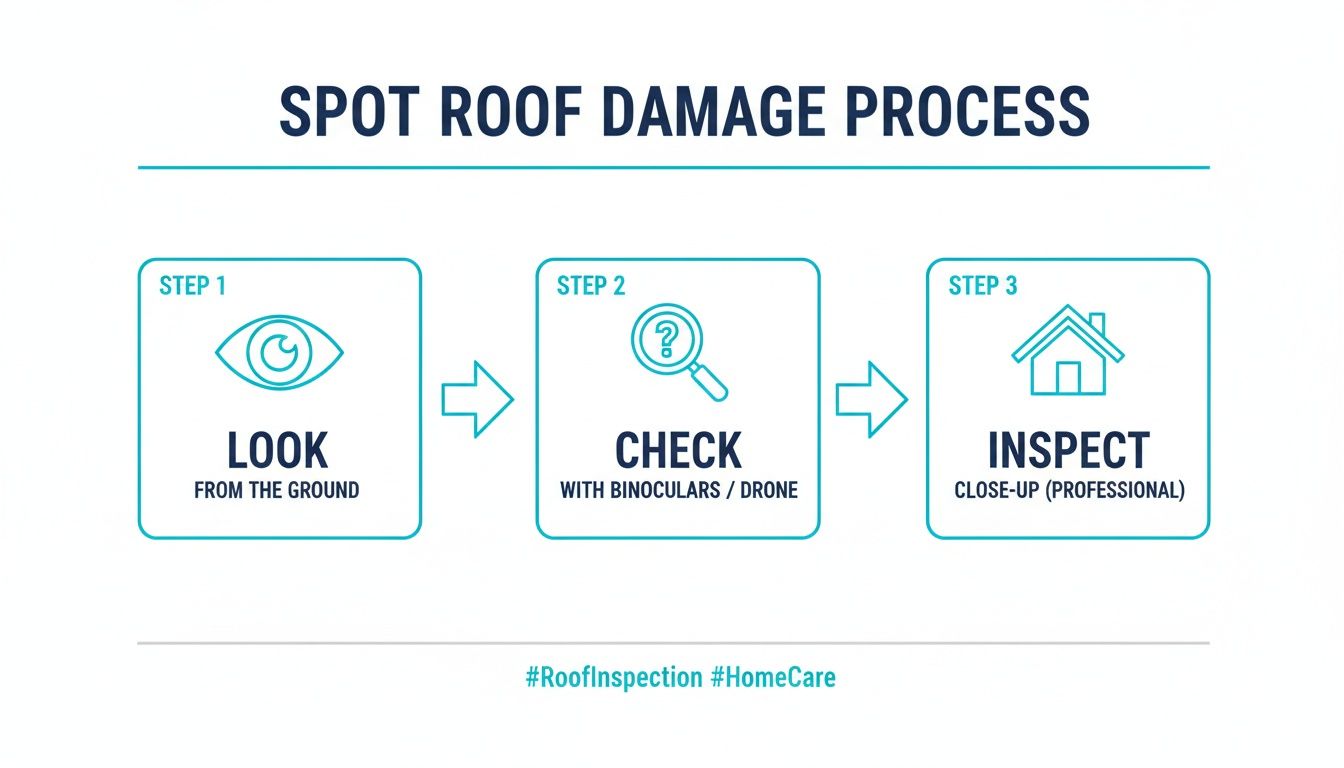
As you can see, it breaks down the inspection into three simple stages, moving from a quick visual scan to a detailed professional assessment.
Patching and Sealing Minor Damage
For smaller problems like isolated cracks, little blisters, or minor punctures, a professional patch is usually the best solution. But this isn’t just a quick smear of tar. A proper repair is a careful, multi-step process designed to make sure the new material bonds perfectly with the old, creating a seamless, strong seal.
Here’s what that process typically looks like:
- Thorough Cleaning: First, the roofer will clean the damaged area, getting rid of all dirt, moss, and loose bits. This is a critical step as any dirt left behind will stop the new materials from sticking properly.
- Drying the Surface: The area has to be bone dry. Professionals often use a torch to gently heat the surface, which gets rid of any hidden moisture that could weaken the repair.
- Applying a Primer: Next, a special bitumen primer is applied. Think of it like the undercoat you’d use before painting a wall; it creates a tacky surface so the new asphalt can form an incredibly strong bond.
- Applying the Repair Compound: A high-quality, fibre-reinforced asphalt mastic or sealant is worked into the primed area, completely filling the crack or hole.
- Reinforcement: For anything more than a tiny repair, a layer of reinforcing fabric (known as scrim) is pressed into the wet compound. Another layer of sealant goes on top, creating a multi-layered, reinforced patch that’s far tougher than sealant alone.
This methodical approach is what makes the difference between a temporary fix and a professional asphalt roof repair that will hold up for years to come.
Addressing Blisters and Bubbles
Blisters are a common sight on older asphalt roofs, but they need to be handled with care. Just popping them and sealing the hole is a recipe for failure down the line. A professional will tackle the trapped moisture that caused the blister in the first place.
The roofer will carefully slice an ‘X’ across the blister and peel the flaps back to get underneath. They’ll then completely dry out the cavity to remove all the moisture. After applying primer and repair compound inside, the flaps are pressed back down and sealed, before a final reinforced patch is applied over the whole area to make it completely watertight.
A professional repair is about restoring the integrity of the entire roofing system, not just covering up a flaw. By addressing the root cause, such as trapped moisture in a blister, the repair provides a long-term solution rather than a short-term patch.
Replacing Damaged Roof Sections
When you’re dealing with extensive damage, like widespread “alligatoring” (cracking that looks like alligator skin) or a large, deep split, patching just won’t cut it. The only real solution is to cut out the entire damaged section of the asphalt membrane and replace it. It’s a more involved repair, but it’s essential for keeping your roof structurally sound.
This process involves a few key stages:
- Cutting Out the Damage: The roofer will mark out a neat square or rectangle around the damaged section and carefully cut it out, removing the compromised material right down to the roof deck.
- Inspecting the Deck: This is the perfect chance to check the underlying roof structure for any signs of rot or water damage that might be hiding.
- Rebuilding the Layers: The roofer then rebuilds the section, starting with new underlayment, followed by fresh layers of asphalt and reinforcing felt. They make sure each layer properly overlaps with the existing roof, and the edges are heat-sealed to create a seamless, waterproof join.
This method guarantees that the damaged area is gone for good, replaced with a new, fully integrated section that restores your roof’s protective barrier. For homeowners in Windsor, Maidenhead, or Woking, understanding these methods helps you see the true value in a quote that details a proper, lasting repair.
Contact All Custom Roofing for a professional assessment and expert asphalt roof repair services across Berkshire. We cover Windsor, Reading, Slough, Bracknell, and nearby towns.
Deciding Between DIY and Professional Roof Repair
The temptation to grab a ladder and tackle a roof repair yourself can be pretty strong. It often seems like a simple way to save a bit of money, especially when you spot what looks like a tiny crack or a small blister. But here’s the thing about roofing: the line between a quick fix and a serious safety hazard is incredibly thin. A DIY job gone wrong can spiral into a costly disaster faster than you’d think.
For any homeowner in Berkshire, understanding this difference is crucial. Making the right call isn’t just about protecting your roof; it’s about protecting yourself, your wallet, and even keeping your home insurance valid. The whole decision comes down to being honest about the complexity of the job and what you can realistically handle.
So, before you even think about reaching for the sealant, let’s lay out a clear framework for what’s safe to tackle yourself versus when you absolutely need to call in the pros.
When DIY Might Be an Option
Let’s be clear: DIY asphalt roof repair should be limited to the most minor tasks, and only if you can do them without actually climbing onto the roof. We’re talking about jobs that are easily and safely reachable from a sturdy ladder, where you don’t need any specialised kit.
A sensible DIY job might look like this:
- Sealing a tiny crack: Applying a small dab of roofing sealant to a hairline crack on a low, easily accessible flat roof, like on a garage or a small extension.
- Clearing accessible debris: Scooping a handful of leaves off a ground-floor bay window roof that you can reach safely without putting a foot on it.
Even for these simple jobs, safety has to be your number one priority. Never work in wet or windy weather, and always make sure your ladder is completely secure. Saving a few quid is never worth a serious injury.
The Undeniable Case for Professional Repair
For almost every other situation, hiring a professional isn’t just the best choice, it’s the only sensible one. The risks of working at height, handling heavy materials, and correctly diagnosing what’s actually causing a leak are just too high for the average homeowner. A botched repair often leads to much bigger problems like extensive water damage, mould growth, and even issues with your home’s structural integrity.
You should always call in a professional if the job involves:
- Working at height: Any repair that requires you to get onto the main roof of your property. No exceptions.
- Significant leaks: If water is actively dripping into your home, that’s a sign of a serious breach that needs an expert eye to trace and fix properly.
- Damage larger than a tiny patch: Anything more than a minor crack, including blisters, splits, or areas where water is pooling.
- Flashing repairs: The seals around chimneys, vents, and skylights are complex. They’re a common source of leaks and need to be handled by someone who knows what they’re doing.
The UK’s roofing industry is a solid one, with plenty of experts ready to tackle these challenges safely. In fact, the market is projected to hit £7.3 billion by 2026, supported by over 12,000 roofing businesses. This level of competition means property owners in Windsor and Reading have great access to qualified professionals who deliver quality, guaranteed work. If you’re looking to hire a professional, resources for finding reliable professional roofing services can be a good starting point for your research.
Ultimately, a professional asphalt roof repair is an investment in your peace of mind. For homeowners in Slough, Bracknell, and Maidenhead, choosing an expert like All Custom Roofing means knowing the job is done safely, correctly, and with a guarantee that protects your home for years to come.
Understanding Asphalt Roof Repair Costs in Berkshire
When you spot a problem with your asphalt roof, the first question that pops into your head is almost always, “How much is this going to set me back?” The truth is, there’s no single answer. The final bill for an asphalt roof repair can swing quite a bit because it’s never a one-size-fits-all job. Getting your head around the factors that influence the price will help you budget properly and know a fair, honest quote when you see one.
For homeowners anywhere in Berkshire, from Reading to Maidenhead, the cost boils down to a few critical things. The biggest driver, by far, is the extent and type of damage. Fixing a single, small blister is a world away from repairing a large, cracked section where water has already started to creep into the structure beneath.
Key Factors That Influence Repair Costs
A proper quote from a reputable crew like All Custom Roofing will always be broken down to show you exactly what your project needs. We don’t do hidden fees, just a straightforward assessment of the labour and materials required to get the job done right.
Here are the main things that will shape the final cost:
- Size and Scope of Damage: This is the big one. A small patch is always going to be cheaper than replacing a large section. The total square meterage of the repair area is a primary factor. Before anyone can give you an accurate cost, knowing how to approach tasks like measuring a roof for shingles correctly is a fundamental first step.
- Roof Accessibility: Let’s be honest, getting up onto a flat roof on a single-storey extension in Bracknell is a lot simpler than accessing a three-storey roof on a tight terraced street in Windsor. If the job needs scaffolding or specialised safety gear, that will naturally be factored into the labour costs.
- Material Quality: Not all asphalt and sealants are the same. We only use high-quality, durable products proven to stand up to the UK’s damp, unpredictable climate. This ensures a repair that lasts. While you might save a few quid initially with cheaper materials, it’s often a false economy that leads to more repairs down the line.
Investing in a quality repair with the right materials isn’t just about fixing today’s leak; it’s about heading off future problems. A professional job saves you money and stress in the long run by making sure the fix holds up against whatever the wind, rain, and frost throw at it.
Estimated Costs for Common Repairs
While every job has its own unique wrinkles, it helps to have a rough idea of what to expect. Small, straightforward fixes like sealing a minor crack or patching a little puncture could start from a couple of hundred pounds. More involved work, like repairing damaged flashing around a chimney or replacing a medium-sized chunk of compromised asphalt, will of course cost more. For a complete look at potential expenses, check out our detailed guide on UK roof repair costs.
It’s also worth keeping an eye on market trends. Tackling a problem now could save you from much bigger bills as material and labour costs continue to climb. For example, recent industry analysis has shown steady increases in tender prices for repair and maintenance work, underscoring the importance of acting sooner rather than later.
Ultimately, the only way to know for sure what your repair will cost is to get a detailed, itemised quote. A professional will properly assess the damage, find the root cause, and walk you through the steps needed to make your roof watertight and secure again.
For a clear, no-obligation quote for your asphalt roof repair, contact All Custom Roofing in Windsor. We provide expert services across Berkshire, including Slough, Maidenhead, Bracknell, and all the surrounding towns.
Preventative Maintenance to Extend Your Roofs Lifespan
The best kind of asphalt roof repair is the one you never have to make. While a professional fix is vital when something goes wrong, a bit of proactive maintenance is your best defence against the relentless UK weather. A little regular attention can go a long way, stopping small issues from spiralling into major, expensive emergencies.
Think of it like servicing your car: you don’t wait for the engine to seize up before checking the oil. Your roof deserves the same care. By getting into a simple seasonal routine, you can protect your investment and keep your home structurally sound.
This approach puts you in control, giving you the know-how to handle basic upkeep and spot trouble long before it really takes hold. It’s simply the most effective way to look after the long-term health of your roof.
Your Essential Maintenance Checklist
For homeowners across Berkshire, a straightforward checklist can make all the difference. These are simple, actionable steps you can usually perform safely from the ground or with a securely placed ladder if you have a single-storey home.
- Keep Gutters Clear: Clogged gutters are one of the biggest culprits behind roof damage. When leaves and muck build up, water can’t drain properly. It pools and backs up against the roof edge, seeping under the asphalt and rotting the timber structure beneath.
- Conduct Seasonal Visual Checks: Make it a habit to walk around your property twice a year, ideally in spring and autumn. Look for anything that seems out of place, like loose flashing, cracked sealant around vents, or patches where the surface granules have worn away.
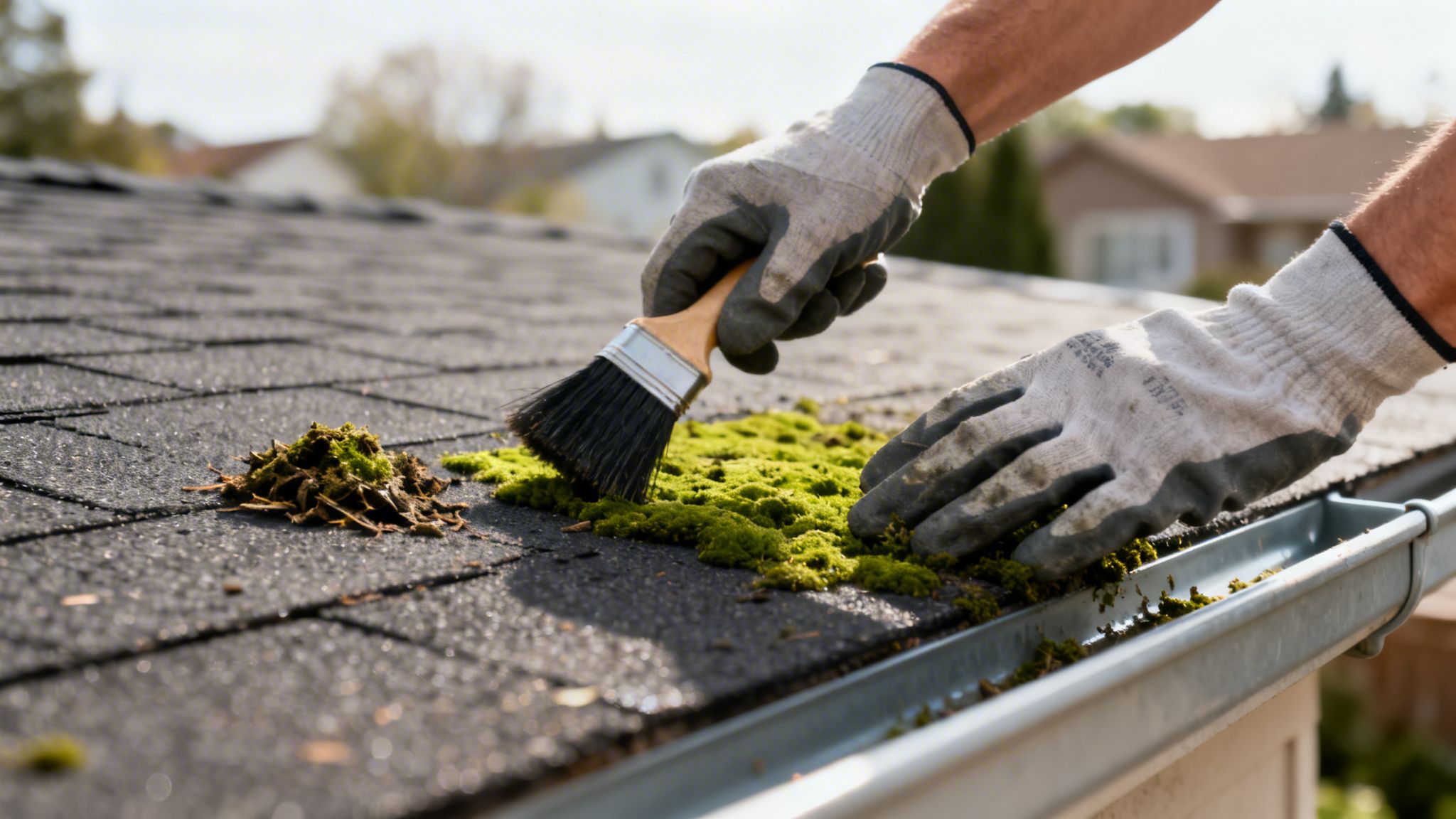
- Remove Moss and Debris: Moss, algae, and fallen leaves act like sponges, trapping moisture right against your roof’s surface. This constant dampness can break down the asphalt much faster, leading to premature ageing and leaks. A gentle brush-off is all it takes.
Proactive maintenance isn’t about avoiding repairs forever; it’s about controlling when and why they happen. A well-kept roof is far less likely to spring a nasty, expensive surprise on you after a big storm.
Your Long-Term Roofing Partner
While these DIY checks are invaluable, they don’t replace the sharp eye of a professional. An experienced roofer can spot the subtle signs of wear that an untrained eye might easily miss. For a deeper dive into upkeep strategies, you can learn more about how to extend the lifespan of your roof with regular maintenance in our dedicated guide.
At All Custom Roofing, we see ourselves as your long-term partner in looking after your property. We offer professional inspection and maintenance services designed to keep your roof in peak condition, year after year.
Contact All Custom Roofing in Windsor for expert maintenance and asphalt roof repair services across Windsor, Bracknell, Reading, and the wider Berkshire area. Let us help you protect your property for years to come.
Your Asphalt Roof Repair Questions Answered
Got questions about your asphalt roof? You’re not alone. Here are some straightforward answers to the queries we hear most often from homeowners across Berkshire and the surrounding areas.
How Long Does an Asphalt Roof Repair Typically Last?
A proper, professional repair should stand the test of time and hold up against the unpredictable UK weather for years to come. The real key is the quality of the job and the materials used for the asphalt roof repair.
- A quick minor patch to seal a small crack will likely last you 2 to 5 years.
- A more substantial repair, where we replace an entire damaged section, can easily last for over a decade.
It’s all about tackling the root cause of the problem, not just plastering over the symptoms. At All Custom Roofing, our focus is always on providing a long-term solution that fully restores your roof’s integrity.
Can My Asphalt Roof Be Repaired During Winter?
Yes, absolutely. We can certainly carry out repairs in the winter, but it’s all down to the weather on the day. Our team is equipped to work in the cold, but severe rain, ice, or snow can create safety issues and affect how well new materials bond to the old surface.
If you have an urgent leak during a bad spell, we can usually implement a temporary fix to stop the water getting in and protect your property. Once the weather improves and conditions are safe, we’ll be back to complete the permanent, guaranteed repair.
How Do I Know If I Need a Repair or a Full Replacement?
This is a common question, and the answer really hinges on two things: the age of your roof and how widespread the damage is. If the issue is isolated to one or two small spots on an otherwise solid roof, a targeted repair is almost always the most sensible and cost-effective choice.
However, if your roof is getting on a bit, say over 15 to 20 years old, and you’re seeing problems everywhere, a full replacement often becomes the smarter long-term investment. Telltale signs include widespread cracking, leaks popping up in multiple places, or any noticeable sagging in the roof structure. We provide honest, clear assessments to help homeowners across Berkshire make the right call.
For a professional inspection and a clear, no-obligation quote, get in touch with All Custom Roofing. We provide expert asphalt roof repair across Windsor, Reading, Slough, Bracknell, Maidenhead, and surrounding towns. Find out more at https://customroofing.co.uk.