 (+44) 7900 515 552
25 Nov 2026
 insurance backed guaranteeinsurance backed guarantee
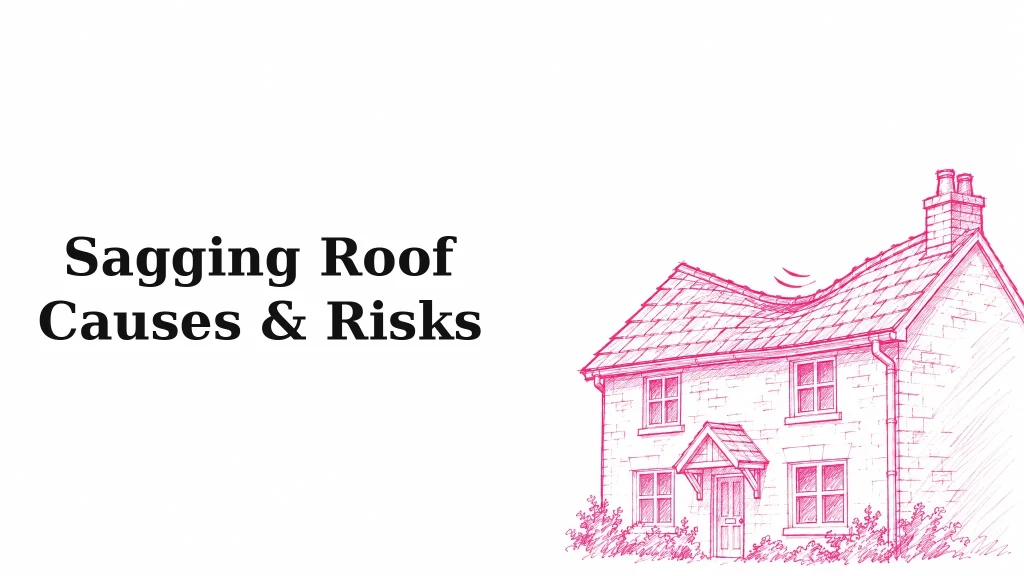
Stand across the road from your house and look at the roofline. Is it dead straight from end to end, or does it dip in the middle like the back of an old horse?
A sagging roof is one of those problems that’s easy to ignore for months, because nothing is actively leaking and nothing has fallen off. But a dip in the ridge line is one of the clearest signs a roof is giving you that something underneath it has gone wrong.
This guide explains what causes a roof to sag, how to tell whether it’s a minor repair or a genuine structural problem, what it’s likely to cost to put right, and when you need more than just a roofer involved.
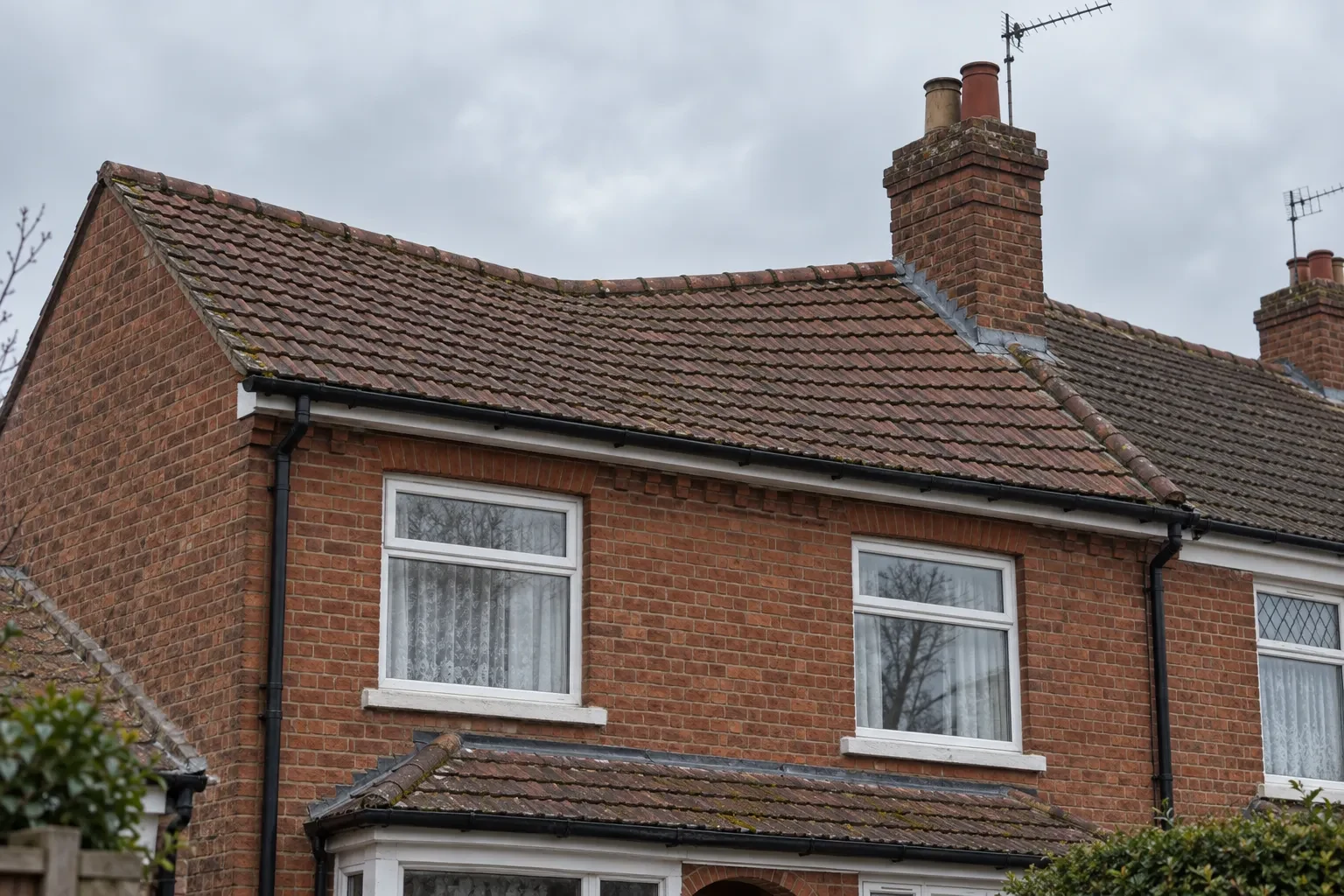
A roof is sagging when its main planes or its ridge line are no longer straight. On a healthy pitched roof, the ridge (the top horizontal line) runs dead level, and each slope is a flat, even plane down to the eaves.
Any dip, wave, or bellying in that line means something supporting the roof has moved, weakened, or failed.
It’s worth separating two different things that both get called “sagging”:
The difference matters because the first is often a contained repair, while the second usually needs a structural engineer involved before any roofer touches it.
You don’t need to get on the roof to do a first check. Stand well back, level with the gable end if you can, and sight along the ridge.
The HomeOwners Alliance puts it plainly: the ridge “should be completely straight,” and if it’s sagging at all, that “indicates structural problems with your joists.” A pair of binoculars from the garden will often show a dipping ridge line more clearly than the naked eye.
A straight ridge line is one of the simplest health checks a roof has. Once it starts to dip, the clock is already running on a bigger repair.
A sagging roof is a symptom, not a diagnosis. There are several genuinely different causes behind it, and the repair looks very different depending on which one you’re dealing with.
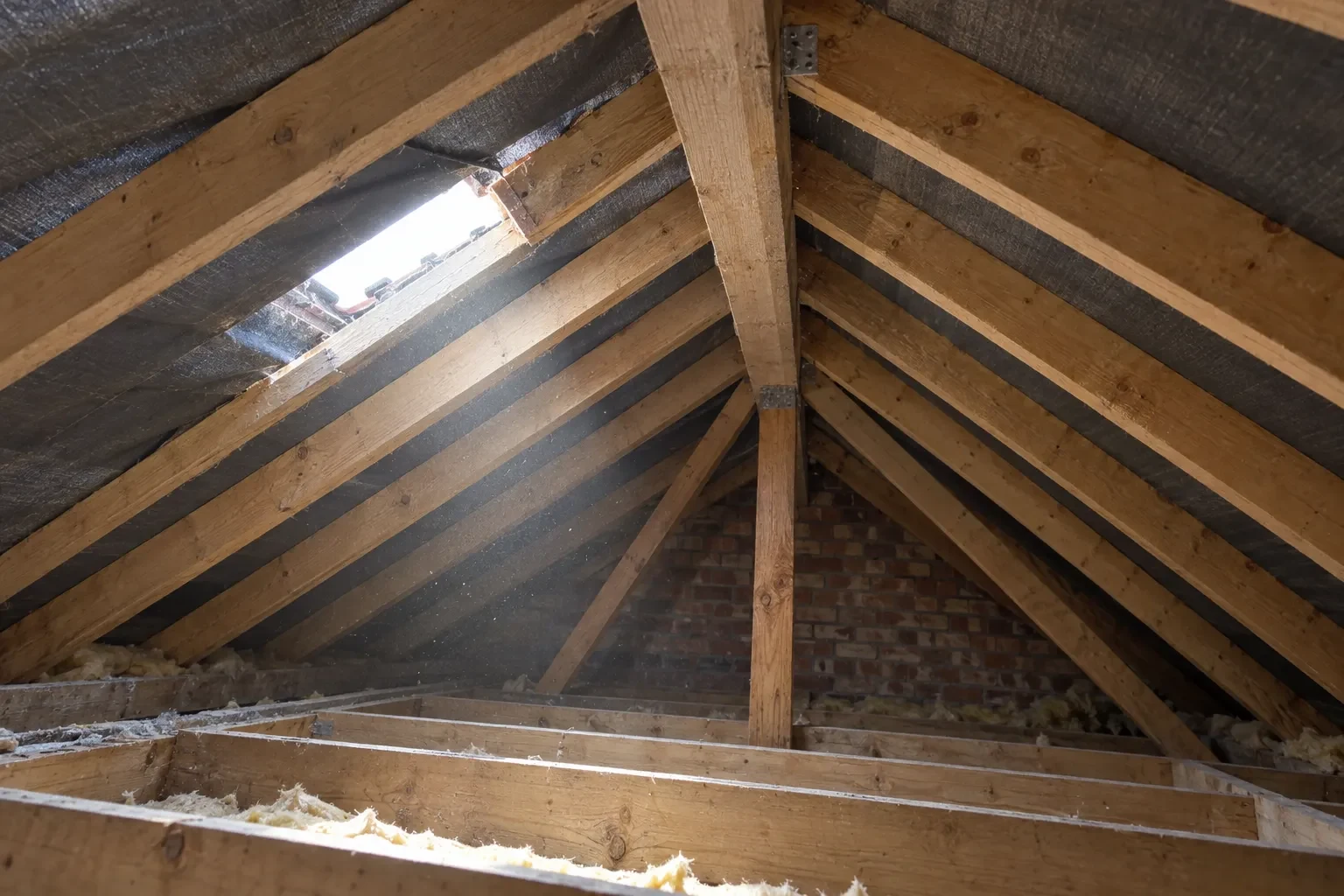
Timber loses its strength long before it visibly rots through. A rafter or purlin that’s been quietly absorbing moisture from a slow, unnoticed leak can soften and bend under the weight of the roof above it, long before anyone spots a stain on the ceiling.
This is the same decay process covered in our guide to woodworm and timber decay, and it’s one of the most common causes of a localised dip in an otherwise sound roof.
Every pitched roof pushes outward at the top of the walls it sits on. Rafters, ceiling joists, and collar ties are there specifically to resist that outward thrust and hold the structure together.
When those ties are missing, cut, or weakened, as conveyancing specialist SAM Conveyancing explains, “the roof structure does not adequately resist the outward thrust of the rafters,” and the supporting walls can begin to bow outward while the roof itself sags.
It’s a pattern seen most often in Victorian and Edwardian houses, though as SAM Conveyancing is careful to note, “the age of a property alone does not guarantee a problem.”
Older roofs were sometimes built with rafters that were adequate for the materials of their day but were never designed for a longer span, or built without the strutting and bracing a modern roof would include.
Independent engineering publication EngineerFix notes that in older homes “rafters or trusses may have been undersized for the span they cover,” and that missing bracing lets the roof structure “spread outward and settle inward” over time. It’s rarely obvious from the surface, which is exactly why a visual inspection from the loft matters.
Roofs are designed around a specific expected load. Replacing a light original covering, like slate, with heavier concrete tiles can significantly increase that load on timbers that were never sized for it.
The same applies to snow sitting on a roof for days during a cold snap, which we cover in more detail in our guide to snow and ice damage. Neither problem shows up overnight.
It’s the cumulative effect of a heavier load sitting on a structure for years, or an unusually harsh winter, that eventually shows up as a dip.
A loft conversion changes how a roof’s weight is carried, often removing or altering the original ceiling joists and collar ties to open the space up. Done properly, with new structural steels or strengthened joists specified by an engineer, this is entirely safe.
Done badly, with supports simply cut out to make room, it’s a direct route to roof spread. Our loft conversion roofing guide covers what a properly specified conversion actually involves.
Not every dip means the roof is about to fail, but a handful of signs tell you how urgently to act.
Professional surveyors use a more formal scale for exactly this kind of movement. Drawing on a Building Research Establishment study of more than 130 affected properties, the RICS Property Journal sets out a widely used crack classification.
Hairline cracks under 5mm are generally considered “essentially aesthetic problems only,” cracks between 5mm and 25mm start to cause real issues like sticking doors or penetrating damp, and anything over 25mm “was considered to require structural intervention.”
It’s also the pattern of cracking that matters as much as the width. Several small, widely spaced cracks can be far less significant than a cluster of hairline cracks concentrated in one area.
SAM Conveyancing’s own guidance is a useful reality check here too: signs like a sagging roofline or cracking “do not confirm the cause on their own.” A dip can mean anything from one rotten rafter to a roof structure that’s been slowly spreading for decades.
That’s exactly why a proper inspection, not a guess from the pavement, is the next step either way.
A sagging roof rarely fixes itself, and it tends to get more expensive the longer it’s left. A localised dip from a rotten rafter will keep softening the timber around it as moisture spreads.
Roof spread puts continuous outward pressure on your walls, and left unaddressed for long enough, a sagging roof structure can ultimately fail and collapse under its own weight, as several sources on this topic are clear to point out.
Beyond the direct safety risk, a visibly sagging roof is also exactly the kind of thing a mortgage lender’s valuer or a buyer’s surveyor flags hard, which can complicate a future sale or remortgage even if you have no plans to move any time soon.
It’s also worth checking whether your home insurance covers roof repairs, since the answer often depends on the cause and how long the problem has been developing.
There’s no single answer here, because “sagging roof” covers everything from a localised timber repair to a full re-truss of the roof structure.
The table below gives a rough sense of scale, based on figures reported by the HomeOwners Alliance, citing tradesperson platform Checkatrade, but treat these as a starting point for a conversation with a professional, not a quote.
| Likely Cause | Typical Repair | Rough Cost Range |
| One or two rotten rafters | Sistering or replacing the affected timbers | A few hundred pounds, contained job |
| Roof sagging under its own weight | Additional joists to share the load | £1,000–£2,000 |
| Structure weakened by prolonged water damage | Replacing waterlogged timbers across a wider area | £5,000–£12,000, depending on the size of the house |
| Genuine roof spread affecting the walls | Engineer-specified structural repair, sometimes a partial rebuild | Needs a structural engineer’s assessment before any figure is meaningful |
Those middle two figures come via the HomeOwners Alliance’s own guide, which is worth reading in full if you want the wider context on when a roof needs full replacement rather than repair.
The real point of the table isn’t the exact numbers, which will vary with your house and your location, it’s the range. A one-off rotten rafter and a genuine roof spread problem can look similar from the garden and cost ten times apart to put right.
A good roofer will spot the signs of roof spread or structural movement straight away, but fixing it properly, once it’s more than a contained timber repair, is a job that needs a structural engineer’s assessment first.
This isn’t about passing the buck. It’s that the engineer specifies exactly what needs to happen, new ties, strengthened joists, or in serious cases a partial rebuild, and the roofer then carries that specification out.
Skipping the engineer and going straight to a repair risks fixing the symptom without addressing why the roof moved in the first place.
If a mortgage lender or buyer’s surveyor would want an engineer’s report before touching this, that’s a strong hint you should want one too, whether or not you’re selling.
This is also where it’s worth asking any contractor you’re considering about their own track record and guarantees. All Custom Roofing is a verified member of the Confederation of Roofing Contractors, and every structural repair we carry out is backed by an insurance-backed guarantee, which protects the work itself for years after the job is finished, not just while we’re still trading.
You can read more about what an insurance-backed guarantee actually covers in our full breakdown.
A sagging roof is one of the problems we take most seriously, because getting the diagnosis wrong costs real money either way: over-specifying a repair wastes yours, and under-specifying one means paying for the same job twice.
Our team will tell you honestly whether you’re looking at a straightforward timber repair or something that needs an engineer involved first, and every structural repair we carry out is covered by our insurance-backed guarantee. If cost is a concern, we also offer FCA-regulated finance options to help spread the cost of larger structural work.
We work across Windsor, Reading, Slough, Bracknell, Maidenhead and the wider Berkshire area. If you’ve noticed a dip in your roofline, get in touch for a free inspection before it has a chance to get worse.
Not always. A dip caused by one or two rotten rafters is often a contained repair rather than a full replacement. A wider pattern of sagging across the whole roof, especially alongside cracking in the walls below, is more likely to point towards roof spread or a structural problem that needs a fuller fix. The only way to know which you’re dealing with is a proper inspection.
No. This isn’t a job for DIY, and it isn’t safe to climb onto or into a roof that may already be structurally compromised to investigate further. Leave the climbing to a professional with the right equipment and experience.
It varies enormously depending on the cause, from a few hundred pounds for a contained timber repair to several thousand for wider structural work. Reported figures range from around £1,000–£2,000 for additional joists where the roof is sagging under its own weight, up to £5,000–£12,000 where the structure has been weakened by prolonged water damage. Genuine roof spread needs an engineer’s assessment before any figure means much.
It depends on the cause. Sudden damage from a specific event is more likely to be covered than gradual deterioration from wear and tear or long-term lack of maintenance, which most policies exclude. Check your policy wording and speak to your insurer early, ideally before committing to repair work.
Yes, it’s one of the things a buyer’s surveyor is most likely to flag, and a visibly sagging roofline can prompt a lender to want a structural engineer’s report before a mortgage is approved. Addressing it before you list, with proper documentation of the fix, is almost always a stronger position than leaving a buyer’s survey to find it.
Sagging describes what you can see: a dip or wave in the roofline. Roof spread is one specific cause of that sagging, where the roof structure is pushing the supporting walls outward because the ties meant to resist that force have failed or were never adequate. Not every sagging roof is caused by spread, which is why the cause needs confirming before any repair is specified.