 (+44) 7900 515 552
23 Nov 2026
 insurance backed guaranteeinsurance backed guarantee
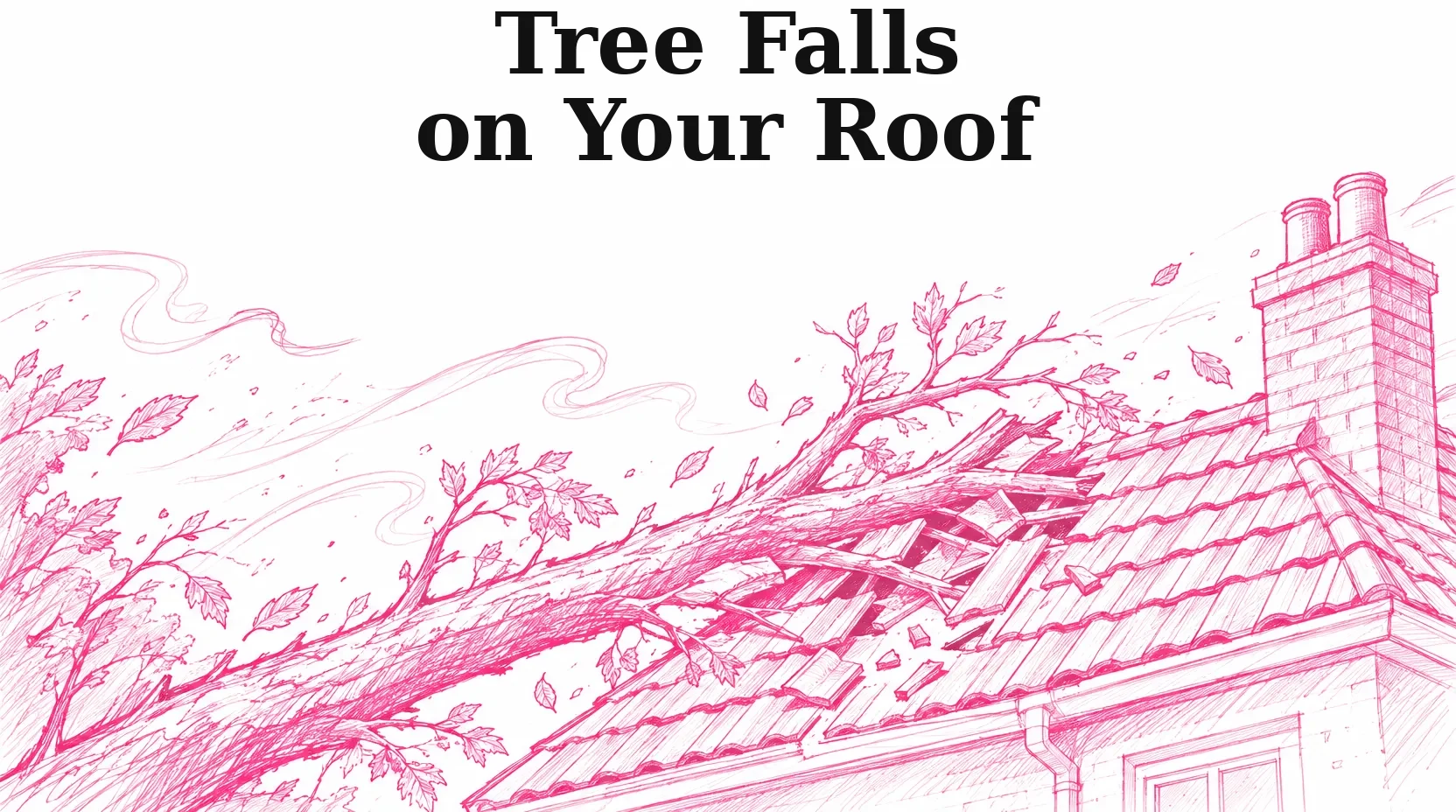
You hear it before you see it: a crack, a thud, then silence. A branch or a whole tree has come down on your roof. Your first instinct might be to grab a ladder and see how bad it is. Don’t. There’s a right order to do things in when a tree lands on your house, and getting it wrong can turn a repair job into a much bigger problem.
This guide walks through what to do in the first few minutes, how insurers actually treat this kind of damage, what it tends to cost to put right, and when to call a roofer rather than reach for a tarpaulin yourself.
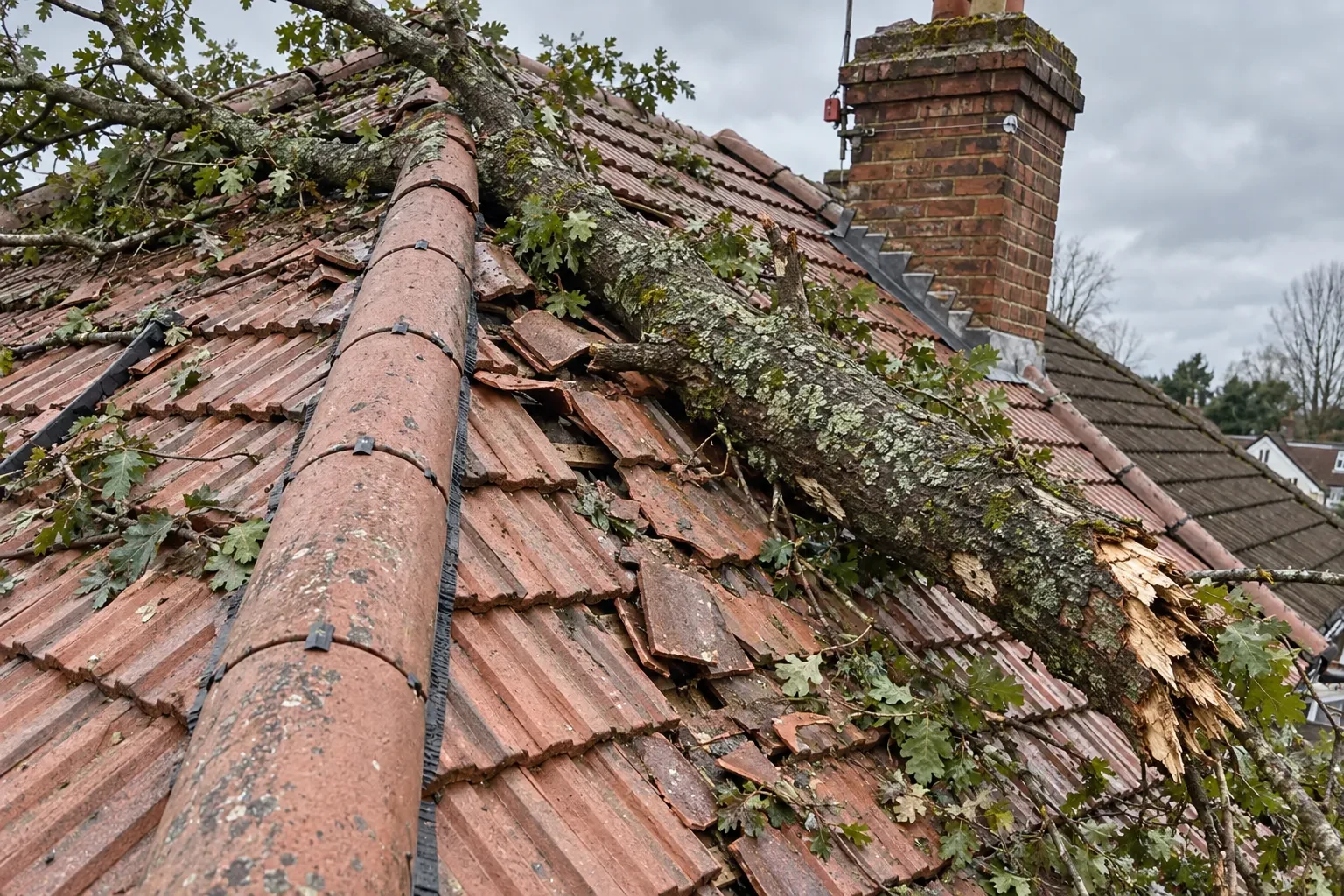
A tree coming down is a structural event, not just a cosmetic one. Treat the area around it as a hazard zone until someone qualified has looked at it.
If anyone’s injured, or the tree has come through the roof into a room below, call 999 straight away. Get everyone, including pets, out of rooms directly under or next to the damage. A ceiling that’s taken a direct hit can fail later, even if it looks intact right now.
If the tree has brought down a cable, or a branch is resting on one, don’t go anywhere near it. The Health and Safety Executive is blunt about overhead power lines: contact with them causes fatal or severe electric shock and burn injuries, and a line can be live even if it looks dead. Keep everyone back, don’t touch the tree or anything resting against it, and call your electricity network operator (not your energy supplier) or 105 from any phone to report a downed line.
It’s tempting to want to see the damage properly, but a roof that’s just taken an impact is not a safe place to be stood. Tiles can be loose without looking it, timber underneath can be cracked, and you’ve no way of judging that from on top of it. Look from the ground, or from an upstairs window, and leave the climbing to someone with the right equipment and training.
A roof that’s just been hit by a falling tree hasn’t finished moving. What looks stable from the ground can still be a long way from safe to stand on.
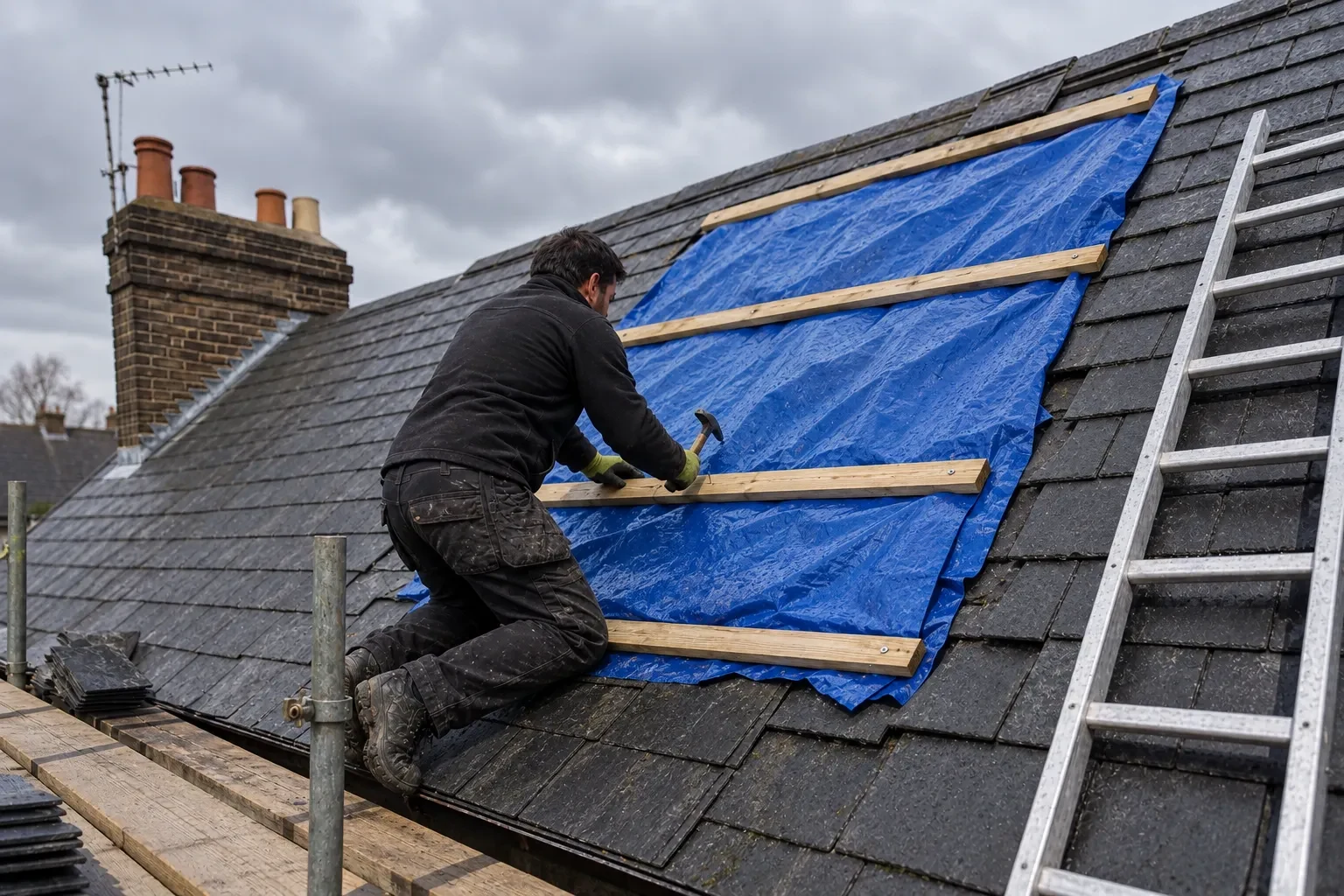
Once everyone’s safe and clear of any electrical risk, there’s a sensible order to work through.
This is usually more straightforward than people expect, with one common complication. A falling tree is treated as a sudden, external event rather than gradual wear and tear, which is exactly the kind of damage standard UK buildings insurance is designed for. For the fuller picture on what is and isn’t covered more broadly, see our guide to home insurance and roof repairs.
It doesn’t usually matter whose tree it was. If a neighbour’s tree falls on your roof, your own buildings insurer will typically still deal with your repair under your own policy, then potentially recover costs from the neighbour’s insurer afterwards if negligence can be shown, such as a tree that was known to be diseased or dangerous and ignored. You’re not expected to sort that argument out before getting your roof fixed.
What insurers won’t generally cover is damage that was really a long time coming, such as a rotten tree that had been visibly dying for years with no action taken, or damage that’s actually due to a pre-existing roof defect the tree just exposed.
Industry figures give a sense of scale here. The Association of British Insurers recorded a record £6.1 billion in UK property insurance payouts in 2025, with storm damage to homes alone reaching £244 million, up 32% year on year, and an average storm damage payout of £2,450. This isn’t a rare, one-off kind of claim.
Which?’s guidance on storm-related claims is worth following here too: contact your insurer as soon as you reasonably can rather than sitting on it, since most give you a window of several months to claim but delaying tends to let damage get worse in the meantime. Keep anything that was damaged, in case it helps with assessing the claim, and if you make a quick fix yourself, tell your insurer what you did and keep the receipt.
You don’t need to establish whose tree it was, or argue about blame, before your own roof gets fixed. That’s your insurer’s job to untangle afterwards.
The honest answer is that it depends heavily on how hard the tree hit and where. A glancing branch across a few tiles is a different job to a trunk through a rafter. The table below gives a general sense of UK pricing, based on current cost-guide data.
| Scenario | Typical UK cost range |
|---|---|
| Emergency roofer call-out | £150 – £300 |
| Minor tile or slate repair (few tiles, no structural damage) | £150 – £400 |
| Temporary protective cover (tarpaulin or board-up) | £150 – £500 |
| Moderate storm or impact damage repair | £300 – £1,200+ |
| Scaffolding, where access is needed | Around £1,000 for a typical domestic job |
| Tree removal (separate from roof repair) | £1,000 – £3,000+ depending on size and access |
Figures drawn from current UK roofing and tradesperson cost data, including MyJobQuote’s emergency roofer cost guide, which lists “fallen trees that are affecting the roof” as one of the standard triggers for an emergency call-out, and notes that a call-out charge is separate from, and doesn’t cap, the cost of the repair itself.
A direct hit from a branch or trunk can crack a rafter or damage the roof structure without leaving an obvious hole. This is the main reason not to assume a roof is fine just because you can’t see daylight from below.
Where there’s any doubt, a roofer will usually want to get into the loft before quoting, and for a genuinely heavy impact, may recommend a structural engineer takes a look at the rafters and roof deck before any covering goes back on. That’s not them padding the job out; it’s the only way to know the roof will still do its job in the next storm.
Tree damage tends to bring out opportunistic callers in the days after a storm, going door to door offering a quick fix. This is exactly the situation where checking who you’re dealing with matters most, not least. For the full checklist on vetting a contractor properly, see our guide to choosing a roofing contractor.
At a minimum for emergency, post-storm work: get a written quote before anything beyond temporary protection is agreed, check the contractor is insured and able to show it, and be wary of anyone asking for a large cash payment up front. A reputable local roofer with proper insurance, like our insurance-backed guarantee, will stand behind the repair well after the immediate crisis has passed, which matters if a hidden problem shows up weeks later.
A falling tree is usually the result of the same high winds that cause other storm damage elsewhere on the roof, so it’s worth checking the rest of the property, not just the point of impact. Our guides to storm damage repair and snow and ice damage cover the wider checks worth doing after any severe weather event, since loose tiles, strained flashing or blocked guttering elsewhere on the roof often go unnoticed next to a more dramatic tree strike.
The Met Office names a storm when it’s expected to cause disruption or damage significant enough to warrant an amber or red weather warning, running roughly from early September through to late August the following year. Named or not, any storm strong enough to bring a tree down is usually strong enough to cause damage elsewhere on a roof too.
It’s possible, in the same way any claim can affect future premiums, but a genuine storm or impact claim is a normal part of what buildings insurance exists for. Most insurers won’t penalise you for making a legitimate, one-off claim the way they might for repeated smaller claims. If you’re worried, ask your insurer directly how a claim of this type is likely to affect renewal before you decide whether to claim.
Generally, your own buildings insurer deals with the repair under your policy, regardless of whose tree it was. If your neighbour was negligent, for example the tree was known to be dangerous and nothing was done about it, your insurer may seek to recover costs from theirs afterwards. That process happens between the insurers; it shouldn’t hold up getting your own roof fixed.
Only if it’s small, clearly safe to handle, and nowhere near power lines, the roof edge, or a boundary dispute. Anything larger, anything resting against the structure, or anything near a cable should be left to a tree surgeon or, where cables are involved, the network operator. Don’t climb onto the roof to move debris.
Treat a direct impact as urgent even without a visible leak. Damage to the structure or covering often shows up as a leak days or weeks later, once the next spell of rain finds the weak point. An assessment now, with a temporary cover if needed, is far cheaper than a ceiling collapse later.
Many UK insurers allow up to around 180 days to claim after storm-related damage, but don’t treat that as a reason to wait. Reporting it promptly, with photos taken straight after the event, generally makes the claim quicker and more straightforward, and stops further damage building up in the meantime.
That’s an emergency, not a standard repair job. Get everyone out of the affected rooms, call 999 if anyone’s trapped or hurt, and call your insurer’s emergency line and a roofer straight away. Don’t attempt to clear debris from inside the property until someone qualified has confirmed it’s structurally safe to do so.
If a tree has come down on your roof, get in touch with All Custom Roofing for an emergency assessment. We cover Windsor, Reading, Slough, Bracknell, Maidenhead and the surrounding towns, with CORC-accredited, fully insured repairs and clear quoting from the first call.