(+44) 7900 515 552
11 Nov 2026
 insurance backed guaranteeinsurance backed guarantee
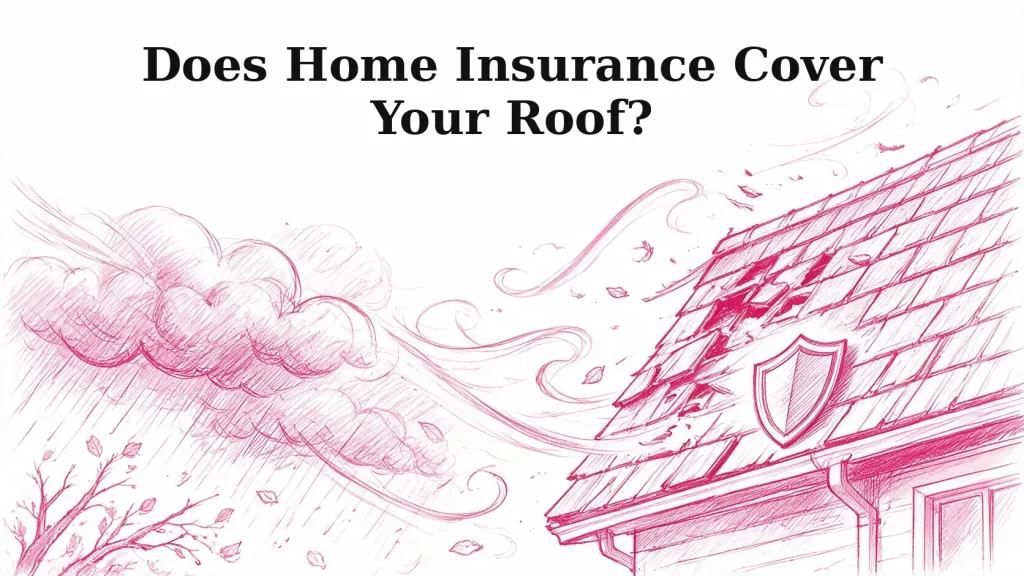
If your roof is damaged, leaking, or simply coming to the end of its life, one question comes before almost every other decision: will your home insurance pay for it? The honest answer is that it depends entirely on why the roof needs work, not just what’s wrong with it.
Insurers draw a hard line between damage that happened to your roof and damage that happened because of your roof. That line decides whether you get a payout or a bill.
This guide sets out what UK buildings insurance typically covers on a roof, what it almost always excludes, what insurers expect from you as evidence, and what your options are when the answer turns out to be no.
Most UK buildings insurance policies work on the same principle. They cover sudden, accidental, one-off events: a storm ripping tiles off, a branch coming down in high wind, a fire, or a burst pipe that soaks through from a loft.
What they don’t cover is deterioration that was always going to happen eventually. Tiles wearing out after 40 years of weather, flashing perishing with age, moss building up over seasons, or a roof that was poorly built in the first place all fall outside a standard policy.
The Financial Ombudsman Service, which rules on disputes between homeowners and insurers, puts it plainly: home and buildings insurance policies “usually cover financial loss caused by storm damage,” but commonly exclude “gradual damage” and “wear and tear.”
The burden is on the insurer to show an exclusion applies, often by commissioning their own inspection. A claim is unlikely to succeed if the roof was already in poor condition before the storm and you knew it.
The test insurers apply isn’t “is my roof in bad shape”: it’s “did something sudden and specific cause this damage, or was it coming anyway.”
That distinction explains why two homeowners with near-identical roof damage can get two completely different answers from the same insurer. One lost a dozen tiles in last week’s storm on an otherwise sound roof.
The other lost tiles that were already cracked and overdue for replacement, and the storm just finished the job. The first is a claim. The second is maintenance.
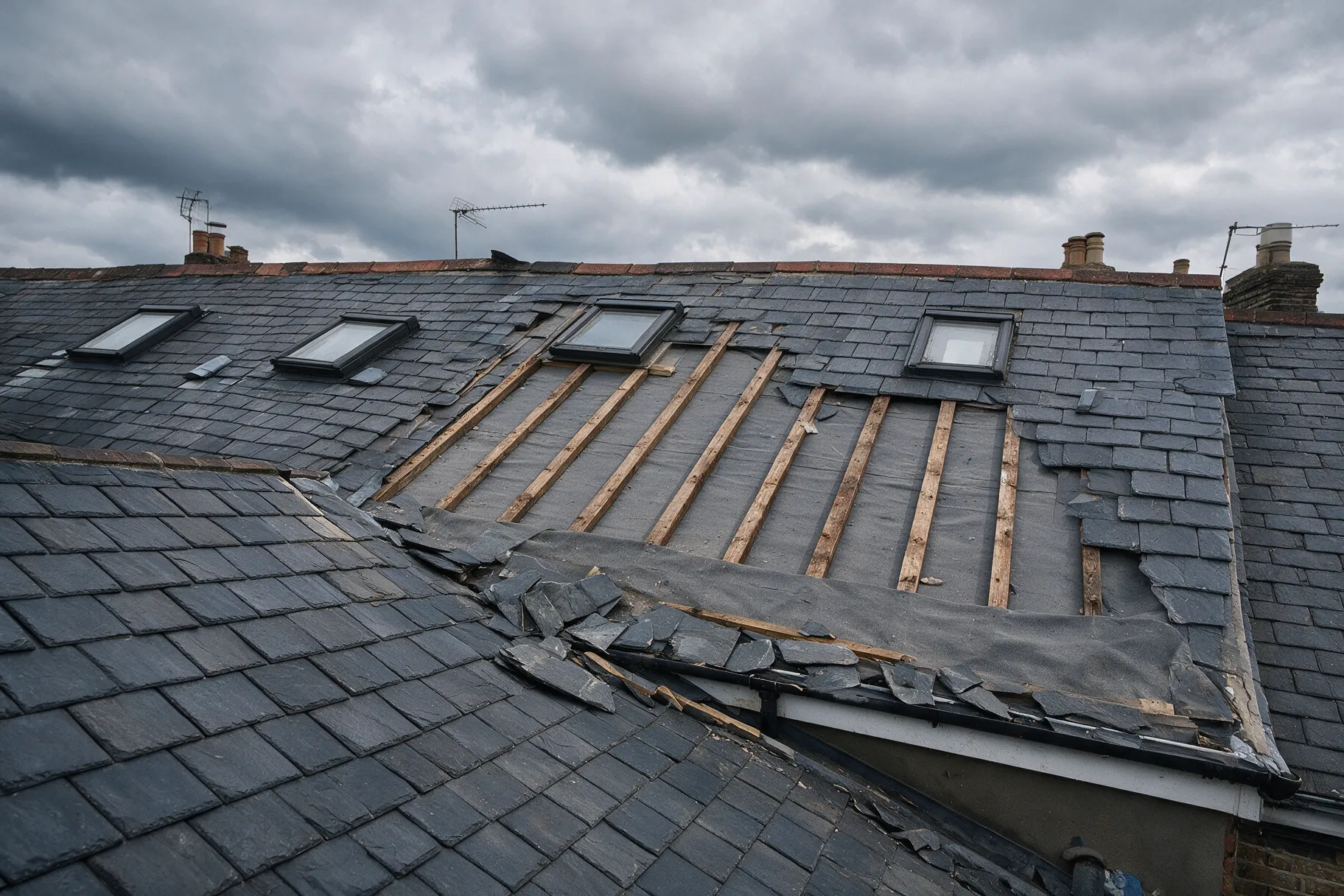
Insurers don’t take your word for what happened, and they don’t take the first explanation at face value either. The Ombudsman’s guidance notes that insurers typically lean on official weather records, such as Met Office storm data, alongside expert reports and photographs.
Very often, this includes a surveyor the insurer sends out themselves to inspect the damage firsthand. That surveyor works for the insurer, not for you.
Their job is to form a view on what caused the damage. If that view leans towards wear and tear rather than a storm, your claim can be reduced or declined on the spot.
This is a genuine, documented problem, not a rare edge case. Which?, the UK consumer body, reported on a homeowner whose roof was damaged in Storm Isha in January 2024.
The insurer’s own surveyor initially blamed wear and tear and declined the claim. It was only accepted after further checks, and full payment didn’t land until November 2025, nearly two years after the storm.
In the meantime, the homeowner had to get her own contractor’s quotes to support her damage estimate against a lowball cash offer from the insurer. The lesson isn’t that insurers act in bad faith. It’s that their assessment is one opinion, and you’re entitled to get a second one.
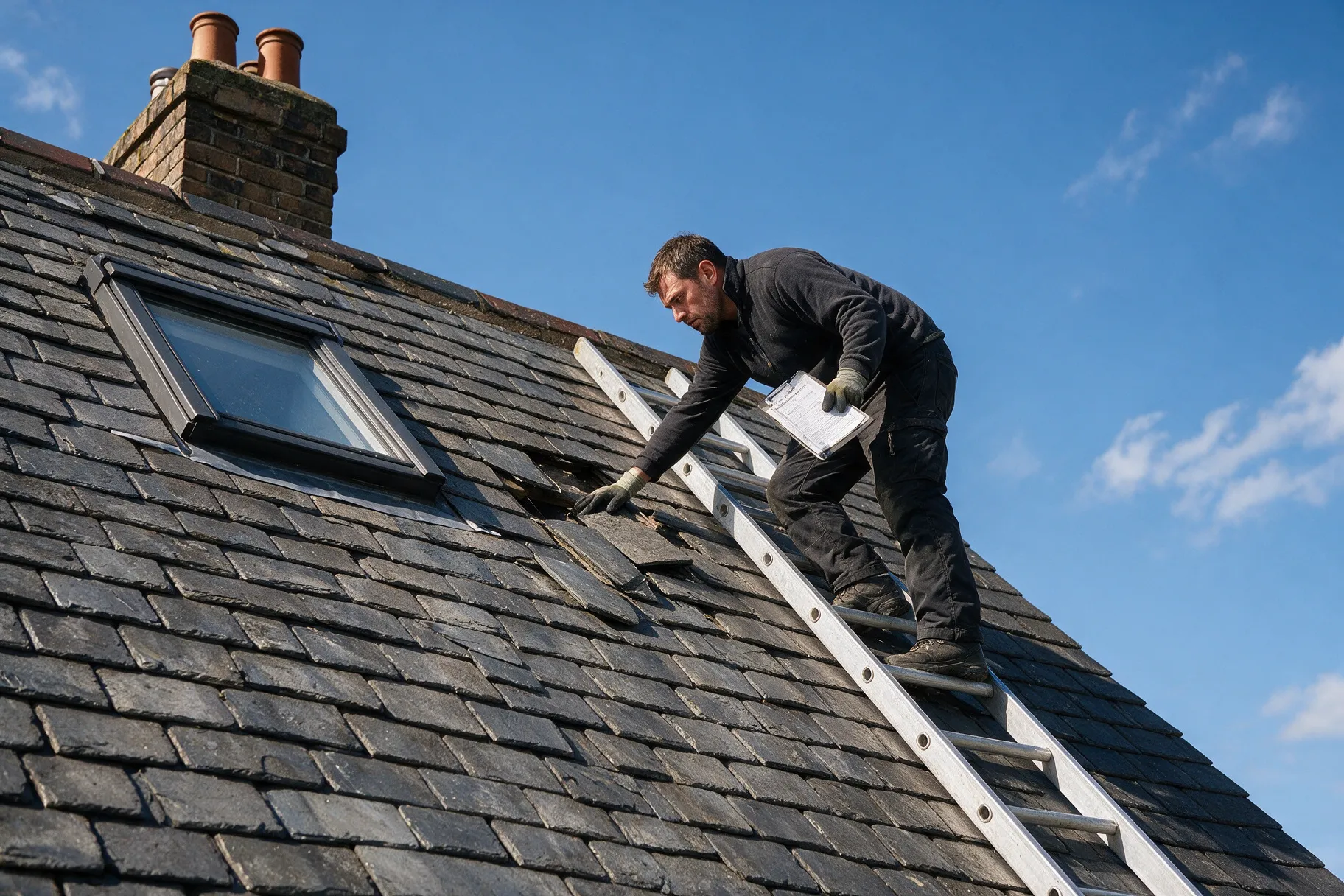
A roofer’s report that lands on the insurer’s desk alongside your claim, rather than being produced later as a rebuttal, puts you in a stronger position from day one.
Roof and storm damage claims aren’t a minor corner of the UK insurance market. According to the Association of British Insurers, weather-related property claims across the UK hit £1.2 billion in 2025, up 14% on the year before.
Storm damage to homes specifically cost insurers £244 million, a 32% jump. The average payout for storm damage was £2,450, itself up £750 on 2024.
Those numbers tell you two things. First, storm claims are common enough that insurers have a well-established, mechanical process for assessing them, so you’re not asking for anything unusual.
Second, average payouts are rising, which puts more pressure on insurers to scrutinise borderline cases carefully, cutting both ways for homeowners whose roofs are genuinely storm-damaged but weren’t in perfect condition beforehand.
| UK property insurance, 2025 | Figure |
|---|---|
| Total property insurance payouts | £6.1 billion (highest on record) |
| Weather-related property claims | £1.2 billion (up 14% / £142m on 2024) |
| Storm damage to homes specifically | £244 million (up 32% / £59m on 2024) |
| Average storm damage payout | £2,450 (up £750 on 2024) |
| Average payout, all home insurance claims | Around £6,000 |
None of this guarantees your particular claim will succeed. It just confirms that storm damage to roofs is one of the most routinely handled categories of home insurance claim in the country.
That’s exactly why insurers have detailed criteria for separating a genuine storm claim from an ageing roof that happened to be caught in bad weather.
If your roofer or the insurer’s own surveyor concludes the problem is wear and tear rather than a single damaging event, that’s usually the end of the insurance route. It’s worth knowing this isn’t unusual, and it isn’t a sign you’ve done anything wrong.
Roofs have a finite working life, and insurance was never designed to fund planned replacement of something that’s simply worn out. It’s there for the unexpected, not the inevitable.
At that point, you’ve got three broad options, and none of them need to be decided on the spot.
Straightforward if you’ve budgeted for it, but a full re-roof is a significant outlay, and most homeowners haven’t set aside tens of thousands of pounds specifically for this.
This is where a genuinely regulated finance option is worth understanding properly rather than dismissing out of hand. We work with an FCA-regulated finance partner specifically so a re-roof that isn’t covered by insurance doesn’t mean choosing between an unaffordable lump sum and a failing roof.
Because the arrangement is FCA-regulated, you get the same consumer protections you’d expect from any regulated credit agreement, rather than an informal payment plan with no oversight.
On some roofs, a full replacement can be staged, tackling the worst-affected slope or section first. This depends entirely on the roof’s condition and construction.
A decent contractor will tell you honestly whether phasing is sensible, or whether it just delays an inevitable full job at a higher total cost.
Whichever route you take, get more than one quote, and be wary of anyone who pressures you to sign before you’ve had a proper, unhurried look at the condition of the roof and the actual scope of work needed.
An insurance decline isn’t a verdict on the roof’s safety or urgency. It’s only a verdict on who pays. The roof still needs sorting either way.
There’s a separate kind of insurance worth understanding here, and it’s easy to confuse with the buildings insurance question above. An insurance-backed guarantee covers the workmanship on a new roof or repair. It protects you if the contractor who did the work goes bust, rather than covering storm damage to the roof itself.
If you’re paying for a re-roof yourself, whether outright or through finance, an insurance-backed guarantee is what protects that spend if the worst happens to the company you hired.
All Custom Roofing’s own guarantee is insurance-backed for exactly this reason, and we’re a verified member of the Confederation of Roofing Contractors, giving you an independent trade-body check on top of that.
Whether your roof turns out to be a genuine insurance claim or a self-funded replacement, the practical first step is the same: get a proper assessment from a roofer who’ll tell you honestly what’s wrong and why, in writing, before any money changes hands.
That report is useful evidence if you do end up claiming, and it’s the only sound basis for a quote if you don’t. If you’d like us to carry one out, you can get in touch for a free, no-obligation assessment, whether you’re heading towards a claim or paying for the work yourself.
We’ve written separately about what to do immediately after storm damage to your roof, how long a full roof replacement actually takes, and how to choose a roofing contractor you can trust with either job, all worth reading alongside this one.
No. General wear and tear, including a roof covering simply reaching the end of its working life, is excluded from almost every UK buildings insurance policy. Insurance is there for sudden, unforeseen damage, not planned replacement.
Get your own roofer’s written assessment and challenge the decision with that evidence. The Financial Ombudsman Service can review the dispute if you and the insurer can’t agree, and documented cases show initial declines are sometimes overturned on appeal.
It can, particularly if you’ve claimed before or the payout is large, though this varies by insurer and policy. It’s worth asking your insurer directly what effect a specific claim would have before you decide whether to proceed.
Usually not, because a blocked gutter is considered a maintenance issue rather than a sudden event, and insurers can treat resulting damage as preventable neglect.
No. An insurance-backed guarantee protects the workmanship on a job if the contractor who did it goes out of business. Buildings insurance covers damage to the structure itself from events like storms or fire. You can need either one independently of the other.
Get an independent roofer’s assessment first. It costs you nothing to find out what’s actually wrong and roughly what it would cost, and that information makes the insurance decision much easier either way.
Yes. All Custom Roofing works with an FCA-regulated finance partner, so a self-funded re-roof doesn’t have to mean paying the full cost upfront.