(+44) 7900 515 552
02 Nov 2026
 insurance backed guaranteeinsurance backed guarantee
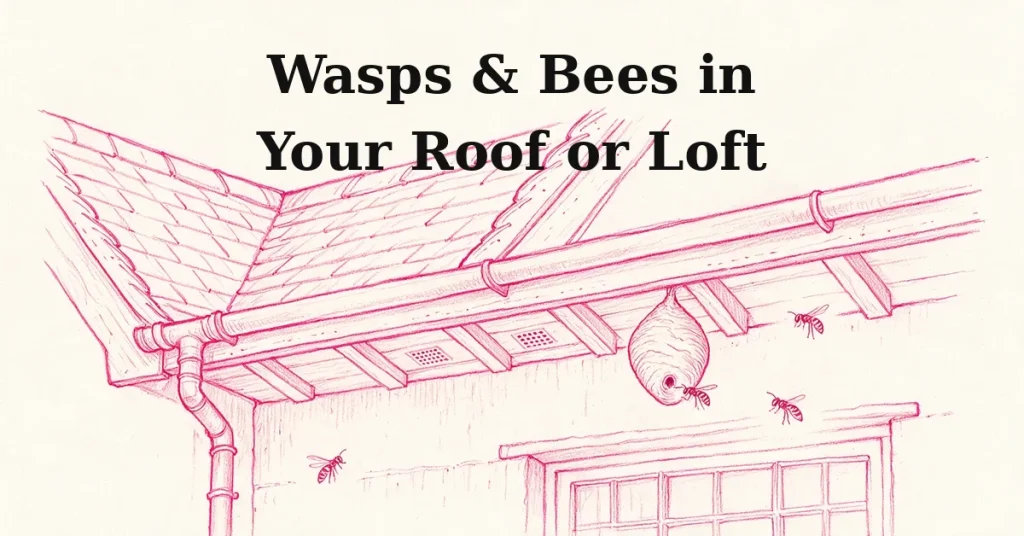
It usually starts with a hole that’s appeared in a soffit board, or a low buzzing you can hear from the landing below the loft hatch. Somewhere up there, wasps or bees have found a gap and moved in.
Pest control deals with the nest. A roofer deals with whatever let it in, and whatever’s left once it’s gone. The two jobs get mixed up a lot. This guide sets out what’s actually involved in each, what it costs, and where we fit in.
Wasps and bees don’t create their own way in. They find an existing gap and take advantage of it. A nest is often the first visible sign of a smaller maintenance problem that’s been building for a while.
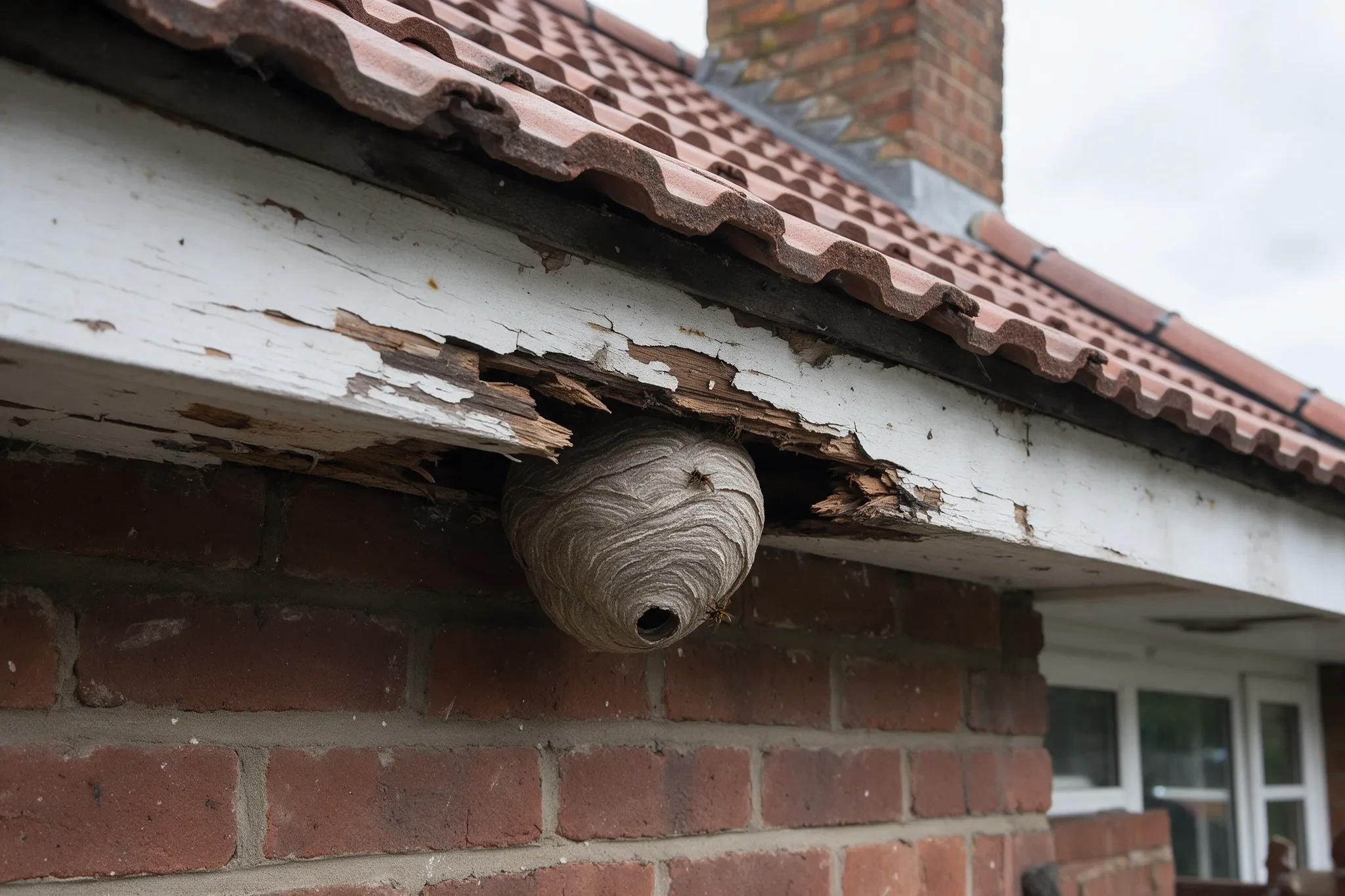
Older properties with timber fascias and soffits tend to see this more than newer builds fitted with uPVC, simply because painted timber eventually cracks and softens in a way uPVC doesn’t. It’s one more reason a tired fascia is worth replacing before it fails outright.
The two most common UK wasps, the Common Wasp (Vespula vulgaris) and the German Wasp (Vespula germanica), are slender, smooth-bodied, and 10-20mm long. They build papery, football-shaped nests from chewed wood pulp, usually in a roof void, wall cavity, or loft.
Honeybees occasionally set up a colony in a cavity wall or loft space if they find a suitable gap. This is rarer than a wasp nest and a different job entirely.
Destroying an established honeybee colony is generally discouraged. A local beekeeper will often collect a swarm for free rather than a pest controller treating it.
Bumblebees and solitary bees sometimes nest under a loose tile or in a soffit gap too. Their colonies are small, last a single season, and are rarely a reason to call anyone at all.
A handful of wasps around the eaves on a warm afternoon doesn’t mean there’s a nest nearby. A few signs together usually do.
Nest size tracks the colony’s life cycle closely, which is why a nest that looked manageable in June can be a genuine job by September.
| Time of year | Typical nest size | What’s happening |
| Spring (April-June) | Golf ball sized | A single queen builds the first cells alone |
| Early-mid summer (June-July) | Tennis ball to grapefruit | First workers hatch and the colony starts to grow fast |
| Late summer (August-September) | Football or basketball sized | Peak population and activity, often several thousand wasps |
| Autumn onward | Abandoned | The colony dies off after the first frosts and the nest isn’t reused |
The National Pest Technicians Association puts the size range at anywhere from a golf ball in spring to larger than a football by late summer, with activity peaking as the days shorten in August and September.
A wasp nest the size of a football by September isn’t an exaggeration. It’s the normal end point of a colony that started as a single queen in spring, which is why nests that go unnoticed in early summer often get a lot bigger before anyone spots them.
Mostly, no, not in the way woodworm or an active squirrel does. A wasp nest doesn’t chew structural timber or strip insulation the way timber-decaying insects or a nesting animal can. The real cost almost always sits elsewhere.
Wasps didn’t make the gap they used, they found it. That same gap, whether it’s a rotten soffit corner or a slipped tile, is just as happy to let in rain, pigeons, or squirrels next.
Once in a while, a very large, long-established nest can leave staining or a soft patch on a ceiling below it, usually from moisture trapped behind the nest rather than anything the wasps did directly. That’s the exception, not the rule.
There’s one genuine safety point worth flagging rather than ignoring: a nest built close to loft wiring or a junction box, however rare, is a reason to get an electrician to check things over once the nest is cleared, not something to assume is fine.
The honest summary: the nest itself is rarely the expensive part. Finding and properly repairing whatever let it in is what stops this happening again, with wasps or with something else.
Even most local council pest teams won’t enter an enclosed loft or wall cavity to deal with a live nest, and don’t work from ladders either. If a professional team treats it that cautiously, it’s a reasonable guide for what any homeowner should and shouldn’t attempt themselves.
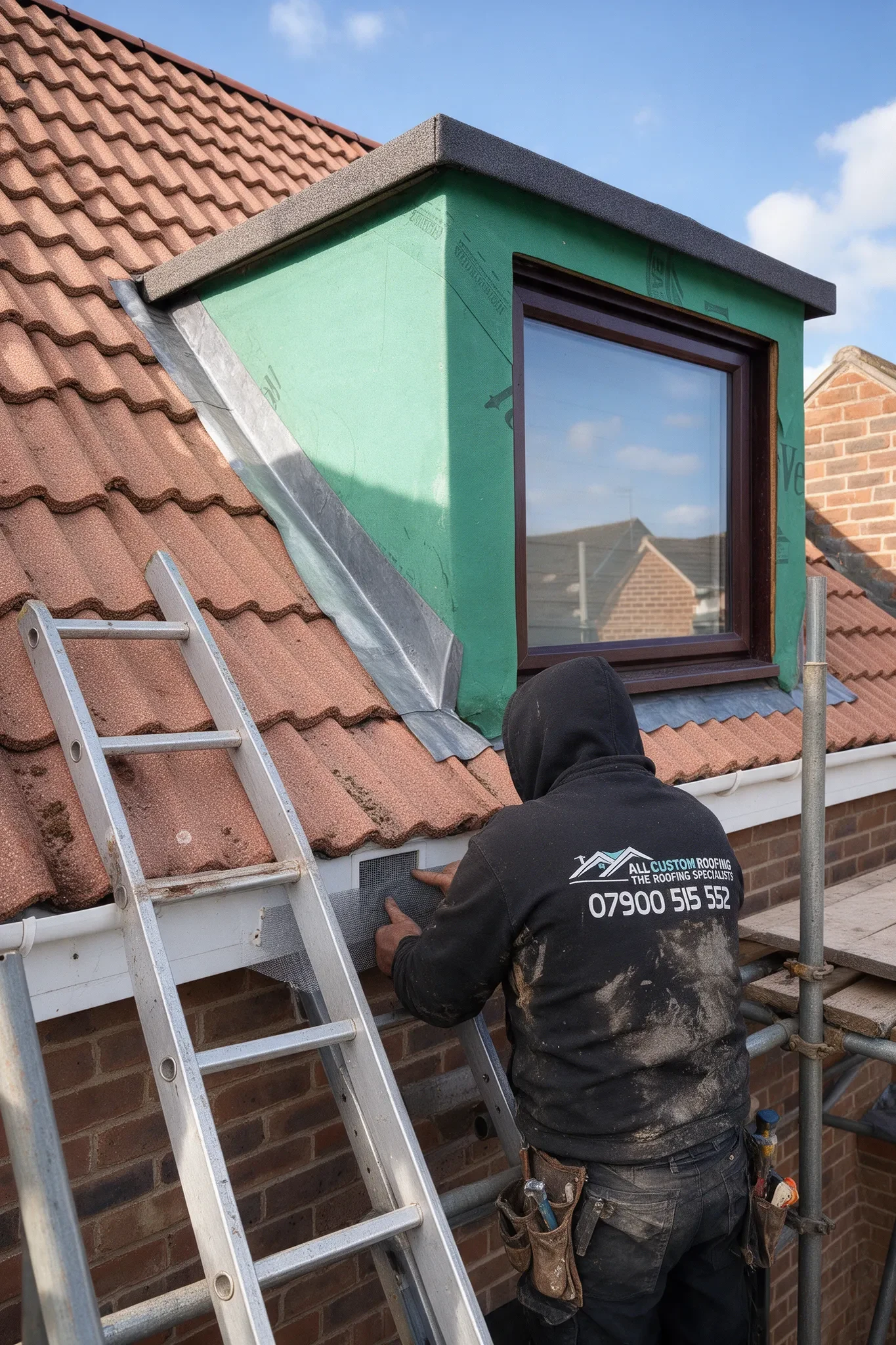
Our role starts after pest control has finished. It’s usually a small, straightforward repair rather than anything approaching a full re-roof, and it’s worth having it done properly rather than just filling the hole.
Two separate bills are usually involved: the pest control call-out, and the roofing repair that follows it. Treat them as two different jobs with two different tradespeople, even if you book them close together.
| Job | Typical UK cost |
| Wasp nest treatment (pest control) | £60-£200 per nest, more for hard-to-reach or repeat treatments |
| Localised soffit or fascia board repair | £150-£400 per section, depending on access and material |
| Insect mesh fitted to vents (prevention) | £10-£30 per vent, plus any call-out charge |
| Full fascia or soffit replacement (if rot is widespread) | Priced as part of a wider job, often alongside scaffolding |
Cost guides comparing real UK tradespeople put a standard wasp nest treatment at roughly £70 to £180, with harder-to-reach nests or a second visit pushing that higher.
If a survey finds rot running the full length of a roofline rather than one patch, that’s a bigger job, and scaffolding may be needed to do it properly. Our separate guide to roof scaffolding costs covers what drives that price up or down.
Mostly, no. Standard UK home insurance policies generally don’t cover pest control costs, including wasp or bee nest removal. Some insurers sell a home emergency add-on that covers the call-out and treatment, but that typically stops short of covering any damage the pests caused.
Damage itself is usually only covered if it’s sudden and accidental, not the slow, gradual kind caused by a gap that’s been there for a season or two.
Insurers also expect reasonable maintenance. A rotten soffit that’s been visibly failing for a while can count against a claim rather than support it.
If an insurer sees a soffit that’s clearly been rotten for a couple of seasons, “the wasps did it” won’t carry much weight. Fixing the gap before it becomes a bigger job is exactly the maintenance insurers expect homeowners to keep up with.
An established honeybee colony inside a cavity wall or loft is a more involved and usually more expensive job than a wasp nest, because the comb and colony need removing properly rather than just treating. It’s still not a roofing job on its own.
A passing swarm looking for a new home is different again, and often temporary. Many local beekeeping associations will collect a swarm for free, since a healthy colony is worth keeping rather than destroying.
Either way, our part of the work is the same as with wasps. Once the bees are dealt with, we repair whatever let them in.
No. Wasps have no special legal protection, unlike bats. You can have a nest treated or removed, though doing it yourself once it’s inside a loft or wall cavity usually isn’t advisable.
No, abandoned nests aren’t reused. Wasps do often return to the same flight path or favourable gap, which is why sealing the entry point once it’s clear reduces the chance of a new nest close by.
Away from the house in a low-traffic spot, often yes, since the colony dies off naturally after the first frosts. Inside a loft or cavity near living space, it’s safer and more comfortable to have it treated.
Wasps are slender, smooth, and yellow and black. Bees are rounder and hairier, and a bee colony tends to be quieter unless directly disturbed. Mention which you think it is when you call, since the right response differs.
No. Treating or removing a live nest is a pest control job, not a roofing one. Our part starts once the nest is confirmed gone, repairing whatever let it in.
A small nest usually doesn’t, but a very large one can compress or stain insulation directly beneath it. Worth a quick check when the entry point is repaired, rather than a separate call-out on its own.
An insurance-backed guarantee covers the roofer’s own workmanship on the repair, not the pest removal itself or damage the pests caused. Keep the pest control and roofing invoices separate in case you need either for a later query.
Once pest control has confirmed a nest is dealt with, the repair is usually small: a section of fascia, a few tiles, some repointing, and insect mesh to stop a repeat visit. It’s still worth getting it done by someone who’ll stand behind the work.
We’re members of the Confederation of Roofing Contractors, and every repair comes with an insurance-backed guarantee, so the fix is covered even if something isn’t right further down the line.
If you’re not sure who to call for a repair like this, our guide on choosing a roofing contractor covers what to check before you book anyone in.