(+44) 7900 515 552
30 Oct 2026
 insurance backed guaranteeinsurance backed guarantee
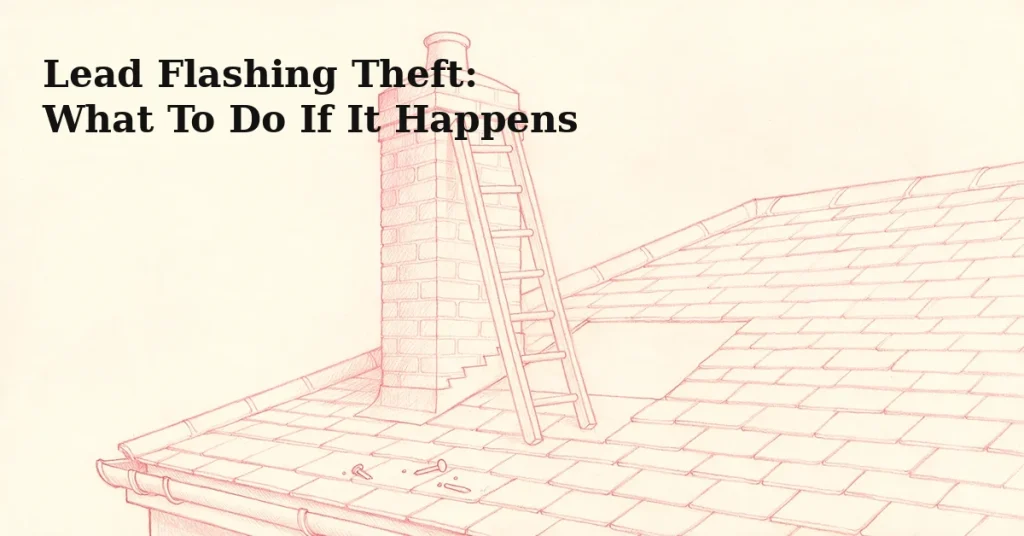
Finding a strip of lead missing from your roof overnight is a different kind of job to the usual storm call-out. There is no weather event to point to, no obvious cause, and usually a leak starting within days.
Lead theft from roofs has been a problem in the UK for years, and it has never fully gone away. Ordinary houses, not just churches and historic buildings, get targeted too.
This guide covers why lead gets stolen, what the law actually does about it, whether your insurance will pay out, and what to do in the first 24 hours if it happens to you.
Lead has always had scrap value, but it is also soft, heavy, and sits in exposed, often unlit places on a roof. That combination makes it an easy target for an opportunist with a ladder and a van.
A thief does not need to be on your roof for long. A chimney flashing or a valley gutter lining can be stripped out in minutes once someone is up there.
Most news coverage of lead theft focuses on churches, and for good reason. Historic lead accounts for a notable share of all UK metal theft, and a single church roof can hold a huge amount of it in one place.
But domestic properties are targeted constantly too, usually for smaller, faster jobs: chimney flashing, the lead lining in a valley gutter, flat-roof dormer coverings, and bay window roofs. These are quick to strip and quick to sell on.
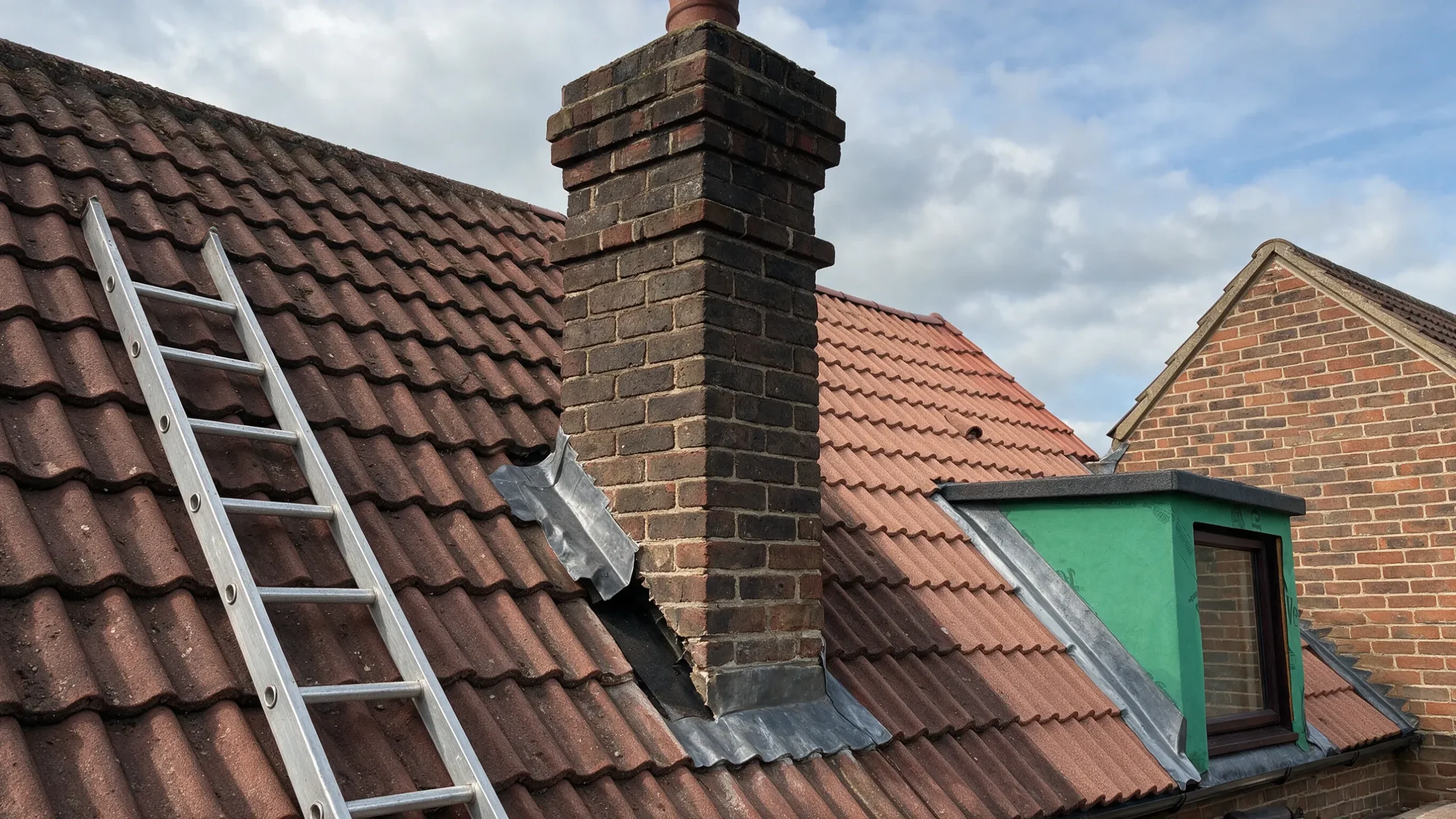
From the ground, a missing flashing strip is not always obvious. The giveaway is usually a leak appearing suddenly, with no storm or fallen branch to explain it.
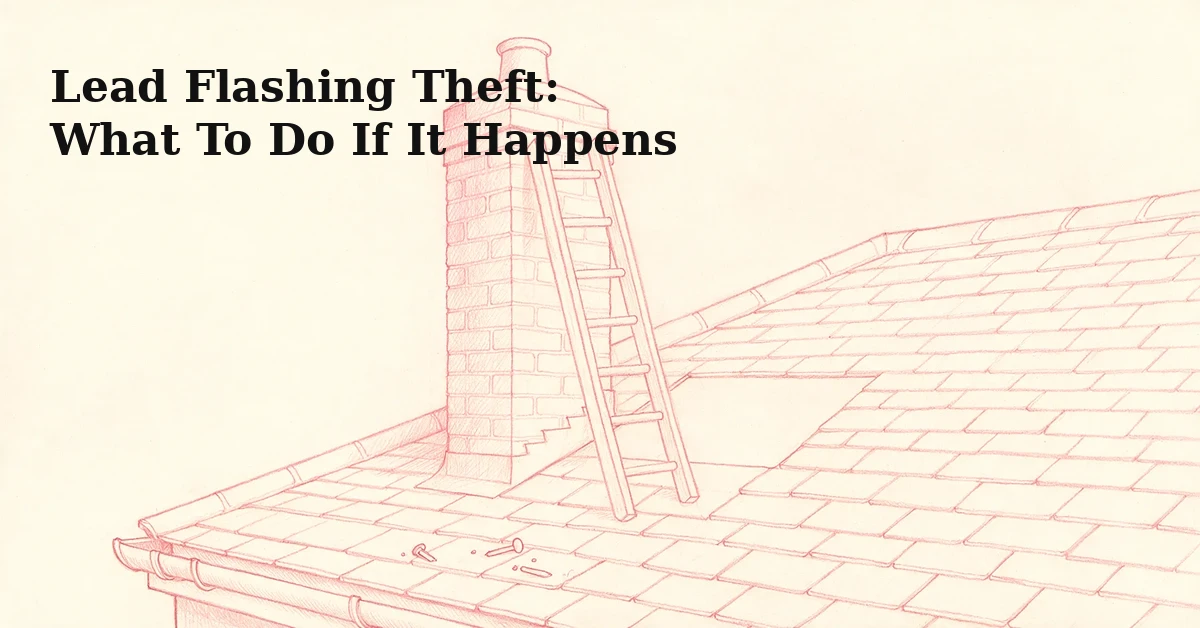
Look for a pale, unweathered strip where lead used to sit, and torn or curled felt underneath where it was prised out. Loose nails or clips are often left scattered on the roof too.
A chimney stack with its flashing missing often shows a dark, damp stain running down the brickwork below it. That stain is usually the first thing anyone notices from the ground.
A stolen strip of lead rarely stays a dry problem for long. Once it is gone, the next bit of rain has a direct route into the roof structure underneath.
If you can see the roof safely from an upstairs window or next door’s garden, a quick look is worth it. Otherwise, ask a roofer to check rather than getting a ladder out yourself.
Metal theft, including lead stolen from roofs, was a far bigger problem a decade ago than it is today. The Scrap Metal Dealers Act 2013 is the main reason why.
It requires every scrap dealer to hold a licence, verify the identity of anyone selling them metal, and stop accepting cash payments for it. The effect on recorded thefts was significant, even if the problem never fully disappeared.
| Period | Recorded metal thefts (England & Wales) |
|---|---|
| 2012/13 (before the Act) | Around 62,000 a year |
| 2015/16 | Around 16,000 a year |
| 2016/17 | Fewer than 13,000 a year |
At its peak, metal theft was estimated to cost the UK economy more than £220 million a year. Cash-free scrap dealing and mandatory ID checks are the main reason the numbers fell so sharply.
A licensed, legitimate scrap dealer will not take lead without ID and a paper trail. An unlicensed buyer, or a dealer willing to look the other way, still exists though, and that is enough to keep the trade alive on a smaller scale.
Always report a theft to the police and get a crime reference number, even if you suspect nothing will come of it directly. You need that reference for your insurance claim regardless.
Reported thefts also help the police build a pattern across an area. A spate of thefts on one street is far easier to spot, and act on, if every victim actually reports it.
Replacing stolen lead gets more complicated on a listed building or in a conservation area. Swapping lead for a cheaper alternative is sometimes tempting after a second or third theft, but it is rarely a free choice.
Local planning rules and, for listed buildings, Listed Building Consent can require a like-for-like lead replacement rather than a substitute material, whatever the theft history. Our guide to planning permission for roof work covers when consent is needed in more detail.
In practice, this usually means investing properly in prevention instead of trying to design the problem out with different materials. A theft-resistant fixing and a marking product do more good here than swapping to a material the planners will likely reject anyway.
This is usually covered under buildings insurance as a theft claim, not under contents. Theft is one of the standard perils most UK buildings policies list, alongside fire, flood, and storm damage.
That does not mean every claim is straightforward. Standard home insurance policies exclude deliberate damage and normal wear and tear, and you will pay an excess on any accepted claim, typically somewhere between £50 and £1,000 depending on your policy.
Report it, document it, and claim promptly. A theft reported weeks later, after more rain damage has built up, is a harder claim to make cleanly.
Some insurers also set conditions around forensic marking products such as SmartWater, particularly if a property has claimed for metal theft before. Check your policy wording, since a condition like that being unmet can affect a future claim.
Photograph the missing lead, the exposed felt or timber underneath, and any internal water damage. Do this before any temporary repair work covers it up.
Keep your crime reference number, the date you reported it, and any quotes you get for the repair.
Insurers generally want evidence the loss happened suddenly rather than built up gradually, so timestamped photos taken as soon as you notice it genuinely help your case.
Speed matters here. A roof with missing flashing left exposed over a wet weekend can turn a lead theft into a much bigger ceiling and timber repair.
Avoid any contractor who turns up uninvited offering a quick fix shortly after a theft in your street. This is a known follow-on scam, and a genuine roofer will not need to cold-call you to get the work.
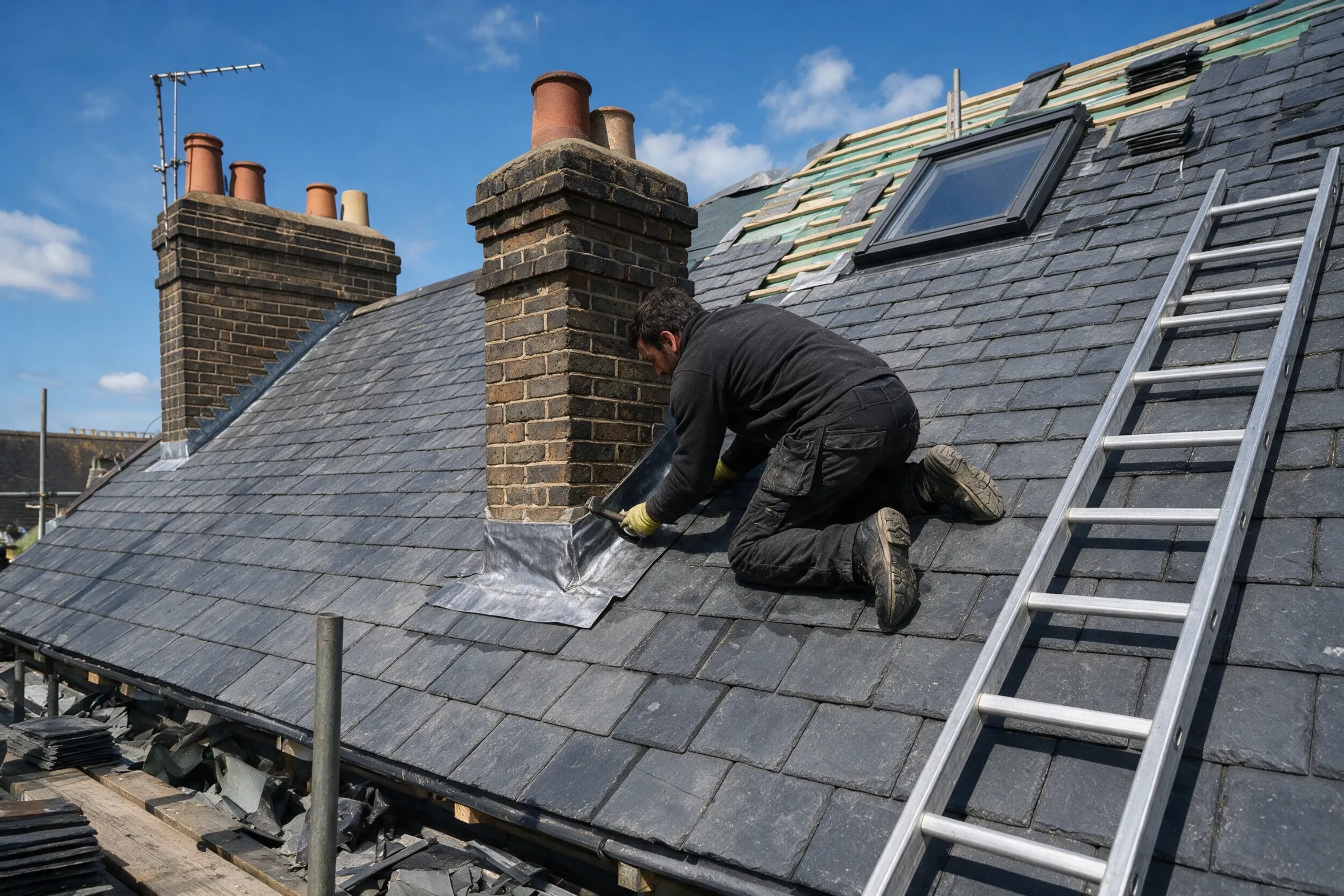
Once a property has been targeted, it is often targeted again, so prevention is worth taking seriously once the immediate repair is sorted. Insurers themselves recommend a fairly consistent set of measures for properties that have had metal stolen before.
Scaffolding during a repair creates its own temporary risk too, since it makes any roof far easier to climb. Ask your contractor about overnight scaffold security if work runs over several nights.
It is also worth checking with your insurer whether cover changes while scaffolding is up. Some policies treat this as a higher-risk period.
Costs vary a lot depending on how much lead is missing, where it is on the roof, and whether scaffolding is needed to reach it safely.
| Job | Typical UK cost (2026) | Notes |
|---|---|---|
| Patch repair, no scaffolding | £150 to £250 | Suitable for a small, easily accessible area such as a single chimney flashing |
| Patch repair, with scaffolding | £450 to £600 | Covers scaffold hire and setup alongside the repair itself |
| Full lead replacement, no scaffolding | £350 to £460 | A low-level valley or bay roof the crew can reach safely without scaffold |
| Full lead replacement, with scaffolding | £700 to £920 | The most common scenario for a chimney stack or a higher roof section |
If your insurer is covering the claim, these are the figures a loss adjuster will typically be working from too, so it is worth having a written quote ready that breaks the job down the same way.
On a lot of lead theft jobs, the lead itself is a fairly small cost next to safely accessing it. Our guide to scaffolding costs covers what affects the price, and when a tower or ladder access might do instead.
This is exactly the situation rogue traders look for. A visible theft, an anxious homeowner wanting it sorted fast, and an insurance claim in progress is a combination some cold-callers try to exploit.
Stick to someone properly vetted, ideally already known to you or recommended, rather than whoever knocks first. A genuine roofer does not need to door-knock for leadwork off the back of a crime wave.
As a CORC-registered contractor working under an insurance-backed guarantee, any leadwork we carry out is covered the same way as any other roofing job. That matters if you are mid-claim.
A theft is stressful enough without adding a bad repair on top of it. Take the time to check who you are letting back up on your roof.
Our guide on how to choose a roofing contractor covers the questions worth asking before you commit, and the checks worth making on anyone offering leadwork specifically.
For the wider picture on flashing materials and failure points, our guide to metal roof flashing is worth a read too. If a leak is already coming through near a chimney, our piece on chimney flashing leaks specifically covers the diagnosis side in more depth.
Usually yes, under the theft section of a standard buildings insurance policy, though you will pay an excess and will need a police crime reference number to support the claim. Check your policy for any specific conditions around forensic marking.
Like-for-like lead is usually the straightforward choice on an ordinary house, since it matches what is already there and raises no planning questions. On a listed building or in a conservation area, any change away from lead may need separate approval first.
As soon as possible, ideally the same day. An exposed roof left open over even one wet night can let in enough water to damage timber, insulation, and ceilings, turning a theft into a far bigger repair bill.
It can, and you will also lose that year’s no-claims bonus, the same as with any other accepted claim. Whether it affects your premium depends on your insurer and whether the property has claimed for theft before.
Yes, particularly if your roof has already been targeted once. It makes stolen lead traceable and harder to sell on, and some insurers treat it as a condition of continued cover after a previous metal theft claim.
Chimney flashing is usually the easiest lead on a roof to reach and strip quickly, often from a single ladder position, without needing to walk across tiles. That combination of value and quick access makes it a common first target.