(+44) 7900 515 552
21 Oct 2026
 insurance backed guaranteeinsurance backed guarantee
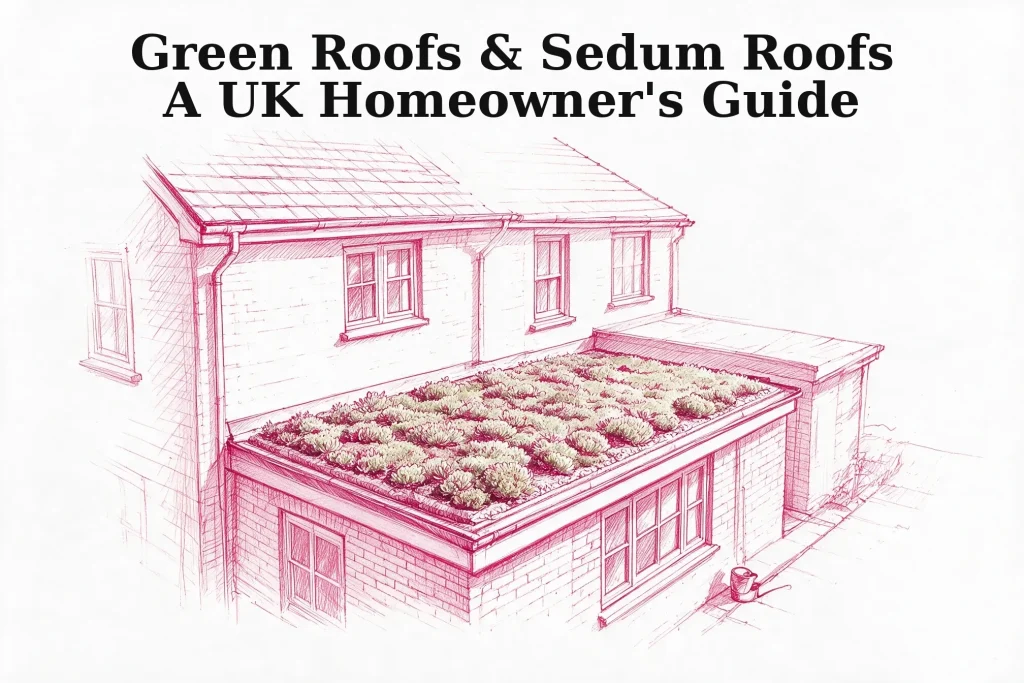
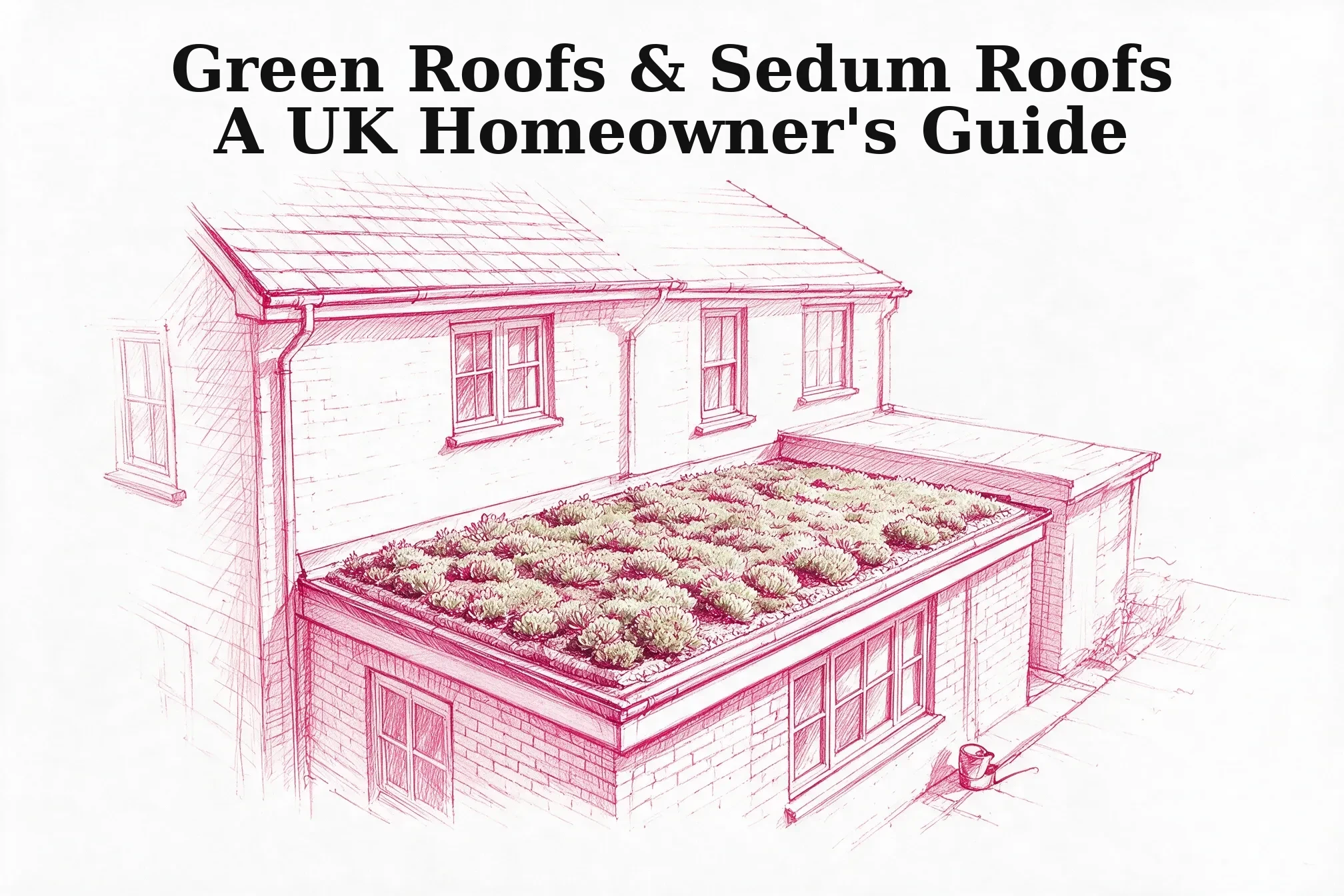
If you’re planning a flat-roof extension, replacing an ageing garage roof, or just looking at your current flat roof and wondering if there’s a better option than felt, you’ve probably come across green roofs and sedum roofs. They’re one of the few genuinely growing trends in UK roofing right now.
That’s driven by new-build planning policy, rising energy bills, and a simple fact: a well-built green roof does more jobs than a conventional one.
This guide covers what a green roof actually is, what it costs in the UK in 2026, whether you need planning permission, and what the maintenance really looks like once it’s installed. No sales pitch, just what a homeowner needs to know before deciding.
A green roof (also called a living roof) is a roof covered, in part or in full, with vegetation planted into a growing medium over a waterproof membrane.
Underneath the planting there’s a build-up: a root barrier, a drainage layer, a filter fleece, then the substrate and the plants themselves. It’s a proper roofing system, not a tray of soil dropped onto felt.
There are two broad types, and the difference matters for cost, weight, and maintenance.
Extensive roofs use a shallow substrate, usually 60-150mm deep, planted with low-growing, drought-tolerant species such as sedum, moss and wildflower mixes. They’re lightweight relative to intensive systems and need very little upkeep once established.
This is the type most UK homeowners mean when they say “sedum roof,” and it’s by far the most common choice on house extensions and garage roofs. It’s also the type most often compared against a conventional flat roof covering when homeowners are weighing up options.
Intensive roofs use a much deeper substrate, often 200mm or more, and can support lawns, shrubs, even small trees. They’re designed as usable outdoor space, a roof terrace or garden you can actually walk on and plant properly.
They’re heavier, cost more, and need the kind of regular maintenance a garden needs.
Most homeowners asking about green roofs actually want an extensive sedum system: low maintenance, lightweight, and a genuine upgrade on felt. An intensive roof garden is a different project with a different budget.
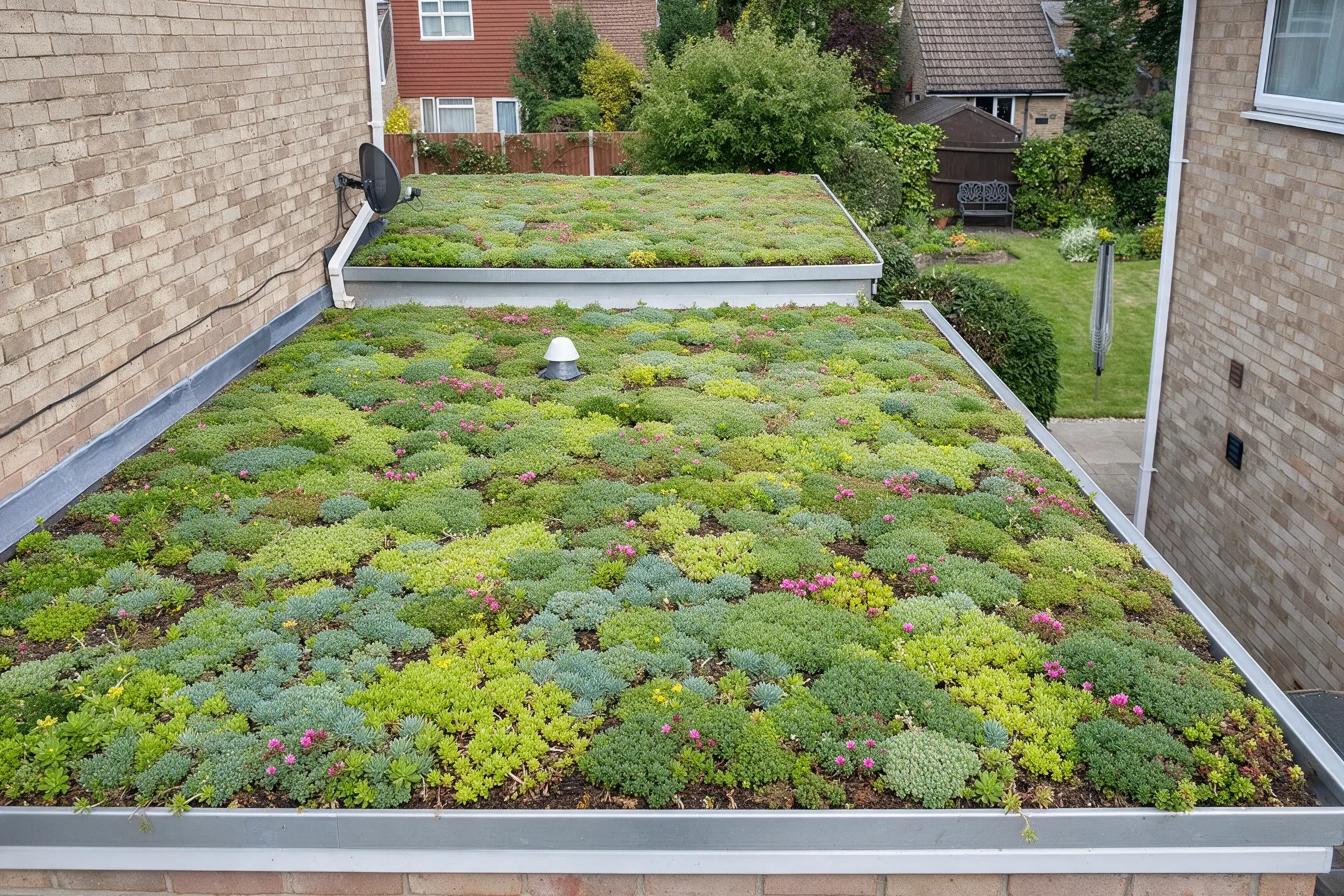
The appeal isn’t just aesthetic, though a sedum roof does look better than grey felt from the upstairs window. A green roof’s substrate and planting shield the waterproof membrane beneath it from UV radiation and extreme temperature swings, which is one of the main things that ages a flat roof.
Swansea Council’s own green infrastructure guidance notes that this protection, along with the thermal benefit in winter, is a core reason councils encourage green roofs on new development.
The same guidance highlights two other genuine benefits. First, stormwater: the substrate absorbs rainfall and slows down run-off, which matters more each year as UK winters bring heavier, more concentrated rainfall.
Second, biodiversity: a green roof creates habitat for pollinators and small wildlife in places that would otherwise be dead space, something increasingly valued in planning policy for flats and extensions in built-up areas.
None of this makes a green roof a free upgrade. It costs more upfront than felt or a single-ply membrane, and it adds weight your existing structure needs to be able to take.
Both of those are worth working through honestly before you commit.
This is the step that gets missed most often, and it’s the one that actually matters. A green roof, even a shallow extensive one, is considerably heavier when fully saturated after rain than felt or a membrane on its own.
An intensive roof with soil and shrubs is heavier again, by a significant margin.
Before you commit to a green roof on an existing structure, a structural engineer needs to check that your joists, deck and supporting walls can actually carry that extra load, wet and loaded with snow, not just on a dry day. This isn’t optional and it isn’t something a roofer can sign off alone.
Swansea Council’s guidance points installers and homeowners towards the Green Roof Organisation’s GRO Code for the detailed design standards a competent installer should be following.
The same council guidance is clear that this loading check belongs alongside the design work from the outset, not as an afterthought once the planting’s been chosen.
On a new extension, this is usually built into the structural calculations from the start, so it’s a non-issue. On an existing garage, outbuilding or older flat roof, it’s the first phone call to make, before you start costing out plants and substrate.
For most houses, converting an existing flat roof to a green roof doesn’t change the roof’s external profile enough to trigger a full planning application on its own. It’s the kind of “alteration to the roof” that’s often covered under permitted development.
The Planning Portal, the government-backed service covering planning rules in England, sets out the relevant conditions for roof alterations on a house: you must not be in a flat or a building that was itself created under permitted development. The work must not project more than 150mm from the existing roof slope, and it must not exceed the height of the existing roof.
If you’re planning a brand new flat-roof extension with a green roof on top, rather than converting an existing roof, that’s a different question, governed by the separate rules for extensions.
And if permitted development rights have been removed in your area, through an Article 4 direction, a planning condition, or because you’re in a conservation area or your home is listed, a full application is required regardless.
We’ve written a full guide to planning permission for roof replacement, listed buildings and conservation areas if that’s a live question for your property.
The short version here: always check with your local planning authority before you start. It’s a free phone call against a potentially expensive mistake.
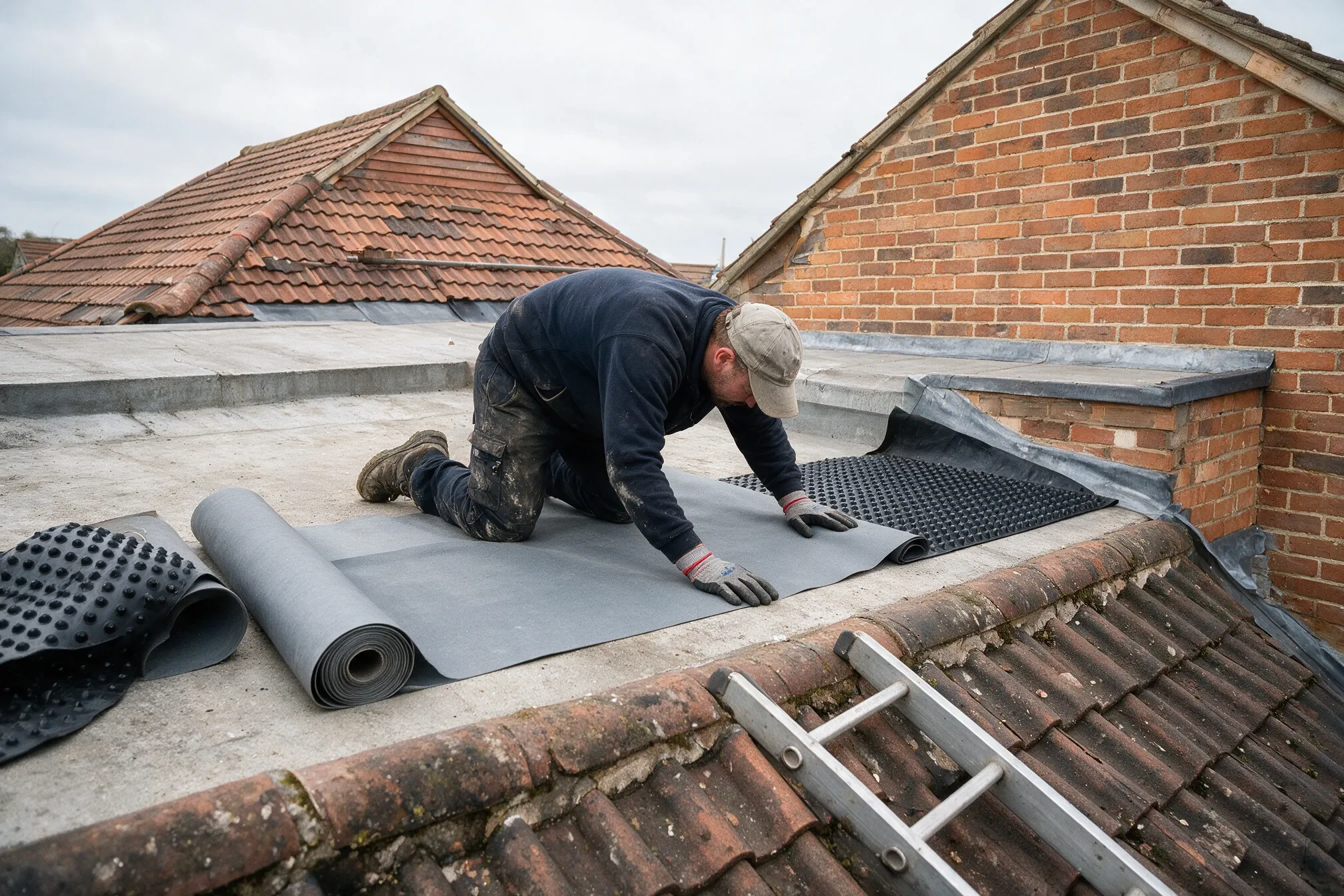
A green roof is only as good as the waterproofing underneath it, so a professional installation follows a fixed sequence rather than cutting corners on the layers nobody sees once the plants are in.
Skip or skimp on any of the middle steps and you don’t just get a roof that looks patchy, you get a roof that leaks. That’s often much harder to diagnose and fix than a conventional felt roof, because the fault is hidden under a growing medium.
Cost varies a lot depending on which type of system you choose, and whether any structural reinforcement work is needed first. Current UK pricing, based on 2026 tradesperson quote data, breaks down roughly like this:
| System type | Typical cost per m² | Best suited to |
| Simple extensive (sedum mat, shallow substrate) | £35-£50 | Garages, bin stores, small flat-roof extensions |
| Medium extensive (sedum/wildflower mix, 80-150mm substrate) | £50-£100 | Larger extensions, more planting variety |
| Semi-intensive | £80-£150 | Roofs with occasional access, mixed planting |
| Intensive (roof garden, deep substrate) | £150-£300+ | Usable roof terraces and gardens |
On top of the system itself, budget for a structural engineer’s assessment if one’s needed. A roofer’s day rate (roughly £250-£350) and a landscaper’s day rate (roughly £150-£280, or £30-£60 an hour) may both be involved, depending on how the job splits between roofing and planting work.
Ongoing maintenance for an extensive roof typically runs to a few pounds per square metre a year. An intensive roof, being closer to a garden, costs more to keep looking good.
The cheapest extensive sedum system and the most expensive intensive roof garden are, functionally, different products solving different problems. Price them against what you actually want the roof to do, not just against each other.
An extensive sedum roof is genuinely low maintenance once it’s established, which is a large part of its appeal, but “low maintenance” isn’t the same as “no maintenance.”
An intensive roof garden needs the same checks plus whatever a garden at ground level would need: watering in dry spells, pruning, and general upkeep of anything planted beyond the basic sedum and moss mixes.
A green roof is a genuinely good option for a flat-roof extension, garage, or outbuilding where you want better thermal performance, a longer-lasting membrane underneath, and something better to look at than grey felt.
It’s not automatically the right answer for every flat roof, especially where the structure can’t easily take the extra weight without reinforcement, or where a well-installed conventional membrane would do the job perfectly well on a tighter budget. Our wider guide to choosing a roofing material covers how it stacks up against the other options.
If you do go ahead, the parts that matter most are the parts you won’t see once it’s planted: the structural sign-off, the root-resistant membrane, and the drainage layer underneath.
That’s exactly why it’s worth using a specialist who stands behind the whole system, not just the planting on top. Look for an installer who belongs to a recognised trade body, such as the Confederation of Roofing Contractors or the Green Roof Organisation, and who backs the installation with a proper written, insurance-backed guarantee rather than a verbal promise.
If anything underneath that substrate goes wrong, you shouldn’t be relying on the installer still being around to fix it.
No. A green roof needs a root-resistant waterproof membrane purpose-built for the job, not a general-purpose felt covering. If your existing roof isn’t already built for that load, the old covering comes off and the correct build-up goes down from scratch.
It varies by system and how saturated the substrate is after rain, which is exactly why a structural engineer needs to check your specific roof rather than relying on a general figure. This is the one step that shouldn’t be skipped or guessed at.
Established extensive sedum is drought-tolerant and generally survives on UK rainfall without watering, except during an extended dry spell in the first year while it’s establishing. Intensive roof gardens with other planting need watering like any garden.
The waterproof membrane underneath is typically the limiting factor. A well-installed, root-resistant membrane protected by the substrate above it can outlast an exposed felt roof, since it isn’t taking direct UV and weather damage. The planting itself, once established, is genuinely long-term with basic upkeep.
Not inherently, though it’s worth telling your insurer about the roof type when you install one, the same as you would for any significant change to your property. A proper written, insurance-backed guarantee from the installer covers the installation itself, separately from your home insurance policy.
Small DIY sedum mat kits exist for sheds and bin stores, but anything on a house, garage or extension involves a waterproofing layer that has to be right, plus a structural check and drainage that actually works. Get it wrong and the fix usually means stripping the whole thing back off, so this is one job worth leaving to a roofer.