(+44) 7900 515 552
13 Nov 2026
 insurance backed guaranteeinsurance backed guarantee
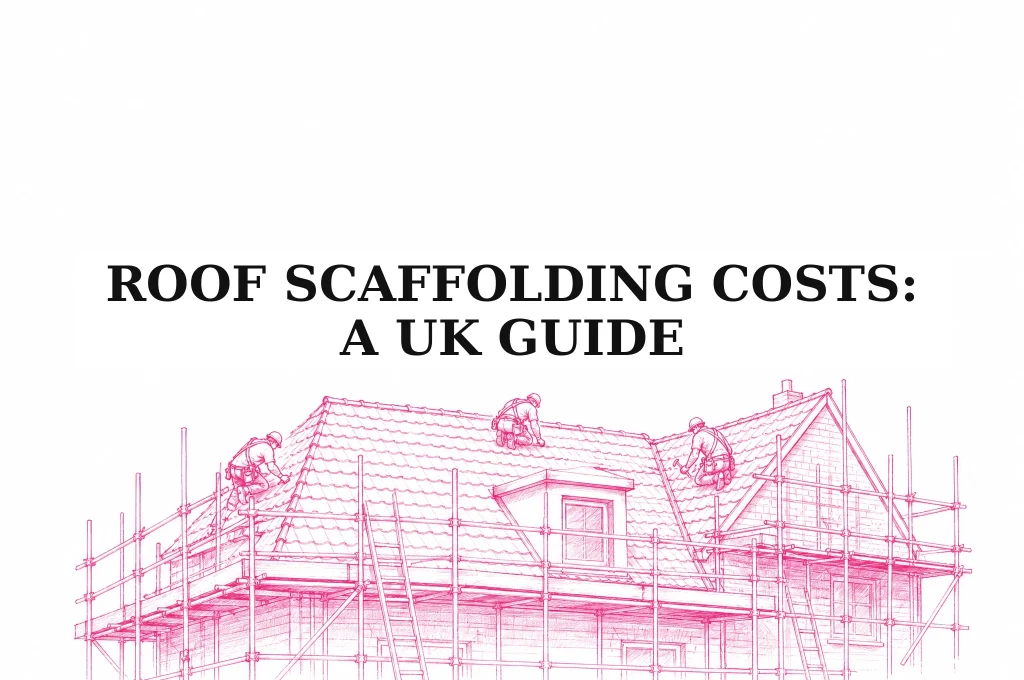
If you’ve had a couple of roof replacement quotes back and noticed the scaffolding line item jumping around by a few hundred pounds between them, you’re not imagining things. Scaffolding is one of the least understood costs in a re-roof, and it’s also one of the few parts of the job you genuinely can’t skip. Here’s what it actually costs in the UK, why it’s non-negotiable, and how to tell whether a contractor’s quote is being straight with you about it.
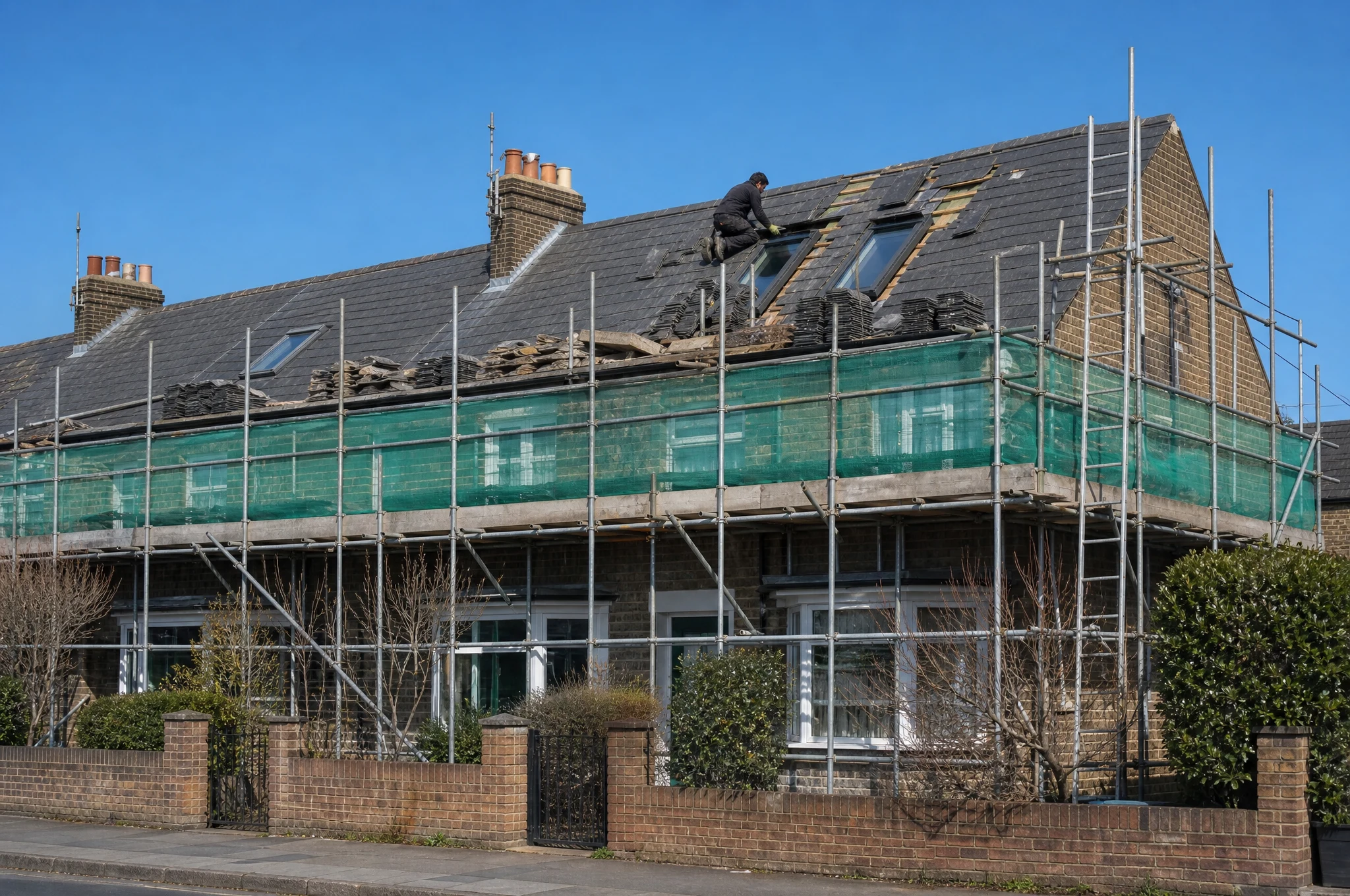
A roof replacement isn’t a job you can do safely off a ladder, whatever the size of the house. Tiles and battens need to come off in a controlled way, new felt or membrane has to go down, and a roofer needs both hands free and somewhere stable to stand for hours at a time. None of that is possible balanced on a ladder.
This isn’t just good practice, it’s the law. The Work at Height Regulations 2005 require that all work at height is properly planned, that the people doing it are competent, and that suitable equipment is used to prevent falls wherever reasonably practicable. For a roof replacement, that almost always means scaffolding rather than a ladder, and the duty sits with whoever controls the work, which in practice is your roofing contractor.
A contractor who suggests skipping scaffolding to save you money isn’t doing you a favour. They’re either planning to break the law, or they’re planning to charge you for it anyway and pocket the difference. Either way, it’s a red flag worth walking away from.
Scaffolding isn’t an optional extra on a roof replacement quote. It’s a legal requirement for the work to happen safely, and any quote that treats it as an add-on is one to question.
Scaffolding is priced by how much of the building it needs to wrap, how long it needs to stay up, and how awkward the site is to work on. A small bungalow with clear access on all sides costs a fraction of what a three-storey terrace on a narrow street with parking restrictions will cost.
Location plays a real part too. Scaffolders in London and the South East typically charge 15 to 25% more than the national average, so if you’re comparing a quote from a friend in a cheaper part of the country, don’t be surprised if yours looks higher for a similar-sized job. As a rough illustration of the spread, a basic 4-metre tower scaffold has been quoted at around £250 in the North East against roughly £600 in London, for essentially the same piece of equipment. If you’re in Windsor, Staines, Woking, or anywhere else across our patch of Berkshire, Surrey, and Buckinghamshire, expect pricing closer to the London end of that range than the national average.
Two houses of the same size on the same street can still get noticeably different scaffolding quotes. A driveway wide enough for a scaffold lorry to unload directly saves hours of hand-carrying materials. A rear garden with a locked side gate and no vehicle access adds them straight back. Roofers who’ve worked in your area before will usually spot these access issues at the quoting stage rather than discovering them on the first morning of the job.
Prices vary by supplier and region, but the ranges below give a fair sense of what to expect for a full re-roof in 2026, based on current UK cost guides from MyBuilder and Checkatrade.
| Property type | Typical full-wrap scaffolding cost |
| Bungalow | £1,000 – £1,800 |
| 2-storey semi-detached or terraced | £1,500 – £2,600 |
| 2-storey detached | £1,800 – £3,000 |
| 3-storey detached | £3,000 – £4,000+ |
| Chimney access only | £400 – £900 |
Weekly hire rates for a standard domestic job generally fall between £300 and £900, and scaffolders often price by area at somewhere between £15 and £25 per square metre once you strip out the minimum-hire assumptions. A typical 2-storey semi-detached house, wrapped on three walls, comes out at around £875 a week on average once you factor in erection and dismantling.
Erection and dismantling should be bundled into the quoted price rather than charged separately, but it’s worth confirming this in writing rather than assuming it. The same goes for any debris netting, toe boards, and access ladders fitted to the scaffold itself, which are a legal requirement, not an optional extra.
If the scaffold needs to sit on a pavement or road, even partially, your local council will require a licence before it goes up. In Surrey, for example, a highway scaffold licence currently costs £194 per 28-day period, with the same fee charged again if the scaffold needs to stay up longer than that. Other councils across our patch, including in Berkshire and Buckinghamshire, run similar schemes at broadly comparable rates.
Applications typically need to go in at least ten working days before the scaffold is due to go up, so this isn’t something that can be sorted the week before work starts. A contractor who’s used to working in your area should already know whether your address needs one and should factor the time and cost into the schedule, not spring it on you halfway through the job.
If the scaffold needs to go up against or over a shared boundary, that can also trigger obligations under the Party Wall etc. Act 1996, particularly on terraced and semi-detached houses. We’ve written a full guide to how the Party Wall Act applies to roof replacement, which is worth a read if your property shares a wall with a neighbour.
This is where a lot of homeowners get caught out. Some quotes include scaffolding as a clear, itemised line. Others fold it into a single lump sum, which makes it impossible to tell what you’re actually paying for it, or to compare quotes fairly against each other.
If you’re still weighing up contractors at this stage, our guide to how to choose a roofing contractor in the UK covers the wider red flags to watch for beyond scaffolding specifically, including insurance, guarantees, and how to read a quote properly.
A quote that hides scaffolding inside a single total isn’t automatically dishonest, but it should make you ask more questions, not fewer.
Occasionally a contractor will suggest working straight off a ladder for a smaller job, or propose a cut-price quote that quietly leaves scaffolding out altogether. It’s worth understanding what that actually risks, beyond the obvious safety concern.
The Health and Safety Executive can, and does, take enforcement action against contractors who breach the Work at Height Regulations, ranging from improvement notices to prosecution following a serious fall. If someone is injured working on your roof without proper access equipment, the liability doesn’t stay neatly with the contractor. As the homeowner, you can find yourself drawn into an investigation or a civil claim, particularly if you knowingly agreed to a cut-price approach that skipped the legally required precautions.
Buildings insurers can also refuse to pay out on a claim connected to work carried out unsafely or in breach of regulations, even years after the roof was finished. A leak that traces back to poor workmanship on a job done without proper access equipment is exactly the kind of thing an insurer will dig into if a claim is ever made. Paying for scaffolding upfront is considerably cheaper than an invalidated insurance claim down the line.
This depends entirely on how long the roofing work itself takes, which varies with the size of the roof, the weather, and whether anything unexpected turns up once the old covering comes off. We cover realistic timeframes in our guide to how long a roof replacement actually takes, but as a rough guide, most straightforward domestic re-roofs need scaffolding up for two to four weeks, including a few days either side for weatherproofing checks and any snagging.
Extending the hire beyond the original minimum period usually costs somewhere between 5% and 10% of the original quote per extra week, so a job that runs into unexpected delays, most commonly bad weather or a structural surprise under the old roof, can add a noticeable amount to the final bill. A contractor who builds a sensible contingency into the original timeline, rather than the tightest possible schedule, is doing you a favour here even if their headline quote looks a little higher.
There are a few genuine ways to bring the cost down without cutting corners on safety.
If you know you’ll need scaffolding for a re-roof, it’s often worth doing any other high-level work at the same time, such as gutter replacement, chimney repointing, or fascia and soffit repairs. You’re paying for the access either way, so getting more done while it’s there spreads that cost across more value.
For smaller, more contained jobs, such as chimney flashing repairs rather than a full re-roof, a mobile tower or partial scaffold may be sufficient rather than wrapping the whole building. This isn’t a decision to make yourself, though: it needs a roofer or scaffolder to confirm it’s actually safe and compliant for the specific job, not just cheaper.
Scaffolding suppliers, like roofers, tend to be busier and pricier in spring and summer. If your roof can safely wait, getting quotes for fixed autumn or winter work can sometimes bring both the scaffolding and the roofing costs down slightly, though weather delays are more likely at that time of year too.
We’re a verified member of the Confederation of Roofing Contractors, which means our approach to site safety, including scaffolding, is something you can check independently rather than take on trust. Every quote we give itemises scaffolding separately, so you can see exactly what you’re paying for and why.
Every job we carry out is also covered by our insurance-backed guarantee, which protects you even in the unlikely event we’re no longer trading. You can read more about how the insurance-backed guarantee works and why it matters more than a standard contractor’s promise. Where planning or listed-building considerations affect access or scaffolding placement, we also factor that in early rather than discovering it once the scaffold’s already booked, something we cover in more detail in our guide to planning permission for roof replacement.
In almost all cases, yes. The Work at Height Regulations 2005 require work at height to be carried out safely, and for a full roof replacement that means scaffolding rather than ladders. A reputable contractor won’t offer to skip it.
For a 2-storey semi-detached house needing a full wrap, expect somewhere between £1,500 and £2,600, depending on access, location, and how long the job takes. Ask your contractor for this itemised separately from the roofing cost.
No, a council licence is only needed if any part of the scaffold sits on or overhangs the public highway, including the pavement. If it’s fully within your boundary, no licence is required, though your contractor should still confirm this before work starts.
Most scaffolders charge an extension fee, typically 5% to 10% of the original cost per extra week. Ask your contractor upfront how they handle this and whether it’s built into their contingency planning.
You can in theory, but it rarely works out well in practice. Your roofer needs to be confident the scaffold meets the standard they need to work safely and insure the job, and coordinating timings between two separate suppliers usually creates more delay and cost than it saves.