 (+44) 7900 515 552
16 Oct 2026
 insurance backed guaranteeinsurance backed guarantee
More than half of UK house surveys turn up a problem, and most buyers who find one do something about it. According to Which?, 55% of surveys uncover an issue.
Of those buyers, 67% go on to either negotiate a lower price or get the seller to fix it before exchange. Separate research from the HomeOwners Alliance found that a third of buyers who had a survey done ended up saving money as a direct result — 10% by renegotiating the price, 9% by getting the seller to sort the problem first.
A roof is one of the easiest things for a surveyor to flag and one of the hardest for a seller to argue with. It’s visible from the outside, and it shows up clearly on thermal and drone imagery.
If yours needs work, the question isn’t whether it’ll come up. It’s whether you deal with it on your terms, before you list, or on the buyer’s terms, during negotiation.
This isn’t the same question as “how much does a new roof cost” or “what does a roof report cover” — we’ve written about both of those already. This is specifically about the money and timing.
What a roof problem actually costs you at the point of sale, whether fixing it beforehand genuinely pays for itself, and what to do whichever side of the transaction you’re on — that’s what follows.
Not every problem in a house survey carries equal weight. A dated kitchen is a matter of taste. A roof is different, because it sits on the list of things a mortgage lender’s valuer, not just a buyer’s own surveyor, will look at.
Water ingress threatens everything underneath a roof, from timber to plaster to wiring, which is exactly why it gets flagged so consistently.
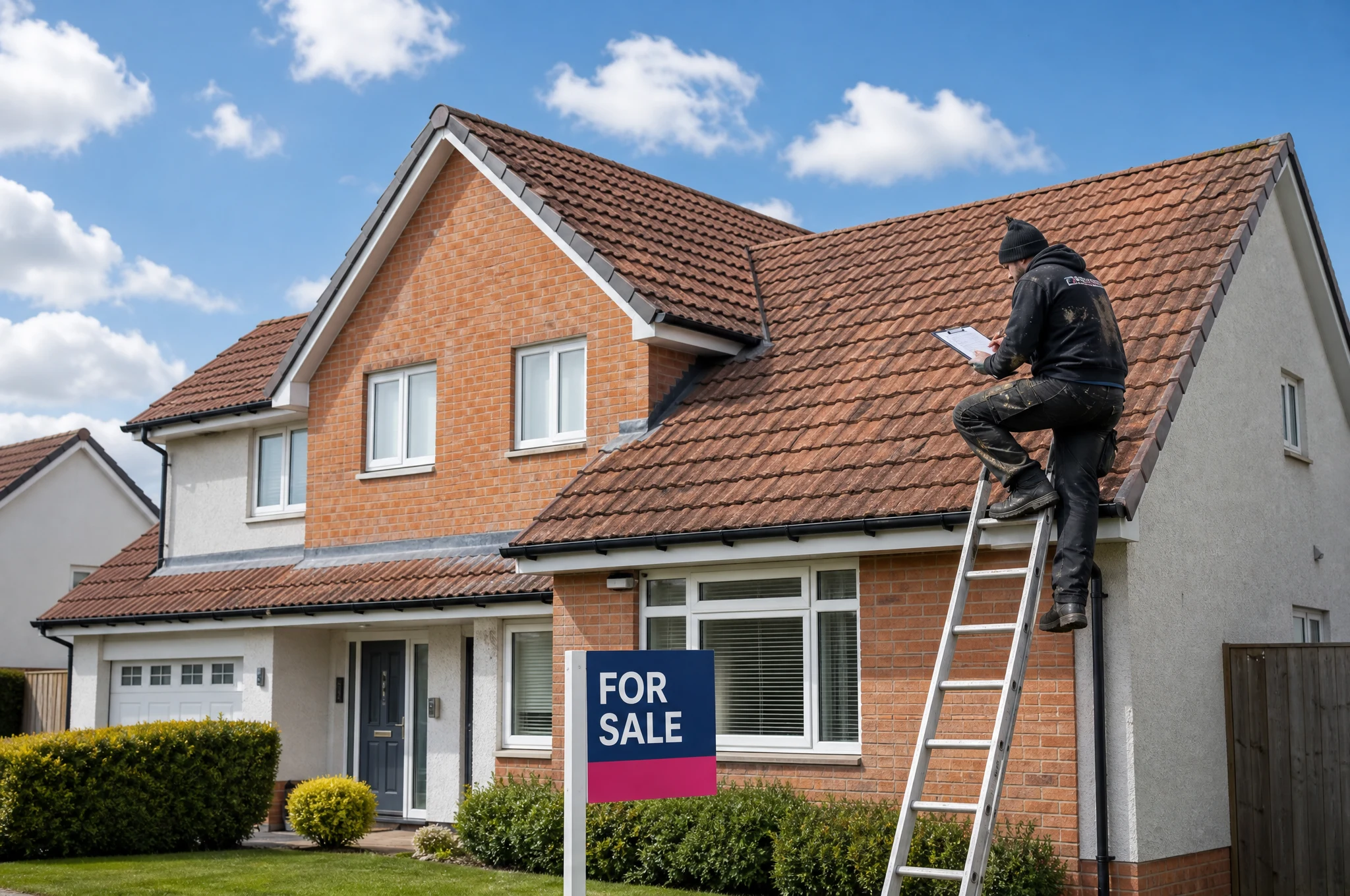
A RICS Level 2 or Level 3 survey includes a visual roof inspection from ground level, from any accessible loft space, and increasingly from drone photography for anything the surveyor can’t safely reach.
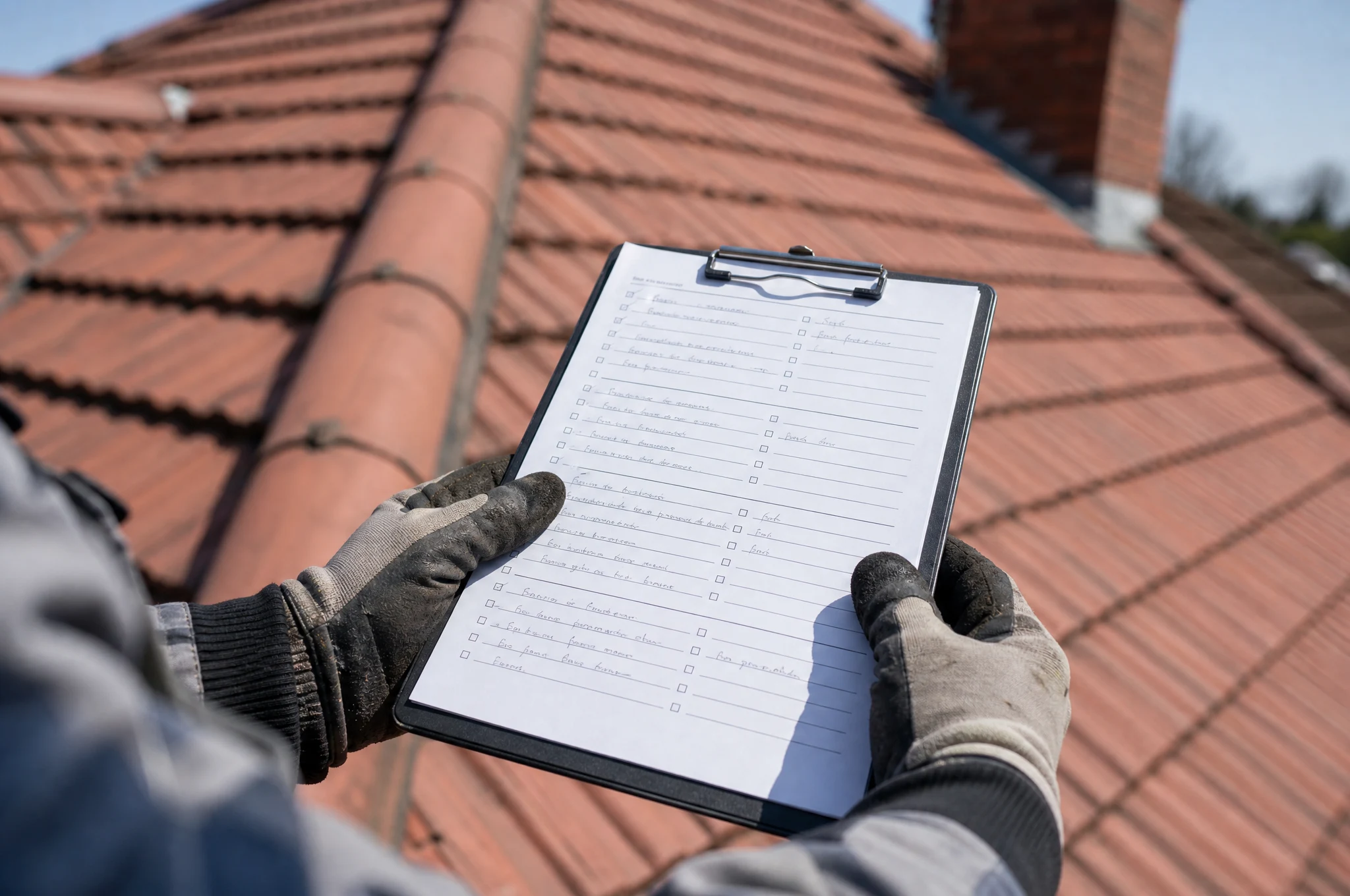
They’re looking at tile or slate condition, sagging or uneven roof lines, flashing around chimneys and valleys, signs of past or active leaks in the loft, and the state of the guttering that drains it all away.
None of this requires the surveyor to climb onto the roof itself. A missing ridge tile, cracked flashing, or a sagging valley is visible from the garden with a decent pair of binoculars — which is exactly why it’s one of the first things noted on almost every survey.
A seller can repaint over a damp patch or tidy a garden before viewings. A roof is much harder to disguise, short of actually fixing it.
It’s also one of the few defects that a buyer’s mortgage lender has a direct financial interest in, since a failing roof is a structural risk to the security on their loan. That’s part of why roof problems can trigger a formal mortgage retention, where the lender holds back part of the loan until the work is done, rather than just a note in the survey report.
A dated bathroom is a negotiating point. A roof that needs work is a lender’s concern as much as a buyer’s — which is why it gets acted on far more often than it gets ignored.
In practice, a flagged roof tends to go one of three ways: the buyer asks for a price reduction reflecting the likely repair cost, the buyer asks the seller to get the work done before completion, or, in more serious cases, the buyer’s lender won’t release funds until it’s addressed.
All three cost the seller money, time, or both — and the third can delay or derail the sale entirely if it can’t be resolved quickly.
What rarely happens is nothing. Buyers who’ve paid several hundred pounds for a survey read it, and a flagged roof is exactly the kind of finding that’s easy to act on.
It comes with an obvious next question: how much would this cost to fix, and can I get that off the price instead?
The honest answer is that a controlled repair, done on your own timeline with your own choice of contractor, is almost always cheaper than the same fix negotiated under pressure during a sale.
When a buyer’s surveyor flags a problem, buyers and their agents tend to price in a margin for uncertainty and hassle on top of the likely repair cost itself, rather than just the bare trade price.
| Roof issue found on survey | Typical cost to fix beforehand | What tends to happen if it’s found during a sale |
|---|---|---|
| Cracked or slipped tiles, minor flashing repair | A few hundred pounds — see our roof repair cost guide | Buyer asks for a price reduction that’s often rounded up “for the hassle,” plus a delay while quotes are obtained |
| Full re-roof needed (end of tile/felt life) | Varies significantly by size and material — our new roof cost guide breaks this down | Mortgage retention is common; some buyers walk away rather than take on the job themselves |
| Active leak with loft/ceiling damage | Repair plus any water-damage remediation, usually modest if caught early | Treated as an urgent red flag; buyers often assume the worst and price in more than the repair alone |
| Chimney flashing failure | Typically a contained job — see our chimney flashing guide | Frequently missed by sellers because it’s less visible, then flagged hard by a surveyor who checks it as routine |
The pattern holds across all four: a repair you commission yourself, at your own pace, from a contractor you’ve chosen and vetted, costs less in cash terms and in stress than the same repair negotiated at speed with a buyer’s solicitor copied in.
It’s worth being straight about this rather than overselling it: a new roof is not generally a like-for-like value-adding improvement the way a loft conversion or an extra bedroom is.
Estate agents and valuers don’t typically price a house significantly higher purely because the roof was replaced five years ago rather than needing replacement now.
What a sound roof does is remove the single most common reason a sale gets renegotiated, delayed by a lender retention, or lost altogether. That’s a different kind of value to a straightforward uplift.
But it’s real money in most cases — the gap between what you’d have accepted anyway and what gets deducted once a problem is on paper in a survey report, with a buyer’s solicitor and lender both aware of it.
A new roof rarely makes a house sell for more. A roof that fails a survey reliably makes it sell for less, or more slowly, or both.
There’s a genuine exception worth naming: if your current roof is visibly tired — moss-covered, patchy tile colour, sagging in places — from the kerb or in listing photos, it can affect a buyer’s first impression.
That’s a presentation effect rather than a structural one, separate from what a survey later finds. It’s worth factoring in if you’re weighing the cost of a full re-roof against a more targeted repair.
If your own survey flags the roof on a house you want to buy, the strongest position is a specific one. “The roof needs work” is a weak opening.
“The survey identified slipped tiles on the rear slope and deteriorated flashing around the chimney, and two independent quotes put the repair at this range” is a position a seller’s agent has to take seriously.
This is exactly the situation where a properly documented, insurance-backed guarantee earns its keep, on either side of a transaction.
If you’re selling and had roof work done through All Custom Roofing, that guarantee and our CORC membership are verifiable by a buyer’s solicitor directly, not just something you assert.
See our full guide to insurance-backed guarantees for how the transfer process actually works if you’re moving on from a house where we did the roof.
And if you’re getting quotes for pre-sale repairs, the same vetting logic applies as it would for any roofing job — see our full guide to choosing a roofer for the checklist.
A rushed, unverified repair job done purely to get through a sale is its own risk, if it’s picked up by the buyer’s own inspection later.
Not automatically, and it depends on severity. Minor, clearly cosmetic findings often don’t move the price at all. Active leaks, structural sagging, or anything that could trigger a mortgage retention are the ones most likely to cost you, either as a direct price reduction or as a delay while it’s sorted.
Fixing genuinely urgent issues beforehand is almost always cheaper and faster than negotiating them mid-sale, and it removes the risk of a lender retention holding up completion. For borderline cosmetic issues, an independent inspection first will tell you whether it’s worth doing.
Rarely pound-for-pound the way an extension can. Its value is mostly in avoiding a price cut, delay, or lost sale rather than commanding a premium — unless the existing roof’s poor appearance is affecting buyer interest before an offer’s even made.
In most cases, yes — this is one of the real practical advantages of having roof work done under a properly registered IBG rather than just a company guarantee. See our insurance-backed guarantee guide for how registration and transfer work.
Anything a lender’s valuer considers a risk to the security of the loan — active water ingress, structural sagging, or a roof clearly near the end of its usable life are the ones most likely to trigger a retention rather than just a note on the report.