 (+44) 7900 515 552
23 Oct 2026
 insurance backed guaranteeinsurance backed guarantee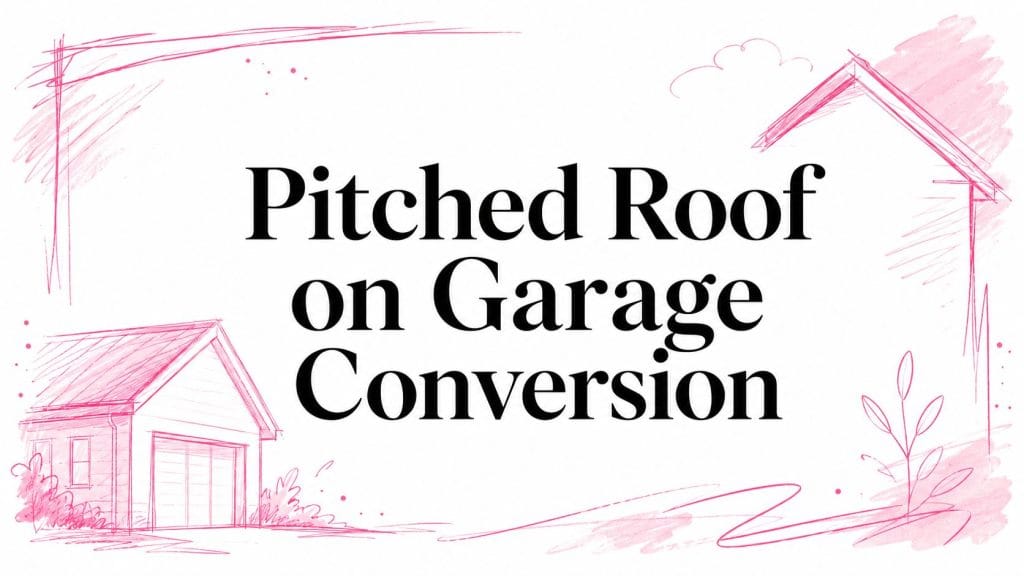
Most garage conversions in Berkshire start the same way. The garage has become a store for bikes, paint tins, old boxes, and the lawnmower, while the house still feels short on usable space. Then you look up at the existing roof and realise the question isn’t only what the room will become. It’s whether the roof over it is good enough for a proper living space.
That’s where many homeowners get stuck. A flat garage roof might be serviceable for storage, but once you want a home office, utility room, snug, or bedroom extension, the roof becomes a bigger decision. Some people assume a pitched roof is automatically the better answer. Sometimes it is. Sometimes a well-designed flat roof upgrade is the smarter spend.
From a roofing contractor’s point of view in Windsor, this is one of those jobs where clear advice matters more than a hard sell. A pitched roof on a garage conversion can improve appearance, drainage, and internal feel, but it also brings structural work, approvals, and more moving parts than people expect.
A lot of garages around Windsor, Maidenhead, Slough, and Reading were built as practical add-ons, not as spaces anyone expected to heat properly or sit in all evening. The roof often shows that. It may be low, plain, and fine for storing tools, but not ideal once the room needs to feel warm, dry, and part of the house.
A pitched roof on a garage conversion can make that space feel less like an adapted outbuilding and more like a proper room. It can also change the whole look from the street. If the garage sits at the front of the property, that visual difference matters more than people think.
For some homeowners, the deciding factor is internal character. A level ceiling under a pitched roof gives you a familiar room shape, while a vaulted option can make a small footprint feel less boxed in. If you’re also considering daylight, it’s worth looking at ways to discover pitched roof skylight options early, because rooflights are much easier to plan before the structure and coverings are fixed.
There’s also a basic design question to settle first. If you’re still weighing shapes and practical differences, this guide on flat roof vs pitched roof helps clarify what each type does well on UK homes.
A garage conversion roof should be judged on performance first, looks second. If it doesn’t stay dry, hold heat, and suit the structure below, the nicer appearance won’t save the job.
The right answer depends on the garage itself, the budget, and how ambitious the conversion is. If the walls and foundations are modest, or the garage sits in a sensitive spot on the plot, a pitched roof might create more complications than benefits. If the existing flat roof is tired and the garage already looks disconnected from the house, a new pitched roof can be the move that makes the whole conversion worthwhile.
Homeowners often assume a pitched roof is the better upgrade because it looks more like the main house. On site, the better question is simpler. Which option gives you a dry, warm, compliant room for sensible money, without creating planning or structural trouble you did not need in the first place?
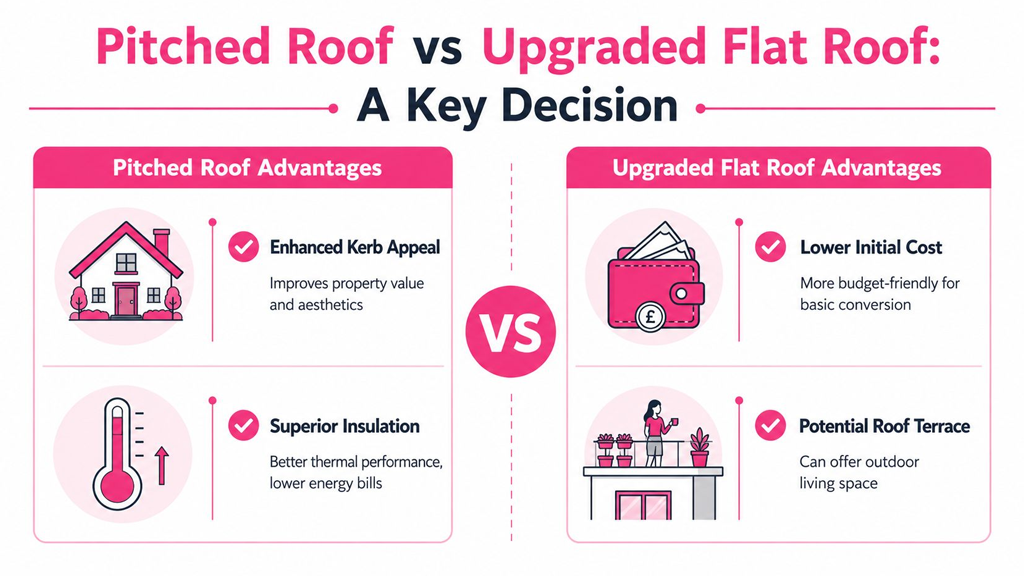
A pitched roof deals with rainwater more naturally and usually ages better in visual terms. In Berkshire, that matters on front-facing garages where the conversion needs to sit comfortably with the house rather than still reading like an old outbuilding.
It can also give you more design freedom inside. Depending on the span and ceiling layout, there may be scope for better proportions, rooflights, or even a vaulted feel. That said, none of that comes free. A new pitched roof often means new wall plates, fresh timber structure, altered junctions at the house, and sometimes extra support in the existing garage walls.
That is where costs start to move.
A properly rebuilt flat roof is often the better-value answer if the garage footprint is modest and the existing walls are nothing special. You keep the external profile lower, you reduce structural alteration, and you are less likely to create planning objections over height or appearance.
Modern flat roofs are not the weak option people remember from older felt systems. If the falls are formed properly, the waterproofing is specified well, and the insulation build-up is right, a flat roof can perform very well over a converted garage.
For homeowners planning a garage to living space project, that trade-off matters. Spending more on a pitched roof only makes sense if you are getting a clear return in appearance, drainage, internal feel, or property value.
Here is the comparison I usually give clients early on.
| Factor | Pitched Roof Conversion | Upgraded Flat Roof |
|---|---|---|
| Appearance | Usually ties in better with the main house | Keeps a lower, quieter profile |
| Drainage | Sheds water more naturally | Works well if falls and outlets are designed correctly |
| Internal options | More scope for ceiling shape and rooflight placement | Simpler ceiling layout, usually with less flexibility |
| Structural work | Often needs more timber, support, and junction changes | Usually involves less alteration to the existing shell |
| Planning risk | Higher if the new roof changes height or street appearance | Lower in many cases because the form stays closer to existing |
| Budget control | Harder to keep tight once structural changes start | More predictable if the existing structure is serviceable |
A close look at flat to pitched roof conversion options for UK homes helps if you are still weighing up whether the extra build cost is justified.
Practical rule: If the existing flat roof can be rebuilt to perform properly, compare that price against the full pitched roof package, not just the carpentry and tiles.
That last point catches people out. The cost difference is not only the roof covering. It is also the structural design, labour, scaffold, leadwork, insulation detailing, and the risk of uncovering weak walls or awkward levels once the old roof comes off.
A pitched roof can absolutely be the right call. It often is on garages that already look out of place or on conversions where the owner wants a more ambitious finished room. But if the goal is straightforward value for money, an upgraded flat roof is often the smarter choice.
A lot of garage conversions look straightforward until the roof design goes on paper. The moment you replace a flat garage roof with a pitched one, the council may see it as a visible alteration rather than routine building work. For homeowners in Berkshire, that is often the point where the question changes from “can it be built?” to “is it worth the extra cost and approval risk?”
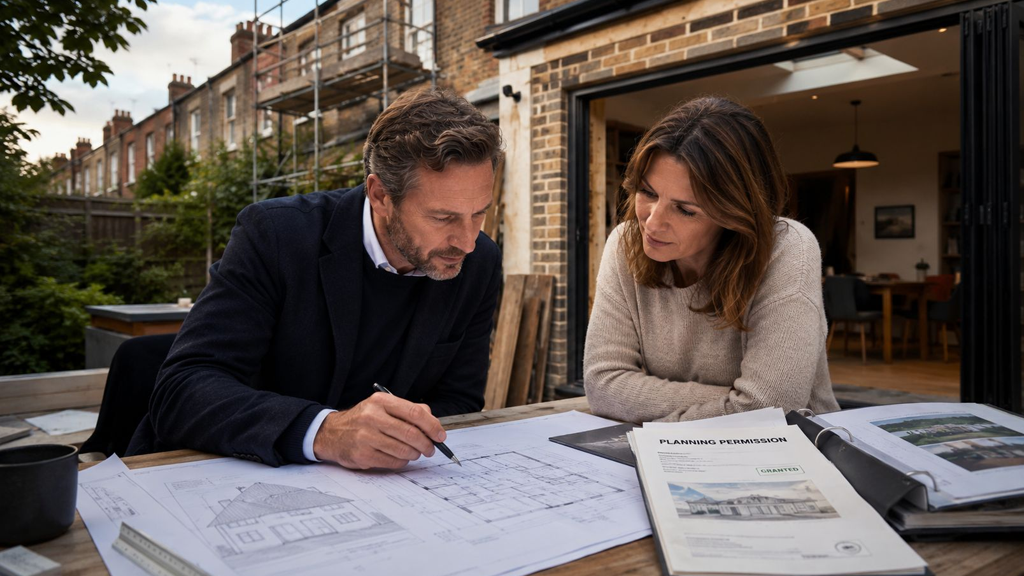
A new pitched roof changes height, shape, and street appearance. On an attached garage at the front of the house, that can be enough to trigger planning concerns, especially if the garage currently helps satisfy off-street parking expectations. Corner plots, estate layouts, and houses in tighter suburban roads usually get more scrutiny than detached garages tucked away at the rear.
Neighbour context matters as well. A modest ridge line on one plot can feel intrusive on another if the garage sits near a boundary, faces the road, or starts to overshadow a neighbour’s side window or garden edge. I have seen owners assume a pitched roof will be treated as a simple upgrade, then lose weeks because the design changed the look of the frontage more than expected.
If you’re broadly planning a garage to living space project, deal with the roof shape early. Leaving it until after the room layout is drawn often means paying to revise plans, structural details, and sometimes the application itself.
The existing garage shell is often the weak point. Many older garages were built to carry a light flat roof, not a heavier tiled structure with deeper rafters, new ceiling joists, and upgraded insulation. Before anyone prices the work properly, the walls and bearings need to be checked, and sometimes the foundations do too.
Attached garages can be awkward for another reason. The new roof has to meet the house cleanly without causing damp problems, trapping water at the junction, or creating a weak support point where old and new construction meet.
Before work starts, these are the checks that usually decide whether the job stays sensible on budget:
That is where value for money gets tested. A pitched roof can add kerb appeal and make the finished conversion feel more like part of the house, but if you end up paying for wall upgrades, steelwork, and foundation remedies, the numbers can move fast.
If a contractor is happy to quote from photos without asking about structure, drawings, or approvals, treat that as a warning.
For a practical overview of what the build usually involves, see this guide on replacing a flat roof with a pitched roof.
The roof build itself is rarely the slowest part. Delays usually come from design changes, approvals, and discoveries made once the old roof is stripped.
Common problems include:
The smoothest projects are the ones that settle the planning position and structural design before materials are ordered. That approach does not make the job cheaper on paper, but it usually prevents the expensive kind of surprise.
A garage conversion can look finished on day one and still become a cold, stuffy, damp room by the first winter if the roof build-up is wrong. On pitched roof jobs, the expensive mistakes usually sit behind the plasterboard. They come from poor condensation control, blocked airflow, and weak detailing at the eaves and abutments.
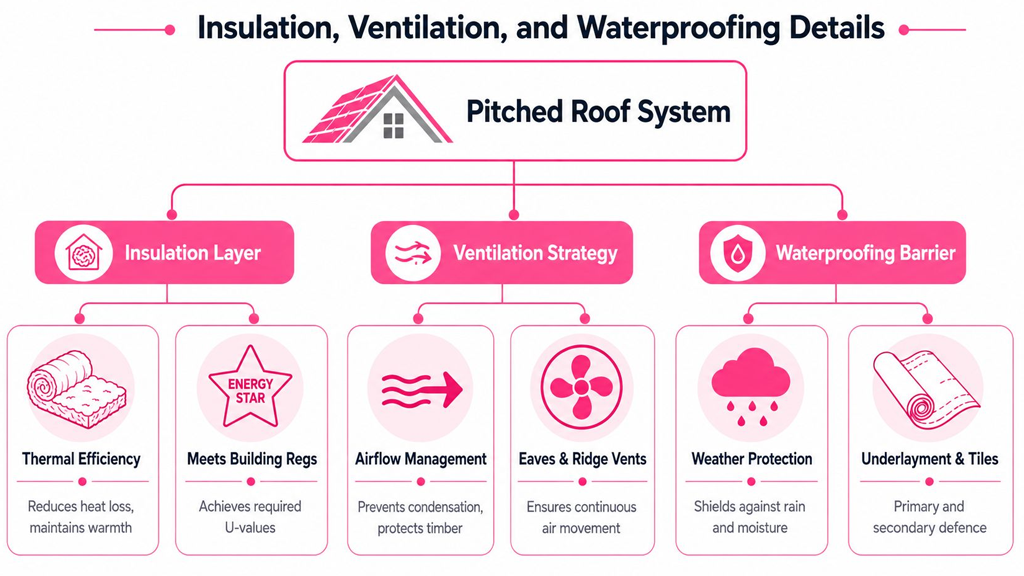
For UK homeowners, especially on attached garages in places like Berkshire, this part often decides whether a pitched roof is good value or a false economy. A new roof shape may improve the look of the conversion, but if the insulation build-up steals too much headroom, needs extra timber depth, or creates awkward junctions at the house wall, the budget can move quickly. That is why the roof should be designed as part of the heated room, not treated as a simple re-covering job.
A pitched garage conversion roof works because each layer has a clear job.
The order matters. So does the thickness of each layer.
The failure I see most often is not a roof leak. It is condensation risk that was ignored during design or value-engineered out during the build. If insulation is pushed tight against the wrong part of the roof, or the ventilation path is broken by noggins, downlights, or careless felt support trays, moisture can build up where you cannot see it. Timber stays damp. Mould follows. Repairs usually mean opening the ceiling back up.
A common detail on a cold roof is a clear ventilation gap above the insulation, with the vapour control layer kept continuous on the warm side. That sounds straightforward, but it often gets compromised once electricians and plasterers start cutting holes.
Too much insulation in the wrong place can cause as many problems as too little. The roof has to control heat, air, and moisture together.
A roofer, builder, or designer should be able to answer these points clearly before work starts:
Those answers matter because the cheapest build-up on paper is not always the best value. A warm roof arrangement can cost more in materials, but it may preserve headroom and reduce condensation risk. A cold roof can be perfectly sound, but only if the ventilation path is kept clear and the detailing is disciplined on site.
If those details are vague, the conversion is being under-planned.
A lot of garage conversion jobs start the same way. The homeowner wants a pitched roof to make the building look more like part of the house, then the first quote lands and the question changes from “Can it be done?” to “Is it worth doing for this garage, on this budget, in this area?”
That is the right question to ask.
The roof work itself is only one part of the spend. On a straightforward garage, the pitched roof structure and covering may be reasonably priced. Once structural alterations, drawings, scaffold, approvals, matching materials, and internal making-good are added, the total can move up quickly. In Berkshire, where side access is often tight and matching the main house matters more for resale, those extras can make the difference between a sensible upgrade and a job that strains the budget without adding enough value.
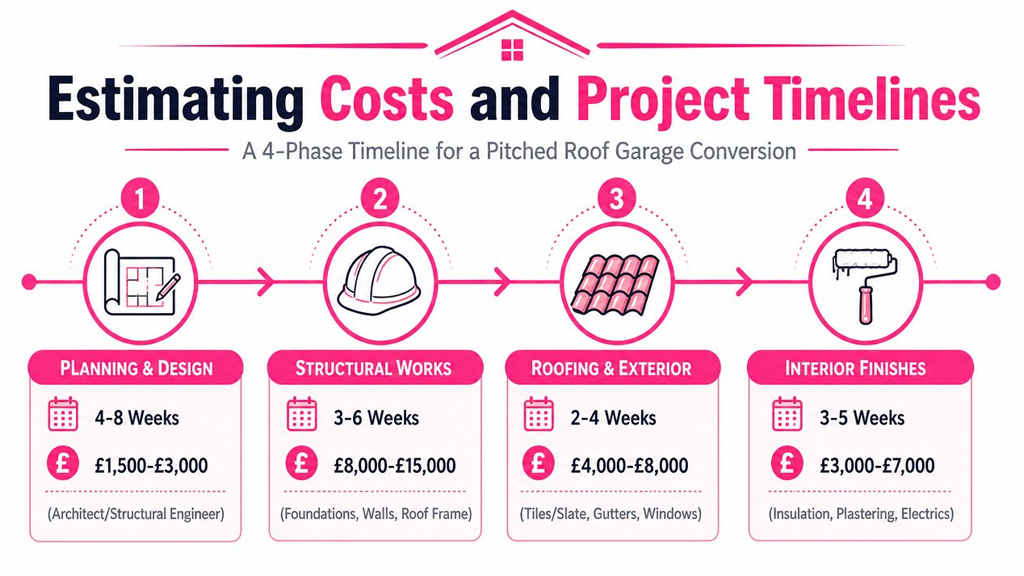
Simple garages cost less. Complicated ones do not.
A detached single garage with good access, clear bearing points, and a basic dual-pitch roof is usually at the easier end of the range. Costs rise when the existing walls need strengthening, the new roof has to tie neatly into the house, or the site setup is awkward enough to slow the whole build.
Common cost drivers include:
When considering value for money, a clear head is essential. Spending more to match the house properly can be money well spent if the garage sits on the front elevation or forms part of the first impression of the property. Spending heavily on premium finishes at the back, on a modest garage with limited use, may not return much in practice.
The on-site roofing phase is often fairly quick. The full job is not.
In real projects, the waiting happens before the first rafter goes up and after the roof is made watertight. Drawings, structural calculations, approvals, material lead times, and booking inspections often take longer than homeowners expect. Weather can also shift the programme, especially if the old roof has to be stripped during a wet spell.
The sequence usually runs like this:
Design and approvals
Finalise drawings, structural details, and any submissions needed before work starts.
Strip-off and opening up
Remove the existing roof and confirm the condition of the supporting walls and bearings.
Structural carpentry
Fit wall plates, rafters or trusses, steels if required, and any strengthening work.
Make the roof watertight
Install underlay, battens, coverings, flashings, and guttering.
Close up inside
Complete insulation, plasterboarding, plastering, and any joinery or decorating linked to the conversion.
On a clean, well-prepared job, the roofing team may only need a short window on site. The full programme often stretches because other trades, inspections, and small corrections have to happen in the right order.
Budget for the work you can see and the work you cannot. Drawings, scaffold, waste removal, structural checks, and making good inside are the items that catch homeowners out most often.
The practical way to price this job is to ask for a breakdown, not just a single total. Separate the roof structure, roof covering, scaffold, structural steel if needed, rainwater goods, insulation-related changes, and internal repairs. That makes it much easier to compare a pitched roof against upgrading the existing flat roof, which is often the primary decision for homeowners trying to balance appearance, planning risk, and return on spend.
Material choice should match the house first, the budget second, and fashion a distant third. On most garage conversions in this area, the cleanest result comes from selecting a covering that sits comfortably with the main property rather than trying to make the garage roof stand out.
Concrete tiles are often chosen because they’re practical and widely available in profiles that suit many Berkshire homes. Clay tiles can work well where the existing house has a more traditional finish. Natural slate suits some properties beautifully, but it isn’t automatically the right call if the rest of the building doesn’t support that look or load.
What matters more than the sales pitch is compatibility. The covering needs to work with the pitch, the structure below, and the detailing at verges, abutments, and gutters.
A garage conversion roof is not the same as a simple re-roof. You need someone comfortable with structural alterations, sequencing with builders and engineers, and dealing with inspections at the right stages.
Ask direct questions:
This is also where one practical local option can be relevant. All Custom Roofing handles garage roof replacement and roof repair work in Windsor and surrounding areas, which makes it a sensible company to include when you’re speaking to contractors about the roofing side of a conversion.
The smoothest projects come from a simple combination. Clear drawings, a roofer who understands conversion work, and materials chosen to match the house rather than chase trends.
The jobs that go wrong usually have one of two problems. Either the design was undercooked, or the contractor treated a structural conversion like a basic roof swap.
Usually, yes, if they’re planned into the design early enough. Rooflights affect rafter layout, trimming details, insulation continuity, and the finished look from outside. They’re far easier to get right before the roof is built than as an afterthought once the covering is on.
It can, but only when the conversion feels properly integrated with the house. Buyers respond to usable, comfortable space and a finished appearance. A pitched roof may help with that, especially where the old flat-roof garage looked obviously separate, but the value comes from the whole result rather than the roof shape alone.
Sometimes, but don’t assume it will work as a loft-style storage area. The structure may be designed only for the roof and ceiling arrangement needed for the room below. If storage matters, say so at design stage, because that affects structure, access, and how the ceiling is formed.
Not automatically. A pitched roof over a garage can create more volume, but usable room space depends on headroom, access, and the overall design. On many single-storey garages, the roof shape improves the feel of the converted room below more than it creates a separate habitable area above.
There will be noise, deliveries, scaffold, and a period where the garage roof is opened up. Attached garages are usually more disruptive than detached ones because the works are closer to the main house and the junction details matter more. Good sequencing helps a lot. The cleaner jobs keep the structure weather-tight as quickly as possible and avoid leaving the roof exposed longer than necessary.
No. It’s better when it solves real problems. If you need stronger visual integration, improved roof form, and a more ambitious conversion, it can be worth it. If your main goal is a comfortable room with controlled cost and less structural intervention, a high-quality flat roof upgrade may be the smarter route.
If you’re weighing up a pitched roof on a garage conversion and want straight advice on what’s practical for your property, contact All Custom Roofing in Windsor. We cover Windsor, Reading, Slough, Bracknell, Maidenhead, and surrounding towns across Berkshire, and we can help you decide whether a pitched conversion or a well-built flat roof upgrade makes better sense for your home.