
 (+44) 7900 515 552
16 Oct 2026
 insurance backed guaranteeinsurance backed guarantee
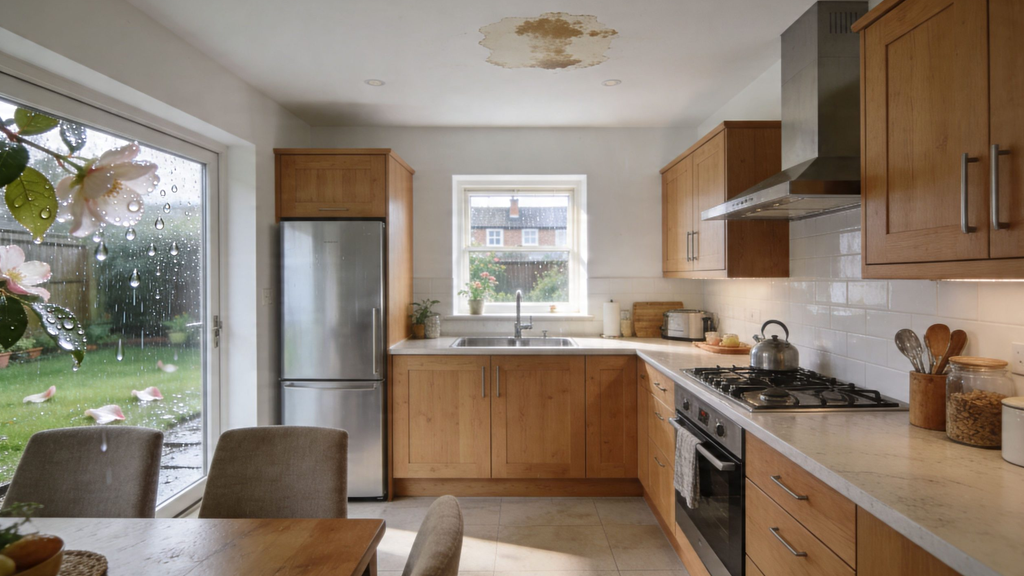
A damp patch on the ceiling rarely appears out of nowhere. It usually shows up after a night of hard rain, often over a kitchen extension, garage, dormer, or rear addition, and it leaves you staring upwards wondering if you need a quick patch or a full new roof.
That’s the moment many individuals start searching for flat roof repairs, even if they live in Windsor, Slough, Maidenhead, or Reading. London search terms dominate, but the roofing problems are much the same across the South East. Older felt roofs, tired garage coverings, badly formed falls, blocked outlets, and patch jobs that never dealt with the underlying cause all turn up again and again.
From a family-run roofing point of view, flat roof repairs are rarely about one visible leak alone. Water can travel. A split near an edge trim can stain a ceiling several feet away. Overflow from a blocked gutter can mimic a membrane failure. And a patch that looks simple from the ground can hide rotten decking underneath. The good news is that most problems become much easier to deal with once the source is identified properly and the repair suits the roof type.
A common call starts the same way. The homeowner notices a brown ring on the ceiling after heavy rain, wipes it down, hopes it was a one-off, then sees it spread a few days later. On a flat roof, that stain often means water has already been sitting somewhere it shouldn’t.
In the UK, that concern is widespread. Leaks and storm damage are the two most common reasons homeowners need roof work, both cited by 33% of UK homeowners, and flat roofs typically last 20 to 30 years compared with 40 to 60 years for pitched roofs. That shorter life is one reason flat roof issues show up so often on extensions and garages across Berkshire and the wider Thames Valley.
A damp mark indoors doesn’t always mean the hole in the roof is directly above it. Water moves along timber, insulation, and plasterboard before it becomes visible. That’s why guessing from inside the room usually leads to the wrong fix.
Look out for these early warning signs:
Practical rule: If the patch grows after each spell of rain, the roof needs inspection sooner rather than later. Cosmetic repairs inside won’t solve it.
Many flat roofs around Windsor and nearby towns sit over kitchens, utility rooms, garden rooms, porches, and garages. These areas often have less ventilation and more temperature change than the main house, which makes hidden damp worse. By the time the ceiling shows damage, the roof covering may have been under strain for some time.
A proper repair starts with finding the route of the water, not just the mark it leaves behind.
A lot of flat roof leaks start in the same places, especially on extensions, garages, and rear additions around South London, Windsor, and the wider Thames Valley. The challenge is that the visible leak is often the final symptom, not the starting point. A small defect at an edge trim or outlet can soak insulation for weeks before anything shows on the ceiling below.
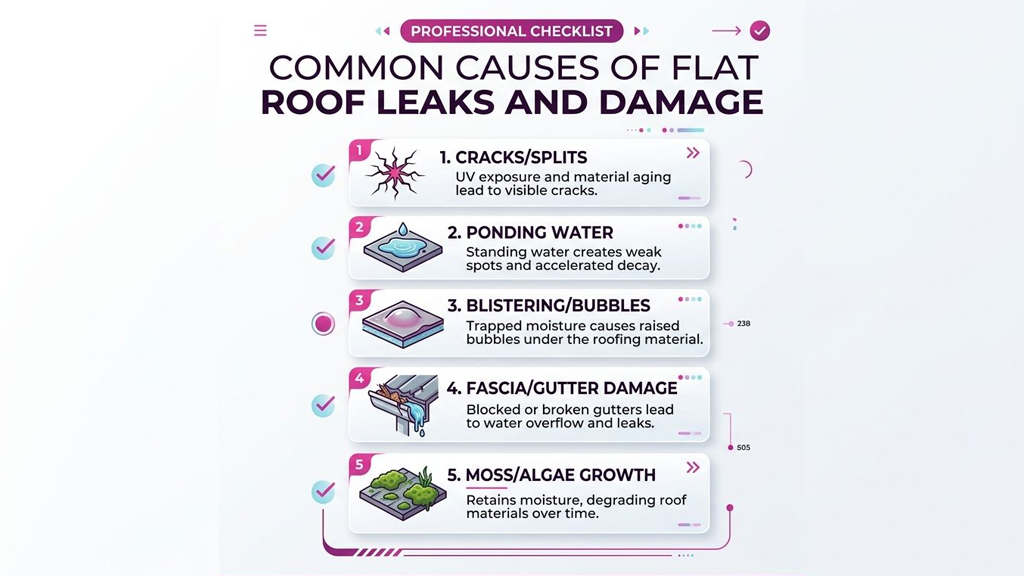
On older felt roofs, I usually find splits at stress points first. Corners, upstands, rooflights, and parapet junctions take movement year after year. On newer systems, the problem is often less dramatic. A poorly bonded seam, a damaged edge detail, or a blocked outlet can be enough to let water track in.
These are the issues that turn up most often:
The South East gets a bit of everything. Long spells of rain, sharp winter frosts, summer heat, and sudden storms all test a flat roof in different ways. A roof in marginal condition might look fine in dry weather, then start leaking after two or three days of steady rain.
Property type matters too. A terraced house extension often has limited falls and awkward drainage runs. A garage roof in Berkshire may have older felt, little insulation, and edge details that have been repaired more than once. Those local, practical issues are usually more useful than generic advice about flat roofs as a category.
Material choice affects the way damage develops as well. Homeowners comparing systems can get a clearer sense of long-term behaviour in this guide to the best roofing materials for flat roofs.
A roof covering can still have life left in it, but if drainage is poor or the edges are failing, leaks will keep returning.
There is no need to climb onto the roof to get an early read on the problem. In many cases, that risks damaging the surface further.
A safer check from ground level or an upstairs window is usually enough to spot the basics:
Brush-on sealants and quick DIY patches have their place in an emergency, but they rarely fix the actual cause. If the roof is holding water, if the substrate has gone soft, or if the failure is at a junction detail, the leak usually comes back. Sometimes it reappears a few feet away, which makes the repair look worse than if it had been diagnosed properly from the start.
That is the reality with flat roof repairs homeowners often face. The leak itself is only part of the job. Finding out why that part failed is what makes the repair last.
A repair only lasts if it suits the roof that is already there.
That matters a lot across Windsor, Slough, and the wider area, where we see everything from older felt-covered garage roofs to newer kitchen extensions finished in EPDM or GRP. The right patch for one roof can be the wrong repair on the next job, even if the leak looks similar from inside the house. Material type, roof shape, sun exposure, and how well the water clears all affect what will hold up through South East weather.
Felt is still common on garages, porches, and many older rear extensions. It is practical to repair if the surrounding covering still has life in it, and localised patching can work well around small splits or failed laps. The downside is age. Once older felt starts drying out, blistering, or cracking in several places, one repair often turns into a series of repairs.
EPDM is a single-ply rubber membrane, usually seen on cleaner, simpler roof layouts. It copes well with movement, which helps on extension roofs that warm up fast in summer and cool quickly overnight. Repairs need proper cleaning, the right primer or bonding method, and sound edge details. If that prep is poor, the patch can lift long before the membrane itself has reached the end of its life.
GRP fibreglass gives a tidy finish and suits modern extensions where appearance matters. It works best on dry, stable surfaces and well-formed trims and upstands. On repair work, the challenge is getting a reliable bond to the existing laminate and matching the finish closely enough that the repaired area does not become the next weak point.
On a small garage roof in Berkshire, a felt patch may be the sensible answer if the defect is isolated and the deck underneath is still firm. On a newer extension in South London, replacing a poorly detailed GRP edge or repairing an EPDM seam may make more sense than disturbing the whole field area.
Homeowners can be steered wrong. Some contractors push a full change of material because it sounds like an upgrade. In practice, mixing systems without addressing the detail properly often creates more problems than it solves. A felt roof does not automatically benefit from a GRP patch, and an EPDM roof needs compatible repair materials and trims.
| Flat Roof Material Comparison | |||
|---|---|---|---|
| Material | Typical repair strengths | Common limitations | Often suited to |
| Felt | Straightforward local patching, practical for many older roofs | Shorter-term result if the roof is brittle or heavily patched already | Garages, porches, older extensions |
| EPDM | Flexible, good for movement, clean finish on simpler layouts | Repairs depend heavily on preparation and compatible detailing | Modern extensions, larger simple roof areas |
| GRP | Hard-wearing surface, neat appearance, good on well-formed roofs | Repair work is weather-sensitive and more technique-dependent | Contemporary extensions, roofs where finish matters |
A targeted repair makes sense when the defect is local and the surrounding roof is still serviceable.
Partial renewal is often the better call where one section has failed repeatedly, such as an outlet area, perimeter edge, or wall abutment.
Full replacement starts to look more sensible when the roof has multiple old patches, signs of trapped moisture, or age-related failure across the surface. At that point, the labour of repeated call-outs can outweigh the saving of another short-term fix.
If you want a broader comparison before deciding, this guide to the best roofing materials for flat roofs gives a useful overview of where each system fits.
For detached garages and basic outbuildings, felt is still a reasonable option if the budget is tight and the roof design is simple. For a kitchen extension or office conversion, EPDM or GRP often gives a cleaner long-term finish, but only if the falls, trims, and outlets are right. On smaller terraced house extensions, where space is tight and details are awkward around parapets or neighbouring walls, the installer matters as much as the material.
That is the trade-off homeowners should keep in mind. The cheapest repair on the day is not always the lowest-cost answer over the next five years.
A proper flat roof repair starts with diagnosis, not patching. On a Windsor garage or a rear kitchen extension in South London, the mark on the ceiling is often some distance from the point where water is getting in. I see that regularly on South East properties, especially after a spell of wind-driven rain followed by standing water.
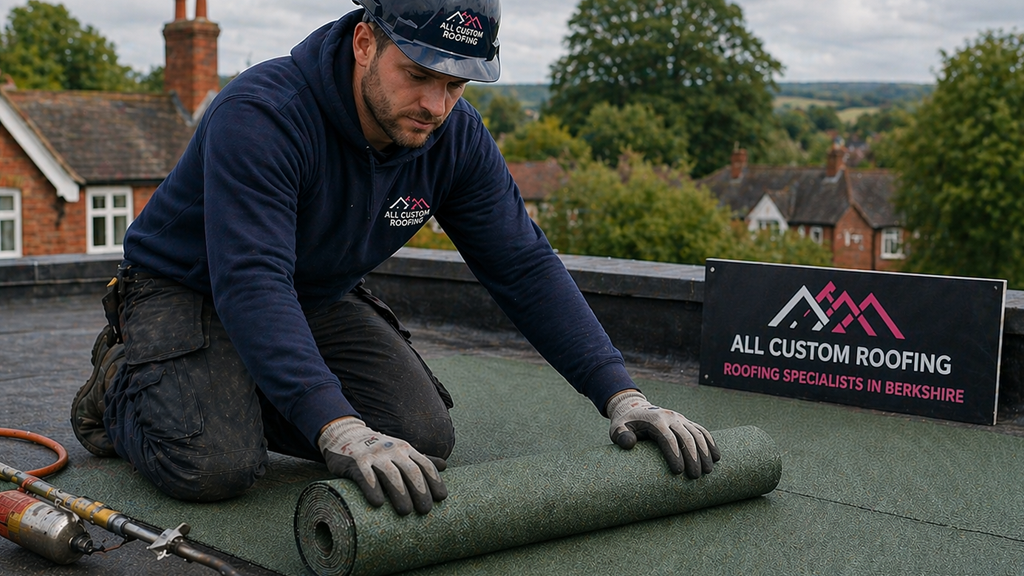
The first job is to inspect the whole roof area and work out whether the issue is local or whether the roof is failing in more than one place. A split near an outlet is one kind of repair. A roof with wet insulation, tired upstands, and repeated ponding is another.
Good repair work starts with opening up enough of the defect to see what is sound underneath. Covering over soft decking or damp substrate usually buys a bit of time, then the leak returns.
A roofer should be checking:
If the covering has to come up, it should be cut back to dry, stable material. Any rotten deck sections need replacing before the waterproof layer goes back on. That part affects cost more than homeowners expect, which is why a clear roof repair cost guide for UK homeowners helps when you are comparing quotes.
Drainage decides whether a repair lasts. Many flat roof leaks are not caused by one dramatic hole. They come from water sitting too long around an outlet, edge, or low spot, then finding a weakness.
As noted earlier in the article, flat roofs need proper falls to shed water effectively. If the area being repaired still holds water afterwards, the roof remains under strain and the same section often fails again. On older extensions and garages across the Thames Valley, that can mean the repair also needs a local build-up, an outlet adjustment, or correction to the surrounding detail.
A tidy patch is not enough if the water keeps returning to the same place.
The repair method has to suit the existing covering. Felt, EPDM, and GRP each need different preparation, bonding methods, and finishing details. Get that wrong and the repair can fail at the edge, crack with movement, or refuse to bond properly in the first place.
This matters most on the smaller flat roofs common around this part of the South East, where details are tight. Terraced house extensions often have awkward abutments against neighbouring walls. Garage roofs tend to suffer from basic drainage faults and older deck boards. The material matters, but the detail work matters just as much.
This short video gives a useful view of professional flat roofing work in practice.
By the end of the job, the repaired area should be secure, clean, and properly tied into the existing roof. Edges should sit flat. Trims and upstands should be fixed properly. Water should have a clear route to the outlet.
For homeowners across Windsor and Berkshire, All Custom Roofing is one example of a contractor that handles specialist flat roof systems and drainage-focused repair work. That matters because repeat leaks are often caused by the detail around the membrane, not just the membrane itself.
A professional roofer should also explain the decision. What failed, what was removed, what was replaced, and whether the repair is a sound long-term fix or a sensible holding measure on an older roof. That is the difference between a repair that solves the problem and one that hides it for a few months.
A damp patch on a kitchen extension in Windsor can come from a small split in the covering, but the bill is rarely just about the split. On flat roofs across Berkshire and the wider Thames Valley, the price usually turns on what sits underneath and how awkward the roof is to reach. A cheap patch on paper can become poor value if the deck is soft, the outlet keeps backing up, or the edge detail has already failed.
That is why sensible budgeting starts with the scope of the repair, not a headline figure.
On a small garage roof or rear extension, costs tend to stay lower when the fault is isolated and access is straightforward. Prices climb when the roof sits above a conservatory, joins a parapet wall on a terraced house, or needs sections opened up to replace wet timber. In this part of the South East, labour rates also tend to run higher than in many other parts of the UK, so pricing often gives homeowners in Berkshire a realistic guide for comparison.
Two roofs can show the same internal stain and need very different work outside.
A quote usually rises or falls based on:
Homeowners frequently get caught out on older roofs, especially felt systems on 1970s and 1980s extensions. The leak may show in one corner, but the underlying problem is sometimes failure along several joints or at the wall detail. In those cases, patching one area can buy time, but it does not always buy much of it.
A local repair makes sense when the rest of the roof is still sound. I would usually say that means the covering is still well bonded, the deck feels firm underfoot, and the issue is tied to one defect rather than general wear across the roof.
Once a flat roof starts leaking in more than one place, or every heavy spell of rain exposes a new weakness, the sums change. Spending money on repeated call-outs for a tired garage roof or an ageing extension roof often costs more in the long run than carrying out a larger repair properly. That is especially true in the South East, where wind-driven rain and blocked outlets can expose weak details fast.
A proper written quote should tell you exactly what is being allowed for, and what is not.
Look for:
If you want a broader benchmark before comparing estimates, this guide to roof repair costs in the UK gives useful context.
A clear quote protects both sides. You know whether you are paying for a short-term patch or a repair with proper life left in it, and the roofer knows the job has been priced on the right basis.
When water is actively coming in, the priority is protecting the inside of the property and preventing the leak from getting worse before proper repairs can be carried out. That doesn’t mean climbing onto a wet roof with a tube of sealant. In most cases, that creates a safety risk and a poor repair.
Start inside the house.
Outside, only do what is safe from ground level. If you can see a blocked outlet or overflowing gutter and can clear it without stepping onto the roof, that may reduce the immediate load of water. Beyond that, wait for professional help.
If the leak is urgent, this practical guide on emergency flat roof repair gives a helpful overview of what should happen next.
The roofs that hold up best usually aren’t the ones that never had a defect. They’re the ones where someone noticed the small issue before it became a major one. A blocked outlet, loose trim, split at an upstand, or minor blister is much easier to deal with early.
One point is worth stating clearly. Preventive maintenance is the most effective way to avoid costly flat roof repairs, and that routine annual inspections provide a significant return on investment by catching minor issues before they lead to major damage. It doesn’t give a precise cost comparison, but the logic is sound from a roofing standpoint. Small faults are cheaper and cleaner to fix than soaked insulation, internal staining, and deck replacement.
On the tools, the difference is obvious: a minor defect caught early is maintenance. The same defect left through winter becomes repair work.
You don’t need a complicated programme. You need consistency.
A sensible routine includes:
The homeowners and landlords who do this usually avoid the most frustrating leaks. Not every issue can be prevented, but many of the expensive ones start as something small and visible.
Choosing a roofer for a flat roof repair isn’t just about finding someone who says they can patch a leak. Flat roofs are unforgiving of poor detail. If the contractor misses the drainage issue, uses the wrong repair method, or gives you a vague verbal price, you can end up paying twice.
A roofer working regularly in Windsor, Slough, Maidenhead, Bracknell, Staines-upon-Thames, and nearby areas understands the kind of roofs common here. Rear extensions, bay tops, garages, dormers, and small commercial units all come with different access and detailing issues.
A good contractor should be able to explain, in plain terms:
If they can’t explain the job clearly, that’s usually a warning sign.
Before agreeing to any work, check the basics properly.
| What to check | Why it matters |
|---|---|
| Written quotation | Prevents disputes and vague scope |
| Proof of insurance | Protects you if something goes wrong |
| Experience with flat roof systems | Different materials require different repair methods |
| Workmanship guarantee | Shows accountability for the repair |
| Local track record | Easier to verify than a generic online presence |
Some problems show up before the work even starts.
A trustworthy roofer doesn’t rush you into the biggest job. They explain the smallest job that will actually solve the problem.
For most homeowners, confidence comes from consistency. The roofer turns up, inspects properly, puts the scope in writing, and leaves the site tidy. That matters more than sales talk.
If you’re comparing firms for flat roof repairs searches and need work doing, choose a contractor with a genuine local service area and a repair-first mindset where appropriate. Contact All Custom Roofing in Windsor for expert roof repairs across Berkshire. We cover Windsor, Reading, Slough, Bracknell, Maidenhead, and surrounding towns.
That depends on what failed and how the repair was done. A properly matched repair on an otherwise sound roof can last well. A surface patch over wet decking, movement cracks, or standing water usually won’t.
The important question isn’t only “how long will the patch last?” It’s “was the cause of the leak corrected as well?”
Sometimes yes, but conditions matter. Some emergency work can be done to make the roof safe and reduce water ingress, but not every material performs well in wet or very cold conditions. The roof surface, the product being used, and the type of repair all affect what’s practical on the day.
If the weather prevents a proper permanent repair, a responsible roofer should say so and discuss a temporary weatherproof option if one is suitable.
A patch stops making sense when the roof has several weak areas, when leaks keep returning, or when the deck beneath has deteriorated. It also stops being good value if the roof is near the end of its serviceable life and each repair only buys a short period of relief.
In those cases, broader remedial work or replacement is often the cleaner long-term decision.
No. A well-designed and well-maintained flat roof can perform very well on the right part of a property. The problems usually come from poor falls, neglected drainage, tired materials, or bad detailing at edges and junctions.
Flat roofs ask for precision. When that precision is there, they’re practical and durable.
Ask what material is on the roof now, what has failed, whether the deck is sound, and whether drainage is part of the problem. Ask what repair method is proposed and whether the quote includes trims, flashings, and waste removal.
You can also learn something from how roofers market and explain their services online. For a useful outside perspective on how roofing companies present themselves to homeowners. It helps you see why some firms focus on emergency call-outs, local intent, and repair-led enquiries.
Yes. Small leaks rarely stay small on flat roofs. Water tends to spread, and the visible mark inside is often only part of the story. Early inspection gives you more repair options and lowers the chance of hidden timber or insulation damage.
If your extension, garage, bay roof, or dormer is showing signs of leaking, contact All Custom Roofing for practical advice and roof repairs across Windsor, Berkshire, and surrounding towns.