 (+44) 7900 515 552
16 Oct 2026
 insurance backed guaranteeinsurance backed guarantee
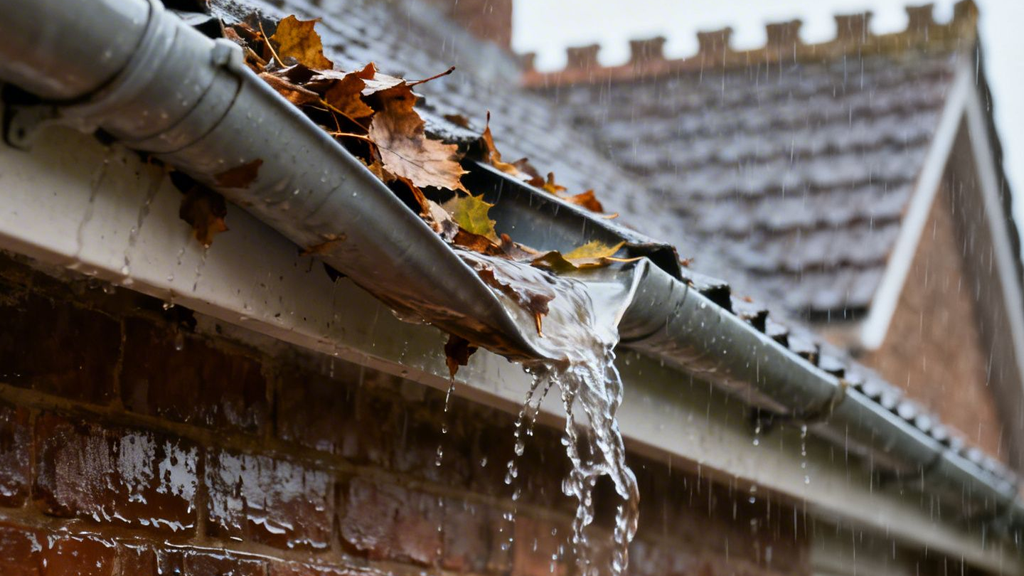
It’s a familiar story for many UK homeowners: a sudden downpour hits, a section of your guttering gives way, and water starts cascading down your brickwork. Emergency gutter repairs are often needed without warning, usually right in the middle of the intense weather we’re all used to. This isn’t just a bit of bad luck; it’s a serious issue that needs immediate attention to stop costly water damage in its tracks.
It can certainly feel like your gutters failed overnight, but the truth is, the problem was likely brewing for months. That final collapse during a classic British storm is often just the breaking point after a long period of strain. For homeowners in Berkshire and across the Thames Valley, this is an all-too-common scenario.
Sudden, torrential rain is almost always the main catalyst. When a massive volume of water pours onto your roof, it can completely overwhelm the guttering. If your gutters are even partially blocked, that water has nowhere to go but straight over the sides, creating a waterfall that can damage your walls, windows, and even your home’s foundation.
The main reasons for a gutter emergency are nearly always preventable. Understanding what causes them helps explain why getting professional help is so important.
Across the UK, emergency gutter repairs have seen a significant surge, driven by more intense storm activity. In fact, neglected gutters are a contributing factor in an estimated 40% of water ingress claims for residential properties, with call-outs peaking during the wettest months from October to February.
When you’re faced with a gutter crisis, acting fast is vital. For expert emergency gutter repairs in Windsor, Reading, Slough, and the surrounding towns, contact All Custom Roofing for a swift, professional response.
When the rain is hammering down and you see a waterfall pouring over your guttering, your first instinct is to do something. That’s understandable, but the most important thing is to stay safe. Whatever you do, do not get a ladder out in a storm. I cannot stress this enough – wet ladders, slippery surfaces, and high winds are a recipe for a serious accident.
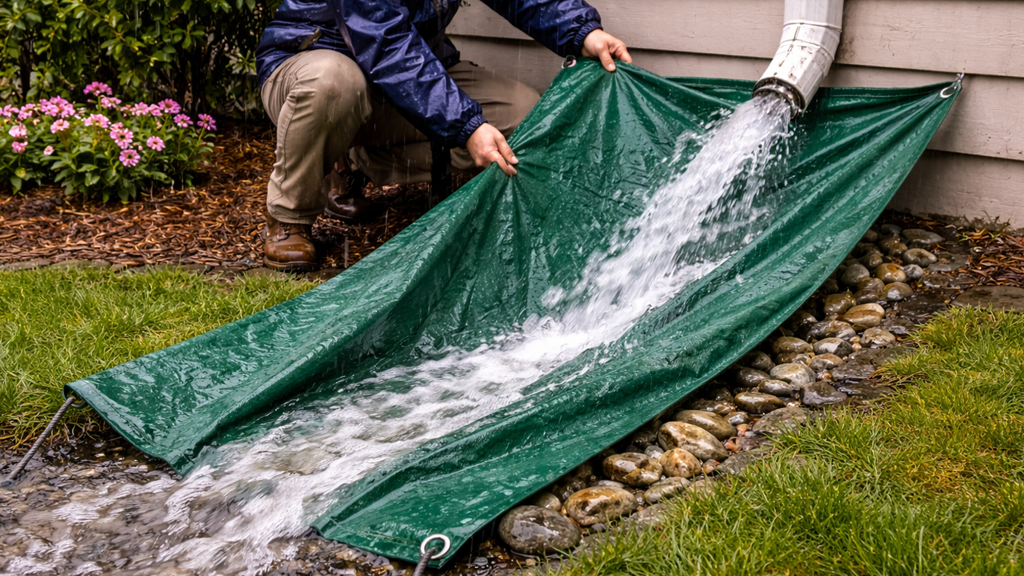
Instead, your focus should be on managing the water from the safety of the ground. The immediate threat isn’t the broken gutter itself, but the sheer volume of water pouring down against your home’s foundation. Your goal is to get that water moving away from the brickwork and foundation, where it can cause damp, erosion, and even structural damage. A large, heavy-duty tarpaulin is your best friend here; you can position it to catch the overflow and channel it towards a drain or a safe part of your garden.
Even from the ground, you can get a good idea of what’s gone wrong. This quick, safe assessment will be incredibly helpful when you ring for professional emergency gutter repairs, as you can give them a clear picture of the problem.
Take a look from a safe spot and see if you can spot any of these tell-tale signs:
In the worst-case scenario after a major storm, severe damage might even be caused by fallen trees. If that happens, you might also need an emergency guide for when a tree falls on your house, as the impact will almost certainly wreck your guttering.
Your immediate priority is never to fix the gutter yourself during a storm. It is always to minimise the water damage to your property’s structure, foundation, and landscaping while you wait for professional assistance.
Once you have an idea of the issue, there are a couple of other ground-level tricks you can try. If you have a rainwater diverter feeding a water butt, try disconnecting it. Sometimes a blockage can form right at the bottom of the downspout, and freeing it up can get things flowing again.
If the water is gushing from a specific joint or crack that you can reach safely from the ground, a little improvisation can go a long way. Use a piece of plastic sheeting or even a cut-up plastic bottle to create a temporary channel. Funnel the water away from the wall and into a bucket. It might seem small, but every drop you divert is one less drop soaking into your brickwork and causing damp issues down the line.
Once you’ve done what you can to control the immediate situation, it’s time to call in the professionals. For homeowners across Windsor, Reading, Slough, Bracknell, Maidenhead, and the surrounding areas, All Custom Roofing offers a rapid response to secure your home and prevent any further damage.

After a storm passes and it’s safe to head outside, your first instinct is probably to check for damage. When it comes to your gutters, a proper look from the ground is the best first step. Keep the ladders away for now – your safety comes first, and you can spot most major issues without climbing up.
Walk the perimeter of your property and use your smartphone to take plenty of photos and videos. This documentation will be a massive help, both for the repair team you call and for any insurance claims you might need to make later on. As you look up, try to see what’s actually gone wrong.
Different gutter problems have their own tell-tale signs. Being able to recognise them will give you a much better idea of how serious the situation is.
It is crucial to know the difference between a simple clog and a structural failure. An overflow might just need a good clean-out, but a sagging or detached gutter means the fixings are compromised. This needs professional attention fast to avoid costly damage to your fascia and soffit boards.
Use this checklist to get a better handle on what you’re seeing and what your next steps should be.
| Symptom | Potential Cause | Severity Level | Recommended Action |
|---|---|---|---|
| Water overflowing but gutter is straight | Heavy blockage (leaves, debris) | Low-Medium | Schedule a professional clean. |
| Consistent dripping from joints/corners | Failed sealant or gaskets | Medium | Needs resealing or joint replacement. |
| A noticeable dip or sag in a gutter run | Broken or loose brackets | High | Call for emergency gutter repairs to prevent collapse. |
| Gutter section hanging loose or fallen | Complete failure of brackets/fixings | Critical | Immediate professional repair is needed. |
| Dark stains on fascia boards | Persistent water overflow | High | Assess gutter and inspect fascia for rot. |
| Damp patches inside the house | Water penetrating the roofline | Critical | Urgent inspection required to find the leak source. |
This checklist isn’t exhaustive, but it helps you communicate the problem clearly when you call for help.
Often, the worst damage from a broken gutter isn’t the gutter itself. It’s the water that has quietly seeped into your home’s structure. Keep a sharp eye out for these subtle but critical warning signs.
Finding these signs early means you can give a roofer the full story. When you call, you won’t just be saying “my gutter is leaking”; you’ll be able to point them toward the secondary damage you’ve already spotted. This ensures they can carry out a truly thorough inspection and fix problems that might otherwise go unnoticed.
While you’re waiting for a professional roofer to arrive, there are a few quick fixes you can try yourself to keep a bad situation from getting worse. Think of these as emergency first aid for your guttering – they aren’t permanent solutions. The main goal here is to control where the water is going and prevent it from damaging your brickwork, fascias, or foundations.
Your safety, however, is always the top priority. Never work at height alone, in bad weather, or after dark. If a repair needs a ladder and you do not feel 100% confident, just leave it. It is far better to wait for a professional who has the right safety gear and training.
For a small drip or crack in a gutter section you can reach safely and easily, a temporary patch can make a world of difference. You can find specialised gutter repair tape which is a great option for this job. It is waterproof, incredibly sticky, and made to withstand the outdoors.
To get it to stick properly, follow these pointers:
If you do not have tape, a thick bead of waterproof gutter sealant can also work to plug a small hole or a failing joint. Just like the tape, it will only work on a completely dry surface and is only meant to be a temporary fix.
Safety First: Only attempt these quick fixes on ground-floor gutters or spots you can easily reach from a sturdy stepladder. Never lean out of a window or over-stretch to reach a problem area.
Has the bottom section of your downspout come away from the wall? If it is still attached at the top but is now hanging loose, you might be able to secure it for the time being. This is really important, as it will stop water pouring directly onto the base of your house.
If you can reach it safely from the ground, you can use strong waterproof tape or even a few zip ties to strap it back to its wall bracket. The idea is just to hold it in place and guide the water back towards the drain until a professional can fix it properly. For more insight into proper fixes, you can learn how to repair roof gutters in our detailed guide.
Remember, these are just damage control measures. You’ll still need a professional to come and find the root cause of the problem and carry out a lasting repair. For emergency gutter repairs across Berkshire and the surrounding areas, get in touch with the All Custom Roofing team in Windsor for a fast, safe response.
There’s a big difference between a quick DIY fix and a problem that needs an expert eye. While tackling a small, easy-to-reach leak yourself can feel satisfying, knowing when to put the tools down is crucial. Some situations are just too risky, and a botched repair can lead to far more expensive structural damage, not to mention personal injury.
Making the right call really comes down to safety and the scale of the damage. Attempting to fix major guttering issues without the proper training, safety gear, and insurance is a gamble you do not want to take. The most obvious red flag? Any work that involves climbing a ladder, especially on a two-storey home. Ladders are linked to thousands of A&E visits in the UK each year, and the danger only increases when you’re dealing with wobbly, storm-damaged guttering.
If you see any of the following, your first and only move should be to call a specialist. These are not jobs for a weekend warrior.
This simple decision tree can help you visualise when to tackle a job yourself versus calling for backup.
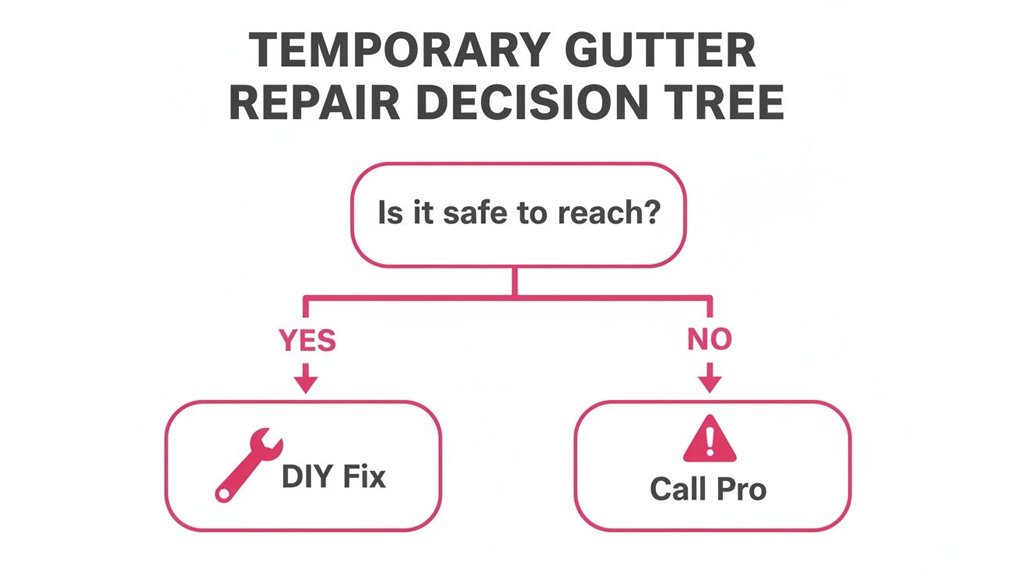
The main takeaway here is simple: if you cannot safely reach and fix the problem from solid ground or a small, stable step-ladder, it is a job for a professional. No exceptions.
Putting off that call to an expert can have serious financial repercussions down the line. Since 2015, severe weather events have led to a 40% increase in demand for UK emergency gutter repairs. In areas like Windsor, where many homes have complex pitched roofs, we see gutter detachments all the time after high winds.
Expert analysis shows that gutters cleaned just once a year fail 300% more often than those maintained regularly, turning a simple maintenance task into a pricey emergency.
For homeowners in Windsor, Reading, Slough, and across Berkshire, All Custom Roofing is the trusted emergency service. Our team is equipped for a fast, safe, and effective response to secure your property and prevent further damage.
Once you’ve dealt with the immediate crisis of a failing gutter, your attention will naturally turn to two things: the cost of the emergency repair and how to stop it from ever happening again. The final bill for an emergency call-out can be a bit of a shock, so it helps to know what goes into the pricing.
The cost of emergency gutter repairs in the UK really does depend on the chaos you’re facing. A simple job, like clipping a downspout back into place, will be on the lower end of the scale. But if a whole section has collapsed under the weight of a storm, you’re looking at a much more significant expense.
Several key things will shape the final invoice you receive. Being aware of these will help you make sense of the quote a professional roofing company gives you.
The Extent of the Damage: A small, dripping joint is a world away from replacing an entire length of guttering that has torn away from the fascia. The more widespread the problem, the higher the cost.
Materials Required: There is a big price difference between standard uPVC guttering and more specialised materials like traditional cast iron or modern aluminium. The material itself is a major factor.
How Easy Is It to Get To?: Working on a bungalow’s gutters is one thing. Accessing them on a three-storey terraced house in central Windsor is another entirely and will almost certainly require scaffolding. This directly affects the time, risk, and labour involved.
Secondary Damage: Often, the gutter isn’t the only victim. If the overflow has caused your fascia and soffit boards to rot, they’ll need repairing or replacing too, which adds to the project’s scope and cost.
Honestly, the single most effective way to avoid the stress and high cost of a gutter emergency is with regular, professional maintenance. It’s a false economy to wait for a disaster to strike. Taking a proactive approach is always more cost-effective and, more importantly, protects your home’s structural integrity.
A straightforward biannual maintenance schedule is your best line of defence. This is not complicated; it just needs to be consistent.
Professional Gutter Cleaning: Getting a professional to clear out all the leaves, moss, and debris is essential. We recommend doing this once in the autumn after the leaves have fallen and again in the spring to clear out anything from the winter. This ensures water has a clear path.
Full System Inspection: A roofer will not just clean; they’ll check the brackets, seals, and alignment of the entire system. This is where they spot weaknesses before they have a chance to become critical failures.
Minor Adjustments and Fixes: During an inspection, it’s simple to tighten a loose fitting or reseal a joint that’s starting to look a bit tired. These small tweaks are what prevent a minor issue from turning into a major leak during the next downpour.
Think of a maintenance plan from a trusted local company as an investment in your property’s health and your own peace of mind. It saves a significant amount of money and stress in the long run. If you’re interested in how these preventative costs stack up against other common jobs, take a look at our comprehensive guide on roof repair costs in the UK.
For reliable gutter maintenance and emergency repairs that protect your home, contact All Custom Roofing in Windsor. We provide expert services across Berkshire, including Reading, Slough, Bracknell, and Maidenhead. Contact us today for a free, no-obligation quote.