 (+44) 7900 515 552
16 Oct 2026
 insurance backed guaranteeinsurance backed guarantee
That heart-stopping moment when you spot a drip from the ceiling is a feeling no homeowner wants. A major roof failure is more than just an inconvenience; it’s an emergency. For these urgent situations, what you do in the first few minutes is crucial. It all boils down to three key actions: securing the property by switching off electrics, moving valuables away from the water, and containing the leak to stop further damage.
Acting fast can mean the difference between a manageable repair and a catastrophic bill. Here’s what you need to do while you wait for a professional roofer to arrive.
Discovering a leak or storm damage can be incredibly stressful, but panic is your worst enemy. A calm, methodical approach is what’s needed. Your first moves inside your home should be all about safety and limiting the mess. Those initial moments are when you can prevent a bad situation from becoming much, much worse.
Taking quick action to stop further harm is the cornerstone of any emergency response. This process is often called damage limitation, and you can get more expert advice from this essential guide to water damage mitigation.
If you see water dripping anywhere near light fittings, sockets, or switches, stop what you’re doing. Your first job is to safely shut off the electricity to that part of the house. Find your consumer unit (fuse box) and flick the circuit breaker for the affected rooms. Water and electricity are a lethal mix, and this one simple step eliminates the immediate risk of shocks or an electrical fire.
With the power off, you can then focus on protecting your property. Start moving furniture, electronics, and anything with sentimental value well clear of the dripping water. If something is too big or heavy to shift, cover it completely with a thick plastic sheet.
Now, grab a bucket, a large bowl, or even an old cooking pot and place it directly under the leak. A little tip from experience: if the sound of the dripping is driving you mad, put an old t-shirt or towel in the bottom of the bucket. It’ll soften the impact of the water and stop the splashing. If you have a more serious leak with water coming through in several places, you’ll need a few containers.
This straightforward action prevents water from soaking your plasterboard ceilings, getting into wall cavities, and ruining your floors. Believe me, keeping the area as dry as you possibly can makes the final repair job far simpler and less costly. To get a better handle on what to do after a storm, check out our guide on responding to storm damage roof repair.
The diagram below gives you a simple, three-step protocol to follow the moment you spot a problem.
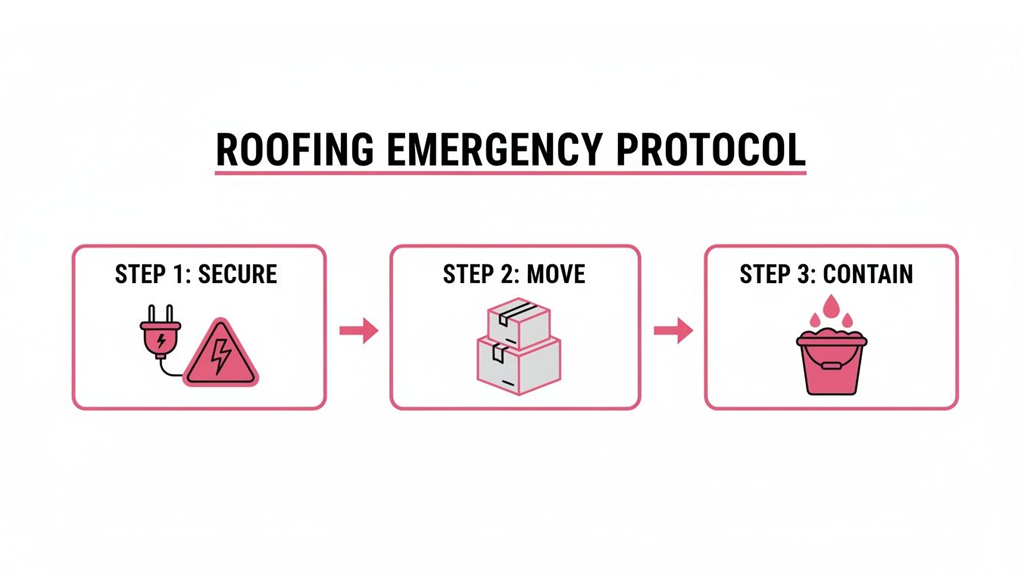
When you discover a roofing emergency, it’s easy to feel overwhelmed. This checklist breaks down the immediate actions into a clear, prioritised sequence to help you stay focused on safety and damage control.
Your Emergency Action Checklist
| Priority | Action to Take | Why It’s Critical |
|---|---|---|
| 1 (Highest) | Shut off electricity to the affected area at the consumer unit (fuse box). | Prevents the life-threatening risk of electrical shocks or fire from water interacting with live circuits. |
| 2 | Move furniture, electronics, and valuable items away from the leak. | Protects your belongings from irreversible water damage, saving you money and heartache. |
| 3 | Place buckets or containers under all drips to catch the water. | Stops water from saturating ceilings, walls, and floors, which can lead to mould and structural issues. |
| 4 | Call a professional emergency roofer immediately for advice and call-out. | A professional can provide guidance and get a team out to secure your property and prevent further damage. |
Following this checklist ensures you tackle the most critical tasks first, creating a safer environment and minimising the long-term impact on your home while you await professional help.
Here in the UK, it’s no surprise that wind damage is the primary culprit behind most roofing emergencies, making up a massive 35% of all professional call-outs each year. This is particularly true for us here in Berkshire and Windsor, where winter gales can easily top 50 mph. A single powerful storm can rip thousands of tiles from roofs across the county, creating a huge spike in demand for emergency repairs.
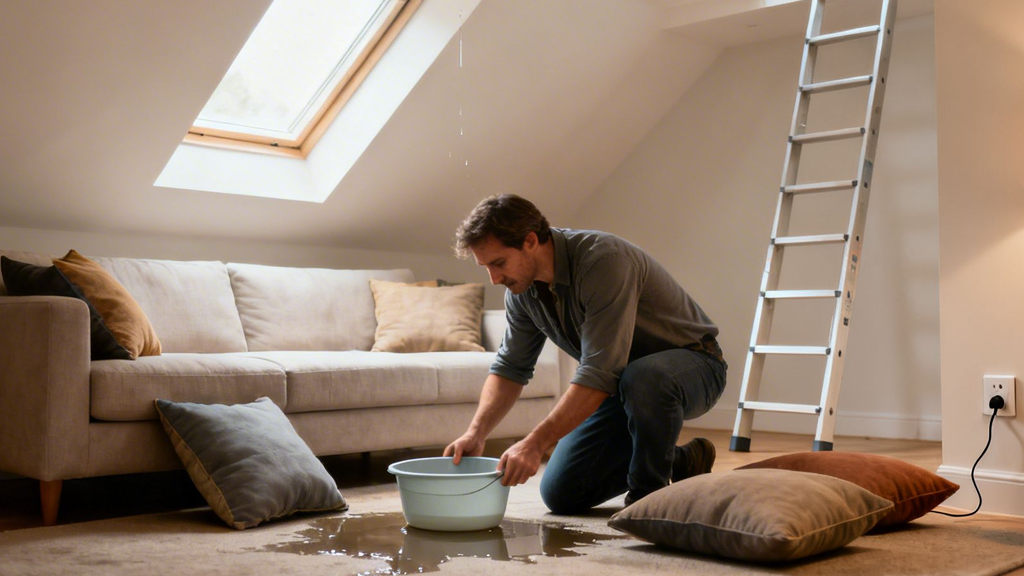
Once you’ve managed to contain the water coming into your home, the next immediate job is to stop any more from getting in. While you wait for a professional to arrive, a well-placed temporary fix can be the difference between a small inconvenience and a major catastrophe, especially given the UK’s famously unpredictable weather.
First things first, though: your safety is paramount. Never, ever attempt to get onto your roof during a storm, in high winds, or while it’s still raining. It’s incredibly dangerous. A temporary patch is only a good idea if you can do it without putting yourself at any risk.
The decision to try a temporary fix really comes down to the location of the damage and the current weather. You should only even consider a DIY stopgap if the storm has passed, it’s daylight, and you can safely access the problem without climbing onto the roof itself.
Here are a few scenarios where it might be feasible:
A temporary patch is not a solution; it is a stopgap measure designed purely to minimise water damage until an expert can perform a full inspection and a proper repair. It buys you valuable time and protects your property from further harm.
The most common and effective temporary fix is covering the hole with a heavy-duty waterproof tarpaulin. Getting this right is key to making sure it actually holds up against wind and rain until your emergency roofer arrives.
If you can tackle it from inside your loft, spread the tarpaulin over the damaged rafters and insulation, making sure it extends well beyond the hole on all sides. You can use a staple gun or heavy, blunt objects to hold it in place, creating a channel to funnel any more water into your bucket.
If you’re applying a patch externally on a low, accessible roof, follow this method:
This quick action can save your ceilings, walls, and belongings from getting completely saturated. It won’t, however, fix the root cause of the problem. For a complete and permanent solution, contact All Custom Roofing in Windsor for expert roofing emergency repairs across Berkshire and surrounding towns like Maidenhead, Slough, and Bracknell.

Let’s be frank: the cost of an urgent call-out is the biggest worry when you’re staring at a leak in the middle of a storm. It’s completely natural. But knowing how emergency pricing works can take some of the sting out of a very stressful situation. The simple truth is you’re paying for immediate, often out-of-hours, expertise.
In the UK, especially in high-demand areas like Berkshire, emergency roofing repairs come at a premium. You should brace for costs that are 50-150% higher than standard daytime rates, particularly for weekend or overnight jobs. Just getting a roofer to your door can cost up to £250 in call-out fees alone.
To give you a real-world idea, an average roof repair might sit around £850, but a major response to storm damage can quickly jump over £2,500. That single tile replacement that would cost £100-£300 on a normal weekday? That could easily be £450 or more when it’s pouring with rain on a Saturday night.
Your home insurance is designed for exactly these kinds of sudden, unexpected events. What it won’t cover, however, is damage that’s crept up over time due to neglect or general wear and tear. That’s why, from the second you spot the problem, your phone should become your best friend.
Meticulous documentation is the most powerful tool you have. Before anyone touches the roof, start gathering your evidence.
Your Evidence Checklist:
Keep a log of every conversation you have with your roofer, the time you called, what you discussed, and what they quoted. A professional firm will always follow up with a written quote detailing the emergency works, which is exactly what your insurer needs to see.
With your initial evidence gathered, your next call should be to your insurance provider. Most have a 24-hour claims line. Tell them you have a roofing emergency and that you’ve instructed a professional to carry out a temporary “make-safe” repair to stop things from getting worse. This is a crucial step, and most policies will cover the cost of these immediate preventative measures.
Dealing with an insurance claim after a roofing emergency can feel like a minefield. If they push back or you feel the offer is too low, this guide on how to dispute a denied or underpaid roof insurance claim provides some excellent advice.
The whole process is much less daunting when you have clear evidence and a detailed report from a trusted roofer. For a more detailed look at what goes into pricing a job, check out our in-depth article on understanding roof repair costs in the UK.
When water is making its way through your ceiling, the panic is real. Your first instinct is to grab the phone and hire the first roofer who answers. But in that moment of crisis, taking a moment to choose the right person can save you from a world of headaches and costly future repairs.
The unfortunate truth is that a sudden storm brings out more than just rain. It also brings out the “storm chasers” and rogue traders. These characters often sweep into an area after bad weather, offering deals that seem too good to be true. They’ll promise a quick, cheap fix, but often use shoddy materials and perform sub-par work before disappearing, leaving your roof and your wallet in a worse state than before. Sticking with a well-established, local company is always your best defence.
Even with water coming in, a few quick questions can tell you everything you need to know about the person on the other end of the line. A genuine professional will have no problem giving you straight answers. This isn’t about a lengthy interview; it’s a quick check to gauge their reliability.
Here’s what you should ask before agreeing to anything:
Choosing a local, family-run business with a long-standing reputation offers peace of mind. For example, All Custom Roofing has been serving Windsor and the surrounding Berkshire communities since 2008, building trust through reliable service and transparent communication.
Knowing the right questions to ask is half the battle. The other half is knowing the warning signs. Rogue traders thrive on the pressure of an emergency, so be on high alert for anyone who:
A few extra minutes spent finding a reputable contractor will make all the difference. Once the immediate crisis is under control, it’s always a good idea to have a more thorough look at your roof’s overall health. You can find out more about what that involves in our guide to a free roof inspection.
For dependable roofing emergency repairs, contact All Custom Roofing. We cover Windsor, Reading, Slough, Bracknell, Maidenhead, and the surrounding towns.
So, you’ve managed to get a tarpaulin over the leak. That emergency patch is buying you precious time, but it’s vital to remember it’s just a plaster, not a long-term cure. The next crucial step is moving from this stopgap fix to a proper, permanent repair that will protect your home for years to come.
This process always begins with a detailed professional inspection once the immediate crisis has passed.
A qualified roofer needs to assess the full extent of what’s happened. What you can see from the ground or even in the loft is often just the tip of the iceberg. Water is notorious for travelling in unexpected ways, seeping into decking, soaking insulation, and rotting timber well away from where the leak first appeared.
A proper inspection after an emergency is non-negotiable. It’s the only way to find those hidden vulnerabilities that could spiral into much bigger, more expensive problems down the line. This is a fundamental step in providing a lasting fix for your roofing emergency repairs.
After a roofer has stabilised the situation, their first job is to pinpoint the root cause and the full scope of the problem. It’s not just about finding the one broken tile; it’s about figuring out why it failed and what other weaknesses might be hiding in plain sight.
The inspection will be a deep dive into your roof’s health, looking for:
This thorough check helps a professional differentiate between a simple fix and a more complex issue. It’s how they determine if replacing a few tiles will do the job or if a whole section of the roof needs to be stripped back and redone.
An emergency patch protects your property in the immediate aftermath, but only a full professional inspection can secure its long-term health. It ensures no hidden damage is left to fester, preventing future leaks and far more expensive repairs.
Based on what the inspection uncovers, your roofer will walk you through the best course of action. This is your chance to have a frank conversation about the solution. A trustworthy contractor will explain everything in plain English, using photos of the damage so you can see the issues for yourself.
They should discuss the different material options available, what warranties come with the work, and a realistic timeline for getting it all done. This is also when they will confirm that the permanent repair will adhere to all relevant UK building standards, such as BS 5534 for slating and tiling.
This collaborative approach guarantees the final result isn’t just another patch-up but a durable, compliant, and professional repair. For expert advice and a comprehensive inspection following a roofing emergency, contact All Custom Roofing in Windsor. We provide lasting solutions across Berkshire, including Slough, Maidenhead, and Reading.
When a roofing disaster strikes, it’s completely normal for your mind to be racing with questions and concerns. In the middle of a crisis, what you need are clear, straight-to-the-point answers.
Here, we’ve gathered some of the most common queries we hear from homeowners across Berkshire about roofing emergency repairs, giving you the practical information you need to know right now.
There’s no getting around it, emergency repairs come at a premium. The final cost will depend on the time of day and where you are, but you should always budget for an urgent call-out.
In Berkshire and the surrounding areas, a call-out fee alone can be anywhere from £150 to £250. On top of that, labour rates are often 50-150% higher for work needed out-of-hours, on a weekend, or during a bank holiday.
For a small, urgent fix like replacing a few tiles blown off by the wind you might be looking at £250 to £500. A more involved temporary solution, such as getting a heavy-duty tarpaulin securely fixed over major storm damage, could cost between £300 and £600. For anything more significant, the cost can easily climb over £1,000. Always make sure you get a clear, itemised quote before agreeing to any work.
Most standard UK home insurance policies will cover you for sudden, unforeseen damage, like from a storm or a falling tree. What they almost certainly won’t cover is damage that has happened over time due to wear and tear or a simple lack of maintenance.
It’s absolutely vital to take clear photos of everything and get in touch with your insurer as soon as possible. Many policies will cover the initial ‘make-safe’ repair to stop things from getting worse, as well as the permanent fix that follows, minus your policy excess. We can supply all the paperwork you’ll need to support your claim.
Most insurers expect you to take reasonable steps to prevent the damage from worsening. Arranging an emergency repair is seen as a responsible action and is often a prerequisite for a successful claim.
For most small, localised leaks or damage, it’s usually perfectly safe to stay put. A professional roofer can often get the job done with very little disruption to you and your family. Safety is always the number one priority.
However, if the damage is severe enough to compromise the roof’s structural integrity, or if you have water pouring in near your home’s electrics, it might be safer to find somewhere else to stay temporarily. When we arrive, the first thing we’ll do is assess the structural risk and give you honest advice on the safest thing to do.
How fast someone can get to you really depends on where their team is based, how busy they are, and how bad the weather is across the area.
As a company based right here in Windsor, we make it our priority to get to emergencies across Berkshire, Maidenhead, and Slough as quickly as possible, often within a couple of hours. During a major storm, however, every roofer in the county is in high demand, which is why it’s so important to call the moment you spot a problem. A good, reliable contractor will always give you a realistic arrival time and offer some immediate advice over the phone.
For prompt and professional roofing emergency repairs when you need them most, contact All Custom Roofing. We provide transparent pricing and reliable service to protect your home. Find out more at https://customroofing.co.uk.