
 (+44) 7900 515 552
16 Oct 2026
 insurance backed guaranteeinsurance backed guarantee
Picking the right material for a flat roof is often a balancing act between how long you want it to last and what you’re prepared to spend. For some, the incredible 40+ year lifespan of an EPDM rubber roof makes it an obvious choice. For others, the tough, joint-free finish of modern GRP fibreglass is exactly what’s needed for a new roof terrace. Ultimately, the best fit comes down to your property’s unique demands and your plans for the future.
Deciding on the right material for your flat roof is one of the most important choices you’ll make for the health of your property. The right system will protect your extension, garage, or commercial building from Berkshire’s unpredictable weather for decades. Get it wrong, and you could be looking at a future filled with frustrating leaks and constant repairs.
This guide will walk you through the options, from modern single-ply membranes like EPDM to reliable high-performance felt, helping you make a confident choice.
We’ll look at the things every property owner in Windsor, Reading, and Slough should be thinking about: lifetime cost, durability against rain and frost, and how much maintenance to expect. The UK’s flat roofing market is always improving, with new technologies offering better performance and value than ever before. Before we get into the specifics, you might find it helpful to get a bigger picture of the benefits and challenges of installing a flat roof.
Some homeowners are also exploring more advanced solutions, such as polyurethane spray foam roofing, which provides a completely joint-free and highly insulated surface. To start, here’s a quick look at the most common materials we’ll be comparing.
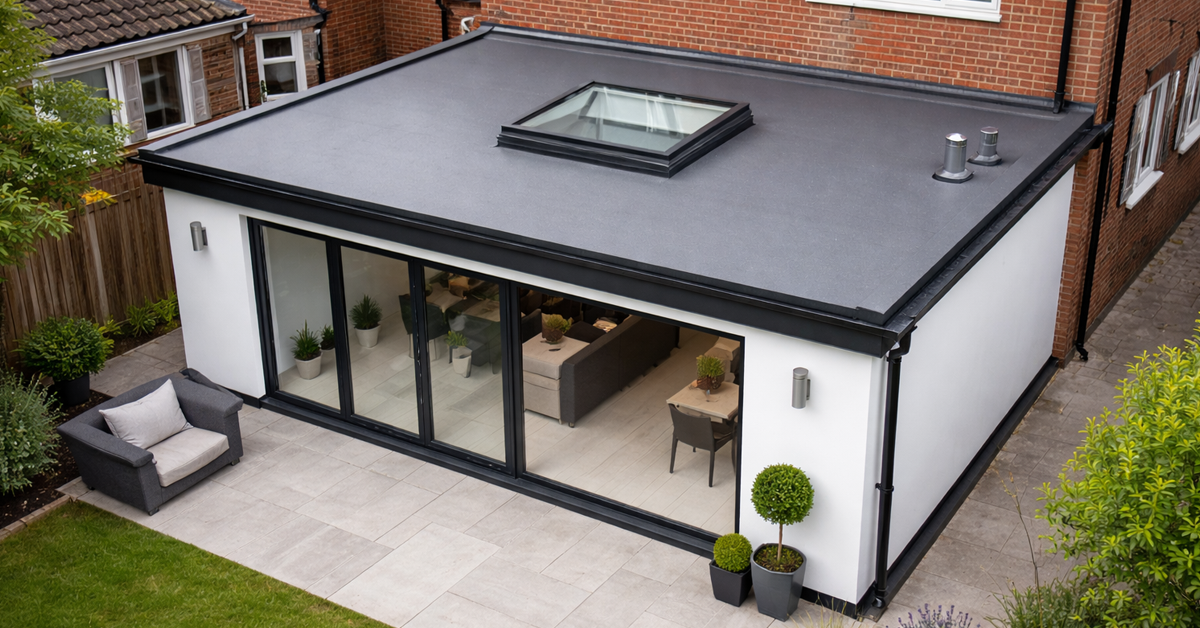
| Material | Best For | Typical Lifespan |
|---|---|---|
| EPDM (Rubber) | Long-term waterproofing and flexibility | 40+ years |
| GRP (Fibreglass) | Durability and roofs with foot traffic | 20 – 30 years |
| High-Performance Felt | Cost-effective, reliable repairs and installs | 15 – 20 years |
| PVC | Commercial use, chemical & puncture resistance | 20 – 30+ years |
Single-ply membranes have become the go-to choice for flat roofing in the UK, and for good reason. They offer a sleek, modern finish and fantastic performance. If you’re a homeowner or business in Berkshire looking at a new flat roof, getting to grips with the main options is the first step.
Let’s break down the three big players: EPDM, TPO, and PVC.
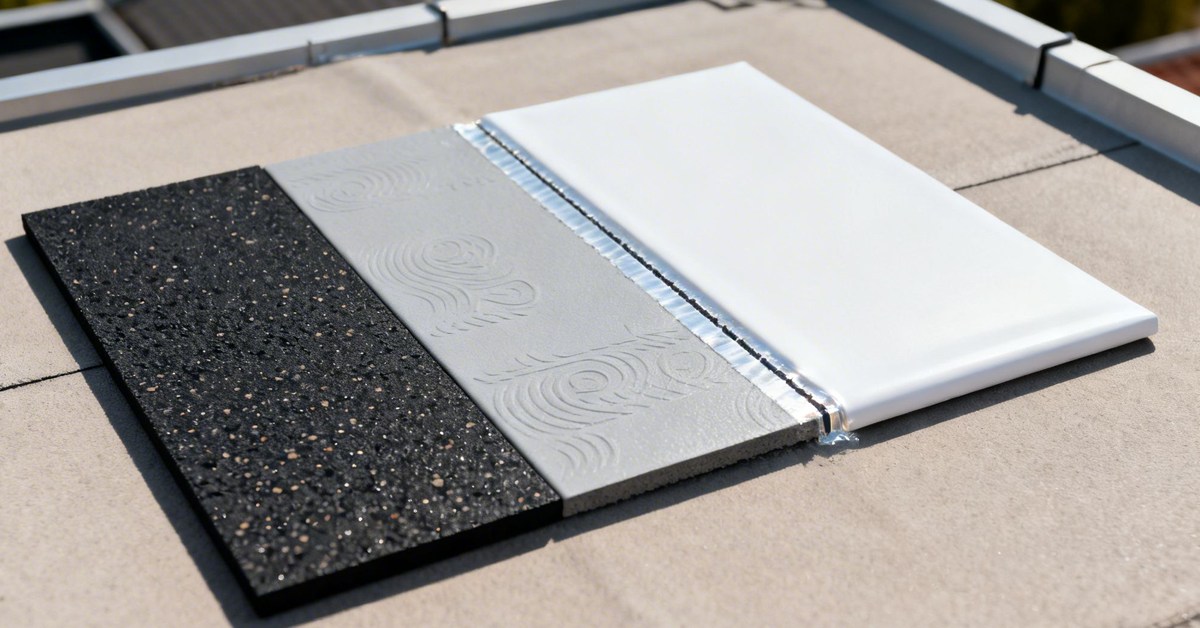
These materials now make up the largest and fastest-growing part of the UK flat roofing market, proof of their durability and how well they handle our unpredictable climate. Their ability to stand up to UV exposure is a huge plus for properties anywhere in the country.
This popularity isn’t an accident. These modern membranes are a massive improvement over older, less dependable systems. But it’s important to remember they aren’t one-size-fits-all. The right choice really comes down to your property, your budget, and how you use the space.
EPDM (Ethylene Propylene Diene Monomer) is essentially a high-performance synthetic rubber membrane. Its biggest selling point is its incredible lifespan; with a professional installation, it can easily last over 40 years. It’s also exceptionally flexible, which allows it to expand and contract as temperatures fluctuate without cracking. This makes it a fantastic option for weathering the UK’s notorious freeze-thaw cycles.
Installation usually involves adhering large, joint-free sheets to the roof deck. By using big sheets, we can dramatically reduce the number of seams on the roof, which are historically the weakest point of any flat roof system. For a tricky roof shape with lots of skylights or vents (something we see a lot in towns like Maidenhead) EPDM’s ability to be stretched and moulded around details is a real difference-maker.
PVC (Polyvinyl Chloride) is a plastic-based membrane that’s been a trusted workhorse for decades, especially on commercial buildings. What really sets it apart is its fantastic resistance to chemicals, punctures, and fire. The seams on a PVC roof aren’t glued; they are heat-welded together. This process creates a permanent, fused bond that is often stronger than the material itself.
This heat-welding makes PVC roofs incredibly waterproof and tough against physical damage. If your property in Slough or Bracknell has a flat roof near a kitchen’s extractor fan that might put out fats or chemicals, PVC is an excellent choice. Its standard white or grey finish is also great for reflecting sunlight, which can help lower your energy bills in the summer.
Think of it this way: EPDM’s superpower is its flexibility and joint-free finish, making it perfect for residential extensions with lots of detail. PVC, on the other hand, is like armour for your roof. Its heat-welded seams and puncture resistance make it a fortress for commercial properties or high-traffic areas.
TPO (Thermoplastic Polyolefin) is a newer kid on the block that blends some of the best attributes of EPDM and PVC. Like PVC, it’s a single-ply membrane with heat-welded seams, which gives it that same brilliant seam strength and leak protection. But it also has a good degree of flexibility, more akin to EPDM.
TPO is also highly valued for its energy efficiency, typically coming in light grey or white to reflect solar heat. It’s a really versatile material that performs well on both homes and commercial buildings. For anyone looking for a modern, durable, and eco-conscious solution, TPO is a very compelling middle-ground.
Trying to decide between these three excellent materials can feel a bit overwhelming. The best roofing materials for flat roofs are always the ones that best match what you need, whether that’s ultimate longevity, sheer toughness, or a particular installation method.
To make it a bit simpler, we’ve put together this quick reference table comparing the key characteristics of these single-ply membranes.
| Feature | EPDM Rubber | PVC | TPO |
|---|---|---|---|
| Primary Strength | Extreme flexibility and lifespan | Puncture & chemical resistance | A blend of flexibility and strength |
| Seam Technology | Adhesives and tapes | Heat-welded | Heat-welded |
| Typical Lifespan | 40+ years | 20 – 30+ years | 20 – 30 years |
| Best For | Residential extensions, complex shapes | Commercial roofs, high-traffic areas | General purpose, energy-conscious installs |
| Weakness | Can be punctured by sharp objects | Less flexible in extreme cold | Newer technology, less long-term data |
So, what’s the takeaway? For most homeowners here in the Windsor area, EPDM often delivers the best long-term value thanks to its proven track record and clean, joint-free appearance. But if you have a workshop or commercial unit, the ruggedness of PVC might be a non-negotiable requirement.
The only way to know for sure is to get an expert opinion. An assessment from a team like All Custom Roofing can pinpoint the perfect match for your building and your budget.
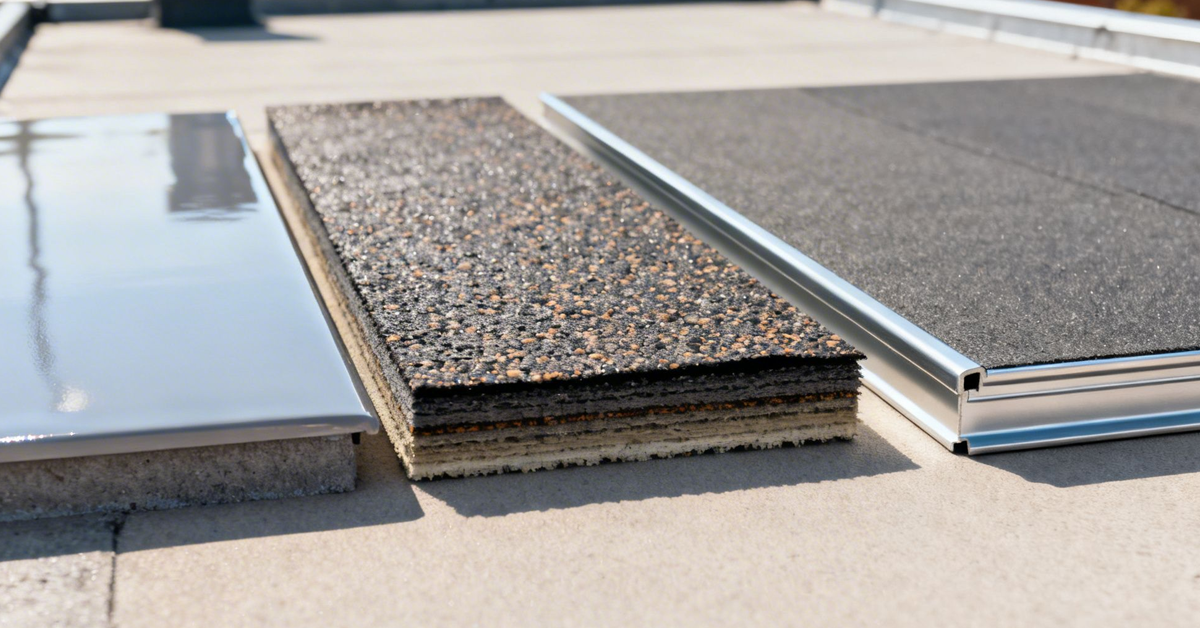
While the new single-ply membranes have certainly earned their reputation, it’s a mistake to write off the traditional systems that have sheltered British homes for decades. Materials like fibreglass, felt, and metal haven’t just been sitting on the sidelines; they’ve evolved into high-performance solutions with their own unique strengths.
These time-tested materials often bring a blend of looks, toughness, and value that can make them the perfect fit for certain properties. Let’s dig into the pros and cons of GRP fibreglass, modern roofing felt, and metal systems to see exactly where they stand in the search for the best flat roofing material.
GRP, or Glass Reinforced Plastic, is what most of us know as fibreglass. It’s applied as a liquid on-site, which then hardens into a single, joint-free, and incredibly tough waterproof layer. This joint-free finish is a huge advantage, as it completely eliminates the joints that are often the first point of failure on a flat roof.
The main reason to choose a GRP roof is its sheer durability and hardness. It forms a solid, shell-like surface that handles foot traffic with ease. This makes it the hands-down winner for any flat roof that needs to double as a balcony, terrace, or access route. For a homeowner in Windsor with a roof terrace, GRP gives you the resilience you need for tables, chairs, and guests without worrying about leaks.
However, GRP isn’t without its quirks. Because it’s a completely rigid system, the roof deck beneath must be rock-solid to stop any cracks from forming. Installation is also very much at the mercy of the weather. It needs a dry, mild day for the liquid resin to cure properly, which is always a key factor in our unpredictable UK climate.
Modern roofing felt is a different beast entirely from the old-school material some might picture. Today’s high-performance torch-on felt is a multi-layered, durable, and cost-effective system. It usually involves three layers fused together with a blowtorch, which creates a thick and highly resilient waterproof membrane.
One of the biggest draws of a modern felt roof is its excellent value. It offers proven, reliable performance at a price point that’s often more manageable than single-ply or GRP systems. This makes it a go-to choice for practical structures like garage roofs and small home extensions across Reading and Bracknell, where keeping to a budget is a top priority.
While a modern felt system offers great waterproofing for its cost, it’s important to set realistic expectations. Its lifespan, typically 15-20 years, is shorter than that of EPDM or GRP. However, for a dependable and budget-friendly solution, it remains a strong and relevant choice.
For those who want exceptional longevity and a roof that makes a real architectural statement, metal is in a class of its own. Materials like zinc, copper, or aluminium can be shaped to create stunning and incredibly durable flat or low-pitched roofs. Standing seam metal systems, with their clean lines and contemporary feel, are especially popular.
The standout feature here is lifespan. A properly installed metal roof can last well over 50 years with very little maintenance. These materials are completely unfazed by British weather, resisting everything from relentless rain and frost to harsh UV rays. A standing seam zinc roof on a modern extension in Maidenhead, for example, isn’t just ultimate protection, it becomes a major design feature of the property.
Of course, this premium quality comes with a higher initial cost. The materials and the specialised skills needed for installation make it one of the more expensive options upfront. But when you look at it over its entire lifecycle, a metal roof can offer fantastic long-term value, especially for high-end homes and architectural projects. This trend is being noticed across the industry; as reported by Grandviewresearch.com, while tiles still dominate the UK market, metal is the fastest-growing segment, showing a clear shift towards modern, durable solutions.
Choosing between these traditional materials means weighing up their unique benefits. GRP is the clear winner for durability underfoot, felt provides unbeatable value, and metal offers supreme longevity and visual appeal. For expert advice on which system best suits your Berkshire property, contact All Custom Roofing. We cover Windsor, Reading, Slough, Bracknell, Maidenhead, and all surrounding towns.
When looking at options for a new flat roof, it’s all too easy to get fixated on the initial cost per square metre. But the real cost of a roof isn’t what you pay on day one; it’s what you spend over its entire life. An installation that seems like a bargain now could end up costing you more in the long run through constant repairs and an early replacement, especially with the kind of weather we get here in the UK.
A smart financial decision is about balancing that upfront investment with long-term performance and future maintenance. It means looking at the total cost of ownership, which covers the materials, the labour for a professional job, and any upkeep down the line.
The price you see on any quote is a blend of two things: the cost of the materials themselves and the labour needed to install them correctly. These two figures can swing wildly depending on the type of flat roofing system you choose.
For instance, fitting an EPDM rubber membrane on a simple garage roof is often a less labour-intensive job. Compare that to a GRP fibreglass system, which demands a precise, liquid application process that is highly dependent on dry weather. Likewise, while traditional torch-on felt might have a lower material cost, the multi-layer application still requires skilled hands to create a fully waterproof, durable seal. At the other end of the scale, premium metal systems have high material costs but can sometimes be fitted relatively quickly by a specialist crew.
Getting your head around these differences is the key to making a choice you won’t regret.
A roof in Berkshire needs to handle much more than a bit of sun. Our climate throws everything at it, from heavy downpours that can lead to pooling water, to freezing winter nights that cause a damaging freeze-thaw cycle. Durability isn’t just a buzzword; it’s about how a material stands up to these real-world conditions, year after year.
EPDM rubber is fantastic here, as its natural flexibility allows it to cope with big temperature swings without turning brittle and cracking. The hard, joint-free shell of a GRP roof gives it brilliant resistance to foot traffic and punctures, but it absolutely must be installed on a solid, stable roof deck to prevent any stress fractures. Modern, high-performance felt systems, when applied in multiple layers, create a thick, durable barrier against water getting in.
The smartest investment isn’t always the cheapest material upfront. It’s the one that provides reliable, long-term protection with minimal unexpected costs. A slightly higher initial outlay for a more durable system like EPDM often results in significant savings over two decades by avoiding the cost and hassle of frequent repairs.
Every flat roof requires a certain amount of care to hit its maximum lifespan. But the kind of care and how often it’s needed varies hugely between materials. Understanding these future jobs is vital for budgeting and your own peace of mind. For a more detailed look, our guide has some specific flat roof maintenance tips to extend your roof’s lifespan.
A GRP roof, for example, needs very little day-to-day attention beyond keeping it clean and checking for any surface damage after a big storm. EPDM and other single-ply membranes should be inspected from time to time, with a close eye on the seams and flashing around details like vents or skylights to make sure they’re still perfectly sealed.
Felt roofs, particularly as they get older, might need more frequent checks for any signs of blistering or cracking that could be the start of a problem. Being proactive with maintenance means a small, inexpensive repair can be sorted before it becomes a major leak and causes expensive damage inside your home. Ultimately, choosing a durable, well-installed roof from the get-go is the best strategy to minimise these long-term headaches and protect your property.
When it comes to choosing a flat roof, there’s no single ‘best’ option. It’s all about finding the right fit for your property and what you need it to do. A solution that works wonders for a commercial unit in Bracknell probably won’t be the right choice for a residential extension in Windsor.
To help you get a clearer picture, let’s walk through a few common scenarios we see across Berkshire and pick out the most suitable material for each. This way, we can move past the technical jargon and focus on how these materials actually perform in the real world.
Our goal is to give you the confidence to have a clear, informed conversation with your roofing contractor about exactly what you need.
For a typical detached garage, the priorities are usually straightforward: you want reliable waterproofing and great long-term value. You need a roof that will keep your car and everything else dry for decades, without you having to constantly worry about it.
In this situation, EPDM rubber is an outstanding choice. It’s applied in a single, unbroken sheet, which eliminates the weak points that cause so many problems on older felt roofs. With a proven lifespan of over 40 years, it offers fantastic security against the persistent rain we get here in the UK.
While GRP is incredibly tough, its rigidity is often overkill for a standard garage. A modern, high-performance felt system is a solid budget-friendly alternative, but EPDM delivers far superior longevity for only a modest increase in the initial cost. It’s simply a wiser investment over the life of the roof.
When your flat roof also needs to serve as usable outdoor space, like a terrace or balcony, the requirements change completely. Here, the number one priority is durability against foot traffic, garden furniture, and the occasional dropped plate or glass.
GRP fibreglass is the clear winner for any surface you plan to walk on. It cures to form a hard, joint-free, and incredibly tough shell that’s specifically designed for foot traffic. You can place tables, chairs, and heavy plant pots on a GRP roof without the constant fear of causing a puncture. Plus, its smooth finish is easy to clean, a major benefit for an outdoor living area.
While single-ply membranes like EPDM and PVC are highly durable against the weather, they are not designed for regular foot traffic. The leg of a chair could easily puncture the material, leading to an immediate leak. For any roof you intend to walk on regularly, GRP is by far the safest and most resilient option.
Before you settle on a material, run through this quick checklist. Thinking about these points will help you nail down your priorities and choose the best material for your flat roof.
Considering these questions will put you in a strong position. For expert advice tailored to your property in Windsor, Reading, Slough, or the surrounding towns, contact All Custom Roofing. We can provide a detailed assessment and a no-obligation quote.
You can choose the finest flat roofing material on the market, but its performance ultimately comes down to the quality of the installation. A premium EPDM membrane or a top-spec GRP system will fail years ahead of schedule if the fitting is anything less than perfect. That’s why professional installation isn’t just a good idea, it’s essential for a long-lasting, leak-free roof.
Even tiny mistakes can lead to big problems. Improperly welded seams on a TPO or PVC roof, or poor detailing around vents and skylights, create weak spots that water will inevitably exploit, especially during the heavy downpours we see across Berkshire. These are the most common causes of premature roof failure.
Choosing the right local specialist is the single most important decision you’ll make for your flat roof. At All Custom Roofing, we’re a family-run business built on expert workmanship and straightforward advice. Our 5-star reputation across Windsor, Reading, Slough, and the surrounding areas comes from one thing: delivering results that last.
We don’t just lay down materials; we engineer a complete roofing system. That means ensuring the drainage is spot on to prevent ponding and only using market-leading materials we’ve tested and trust. As specialists, we know exactly how to protect properties in Britain from our unique, unpredictable weather.
This flowchart shows the key steps to finding a quality roofer, from getting quotes to checking guarantees.
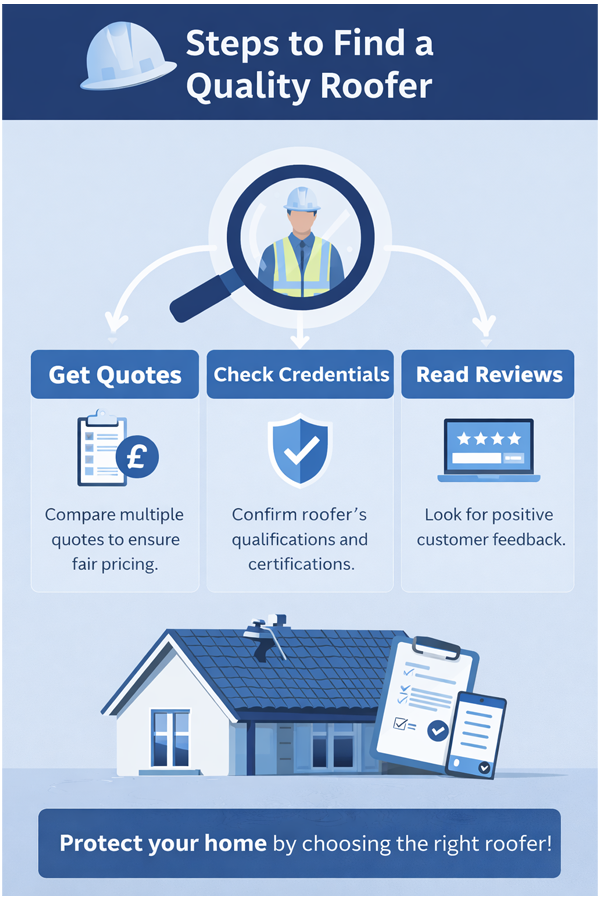
Following a clear process like this helps you vet potential installers and partner with a credible, skilled professional.
A true professional doesn’t just follow the manual; they anticipate problems before they happen. From checking the roof deck is sound to meticulously sealing every join, their expertise is what turns a roll of material into a protective barrier that will shield your home for decades.
We believe a high-quality roof should be within reach for every homeowner. To help you get the best for your property without delay, we offer flexible finance options through our partner, Phoenix Financial Consultants (FCA regulated, subject to status). This allows you to spread the cost while getting the quality your home deserves.
For a more detailed look at what to look for in a contractor, you can read our guide on how to choose the right flat roof installers for your project.
Your property is your biggest investment. Protect it with a roof installed by experts who take pride in their work. Contact All Custom Roofing in Windsor for expert roof repairs across Berkshire. We cover Windsor, Maidenhead, Bracknell, and the wider Berkshire region.
When it comes to choosing the right material for a flat roof, homeowners and businesses across Berkshire often have a lot of questions. To help you make a clear, informed decision for your property, we’ve put together answers to some of the most common queries we hear.
The lifespan of any flat roof really comes down to two things: the material you choose and the quality of the installation. A professionally installed EPDM rubber roof, for example, can easily last for over 40 years.
On the other hand, a well-laid GRP fibreglass roof typically gives you 20-30 years of solid protection, while modern, multi-layer high-performance felt systems usually last between 15 and 20 years. To get the most out of any of these, regular maintenance is key, especially with the UK’s damp climate and punishing freeze-thaw cycles.
Whether you can walk on your flat roof depends entirely on the material it’s made from. GRP (fibreglass) is exceptionally hard-wearing and is specifically designed to handle regular foot traffic, which makes it the perfect choice for a roof terrace or balcony.
In contrast, materials like EPDM and PVC are tough, but they aren’t built for constant use. While they can handle occasional access for maintenance checks, consistent traffic could cause punctures. If you do need to walk on them, specialist walkway pads must be installed. It’s always best to discuss how you plan to use the roof with your contractor beforehand.
The number one cause of flat roof leaks is almost always poor installation. Badly sealed seams, sloppy flashing around pipes and skylights, and poor drainage that allows water to ‘pond’ are the usual culprits. This is why picking an experienced, reputable installer is just as important as choosing the right material.
For most properties, simply replacing an existing flat roof with a similar material is considered ‘permitted development’, so you won’t need planning permission.
However, if you’re planning significant structural changes, like converting the roof into a balcony, or if your property is listed or in a conservation area, you will almost certainly need to get approval. It’s always a wise move to check with your local council in Berkshire before any work gets underway.
A crucial part of any professional installation is making sure every component works together, including vital elements like a gutter apron, which protects the edges of your roof from water damage.
Your property deserves the best protection. For expert advice and a no-obligation quote on the best roofing materials for your flat roof, contact All Custom Roofing. We proudly serve Windsor, Reading, Slough, Bracknell, Maidenhead, and the surrounding towns.