
 (+44) 7900 515 552
16 Oct 2026
 insurance backed guaranteeinsurance backed guarantee
When people think of a commercial flat roof, they might picture an old, leaky felt covering from decades past, especially on warehouses or office blocks here in the UK. But let’s be clear: the modern commercial flat roof is a completely different beast. It’s a highly engineered system built for buildings with little to no slope, providing a tough, weather-resistant shield over massive surface areas.
If you’re a business owner in Windsor, Reading, or Slough, you’ve probably seen your share of older flat roofs. The image of pooling water and constant patch-ups might spring to mind. It’s time to forget that outdated picture.
Today’s materials have completely transformed these systems into durable, long-lasting solutions. Think of it less as just a simple cover and more as a functional platform for your entire business. This valuable space can hold essential equipment, boost your building’s energy efficiency, and, most importantly, protect your assets from the unpredictable British weather.
For property owners across Berkshire and the surrounding counties, choosing a modern flat roof isn’t just about keeping the rain out. It brings several practical advantages perfectly suited to the local commercial landscape.
A well-installed flat roof is more than just a necessity; it’s a strategic investment. Its design supports modern business needs, from energy generation to efficient use of space, making it a smart choice for forward-thinking property owners.
Let’s face it, our region is known for persistent rain and blustery conditions. A modern commercial flat roof is designed to handle it. The joint-free, watertight membranes used today are specifically engineered to stop water from getting in, a critical feature when you’re protecting expensive inventory and equipment.
This focus on durability is getting noticed on a national scale. In fact, data from a project mapping over 40 million UK buildings highlights the importance of flat roofs for assessing water ingress risks and supporting green initiatives like solar panels. You can discover more insights about this comprehensive roof data from Ordnance Survey.
Ultimately, choosing the right system means your property stays dry and secure, year in, year out.
Choosing the right material for your commercial flat roof is one of the most important decisions you’ll make as a business owner. It’s a choice that directly impacts the performance, lifespan, and maintenance demands of your entire property. Especially for businesses in Berkshire, where damp weather is just part of the landscape, picking a tough and reliable material is crucial to protect your building and everything inside it.
Let’s cut through the technical jargon and explore the three leading materials used across the UK. We’ll focus on what really matters: how they stand up to the British weather, how long you can expect them to last, and the overall value you get for your investment.
For most commercial properties, the decision-making process starts with a simple choice, as this graphic shows.
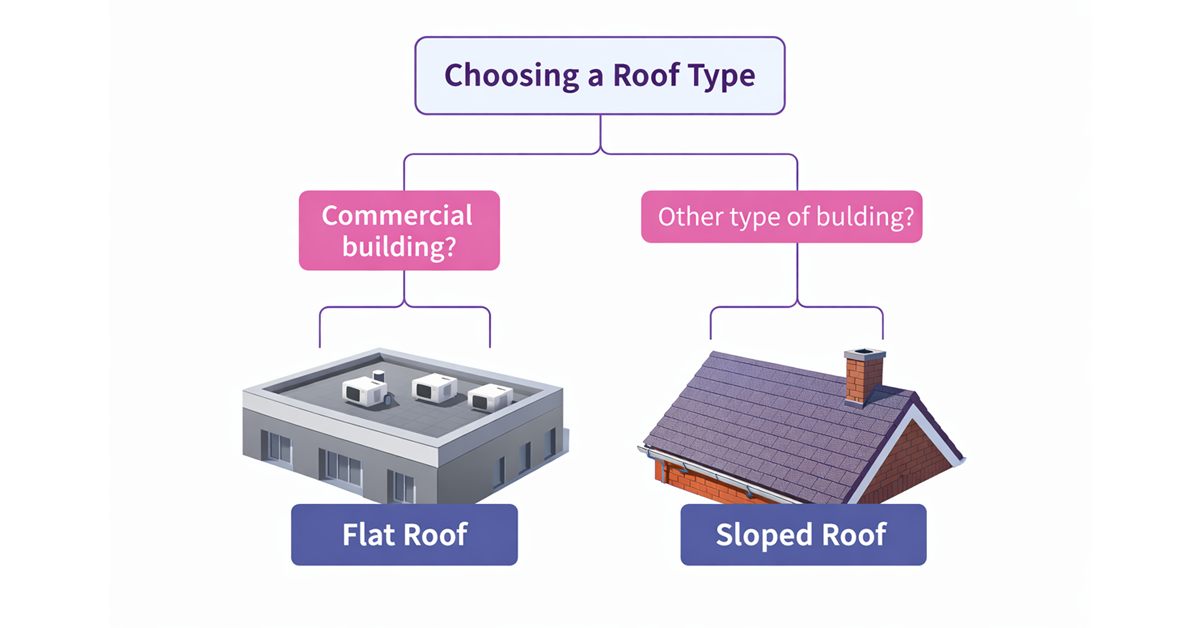
As you can see, a flat roof is often the most practical and efficient starting point for any commercial roofing project.
EPDM (Ethylene Propylene Diene Monomer) is a synthetic rubber membrane known for being exceptionally durable and flexible. The best way to think of it is as a giant, joint-free rubber sheet custom-fitted right over your roof. This single-piece application is a massive advantage, as it completely eliminates the seams where leaks so often begin.
Its flexibility is a key benefit, allowing it to expand and contract with the UK’s temperature swings without cracking or splitting. With proper maintenance, an EPDM commercial flat roof can last an impressive 25 to 40 years, making it a fantastic long-term investment.
The only real catch is that the installation is highly specialised. It needs a perfectly clean, dry surface and skilled technicians to ensure the adhesive bonds correctly, particularly around tricky spots like vents and skylights.
GRP (Glass Reinforced Plastic), which you probably know as fibreglass, creates a tough, joint-free, and totally waterproof surface. It’s built up on-site by applying layers of resin and fibreglass matting that cure into a single, solid shell.
This rigidity makes GRP an excellent choice for roofs that get a bit of foot traffic, like those with regularly serviced air conditioning units or ones used as terraces. A properly installed GRP roof is incredibly resilient against physical knocks and can be expected to last for 20 to 30 years.
The main thing to keep in mind with GRP is that it has to be installed in very specific weather conditions. The resins need a dry, mild day to cure properly, which can sometimes be a challenge to schedule around the unpredictable weather in towns like Bracknell or Maidenhead.
Single-ply membranes are another very popular choice for commercial flat roofs. These are essentially large sheets of synthetic material, most commonly PVC (Polyvinyl Chloride) or TPO (Thermoplastic Olefin), that are rolled out and then fused together at the seams using hot-air welding.
This welding process creates a bond that is often stronger than the material itself, resulting in a continuous, waterproof layer across the entire roof. This modern technique is a primary reason single-ply systems are so reliable.
PVC and TPO each have their own unique benefits. PVC is brilliant at resisting chemicals, oils, and punctures, making it perfect for restaurants or industrial sites. TPO, on the other hand, is often seen as a more energy-efficient option because its reflective surface can help lower cooling costs in the summer.
Both materials offer a lifespan of around 20 to 30 years. They’re also lightweight, which reduces the structural load on your building, and their installation is relatively quick compared to other systems. If you’d like to dive deeper, you can learn more about how to choose the best materials for your new roofing project in our dedicated guide.
Built-up felt roofing, which uses bitumen (asphalt), is the classic flat roofing method here in the UK. The system is straightforward: you layer multiple sheets of roofing felt and bond them together with hot or cold bitumen to build up a thick, waterproof barrier. It has been trusted for decades for good reason.
While single-ply systems have certainly grown in popularity, bitumen felt is still a very cost-effective and reliable choice, particularly for smaller flat roof commercial projects or for repairs. Plus, modern polymer-modified bitumen has come a long way, offering much better flexibility and a longer lifespan than its predecessors.
To make the choice a bit clearer, here’s a straightforward comparison of these top materials. This table breaks down what you can expect in terms of lifespan, cost, and the specific advantages each one brings to a UK business.
| Material Type | Average Lifespan (Years) | Relative Cost | Key Benefits for UK Businesses |
|---|---|---|---|
| EPDM Rubber | 25 – 40 | ££ | Extremely durable and flexible; joint-free application minimises leak risks. Handles temperature changes exceptionally well. |
| GRP Fibreglass | 20 – 30 | £££ | Creates a hard, joint-free shell. Ideal for roofs with foot traffic and is highly resistant to physical damage. |
| Single-Ply (PVC/TPO) | 20 – 30 | ££ | Lightweight and quick to install. Heat-welded seams create very strong bonds. Reflective TPO options can improve energy efficiency. |
| Bitumen Felt | 15 – 25 | £ | The most budget-friendly option upfront; a well-proven choice for smaller roofs and repair work. |
Ultimately, the best material for your commercial flat roof comes down to your building’s specific use, your budget, and your long-term goals. For expert advice tailored to your property in Windsor, Slough, or anywhere in Berkshire, get in touch with All Custom Roofing. We can help you navigate the options to find the perfect solution.
You can have the most advanced flat roof material in the world, but it’s only as good as the team that installs it. A top-tier system will fail years ahead of schedule without expert fitting and, crucially, a smart drainage plan. For business owners across Berkshire, this isn’t just a minor detail; cutting corners here is the quickest way to find yourself dealing with leaks, damaged stock, and expensive emergency call-outs.
It helps to think of your flat roof not as being perfectly level, but as an incredibly shallow basin. It’s built with a slight, carefully calculated slope, which we in the trade call a ‘fall’. This tiny incline, often just 1 or 2 degrees, has one critical job: to shepherd rainwater towards the drains.
If that fall isn’t designed and built professionally, water has nowhere to escape. It starts to pool on the surface, creating a problem known as ‘ponding’. This standing water adds a huge amount of weight and pressure to the roof structure, constantly probing every seam, seal, and join for the tiniest weakness.
A well-designed drainage system is your roof’s number one defence against the UK’s relentless rain. It’s not simply a case of sticking in a few outlets; it’s about creating a complete water management strategy that’s tailored to your building’s size and layout. You can’t overstate how important this is, especially when you realise how drainage infrastructure is evolving.
A professional roofer will assess your property and map out the best solution, which usually involves a combination of the following:
Getting the right mix of these elements is what ensures your roof can handle even the heaviest downpour without being overwhelmed.
Installing a commercial flat roof is a highly skilled job. Professional contractors like us make sure every single detail is handled with precision, from preparing the roof deck and heat-welding the seams to perfectly sealing around obstructions like vents and skylights.
A correctly installed roof is a single, unified waterproof barrier. An amateur installation, however, is often just a collection of materials waiting to fail. The difference lies in the details that a professional never overlooks.
Trying to save a bit of money by hiring an unqualified installer almost always costs more in the long run. Improperly sealed seams, the wrong adhesive, or a poorly designed fall will inevitably lead to leaks. These leaks can ruin insulation, compromise the building’s structural integrity, and bring your business to a halt. For genuine peace of mind and long-term performance for your property in Windsor, Reading, or Slough, professional installation is the only investment that makes sense.
When it comes to your commercial property, a proactive approach to roof health isn’t just good practice; it’s the best way to protect your investment. Catching a small issue early can mean the difference between a simple fix and a major disaster that brings your business to a halt.
As a property manager in Berkshire, knowing the visual cues of a struggling flat roof empowers you to act decisively. This guide is your simple health-check for your roof, helping you spot the common signs of trouble that can extend its lifespan and safeguard everything inside your building.
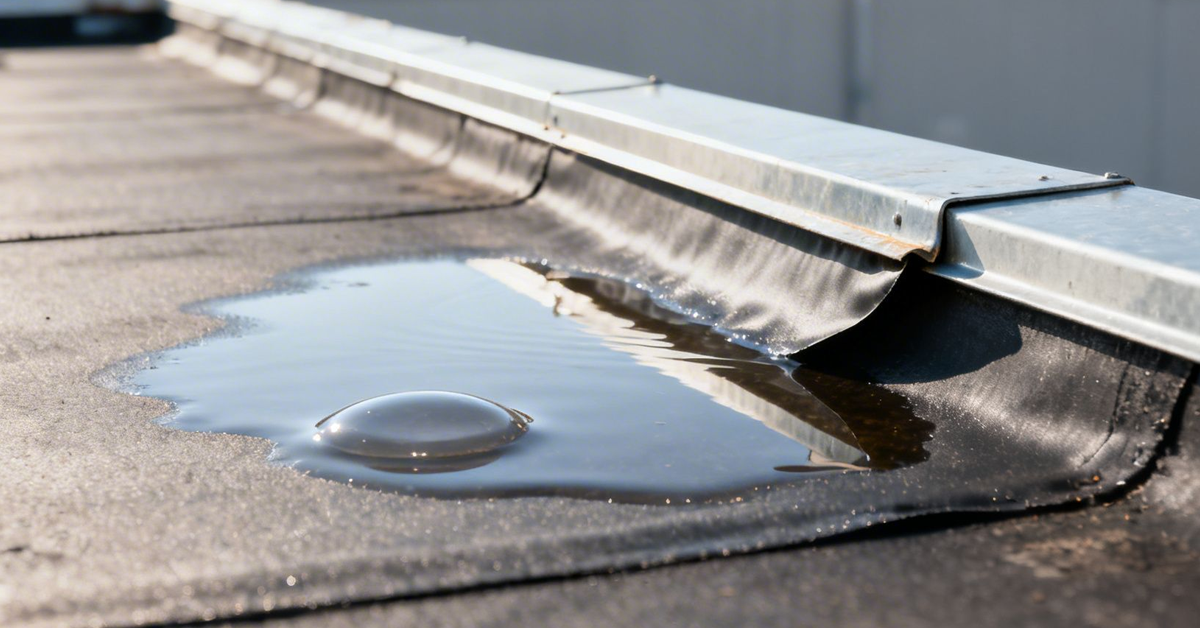
After a typical downpour in Windsor or Maidenhead, you’d expect to see some wet patches. But if you’re seeing large puddles of water still sitting on your roof more than 48 hours later, you’ve got a problem called ponding water.
This is one of the most serious warning signs you can see. That standing water adds immense weight and stress to your roof structure, constantly putting pressure on the membrane. It’s a clear signal of an underlying drainage issue, perhaps a blocked drain or an incorrect ‘fall’ in the roof’s design. Left unchecked, it will dramatically speed up the breakdown of roofing materials and, sooner or later, lead to leaks.
Have you noticed areas on your roof that look like bubbles or blisters forming under the surface? This is a dead giveaway that moisture has become trapped between the layers of your roofing membrane.
What’s happening is that the sun heats the roof, causing the trapped moisture to expand into vapour. This vapour then pushes the membrane upwards, forming a blister. These bubbles create weak spots that are incredibly vulnerable to splitting or being punctured, creating a direct path for water to get into your building. A single small blister might not seem urgent, but it’s a sign of a flaw that needs a professional assessment.
A roof blister is the physical evidence of trapped moisture. It’s your roof’s way of telling you there’s a problem beneath the surface that requires immediate professional attention before it ruptures and causes a significant leak.
Flashing is the material, usually metal or a reinforced membrane, that seals the joins around anything that penetrates your roof. Think about where the roof meets a wall, or the seals around pipes, vents, and skylights. These are, by far, the most vulnerable points on any commercial flat roof.
Keep an eye out for flashing that is pulling away from the wall, looks cracked, or shows signs of rust. Poorly sealed flashing is one of the most common culprits behind mystery leaks. A quick check of these areas, especially after strong winds or storms, is absolutely essential.
Over time, some roofing materials can actually shrink from constant exposure to UV rays and the cycle of heating and cooling. As the membrane pulls back, it puts enormous strain on the seams and the edges of the roof.
You can spot this by looking for material that seems stretched or is ‘bridging’ across corners, or by seeing seams that are visibly pulling apart. This is a particular issue with certain types of glued-down membrane systems. Once a seam fails, your building is left wide open to water getting in.
A routine walk-around to check for these signs is a simple but powerful maintenance step. If you spot any of these issues on your commercial flat roof in Slough, Reading, or anywhere across Berkshire, don’t wait for the problem to get worse. Contact All Custom Roofing in Windsor for a professional inspection and expert advice.
Think of your commercial flat roof as a critical business asset, just like your machinery or your fleet. If you ignore it, small problems can quickly spiral into expensive disasters. Proactive maintenance is the secret to getting the full lifespan out of your roof and avoiding those sudden, gut-wrenching repair bills.
A simple, year-round maintenance schedule, designed for the unpredictable UK climate, is genuinely your best line of defence.
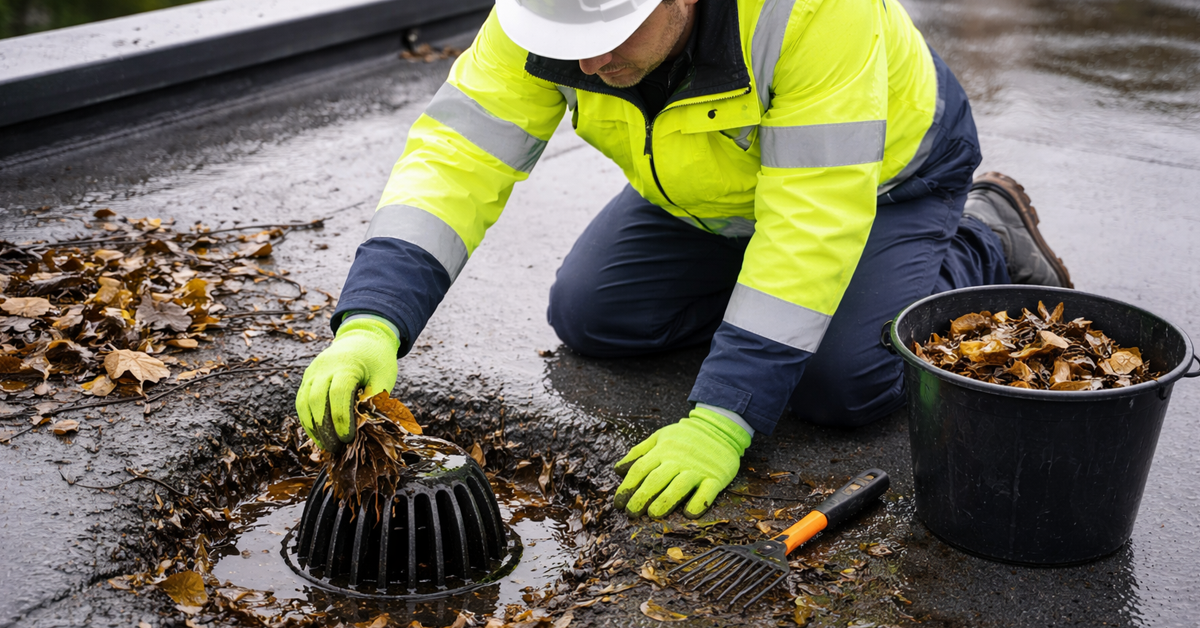
It’s this small, consistent effort that protects your property in the long run. It stops premature roof failure in its tracks and can save business owners in the Windsor area thousands of pounds.
A structured approach to maintenance means nothing gets missed. Treat it as a biannual health check for your property, ideally carried out in spring and autumn to get ahead of the harshest weather.
Inspect Drains and Gutters: Leaves, twigs, and all sorts of debris inevitably build up, especially after autumn. Clear every single drainage point to prevent blockages that lead to ponding water, one of the biggest culprits behind flat roof failure.
Check Seals and Flashing: Take a close look at the areas around skylights, vents, pipes, and anywhere the roof meets a wall. These penetration points are the usual suspects for leaks, so make sure the seals are solid and aren’t cracked or peeling away.
Look for Surface Damage: Scan the main roof surface for any blisters, punctures, or cracks. Pay special attention to the seams to ensure they haven’t started to pull apart under the stress of changing temperatures.
The logic here is simple: preventing a blockage costs a tiny fraction of what it costs to repair the widespread water damage it can cause. Regularly clearing your drains is one of the highest-return activities a property manager can undertake.
Not every issue demands a full-scale response. Knowing the difference between a simple patch job and a more serious problem will help you manage your maintenance budget effectively.
A small, isolated puncture, maybe from a dropped tool or some flying debris, can often be sorted with a professional patch. This involves cleaning the area thoroughly and applying a compatible material to create a tough, watertight seal.
However, things like widespread blistering, failing seams across large areas, or persistent ponding water are red flags. They’re symptoms of a more serious, underlying problem. These situations demand a specialist roofer who can diagnose the root cause and recommend the right course of action, which could mean a sectional repair or even a partial replacement.
Commercial flat roofs have made a real comeback in UK architecture, and for good reason; they’re incredibly practical, especially for businesses in Windsor and Maidenhead. Ordnance Survey data shows just how prevalent they are on commercial buildings compared to residential properties.
Here’s a statistic that should grab your attention: a poorly maintained commercial flat roof can fail 40% faster than a pitched one. But with a scheduled maintenance plan, its lifespan can stretch to 35-50 years, saving property owners thousands every year.
Investing in a maintenance plan isn’t an expense; it’s a saving. For businesses in Reading, Slough, and Bracknell, a small annual investment in upkeep drastically reduces the risk of needing a premature and far more expensive full roof replacement. For more detailed advice, you can also check out our guide on essential flat roof maintenance tips.
A new commercial flat roof is a major capital investment, so getting to grips with the numbers is the first step toward making a sound decision. The final figure is not just a simple quote; it is a total shaped by several key factors that define the project’s true scope and complexity. We believe in being upfront about pricing so you can plan effectively from day one.
The final price for your new roof will ultimately come down to a few critical variables. These include the sheer size of the roof, your choice of material (like EPDM, TPO, or GRP), the state of the existing roof deck, and any on-site complexities like vents, skylights, or abutment walls.
To help you put together a realistic budget, let’s break down the main things that influence the cost of a commercial flat roof project in areas like Windsor, Maidenhead, or Bracknell.
Roof Size and Accessibility: It is simple, the larger the roof area in square metres, the higher the overall cost. That said, the price per square metre can sometimes drop on very large projects due to economies of scale. Accessibility is also a major factor; a roof that is tricky to get to might need specialised equipment like cranes or extra scaffolding, which adds to labour costs.
Choice of Roofing Material: As we have covered, different materials come with different price tags. A traditional built-up felt roof is often the most budget-friendly choice upfront. On the other hand, a high-performance GRP fibreglass system will mean a larger initial investment but pays you back with a much longer lifespan.
Condition of the Existing Structure: If the current roof structure or decking is suffering from rot or damage, it will need to be repaired or completely replaced before any new system goes on. This prep work adds to the total cost, but it is absolutely vital for the long-term health and durability of your new roof.
For a major investment like a new flat roof, it is smart to look at all your financing options. For example, you might want to explore specialised construction business loans to fund the project from start to finish.
Here at All Custom Roofing, we know a new roof is a significant but unavoidable expense. To make it more manageable for businesses and landlords, we offer access to financing options through our trusted partner, Phoenix Financial Consultants. This lets you spread the cost over time, protecting your cash flow while still getting a top-quality, durable roof over your head. You can learn more by reading our guide on exploring your options for new roof financing.
Spreading the cost means you do not have to compromise on quality. It allows you to choose the best roofing system for your property’s long-term needs, not just the one that fits an immediate, tight budget.
The UK’s roofing industry is a significant market, with commercial flat roofs being a large part of its growth. This demand is fuelled by a need for durable, energy-efficient solutions that can handle the British weather. Materials like TPO and EPDM are becoming more popular because they are faster to install and can result in 15-25% less material usage than pitched roofs, making them a savvy choice for budget-conscious businesses.
To get a clear, no-obligation quote tailored to your specific project, contact All Custom Roofing in Windsor today. We serve businesses across Berkshire and the surrounding towns.
Even the most advanced commercial flat roof system in the world is only as good as the team that installs it. Picking the right contractor is every bit as critical as choosing the perfect material. It’s the step that ensures your investment is protected for decades to come, and for businesses in Berkshire, partnering with a reputable local specialist is the only way to guarantee a long-lasting, watertight result.
A contractor’s expertise really does dictate the performance of your entire roof. True professionals understand the nuances of materials like EPDM or GRP, and they know how to apply them according to the manufacturer’s precise specifications. They make sure every single detail, from the insulation underneath to the final waterproof seal, is completed flawlessly.
Before you commit to a contractor, you need to do your homework. A professional and transparent company will welcome your questions and give you clear, straight answers. Use this checklist to arm yourself and make an informed decision.
A local roofer who gets the regional climate is an invaluable asset. They have first-hand experience dealing with the specific challenges posed by the persistent rain and frost we see in Windsor, Slough, and Reading, ensuring your roof is built to handle local conditions.
A detailed, written quote is a hallmark of a professional outfit. It should clearly break down the costs for materials, labour, and any waste disposal. Be wary of any quote that seems unusually low or is only given verbally.
A major red flag is a contractor who pressures you into a quick decision or demands the full payment upfront. Reputable firms like All Custom Roofing operate with clear, phased payment schedules and transparent communication from start to finish. Choosing the right installers is a key step, and our guide on how to choose the right flat roof installers for your project offers even more detailed advice.
By asking the right questions and carefully reviewing your options, you can partner with a trustworthy professional. We cover Windsor, Reading, Slough, Bracknell, Maidenhead, and surrounding towns.
If you’re a business owner in Berkshire, you’ve probably got a few questions about commercial flat roofing. It’s a big investment, and it’s smart to get clued up. Here are some straightforward answers to the questions we hear most often from local businesses.
With a professional installation and a bit of regular care, a modern flat roof is built to last. The exact lifespan really comes down to the material you go for.
Hitting these numbers, or even going beyond them, is all about consistent maintenance.
You’re right, it’s a bit of a misnomer. No commercial “flat” roof is ever truly level. Any good roofer will design a slight, almost unnoticeable gradient into the structure. We call this the ‘fall’.
This subtle slope, often just a degree or two, is absolutely vital. It cleverly channels rainwater towards the drains and stops it from sitting around. Without that fall, you’d get “ponding”, which is puddles of standing water that add a huge amount of weight and stress to your building.
For most commercial buildings here in the UK, we strongly recommend a professional inspection at least twice a year. The best times are spring and autumn. This lets you catch any issues before the heat of summer or the frosts of winter, and it’s a good time to clear away leaves and debris from the previous season.
It’s also just common sense to get it checked over after a major storm or high winds.
Think of a proactive inspection schedule as your first line of defence. A trained eye can spot a small problem, like a blocked drain or a tiny puncture, before it turns into a major leak, costly water damage, and a massive headache for your business.
When a commercial flat roof leaks, it’s rarely because the main surface has failed. The problem almost always starts at one of the weaker points. The most common culprits we find are:
If you have more questions or need an expert to take a look at your property’s roof, the team at All Custom Roofing is here to help. We specialise in commercial flat roof installation, repair, and maintenance across Windsor, Reading, Slough, and the wider Berkshire area. Contact us today for a professional, no-obligation quote.
Yes, you absolutely can. In fact, flat roofs are an ideal platform for solar panel arrays. Their level surface makes it simple to mount panels at the perfect angle to catch the sun, which can make a real dent in your business’s energy bills.
Before you go ahead, it is vital to have a professional roofer like All Custom Roofing take a look. We will need to confirm the roof membrane and the structure underneath are strong enough for the extra weight, and ensure the installation will not compromise your roof’s waterproofing.
For most straightforward repair jobs or a direct like-for-like replacement, you typically will not need to get planning permission.
However, you will almost certainly need to contact your local authority if the project involves major structural changes, alters the height of the building, or if your property is listed or sits within a conservation area. We always recommend checking with your local council in Berkshire before any major roofing work begins, just to be safe.
Do you have more questions or need a specific assessment for your property? The team at All Custom Roofing is here to help. We provide expert guidance and transparent quotes for businesses across Windsor, Slough, Maidenhead, and the wider Berkshire region. Get in touch today for a no-obligation consultation.
If you handle larger or industrial-scale roofing too, our guide to commercial roofing and cladding covers the wider considerations for bigger UK sites. If standing water is building up after rain, see our breakdown of flat roof drainage systems for how to put that right. And if you are still comparing local contractors, our guide to finding a commercial roofing company near you covers what to check before you hire.