 (+44) 7900 515 552
16 Oct 2026
 insurance backed guaranteeinsurance backed guarantee
Fixing your roof gutters usually starts with something simple: spotting the problem. You might notice visible drips from the joints, see water overflowing during a downpour, or even spot a section of guttering that’s clearly sagging away from the roofline. Catching these things early is the key to stopping a minor headache from turning into a major structural nightmare.
Your guttering system is one of the hardest-working, least-appreciated parts of your home's exterior. It is on the front line, day in and day out, channelling rainwater away from your roof, walls, and foundations. But constant exposure to the famously damp UK weather means they are also prime candidates for failure. Leaving even a small problem unchecked is practically an open invitation for water damage to your Berkshire property.
The single most common culprit behind gutter failure? A simple blockage. Autumn leaves, moss sliding off the roof tiles, twigs, and even the occasional bird's nest can quickly form a dam. When water cannot get to the downpipe, it has to go somewhere, and that is usually over the side. This saturates the brickwork below and can find its way inside your home, leading to damp, mould, and misery.
Joint failure is another classic issue we see all the time. The rubber or silicone seals between sections of uPVC guttering can perish over the years, especially after the repeated freeze-thaw cycles of a harsh winter. This leads to those annoying, persistent drips that slowly erode mortar and create damp patches on your walls.
At the same time, the brackets holding everything up can work themselves loose. When that happens, the guttering starts to sag. This creates low spots where water pools, adding a surprising amount of weight and putting even more stress on the whole system.
The real danger of a failing gutter is not just the water you can see spilling over the edge. It is the slow, silent damage it causes behind the scenes. A consistent drip can saturate masonry, rot wooden fascias, and over time, can even wash away the soil around your home's foundation.
To help you figure out what is going on up there, here is a quick reference table to diagnose the most common issues.
| Symptom | Likely Problem | Typical UK Cause | Recommended Action |
|---|---|---|---|
| Water spilling over the sides during rain | Blockage | Leaf litter, moss, twigs, debris | Clear the blockage and flush the system. |
| Consistent dripping from a specific point | Leaking Joint/Seal | Perished rubber seal, cracked uPVC | Reseal the joint or replace the faulty section. |
| Visible sagging or pulling away from the roof | Loose/Failed Hangers | Screws have loosened, bracket has broken | Tighten or replace the gutter hangers. |
| Water running down the wall behind the gutter | Misalignment / Damaged Fascia | Gutter tilted incorrectly, rotten fascia board | Re-align the gutter run; inspect and repair the fascia. |
| Cracks or holes in the gutter itself | Physical Damage | Impact from ladders, storm damage, age | Patch small holes or replace the damaged section. |
This table should give you a solid starting point for troubleshooting. Once you have identified the likely cause, you can decide on the best course of action.
This flowchart is another handy tool for quickly diagnosing the most likely cause of your gutter problems and figuring out your next steps.
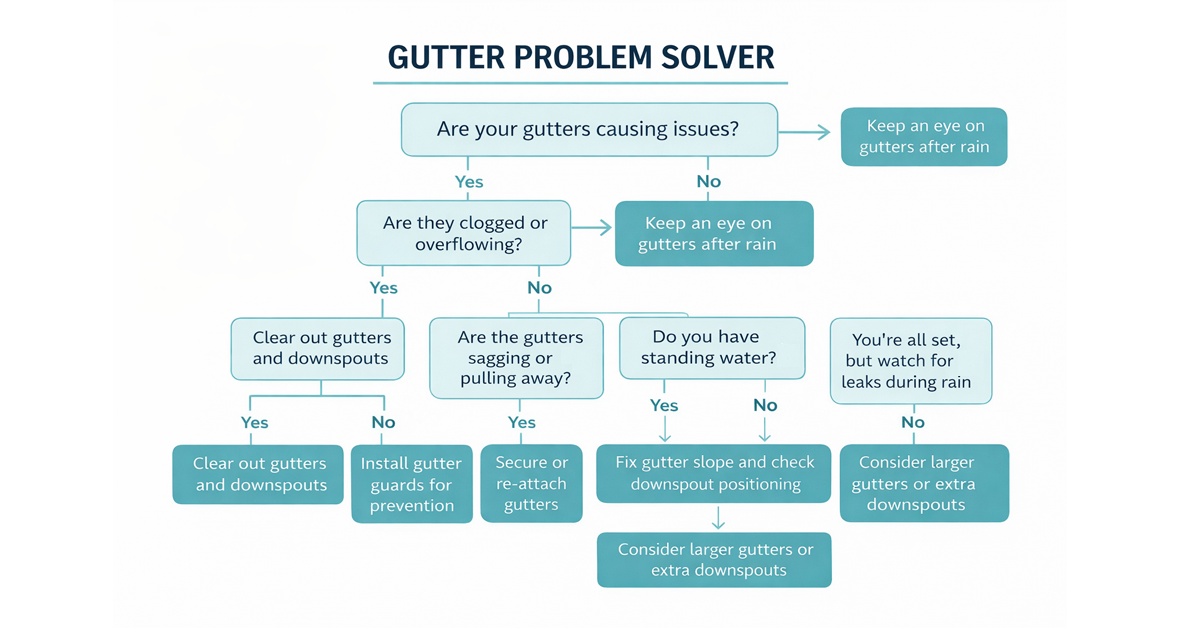
As you can see, whether you are dealing with drips, overflows, or sagging, the first step is always the same: get up there and have a proper look. A thorough inspection is crucial to pinpoint the real issue before you start any repairs.
For homeowners across Windsor, Reading, or Slough, knowing what these signs mean is half the battle. Clearing out a minor blockage might be a straightforward weekend job if you are comfortable on a ladder. But if you are facing persistent leaks, sagging sections, or signs of damage to the roofline itself, it often points to a deeper problem.
A detailed assessment is the only way to understand the full picture, which is where a professional roof inspection report can be invaluable. Do not be tempted to ignore these warning signs. The cost of fixing damp, repointing brickwork, or replacing rotten roof timbers will always be far greater than sorting out the gutters in the first place. If you spot any of these issues, it is time to take action.
Trying to tackle a gutter repair without the right gear is more than just frustrating; it’s genuinely dangerous. Before you even think about leaning a ladder against your house, spending a few minutes getting your tools in order will make the job safer, quicker, and far more effective. It is the first real step towards a proper, lasting fix for your property.
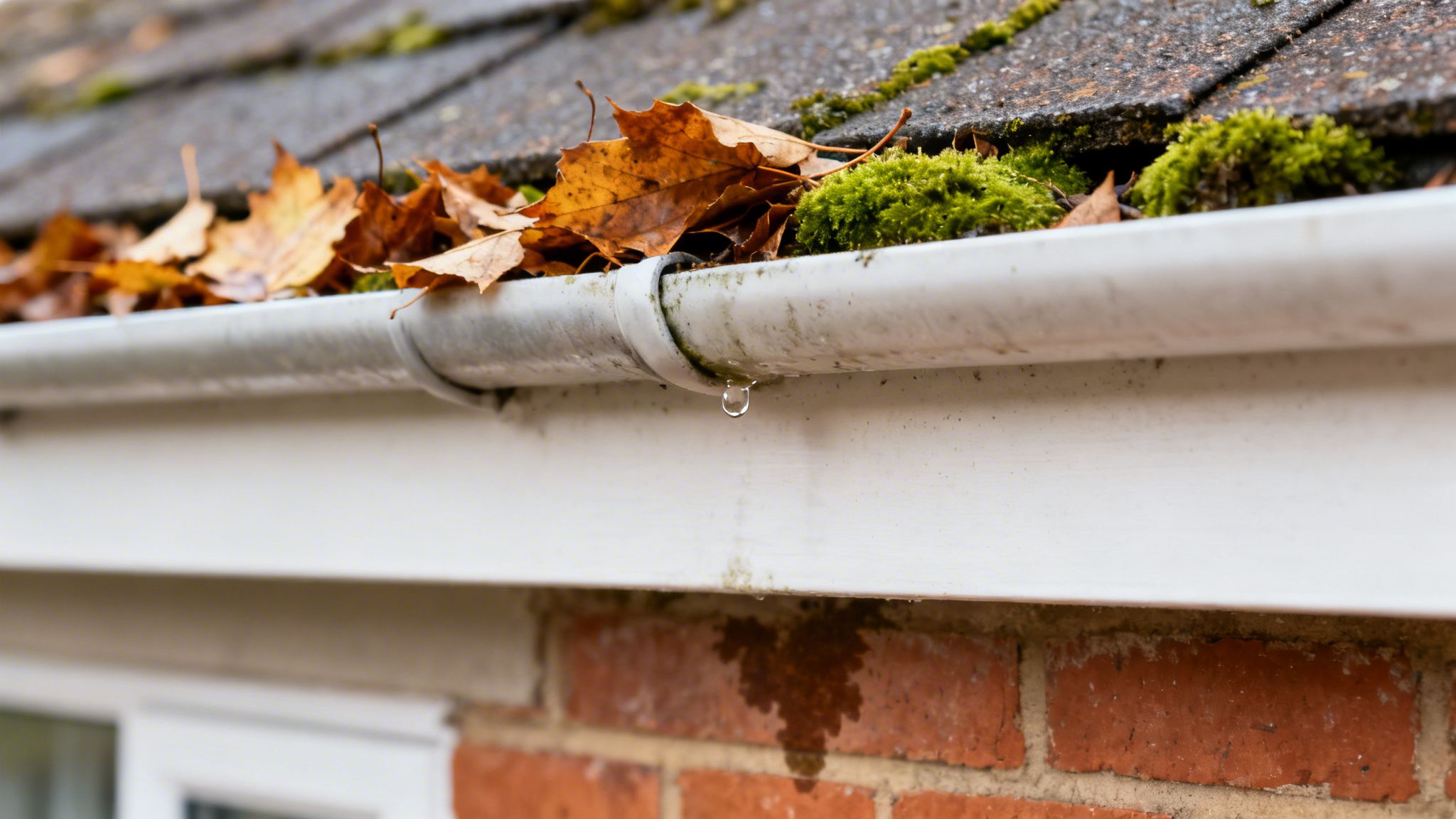
Your absolute non-negotiable is a sturdy, well-maintained extension ladder. Make sure it is tall enough to let you work comfortably on the gutters without stretching or reaching. Along with that, a good pair of thick, non-slip work gloves is a must-have to protect your hands from sharp metal edges, grime, and the odd surprise pest.
For the kind of gutter problems we typically see on UK homes, you do not need a massive toolkit. The trick is having the right bits and pieces ready to go, so you are not constantly climbing up and down the ladder.
Beyond the physical tools, preparing for this job also means getting your head right. Take some time to read through an essential safety guide for working at heights to understand how to prevent falls and other accidents. Honestly, this knowledge is just as vital as any tool in your box.
Working at height has its risks, and our unpredictable British weather only makes things trickier. Never, ever try to repair your gutters in high winds or rain. A wet ladder and a slippery roofline is just asking for trouble.
Always place your ladder on firm, level ground. If the surface is a bit soft or uneven, slide a sturdy wooden board underneath to create a secure base. It’s a simple move that dramatically cuts the risk of the ladder slipping out from under you.
And finally, always let someone know you are up on the ladder. If you can, have them stay at the bottom as a spotter. If at any point the job feels too risky or you are just not sure, do not press on. Give us a call at All Custom Roofing. We provide safe, professional gutter repair services across Windsor, Reading, Slough, Bracknell, Maidenhead, and all the surrounding towns.
Alright, you have got your tools sorted and you are set up safely. Now, let us get down to the nitty-gritty and tackle the most common gutter problems we see across Berkshire. A dripping joint or a bit of a sag might not look like much, but dealing with them properly is key to protecting your home. The good news is, with the right approach, these are fixes you can definitely handle.
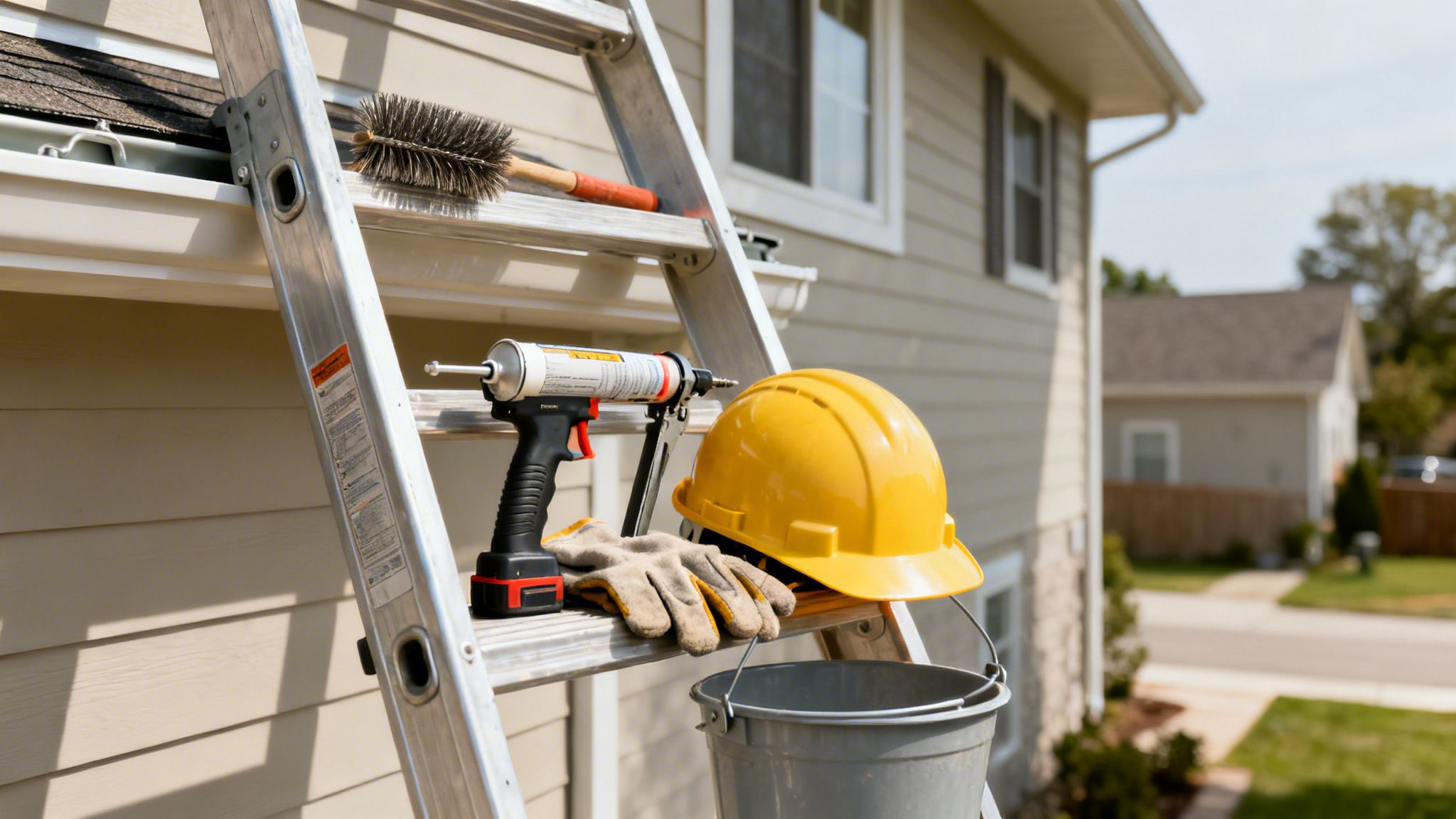
Honestly, the two biggest culprits are leaking joints on modern uPVC systems and sagging sections caused by loose brackets. Both let water escape where it should not, which can lead to damp patches and damage to your brickwork over time. The secret to a repair that lasts is not just patching the problem; it is all about the prep work.
That constant drip, drip, drip from a gutter joint? That is a classic sign the rubber seal inside has given up the ghost. After years of battling the elements, expanding in the sun and contracting in the cold, these seals just perish and lose their flex. Luckily, it is a straightforward fix.
First things first, the area needs to be bone dry and spotless. Scoop out any leaves and gunk, then grab your wire brush and give both sides of the joint a really good scrub. You need to get rid of any moss, algae, or grime that could stop your new sealant from getting a proper grip.
Once it is scrubbed clean, wipe it down with a dry cloth and just let it air dry completely. Do not be tempted to rush this bit. Slapping sealant on a damp surface is the number one reason I see repairs fail.
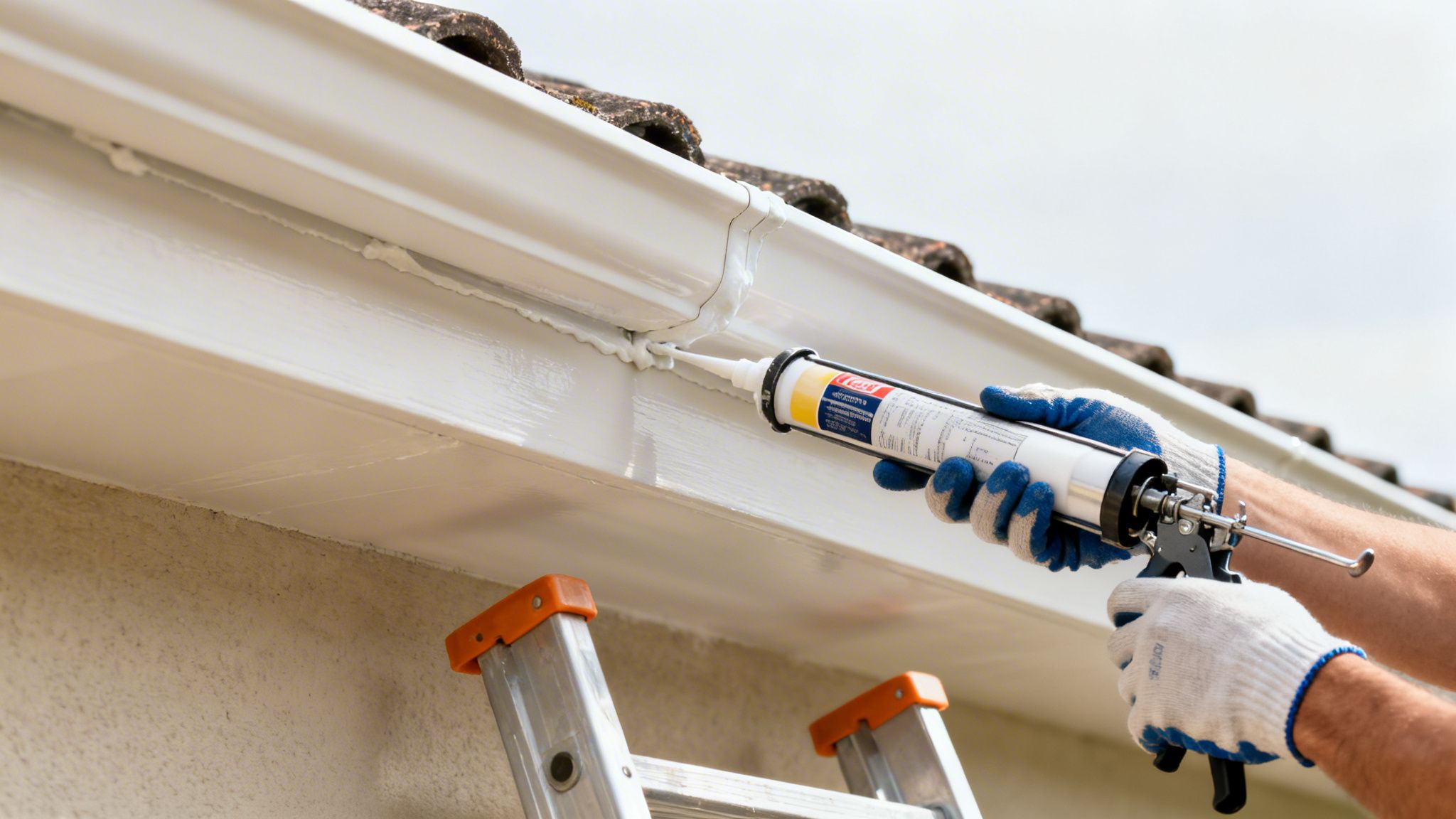
With the joint clean and dry, you are ready for the sealant. Get a generous bead of a high-quality, external-grade silicone sealant in there with your caulking gun. Make sure you pick one designed to stay flexible and handle the lovely British weather. Run the bead right along the inside of the joint, creating a solid, unbroken seal. Then, just smooth it down with a wet finger or a little tool for a neat, waterproof finish.
Here is a tip from the pros: For a truly bomb-proof repair, apply a specific uPVC primer before the sealant. It’s an extra step, but it massively improves how well the sealant sticks. Your repair will last for years, not just until the next big downpour.
A sagging gutter is more than just an eyesore; it is a mini-reservoir waiting to cause trouble. Water pools in the low spot instead of flowing away to the downpipe. The weight of that standing water puts a huge amount of strain on the brackets and can eventually pull the whole section away from the fascia board.
The fix almost always comes down to the gutter brackets. Take a close look at the ones in the sagging area. A lot of the time, the screws holding a bracket to the fascia have just worked themselves loose. If the bracket itself and the wood behind it are still sound, you can often just tighten the screws with a drill or screwdriver and pull the gutter back into line. Simple.
If a bracket is cracked, broken, or has come away completely, you will have to replace it. They are cheap as chips and you can grab them from any big DIY shop.
When you are tightening or replacing brackets, just keep a few things in mind:
For a bit more detail on making sure water flows exactly where it should, you might find our guide on the relationship between your rain gutter and downpipe systems useful.
Older properties, especially around places like Windsor or Maidenhead, often have beautiful cast iron gutters. They are built to last, but they can still get small cracks from an impact or just old age. For a little hairline crack, the process is quite similar to sealing a uPVC joint.
You will want to use a wire brush to clean the damaged spot right back to the bare metal, getting rid of all the rust and flaking paint. Then, apply a coat of rust-inhibiting metal primer and let it dry. To finish, put on a thick layer of a bitumen-based gutter sealant or paint, making sure you cover the crack completely.
If you are looking at widespread problems or you are just not confident tackling any of this yourself, it is always smarter to call in the professionals. Get in touch with All Custom Roofing, and we can sort out any expert gutter repairs you need across Berkshire and the surrounding areas.
It is so easy to put off gutter repairs. That little drip or minor overflow seems like a tiny nuisance you can shove to the bottom of the weekend to-do list. But trust me, delaying that small job is often a hugely expensive mistake, turning what could have been a quick, affordable fix into a major financial headache.
Most straightforward gutter repairs in the South East are pretty modest in cost. The problem is how quickly the financial fallout from neglect can escalate. It is not just a minor issue; the UK Property Maintenance Association estimates that blocked gutters are behind over £100 million in roof damage across the country every single year.
Let us picture a scenario. A single gutter joint on your property in Reading or Bracknell has started to leak. At first, it just leaves a damp patch on the wall after a downpour. But if you leave it, that constant moisture kicks off a seriously destructive chain reaction.
This cascade effect turns a simple problem into a complex and costly nightmare. A repair that might have initially cost less than £200 can easily spiral into thousands of pounds for structural and cosmetic restoration.
A blocked gutter overflowing right next to your house’s foundation is particularly dangerous. Over time, it can wash away the soil, potentially undermining the structural integrity of your entire home. It’s the ultimate example of how a tiny oversight can lead to a catastrophic expense.
When you lay out the costs side-by-side, the conclusion is obvious. A small, proactive investment in professional gutter maintenance is one of the smartest financial decisions any homeowner can make. It protects your property’s value, its structural health, and saves you a world of stress down the line. To get a better handle on the financial side of things, take a look at our guide on understanding roof repair costs in the UK.
For homeowners across Windsor, Slough, Maidenhead, and the surrounding towns, All Custom Roofing provides professional inspections and repairs to stop these problems in their tracks. A timely call to our team is not just a repair bill; it is a direct investment in protecting your home from the costly and damaging effects of water ingress.
While tackling small gutter fixes yourself can be satisfying, knowing your limits is probably the most important part of any home maintenance. Not every problem is a simple DIY job, and working at height always adds an element of risk. There are a few clear signs that it is time to put the ladder away and call in the professionals for your roof gutter repairs.
The most obvious red flag is widespread damage. If you are spotting leaks, sagging sections, or cracks all along your guttering, you are likely looking at a systemic issue, not just one isolated fault. Trying to patch up multiple weak points is usually a short-term fix at best and can easily mask deeper problems that will only get worse.
Access is another major factor. If your home in Maidenhead or Bracknell is more than a single storey high, or if the gutters run over a conservatory or a tricky extension, the risks climb pretty quickly. A professional team has the proper access equipment, like scaffolding towers, and the training to work safely at height. That is something the average homeowner just does not have in their garage.
You should also treat any issues with the underlying fascia and soffit boards as a serious warning sign. If you poke around and find soft, crumbling wood or see paint peeling away right behind the gutter, it is a classic symptom of long-term water exposure and rot. This is not just a gutter problem anymore; it is a potential structural issue with your roofline that really needs an expert assessment.
Hiring a professional is not admitting defeat; it is a smart move to protect your property and yourself. They don’t just bring the right safety gear; they bring years of experience to diagnose the real cause of the problem, ensuring the repair is done right and built to last.
More and more homeowners are realising the value of professional gutter services. With 46 percent of UK homeowners planning home improvement projects, there is a clear shift towards proactive maintenance to head off expensive damage down the line. Choosing a professional service means you are getting modern, durable solutions that genuinely protect your property. You can find out more about these industry trends and what they mean for homeowners like you.
For anyone living across Windsor, Reading, Slough, and the wider Berkshire area, the team at All Custom Roofing is here to help. We provide expert assessments and clear, honest quotes. We have all the skills and equipment needed to handle even the most complex repairs safely, making sure your home is fully protected from the unpredictable British weather.
As specialists working on homes across Berkshire every day, we get asked a lot of the same questions about looking after gutters. To help you out, we have put together some straightforward answers to the things homeowners most often wonder about.
For the majority of homes here in the UK, a good rule of thumb is to clear your gutters out at least twice a year.
The best times are late autumn, once the trees have dropped most of their leaves, and then again in late spring to get rid of any moss, twigs, and general muck that has built up over the winter months.
If your house is right under some big trees, oaks and pines are particular culprits, you might find you need to check them more frequently. Staying on top of cleaning is genuinely the best defence against the blockages that lead to leaks and overflows, saving you from much bigger water damage problems down the line.
Honestly, yes. We would strongly recommend you keep the pressure washer away from your guttering.
The high-powered jet of water can be surprisingly destructive. It can easily blow out the rubber seals in uPVC gutter joints, push brackets out of place, and in some cases, even crack roof tiles or blast mortar from your brickwork.
Beyond the potential damage, it just makes a mess. You will end up spraying dirty water and sludge all over your walls, windows, and patio, creating a whole new cleaning job for yourself.
Stick to the tried-and-tested method: get your gloves on, use a small scoop to remove the debris by hand, and then give the gutters a gentle rinse with a garden hose to make sure water is flowing freely.
Working by hand also gives you the perfect chance to have a proper look at the condition of your guttering up close, spotting any small cracks or loose fittings you would miss with a power washer.
Gutter guards, like the mesh covers or “bottle brush” style inserts you see, can be a decent investment. Their main job is to stop big leaves and debris from clogging up the channels in the first place, which can definitely cut down on how often you need to do a full-scale clean-out.
That said, they are not a ‘fit and forget’ solution.
Tiny particles, like grit from your roof tiles or wind-blown seeds, will still find their way through. Over time, this can mix with rainwater to form a thick sludge at the bottom of the gutter, which can still cause a blockage.
You will also need to clean the guards themselves from time to time to make sure water can still get through them properly. They are a helpful tool for many homes in Berkshire, especially those surrounded by trees, but they do not get rid of the need for regular checks.
If you need expert help to repair roof gutters or would rather a professional handle the maintenance, get in touch with All Custom Roofing. We provide reliable, high-quality roofing and guttering services across Windsor, Reading, Slough, Bracknell, Maidenhead, and the surrounding towns. Visit us at https://customroofing.co.uk/ to schedule your free, no-obligation quote.