
 (+44) 7900 515 552
16 Oct 2026
 insurance backed guaranteeinsurance backed guarantee
Your rain gutter outlets are the critical link between the horizontal guttering that runs along your roofline and the vertical downpipe that carries water safely to the ground. You can think of them as the plughole for your entire roof drainage system – if they get blocked or fail, the consequences can be messy and expensive. Their one job is to provide a smooth, clear exit for rainwater, protecting your home’s foundations, walls, and landscaping from damage.
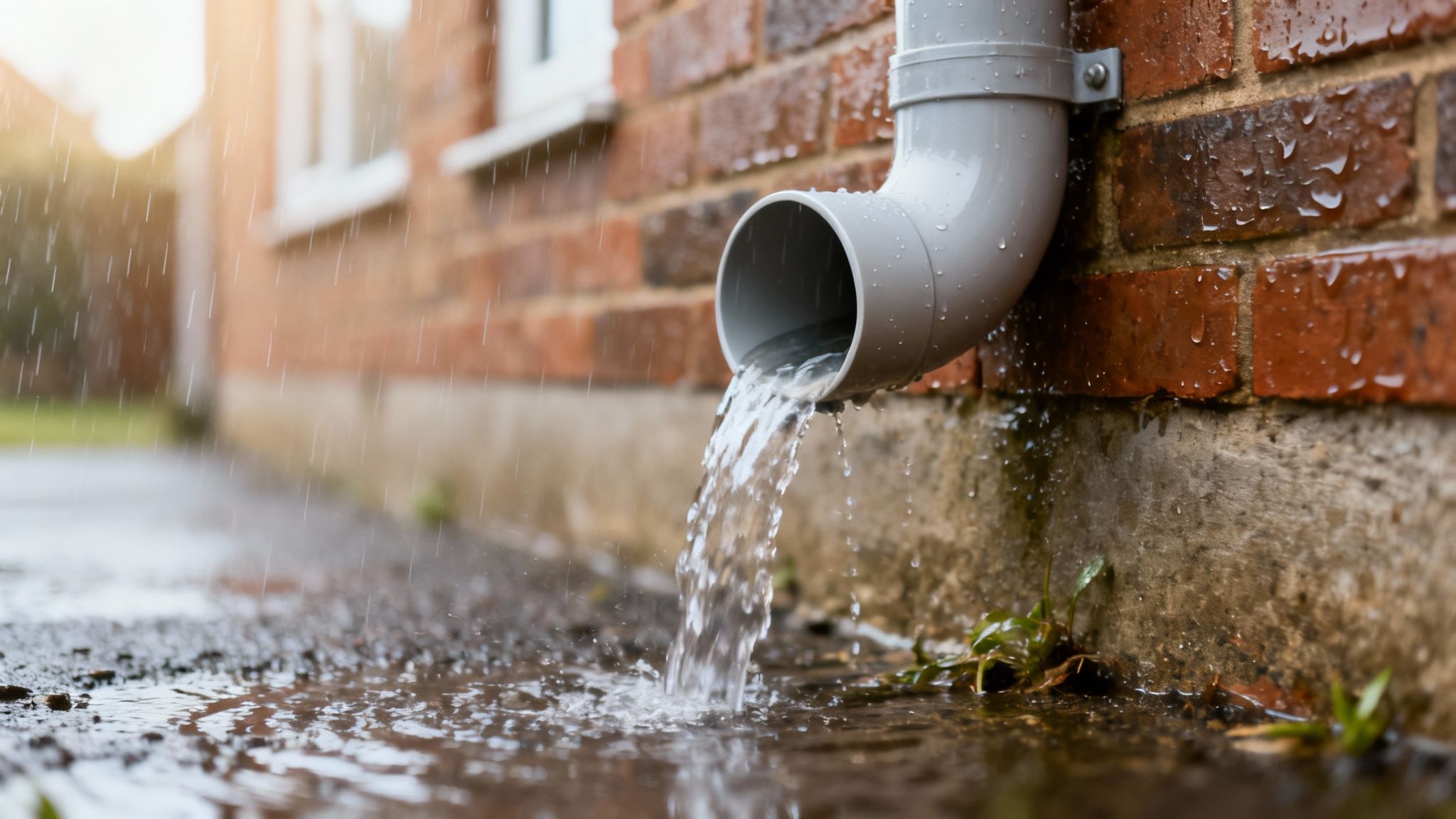
It’s easy to focus on the big parts of a roofing system and forget the small components, but rain gutter outlets have a massive impact on protecting your property. Placed at the lowest point of a gutter section, this simple fitting is the gateway to your downpipe. Its only purpose is to funnel all the water collected from your roof downwards and away, stopping it from spilling over the sides of the gutter.
For anyone living in Windsor and across Berkshire, where we’re no strangers to a downpour, a reliable drainage system is an absolute must. The outlet is, without a doubt, the most vulnerable link in that chain.
Because every drop of water has to pass through this one small opening, it naturally becomes a bottleneck. This is where leaves, moss, twigs, and other bits of debris love to gather. If a blockage forms here, your entire guttering system becomes useless in an instant, triggering a chain reaction of problems that are often costly and disruptive to fix.
A properly working outlet is essential for a few key reasons:
A single blocked gutter outlet can back up several metres of guttering in minutes during a typical British rainstorm. This puts immense weight on the fixtures and risks water getting into your roofline structure.
To give you a clearer picture, here’s a quick breakdown of what your gutter outlets do and what happens when they don’t.
| Key Function | Risk of Failure |
|---|---|
| Funnels water into the downpipe | Water overflows the gutter, running down walls and windows. |
| Prevents water from pooling | Water collects around the foundation, causing cracks and damp. |
| Maintains a clear drainage path | Standing water in gutters adds weight, causing sagging and pulling away. |
| Manages debris flow | Blockages lead to water ingress, rotten fascias, and mould. |
As you can see, these small components have a huge responsibility. Neglecting them is simply not worth the risk.
Ignoring a clogged or faulty rain gutter outlet is a real gamble. The first signs might seem small – maybe a little drip or a slight overflow during heavy rain – but they're often symptoms of a much bigger problem brewing. When water has nowhere to go, it sits in the gutter. This adds a surprising amount of weight, which can cause the support brackets to fail and the entire gutter to sag or pull away from the fascia boards.
That standing water also becomes a perfect breeding ground for mosquitoes and can speed up corrosion in metal gutters. The best way to avoid these headaches is with regular checks. Keeping your outlets clear is a fundamental part of good property maintenance, just as important as the broader task of keeping your roof clean. If you're not sure about the state of your gutters, it’s always wise to get a professional opinion.
Contact All Custom Roofing in Windsor for expert advice on keeping your guttering system in perfect working order.
Picking the right rain gutter outlet might seem like a small detail, but it’s a decision that heavily influences how well your entire drainage system works. The perfect choice hinges on your property's specific needs – everything from the style of your guttering and the size of your roof, to even how hard it typically rains in your local area. An outlet that’s too small or doesn't match your gutter profile is a recipe for overflows and potential water damage.
For property owners across Berkshire and Surrey, getting this right means your home can handle even the most relentless British downpour. Whether you're fitting a completely new system or just patching up an old one, understanding the different types of outlets is the first step towards a reliable, long-lasting solution.
The first thing to consider is the shape, or profile, of your gutters. Most UK properties use one of a few common styles, and each one needs a specific outlet to create a secure, watertight seal. A mismatch here is a guaranteed weak spot.
Beyond just matching the shape, you also have a choice in how the outlet is installed. The two main types you'll find on UK properties are running outlets and stopend outlets, and they each do a different job.
A running outlet (or drop outlet) is fitted into a straight section of guttering, letting water drain into a downpipe somewhere in the middle of a run. A stopend outlet, on the other hand, combines an end cap and an outlet into a single fitting, used at the very end of a gutter section.
Where you place them depends entirely on your roofline's layout and the location of your downpipes. Long stretches of guttering might need several running outlets to cope with the volume of water, especially on larger commercial buildings. Smaller homes, however, might only need stopend outlets at each end. Getting this layout correct is fundamental for efficient drainage.
Choosing the correct rain gutter outlets is the foundation of a high-performing system. If you’re not sure which type is best for your Windsor property, it’s always wise to get a professional opinion. Contact All Custom Roofing for expert advice; we serve homes and businesses across Berkshire, Surrey, and beyond.
Getting the material and size of your rain gutter outlets right is absolutely critical. Think of it as a balancing act: you've got budget, the look of your home, and long-term durability on one side, while sizing is a straightforward, non-negotiable calculation on the other. If you get either of these wrong, you risk undermining your entire drainage system, which can lead to nasty overflows and water damage.
For most homes here in the UK, a few key materials stand out. The best one for you usually boils down to the style of your property and how much maintenance you're prepared to do.
First rule of thumb: the material for your outlet should always match your guttering. This ensures a snug, leak-proof fit and, more importantly, prevents something called galvanic corrosion, which happens when different metals react badly with each other.
Ultimately, the right material hinges on your specific project. For a deeper dive, you can check out our guide on how to choose the best materials for your new roofing project.
When it comes to sizing, we swap personal preference for pure science. An outlet that’s too small for your roof will be completely overwhelmed in a proper downpour, causing water to back up and spill over the edges of your gutters. The trick is to correctly calculate the area of the roof it needs to drain.
A simple rule to remember is this: the larger your roof area and the steeper its pitch, the bigger the outlet and downpipe you'll need. This is because a larger, steeper roof collects more water and sends it down faster. A standard 68mm circular downpipe is fine for many UK homes, but larger or more complex properties will definitely need something wider.
This diagram gives you a great visual on the key factors we consider – things like your roof size, gutter profile, and even local rainfall patterns all play a part in choosing the right size.
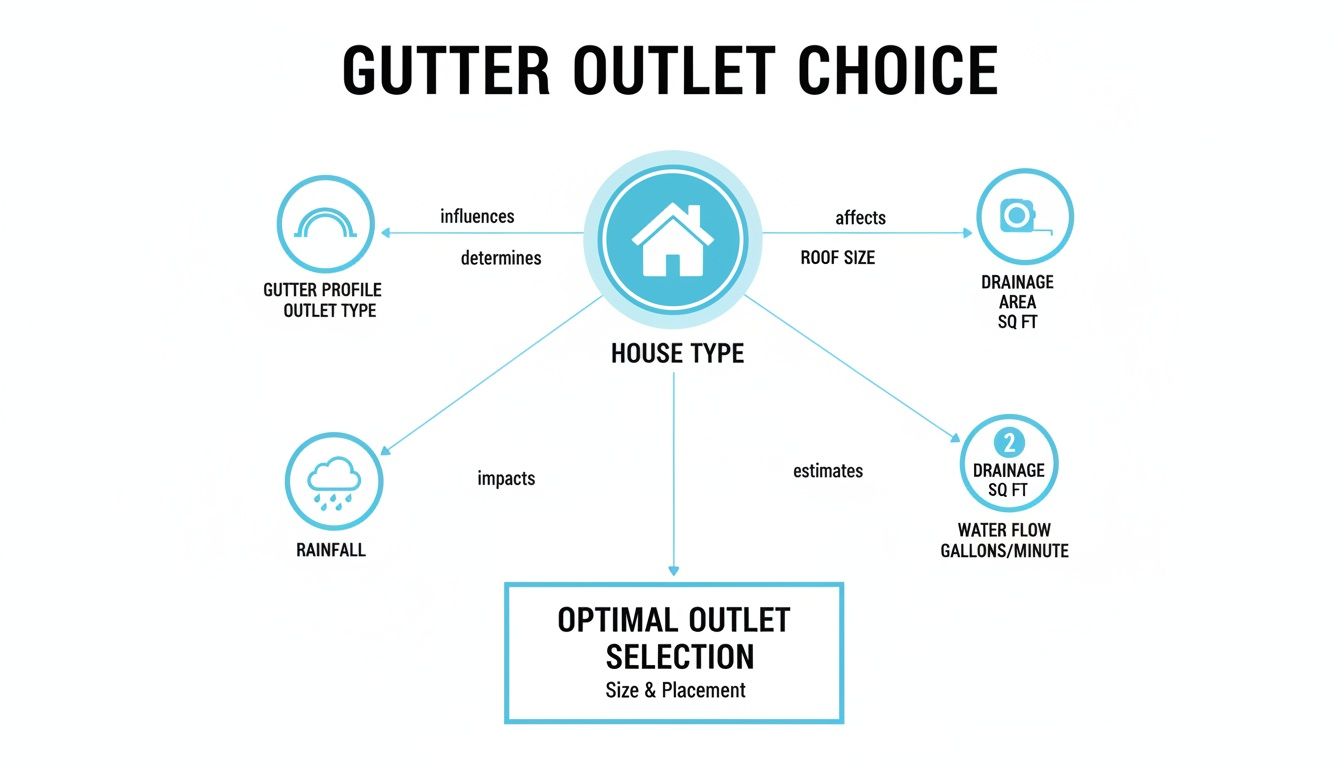
As you can see, there's no "one-size-fits-all" answer; your property's unique makeup dictates what's needed. Getting water management right is essential. According to industry analysis, the UK rain gutter market is driven by the growing need for better drainage solutions to cope with changing weather patterns, making correctly sized outlets more important than ever.
To get a precise calculation that is perfectly tailored to your property here in the Windsor area, your best bet is always to chat with a professional. Give us at All Custom Roofing a call for an expert assessment.
A failing rain gutter outlet rarely gives you a dramatic, sudden collapse. Instead, it whispers. It leaves behind a trail of subtle clues that are all too easy to miss if you’re not actively looking for them. Learning to spot these early hints from the ground can be the difference between a simple fix and a major, expensive repair job affecting your roofline, walls, and even your home’s foundations.
Being proactive is the name of the game in property maintenance. For homeowners here in Windsor and across Surrey, keeping an eye out for these tell-tale signs is a simple but vital step in defending your investment against our famously persistent British weather.
The good news is you don’t need to get up on a ladder for an initial health check. A quick walk around your property, especially just after it’s rained, will tell you a lot about how your whole drainage system is coping.
Keep your eyes peeled for these specific giveaways:
Any of these symptoms point to a problem that needs sorting out sooner rather than later.
When an outlet does fail, it’s usually down to one of a few usual suspects. Blockages are by far the most common issue, where leaves, moss, and other bits of garden debris build up and create a dam that stops water in its tracks.
It’s amazing, but a single handful of wet leaves is all it takes to completely plug a standard gutter outlet. This forces litres of rainwater to back up and find another way out – usually a much more destructive one.
Physical damage is another common culprit. Over the years, uPVC outlets can go brittle and develop tiny hairline cracks, especially right at the join where they meet the downpipe. Metal outlets aren’t immune either; they can suffer from corrosion or have the sealant around the joints fail, leading to slow but steady leaks that cause progressive damage. Regular checks can catch these things before they really compromise your property.
For a professional assessment, feel free to contact All Custom Roofing in Windsor for some expert advice.

Consistent maintenance is the secret to a long-lasting and effective guttering system, and your rain gutter outlets are the most critical point to keep clear. Think of it like servicing your car; a little effort twice a year prevents a major, costly breakdown down the line. For property owners here in Windsor and the surrounding areas, a seasonal check-up is the best defence against the blockages that cause overflows and water damage.
The UK climate gives us two key windows for gutter maintenance: late autumn, after the trees have shed their leaves, and early spring, to clear out any debris that has built up over winter. This simple routine ensures your outlets are ready for both winter downpours and sudden spring showers, protecting your home year-round.
Before you even think about starting, your number one priority must be safety. If you are not completely comfortable working on a ladder, it is always best to call in a professional. It's just not worth the risk.
If you do decide to tackle it yourself, make sure you have the right kit for the job:
The most common cause of blocked rain gutter outlets is a compacted plug of wet leaves and moss right at the top of the downpipe. Removing this initial blockage is 90% of the job.
Once you’re safely in position, the process is pretty straightforward. Start by scooping out the larger debris from the guttering around the outlet. It’s best to work towards the outlet, pulling the debris away from the opening so you don't accidentally push it further down and make the blockage worse.
After clearing the main channel, you can focus on the outlet itself. Carefully dig out any remaining material packed into the opening. When it’s clear, you should be able to see straight down into the top of the downpipe.
The final step is to give the system a good flush. Pour a bucket of water into the gutter a few metres away from the outlet and watch how it flows. If it drains freely down the pipe, you’re all set. If the water starts to back up, you likely have a clog further down the downpipe which may require specialist tools to clear.
For a thorough, safe, and professional clean that guarantees clear rain gutter outlets, contact All Custom Roofing. We provide expert gutter maintenance for homes and businesses across Berkshire, Surrey, and beyond.
Knowing when to roll up your sleeves and tackle a job yourself versus when to call in the professionals is a huge part of smart property maintenance. When it comes to your gutter outlets, making the right call is crucial for both your safety and the health of your entire drainage system.
For most homeowners, a bit of routine cleaning is perfectly manageable. If you’re comfortable and safe on a ladder, clearing out leaves and debris from your outlets each spring and autumn is a pretty straightforward task. Honestly, this simple act alone prevents the vast majority of blockages and keeps water flowing exactly where it should.
As long as you put safety first, a little bit of basic upkeep can often be handled without needing to call for backup.
But the line for DIY is drawn pretty quickly when a real repair is needed, or if you’re just not confident working at height.
Cleaning is one thing; installations and repairs are a different beast altogether. Trying to patch things up without the right experience can easily make problems worse, not to mention compromise your safety. For a proper, long-lasting fix, you really need a professional.
A professional roofer doesn't just show up with the right safety gear for working at height – they bring the expertise to figure out what's really going on. What might look like a simple leak at a rain gutter outlet could actually be a sign of a failing seal, an incorrect slope in the gutter, or even rot in the fascia board hidden behind it.
Hiring an expert ensures the job is done right the first time. They have the correct materials and techniques to guarantee a watertight seal, giving you peace of mind that your home is properly protected. You can read more about the advantages in our guide on the benefits of professional roof cleaning services, which covers some of the same principles.
For a thorough assessment and expert repair of your rain gutter outlets, it's always best to get professional advice. Contact All Custom Roofing in Windsor for reliable service you can count on across Berkshire, Surrey, and the surrounding areas. We'll make sure your entire guttering system is working perfectly.
We hear a lot of the same questions from homeowners across the Windsor area, so we've put together some quick, practical answers. Here’s what you need to know to keep your home's roof drainage system in top shape.
For most properties here in the UK, a twice-yearly check does the trick. The best times are late autumn, once the trees have dropped all their leaves, and again in early spring to clear out whatever muck has built up over winter. Stick to that routine, and you'll head off the vast majority of blockages before they even start.
Yes, absolutely. Gutter guards can be fantastic at stopping the big stuff – leaves, twigs, and other debris – from getting into your gutters in the first place. But they aren't a 'fit and forget' solution. Smaller bits like moss, grit, and seeds can still wash through. You'll still need to peek in there from time to time to make sure the rain gutter outlets themselves are clear.
Nine times out of ten, the culprit is a dense, compacted plug of wet leaves and moss. Because the outlet is the lowest and narrowest point in the whole system, everything naturally funnels down and gets stuck right there. It doesn't take much; even a small blockage can cause metres of guttering to back up in a heavy downpour.
Remember: a clear rain gutter outlet is the key to the health of your entire roof drainage system. Proactive checks are always simpler and cheaper than reactive repairs.
If you're worried about the state of your guttering or just want an expert opinion, don't hesitate to get in touch. For professional advice and reliable repairs on your rain gutter outlets, contact All Custom Roofing in Windsor. We look after homes and businesses across Berkshire, Surrey, and the surrounding areas. Find out more at https://customroofing.co.uk/.